From design to toy · 1998
BullTaurus: Where Did the Rider Go?
A knight rides a bull, then disappears inside it. Follow the original DX toy through its hidden combination and twisting transformation.
- From the world of
- Seijuu Sentai Gingaman
- Toy maker
- Bandai
- Release year
- 1998
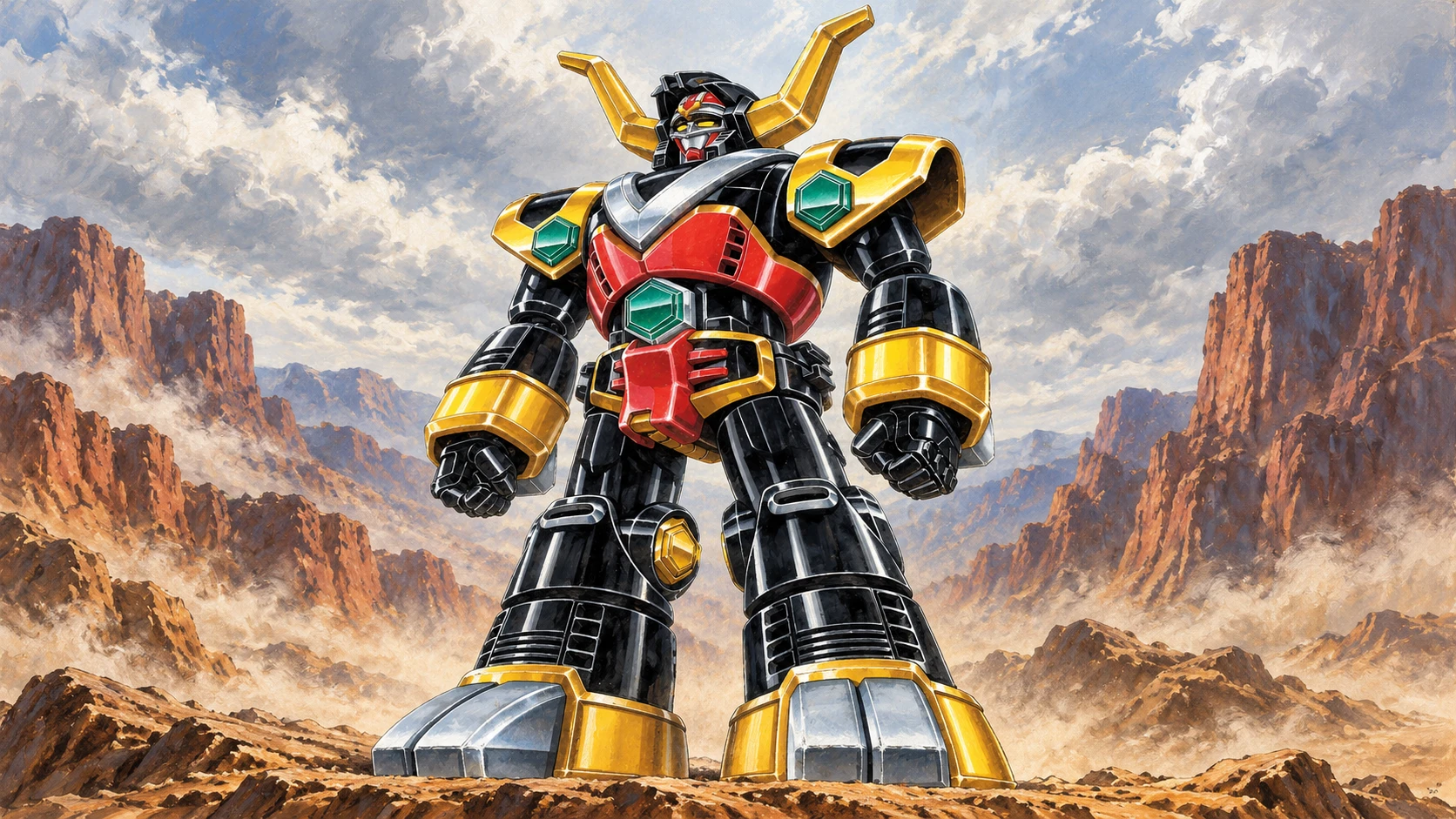
An imagined canyon setting painted from the finished BullTaurus design. Authentic drawings and original DX photographs follow.
AI cover illustration · Rewind: Northwest RetroDesign reference ↗01 / The design
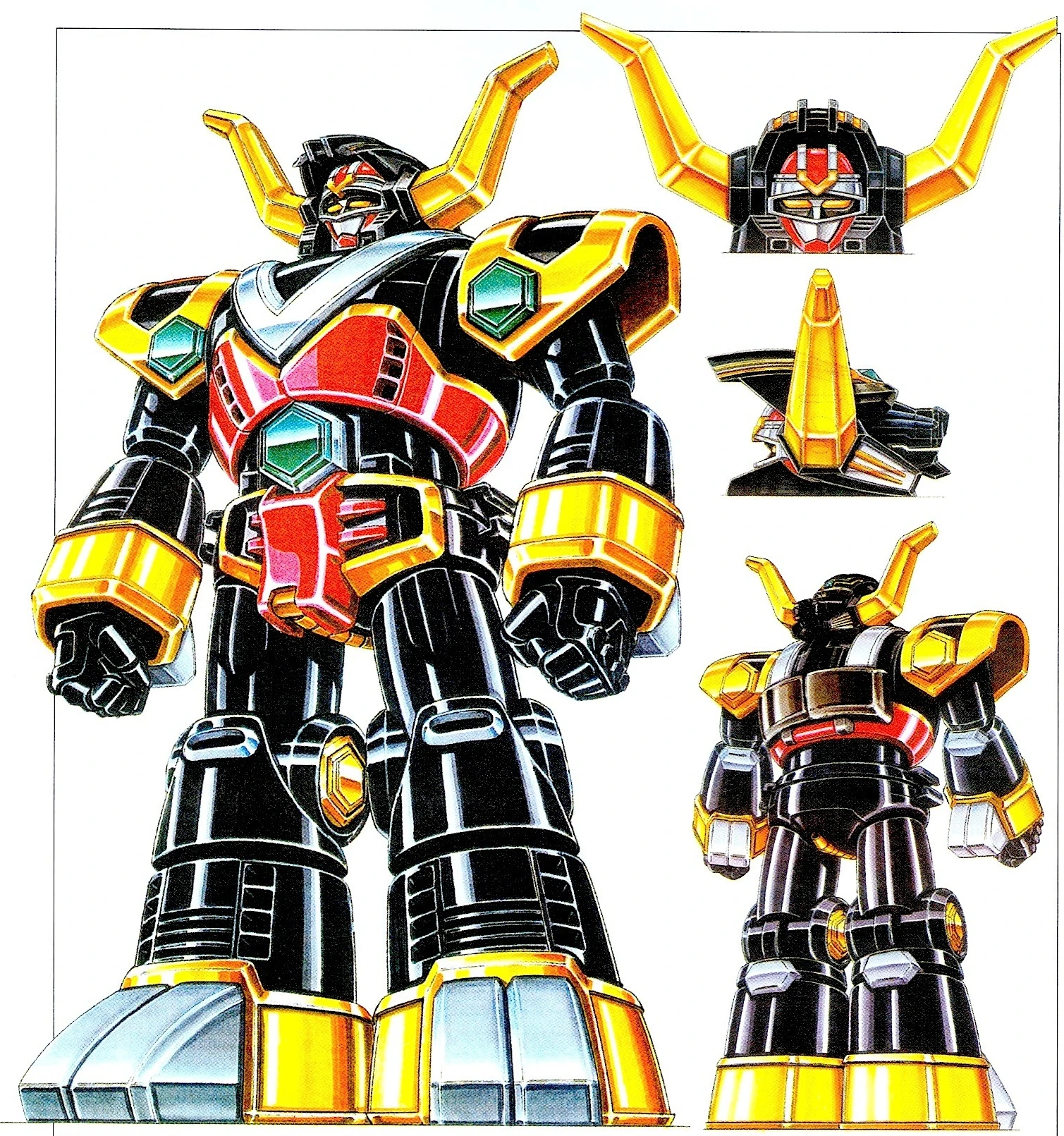
The finished warrior, with rear and helmet studies. Its broad chest gives no outward sign of the rider.
Super Sentai Art Collection · MediaWorks, 2002 · printed p. 042 · PDF p. 50
02 / The toy
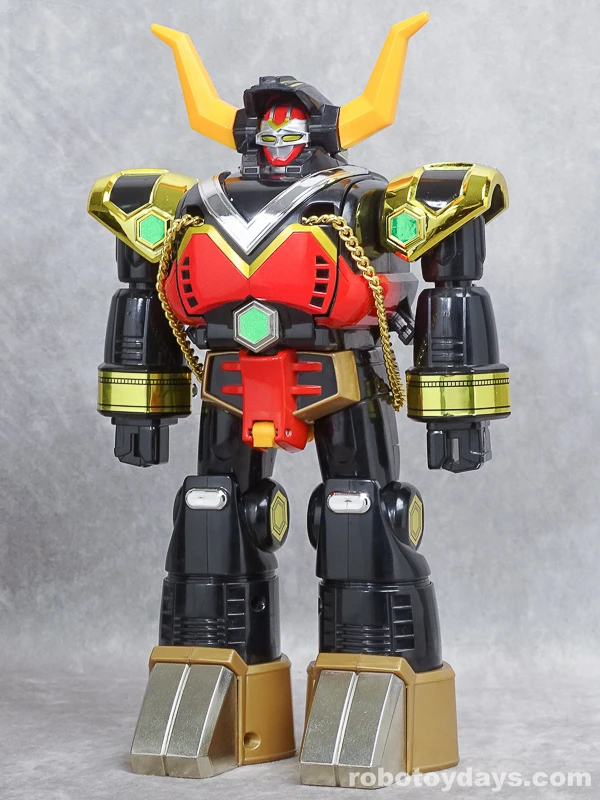
Original Japanese Bandai GD-12 DX, standard colors.
The rider goes inside
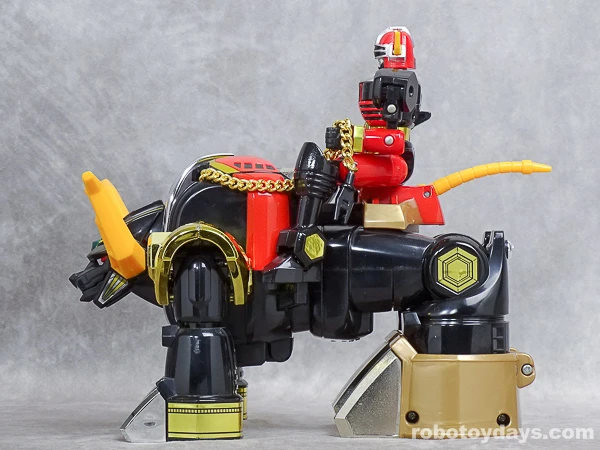
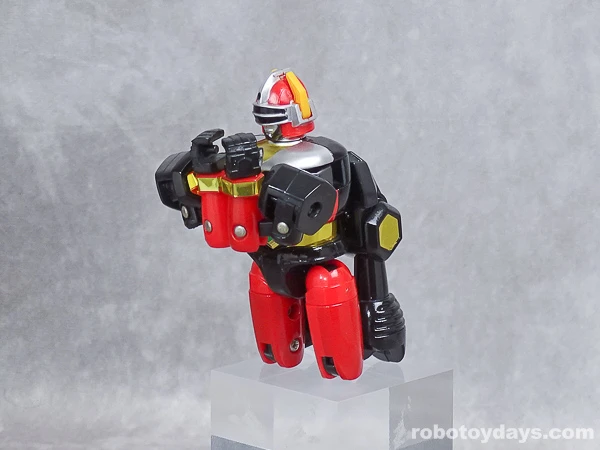
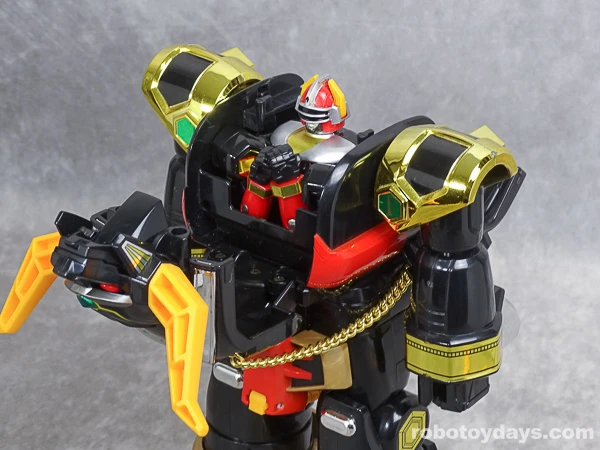
There are two figures at the start of this transformation: a horned bull and the armored knight on its back. At the end, only one warrior stands there. The knight has not become an arm, a weapon or the face. It is folded inside the bull’s torso.
The original DX makes that disappearance wonderfully literal. The knight curls up; GoTaurus opens around it. Close the body and the smaller figure vanishes into the broad black-and-red warrior called BullTaurus. The open-body photograph below lets you catch the trick before the armor shuts. Original DX photographs.
Look closer
From saddle to hidden passenger
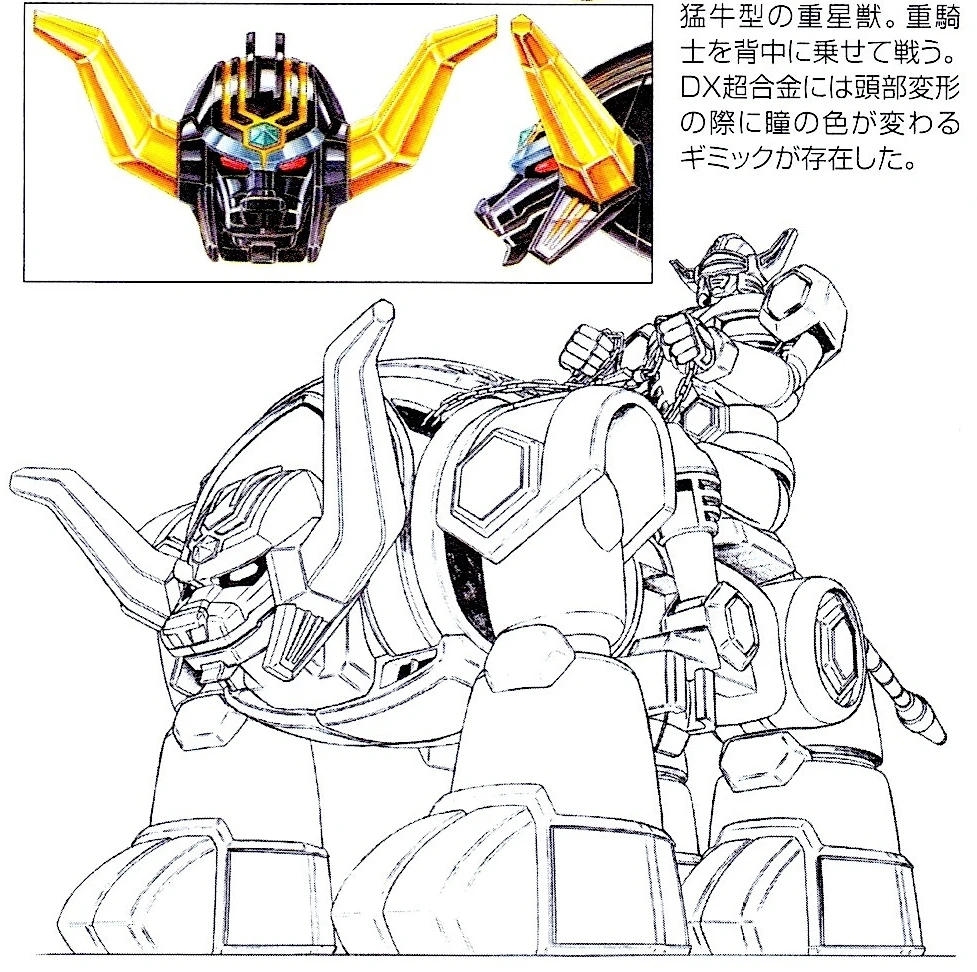
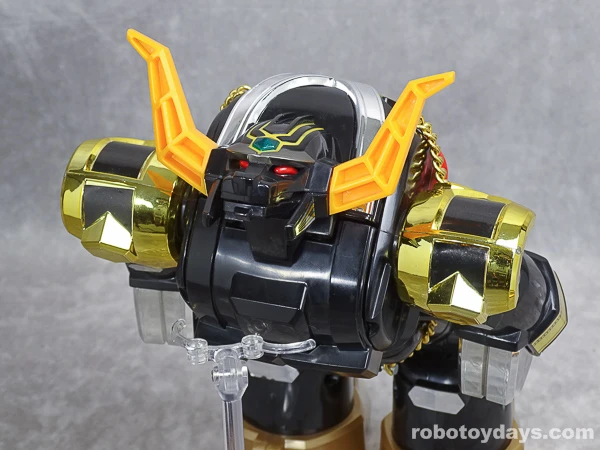
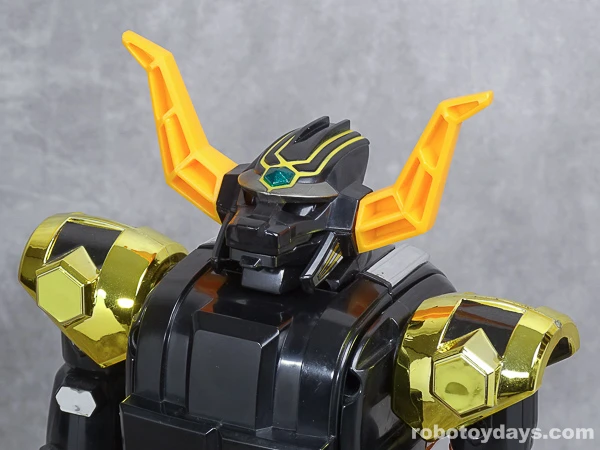
Two visible partners: the knight rides high on the bull’s back. Head studies above show the mount’s face.
Super Sentai Art Collection · MediaWorks, 2002 · printed p. 042 · PDF p. 50
Meet the two partners
In Seijuu Sentai Gingaman, Heavy Knight is the giant form of Black Knight BullBlack—and later Hyuuga, who inherits his power. GoTaurus, the bull-shaped Heavy Starbeast, carries the knight into battle. Their union is called Kijuu Gasshin, the rider-and-beast combination. Artbook, p. 042.
They look related before they join: black armor, red panels and gold trim run through both designs. But their proportions do different jobs. The slim knight can fold; the heavy bull has room to receive it. Compare the separate drawings with the original DX figures below.
Look closer
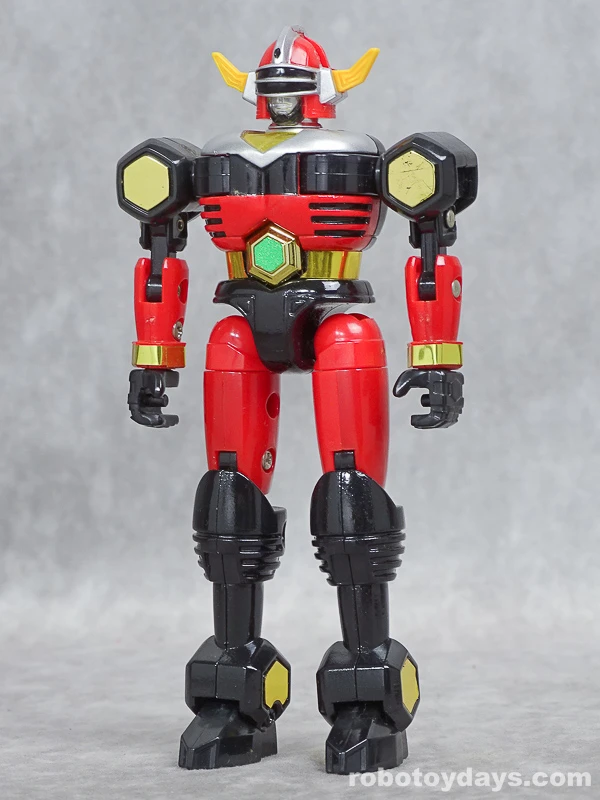
Heavy Knight
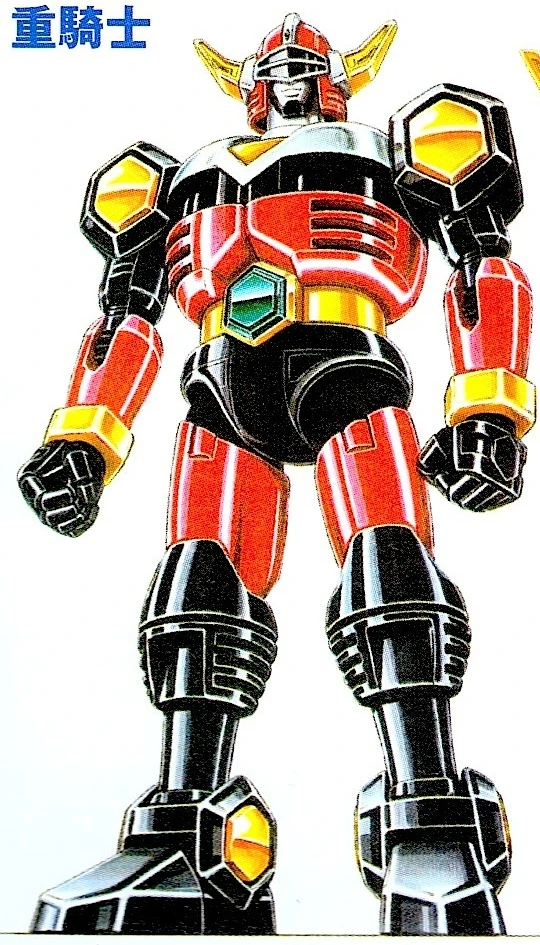
Heavy Knight: a warrior in its own right, with a red helmet and narrow visor.
Super Sentai Art Collection · MediaWorks, 2002 · printed p. 042 · PDF p. 50
GoTaurus
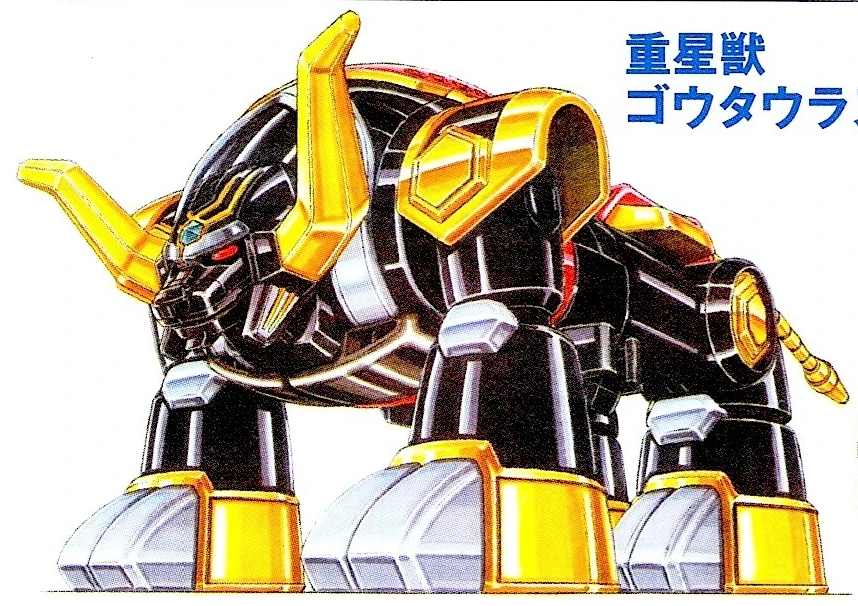
GoTaurus: the four-legged mount supplies the larger body.
Super Sentai Art Collection · MediaWorks, 2002 · printed p. 042 · PDF p. 50
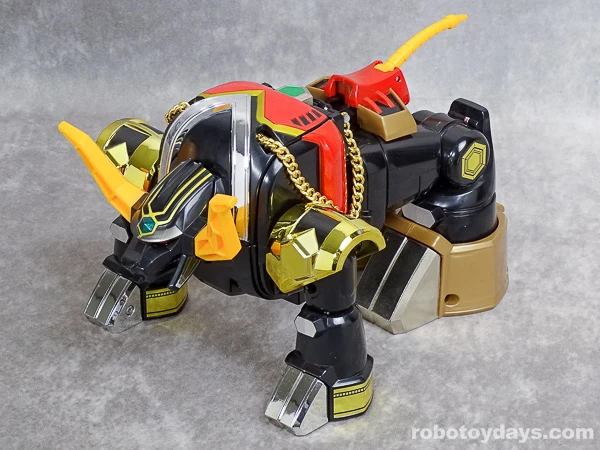
A transformation with a twist
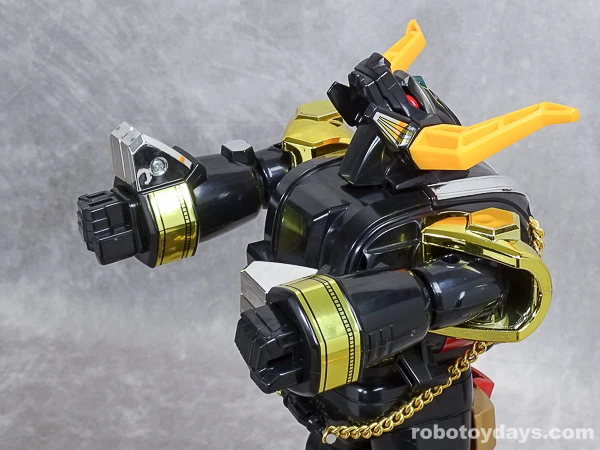
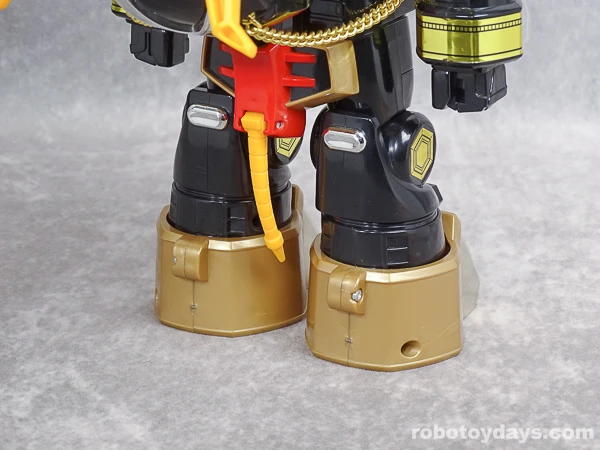
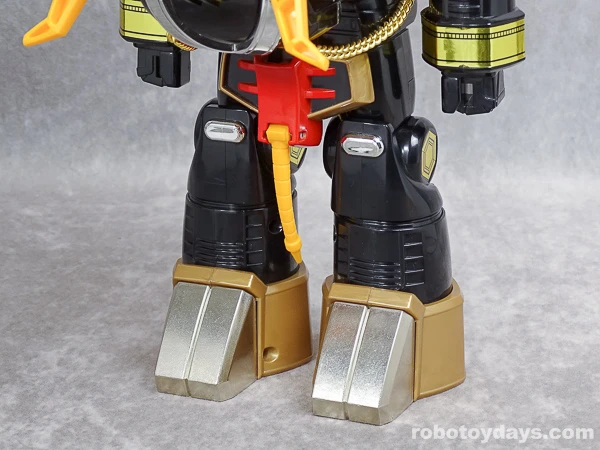
The knight’s hiding place solves only half the puzzle. The bull still needs fists and a standing warrior’s feet.
The DX uses a spiral transformation system: turn the forearms and fists emerge; turn the ankles and the feet extend. The before-and-after pairs let you follow the silver foot surfaces and black hands through the change. Bandai later singled out these original DX mechanisms when explaining what it wanted to preserve in the SMP version. Bandai’s retrospective comparison.
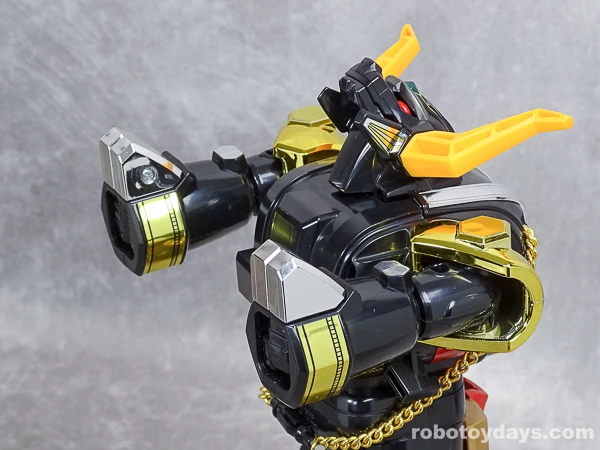
Before the bull
One early idea was a lion. Drawing 30 gives it a circular, rotating mane; the artbook says that idea eventually found a use four years later in Hurricane Leon, the lion machine from Hurricaneger. It was a proposal for the second robot, not an alternate mode of the toy shown here.
Beside it, drawing 31 is much closer to BullTaurus: wide horns, broad shoulders, a V-shaped chest and thick lower legs. The book describes a comparatively direct path from the initial BullTaurus plan to its finished design. The lion is the surprising detour; the armored warrior is already recognizable. Early Sketches, p. 144.
Look closer
Two early directions
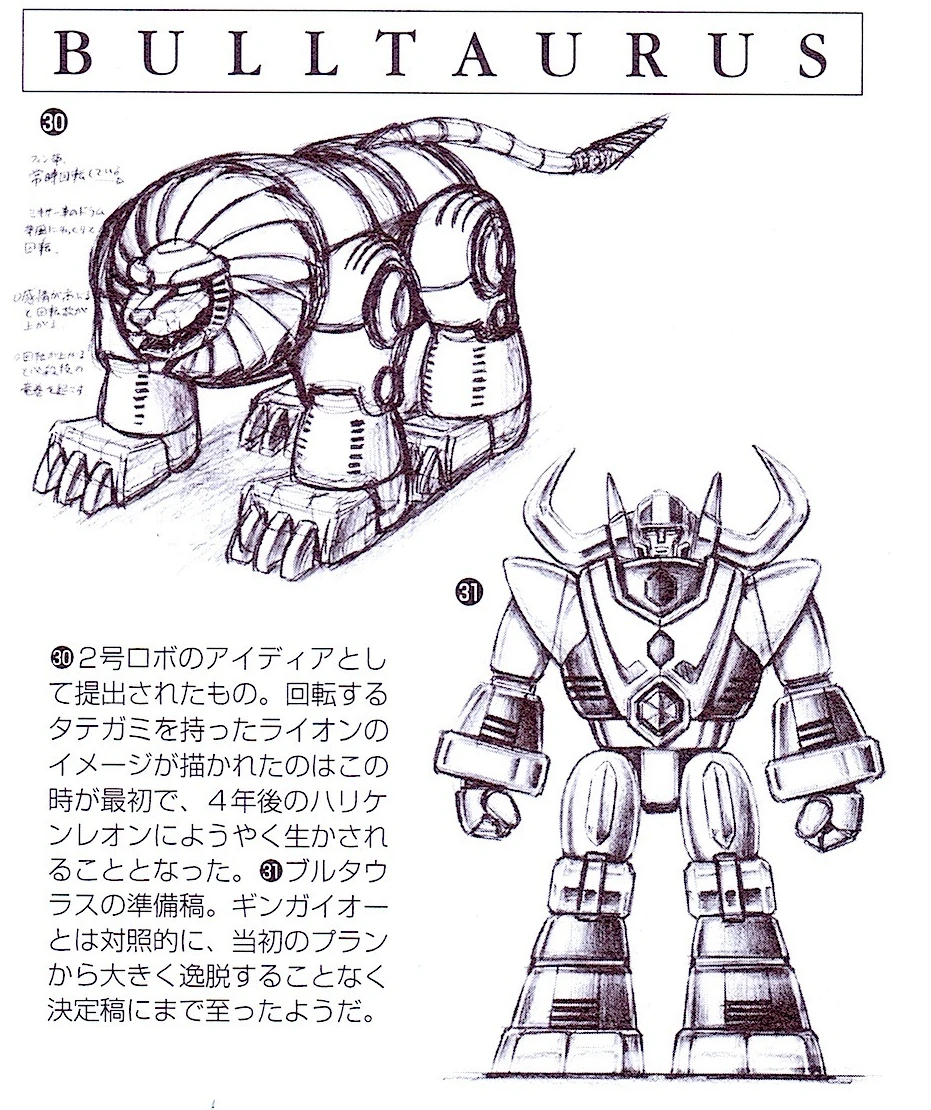
Drawing 30 explores a rotating lion’s mane. Drawing 31 already has the familiar horned warrior silhouette.
Super Sentai Art Collection · MediaWorks, 2002 · printed p. 144 · PDF p. 152
The original DX
The photographs here follow Bandai’s Japanese GD-12 DX Chogokin Kijuu Gasshin BullTaurus. Its 1998 catalog lists the set at ¥7,800 and shows the knight, mounted bull and combined warrior. The box and catalog excerpt below identify that original release. Bandai Toy Catalog 1998 Vol. 2, PDF p. 4.
Look closer
The 1998 Japanese release
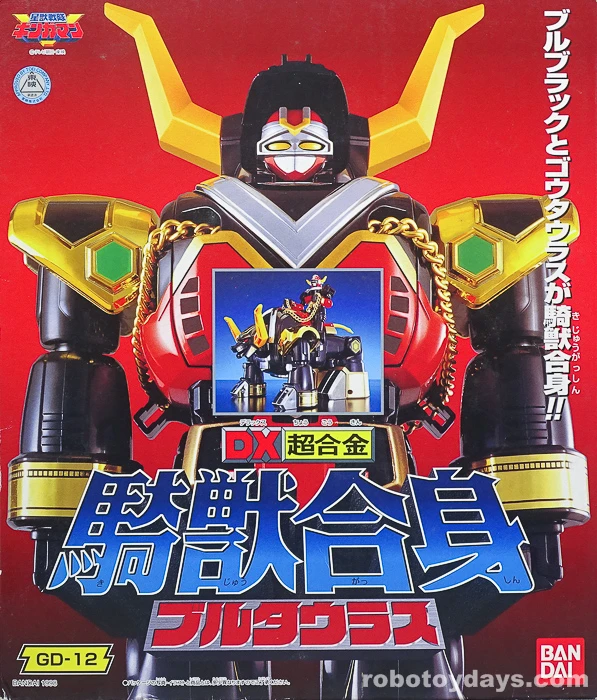
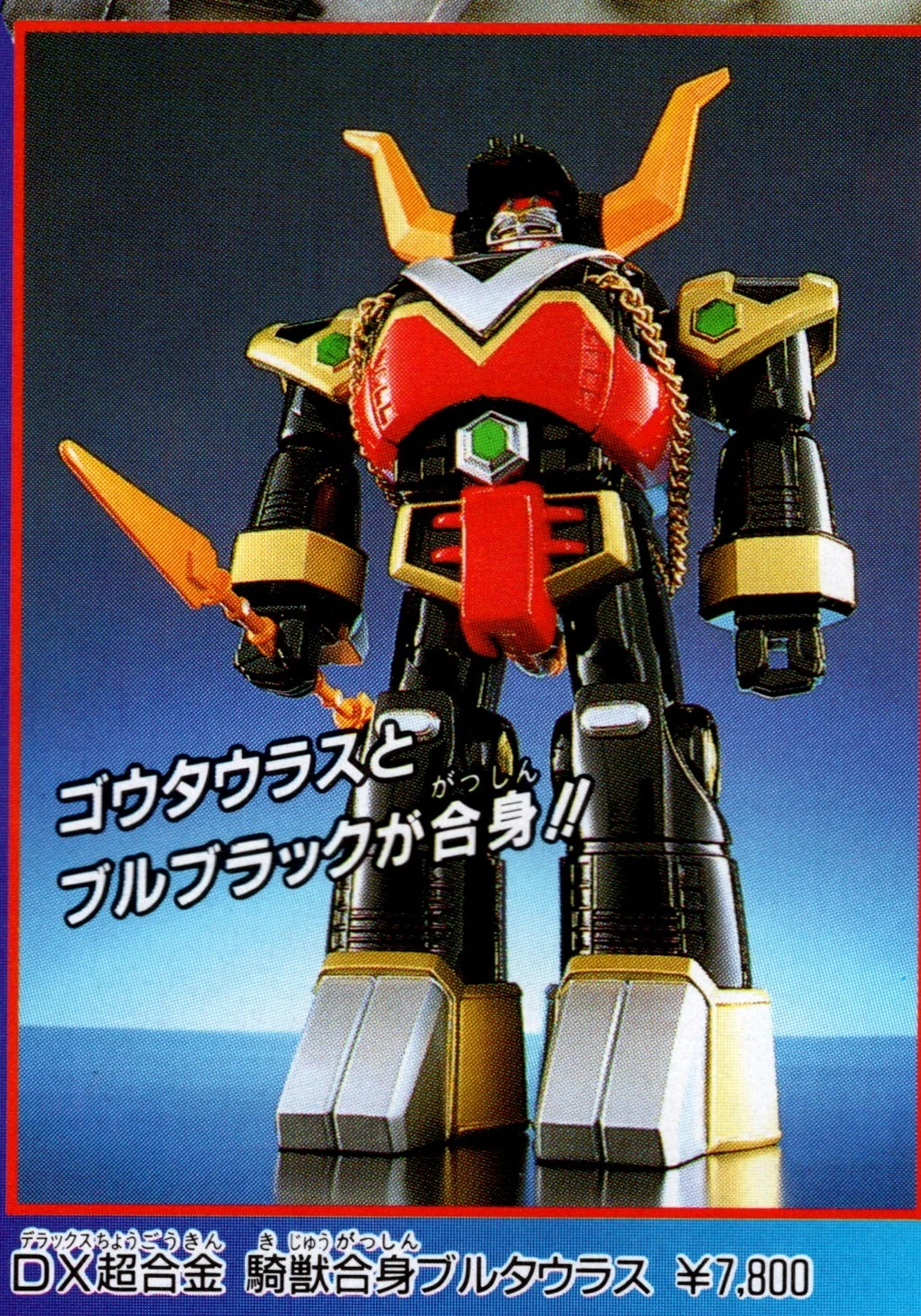
Bandai’s 1998 Vol. 2 catalog: ¥7,800 for the DX set.
Bandai, 1998 · printed p. Unnumbered BullBlack / GoTaurus page · PDF p. 4
Two swords and a separate axe
The rider’s weapons can combine, too. Two Bull Swords form the long Twin Bull Sword; on the original DX, they fit into the fist from opposite ends.
The huge Knight Axe in the artbook’s toy photograph belongs to a separate purchase. It came in the original Ginga Daikessen accessory set, rather than the standard GD-12 box. That distinction explains why a picture of the right robot can still show more than its own package contains. Artbook, p. 042; Bandai on the original accessory set.
Look closer
A weapon that combines too
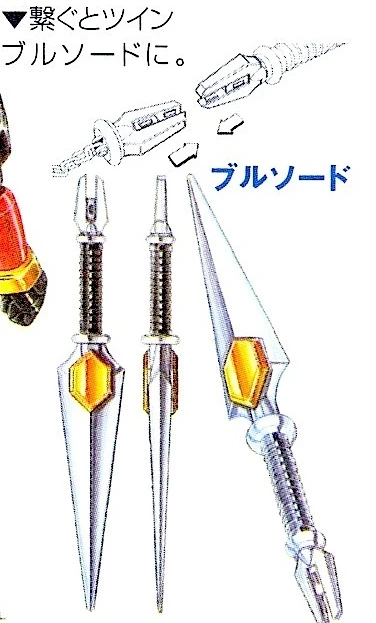
Two Bull Swords become the Twin Bull Sword.
Super Sentai Art Collection · MediaWorks, 2002 · printed p. 042 · PDF p. 50
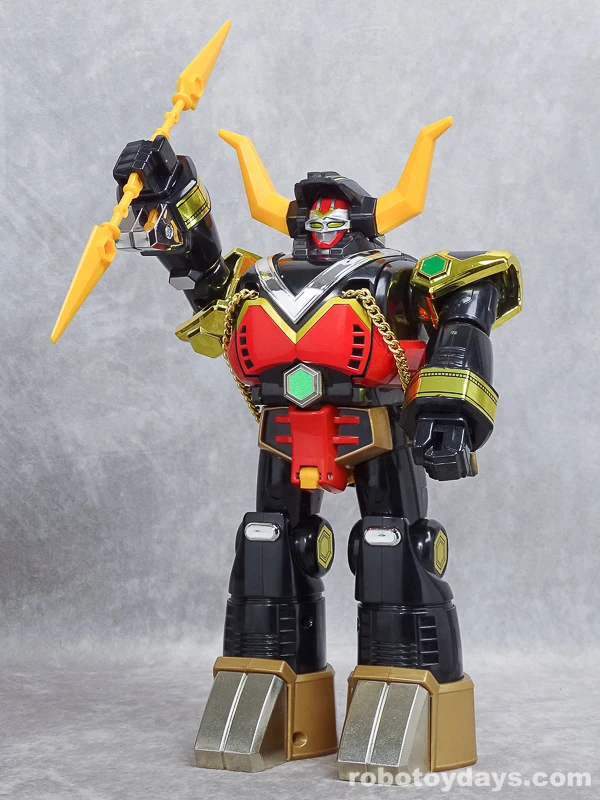
The accessory boundary
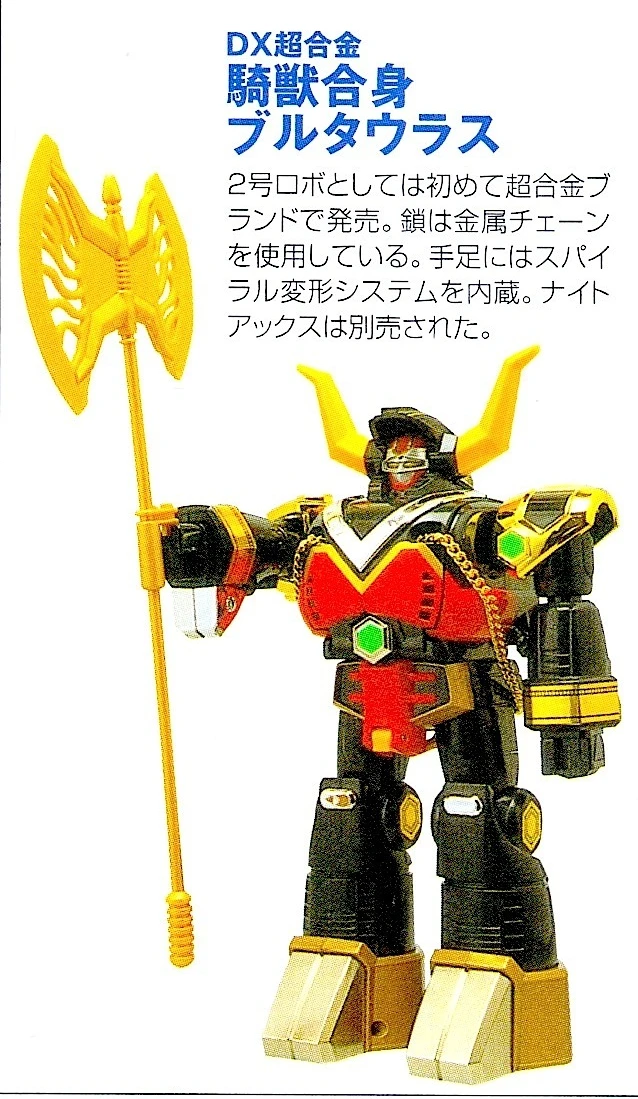
This artbook photograph shows the Knight Axe. The note explicitly says the axe was sold separately.
Super Sentai Art Collection · MediaWorks, 2002 · printed p. 042 · PDF p. 50
One last disappearing act
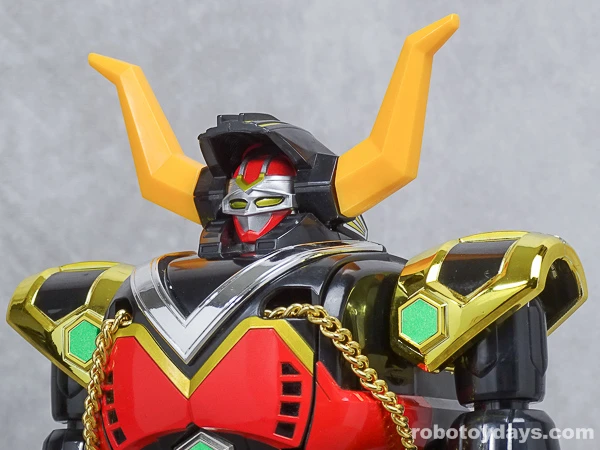
Watch the bull’s eyes. They are red when its face points forward. As the head shifts up, they disappear; the bull head becomes the helmet above a new, human-shaped face. The artbook calls attention to this small change, and the original DX close-ups show it happening.
The big trick hides an entire knight. The little one hides two eyes. Together they make the transformation feel complete: the rider is safely inside, the animal’s face has withdrawn, and a single warrior looks back. Artbook, p. 042.
Sources
- Super Sentai Art Collection — BullTaurus · MediaWorks · 2002 · page 042 · scan page 50
- Super Sentai Art Collection — Early Sketches: BullTaurus · MediaWorks · 2002 · page 144 · scan page 152
- Bandai Toy Catalog 1998 Vol. 2 — BullBlack and GoTaurus · Bandai · 1998 · page Unnumbered BullBlack / GoTaurus page · scan page 4
- RoboToyDays — original Japanese Bandai GD-12 DX BullTaurus photographs · RoboToyDays
- Bandai Candy staff — original DX mechanisms and their SMP successors · Bandai
Artwork and toy photographs are credited reproductions from published sources. This is a virtual exhibit.