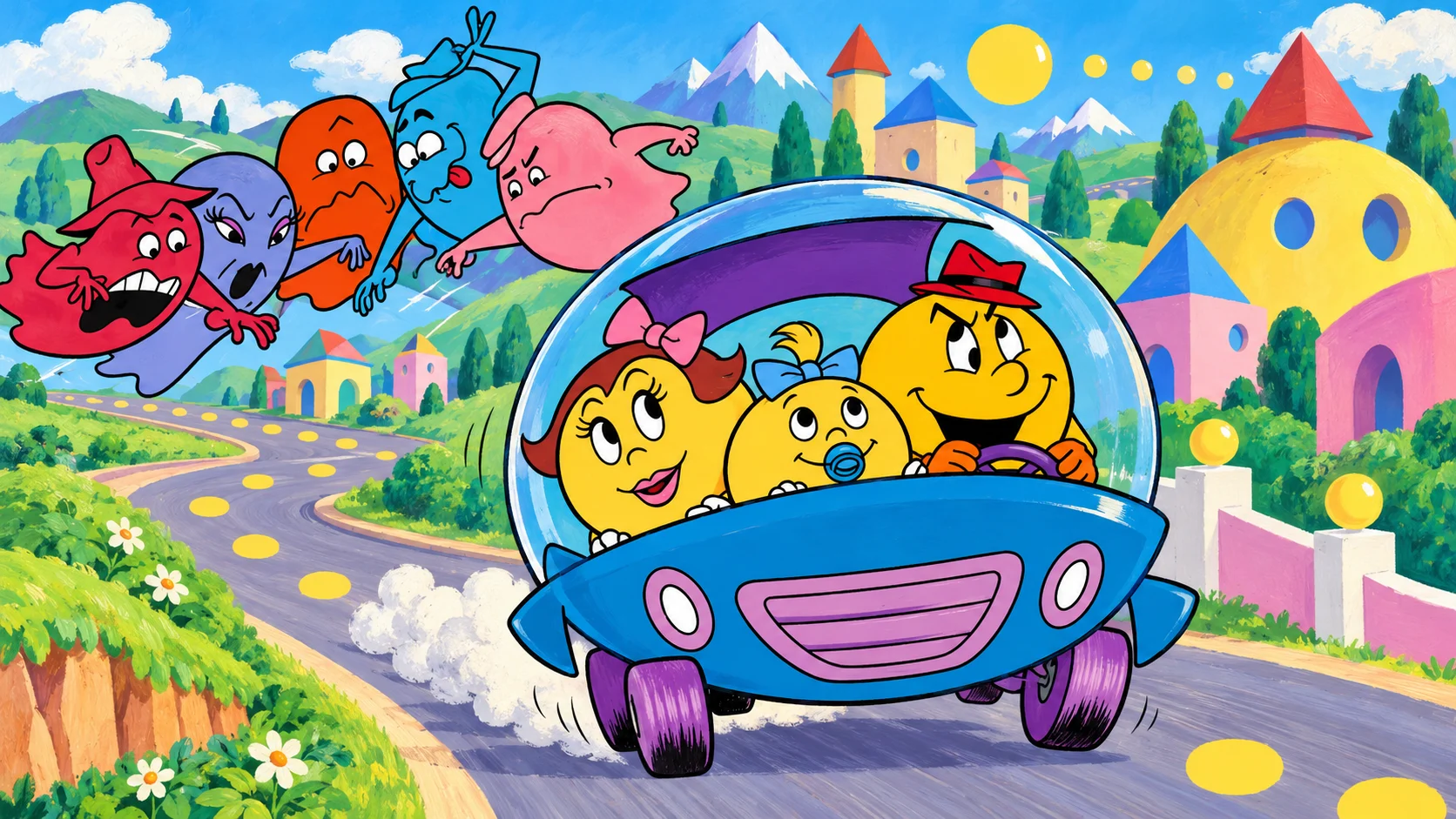
Hanna-Barbera's Pac-Man model sheets give the family a walk line, the ghosts a float line, and a growing cast a shared sense of scale. Five drawings show how the ensemble fits together.
AI editorial illustration · Rewind: Northwest Retro
The first sheet in a scanned set of Hanna-Barbera's 1986 Pound Puppies model sheets carries a handwritten log of revisions and additions dated June to August 1986. Read alongside the sheets it lists, it shows a cast of toy-line dogs gaining houses, props and rough poses over one summer of production.
AI editorial illustration · Rewind: Northwest Retro
Production drawings from Felix the Cat: The Movie carry two languages. Presentation boards dated '85 are lettered in English and credited to a German and an American company, while a model sheet signed 'Belay '87' is annotated in Hungarian, the language of the studio credited with the animation.
AI editorial illustration · Rewind: Northwest Retro
A leaping ninja survives a new title, and a robot adventure becomes a $29.95 offer. Two pieces of sales paper reveal how Japanese animated films were repackaged for American video shelves.
AI editorial illustration · Rewind: Northwest Retro
Four issues of the trade weekly Broadcasting follow ThunderCats from a Telepictures ad promising a September 1985 debut to a column of early Nielsen averages. Together they show the barter deal that brought a Rankin/Bass strip to local stations.
AI editorial illustration · Rewind: Northwest Retro
An 88-page scan of Goof Troop model sheets carries Walt Disney Television Animation archive stamps from March 1991, a year and a half before the series reached syndication. The notes show how the studio rebuilt Goofy and Pete for television, and one rough sheet gives Pete's dog the names Poopsie and Chainsaw.
AI editorial illustration · Rewind: Northwest Retro
A blue strip gives Batman’s black cowl its shape; a green streak cuts through the Joker’s hair; red and black trade places across Harley Quinn’s suit. Three painted models turn those choices into a reference an animator can follow.
AI editorial illustration · Rewind: Northwest Retro
A fraction beside Kitaro’s eye leads to a shadow table. Other notes switch shadows off, add a second stage or change an eye for a close-up—small instructions that keep an animated cast consistent.
AI editorial illustration · Rewind: Northwest Retro
Broken outlines let Snake disappear into white paper or a green jungle. An annotated equipment drawing brings every strap back into focus. Four plates show how much a picture can reveal—and how much it can leave for us to complete.
AI editorial illustration · Rewind: Northwest Retro
A ¥600 figure, a missile-firing action toy and a half-metre display piece offer three ways to own the same monster. Bandai’s 1999 catalog makes their different attractions visible.
AI editorial illustration · Rewind: Northwest Retro
K.A.R.R. meets a Japanese space sheriff, Doraemon meets UNO, and collector Barbie shares a catalog with ¥300 cars. A small customer-service line ties Bandai’s 2003 assortment together.
AI editorial illustration · Rewind: Northwest Retro
A 1995 official setting book for Game Arts' two Lunar games closes out its making-of section with thirty questions answered by Kei Shigema: what Shigema said about Hiro’s unknown parentage, why so many heroes have one parent or none, how much money Lemina saved, and whether Lunar would come back.
AI editorial illustration · Rewind: Northwest Retro
Lenneth’s braid, Kashell’s retakes, Lezard’s heavy clothes and Meltina’s greenish hair: the Yoshinari brothers’ comments reveal the decisions behind Valkyrie Profile’s finished character art.
AI editorial illustration · Rewind: Northwest Retro
A 1998 Gakken art book runs the Langrisser games in story order, III first, and opens each chapter with a short first-person note on designing its characters: what anime had taught him, what he changed, and what he had wanted to try for years.
AI editorial illustration · Rewind: Northwest Retro
Sixteen pages at the back of the 1983 Sears Christmas Wish Book offered seven game systems, and nearly every one came with a markdown, a rebate or a keyboard. Here's the console aisle, price tag by price tag.
AI editorial illustration · Rewind: Northwest Retro
In the 1983 Wish Book, a $4.99 case sits beside licensed Jedi figures with a revealing disclaimer. Compare it with the $19.99 C-3PO case, then follow the toys into a whole bedroom.
AI editorial illustration · Rewind: Northwest Retro
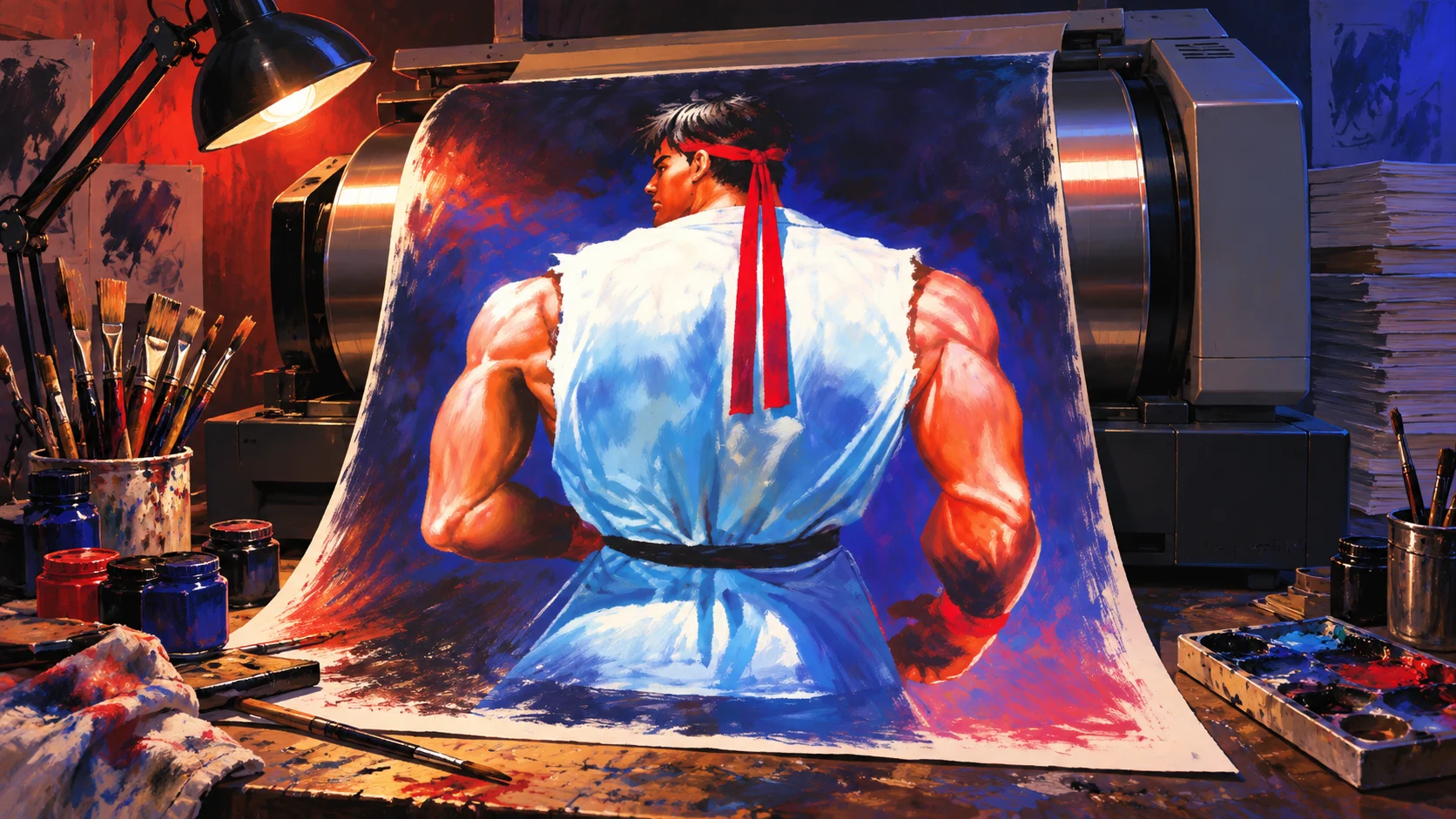
A 1995 Capcom art book shows Street Fighter II's key art in its makers' words: a Japanese poster begun over a Hokkaido New Year, an overseas promo painted in about three days and wrapped around a scanner drum, and a Super Turbo poster undone by Gouki.
AI editorial illustration · Rewind: Northwest Retro
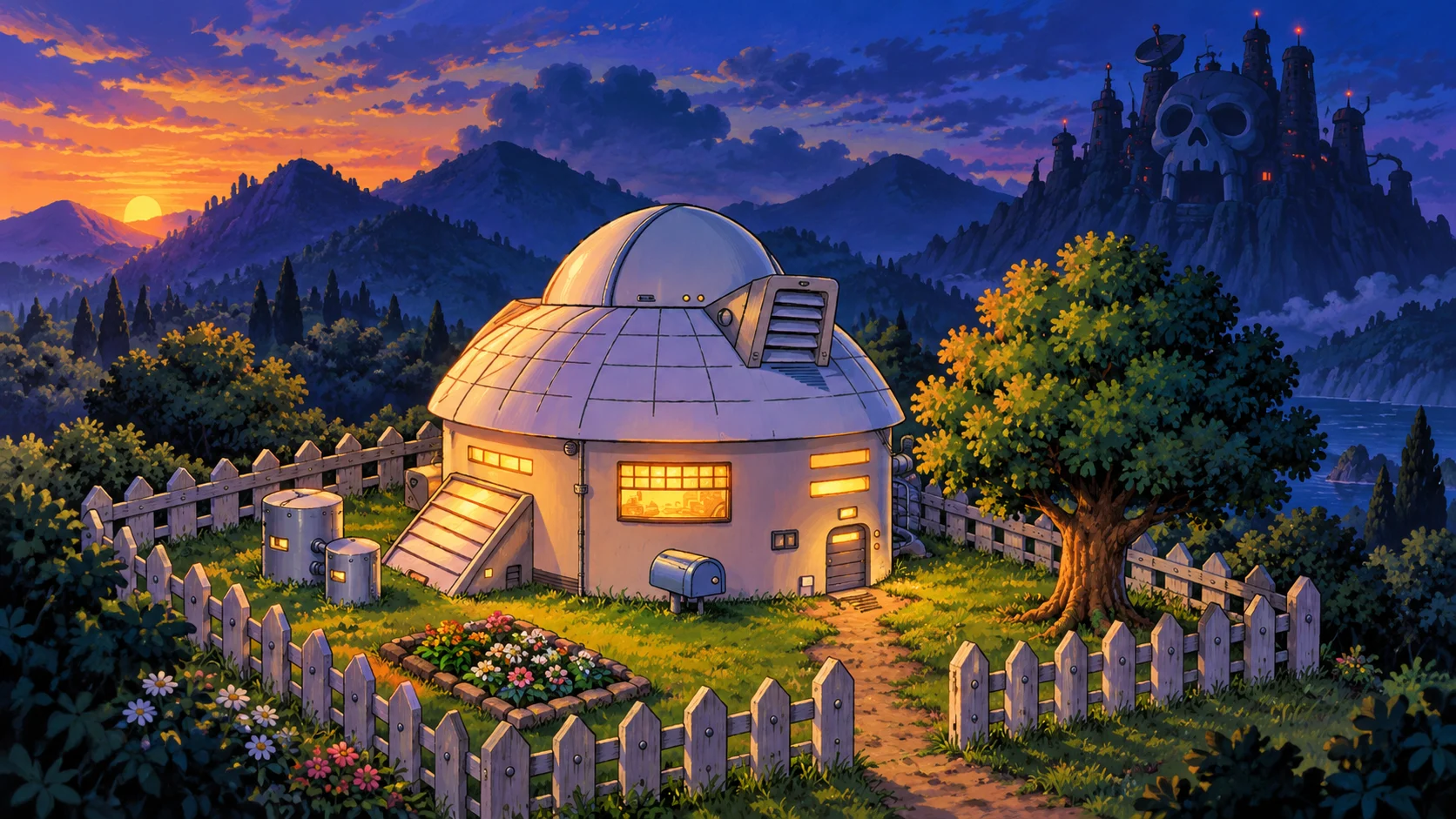
Near the back of a 1997 Rockman collector's book, four pages of black-and-white setting art show Dr. Light's lab as a domed house behind a picket fence, and a villain's castle whose design, the book says, "changes every time."
AI editorial illustration · Rewind: Northwest Retro
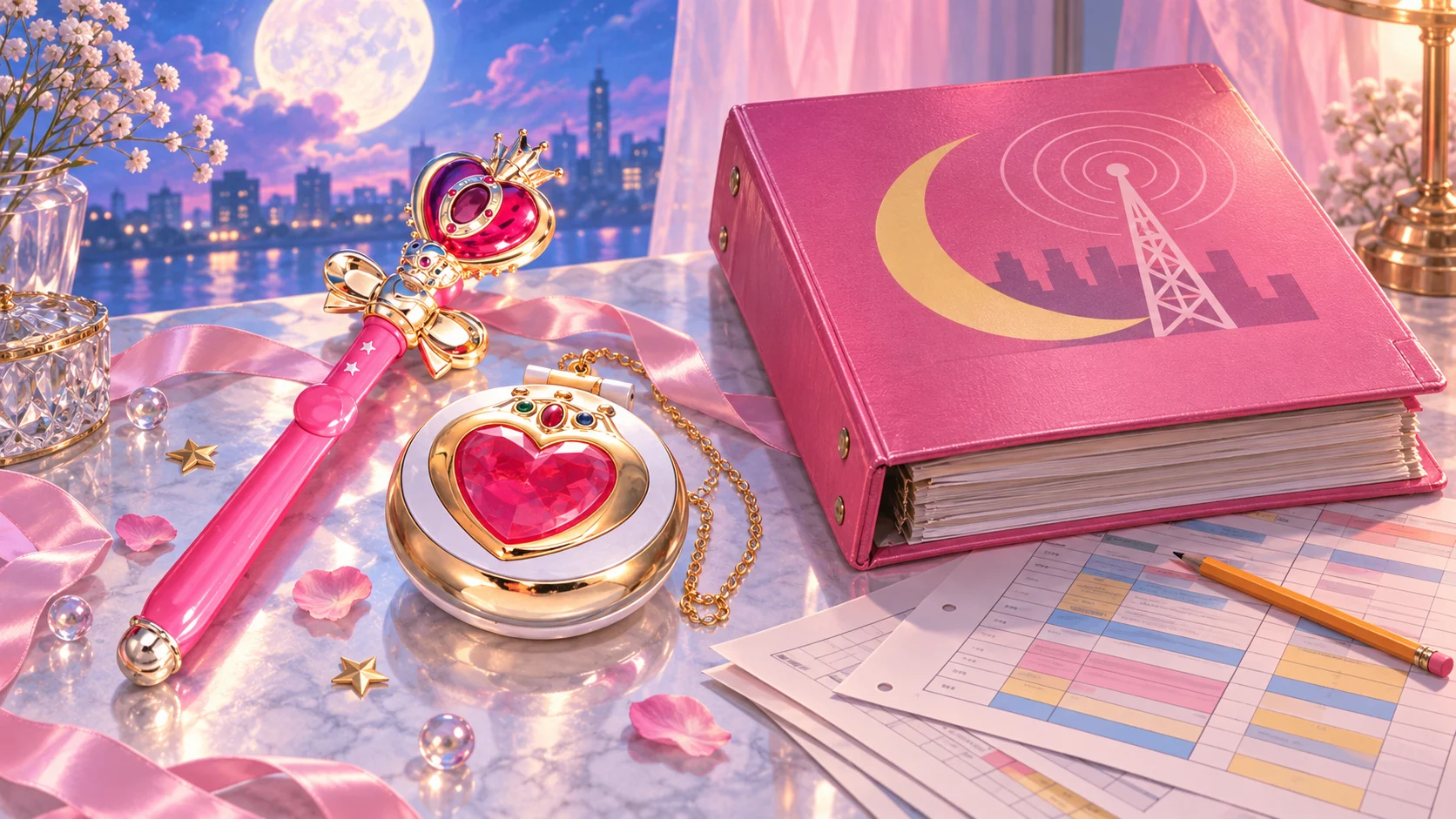
In May 1994, Bandai's Japanese catalogue listed Sailor Moon S wands, compacts and a grail. In 1995, DiC sent American TV stations a pink binder that started the show over from episode one, with Usagi renamed Serena.
AI editorial illustration · Rewind: Northwest Retro
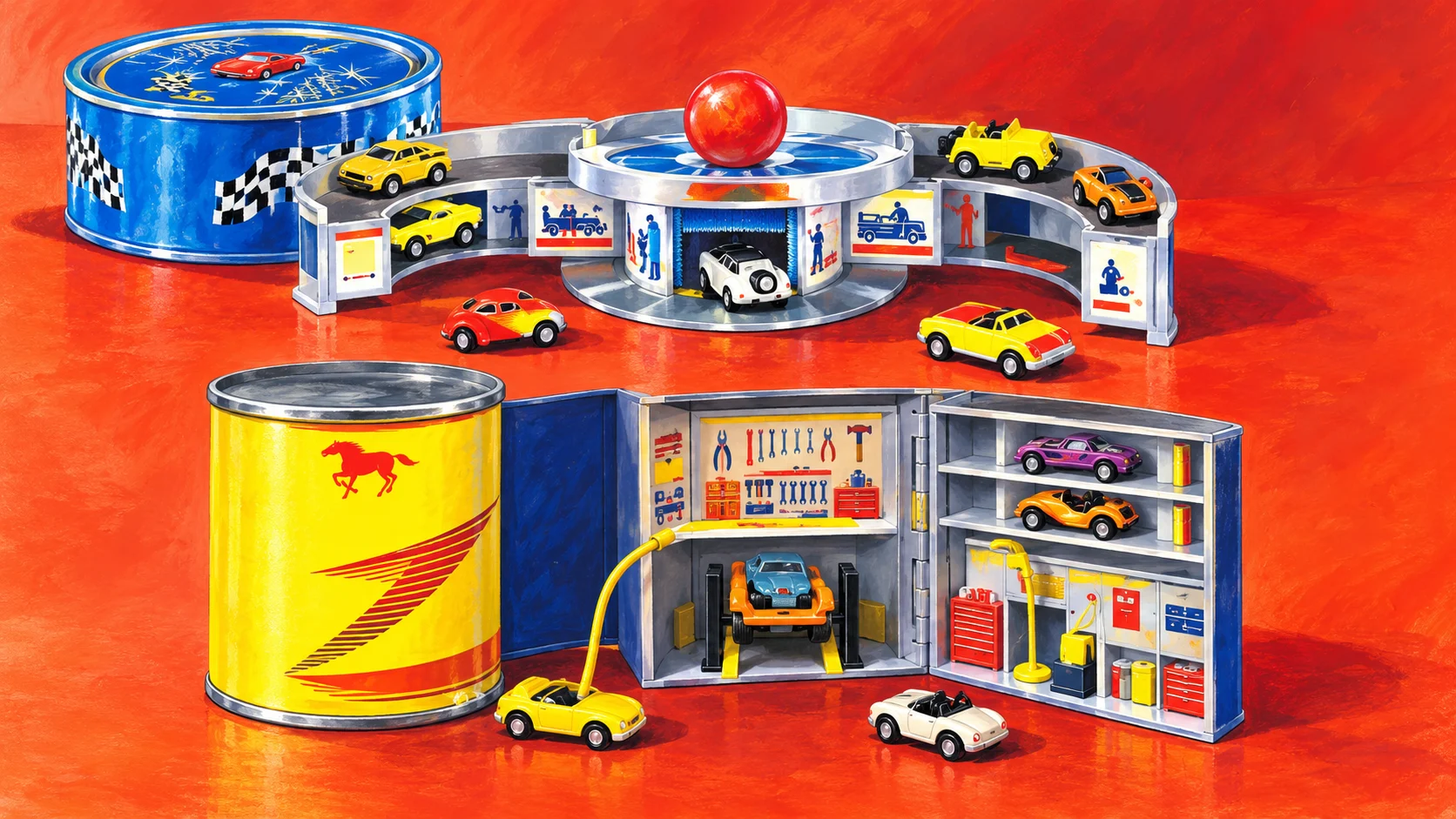
A wax tin becomes a car wash, a motor-oil can becomes a garage, and a gas can conceals a mountain road. Galoob's 1990 Micro Machines catalogue makes the container part of the toy.
AI editorial illustration · Rewind: Northwest Retro
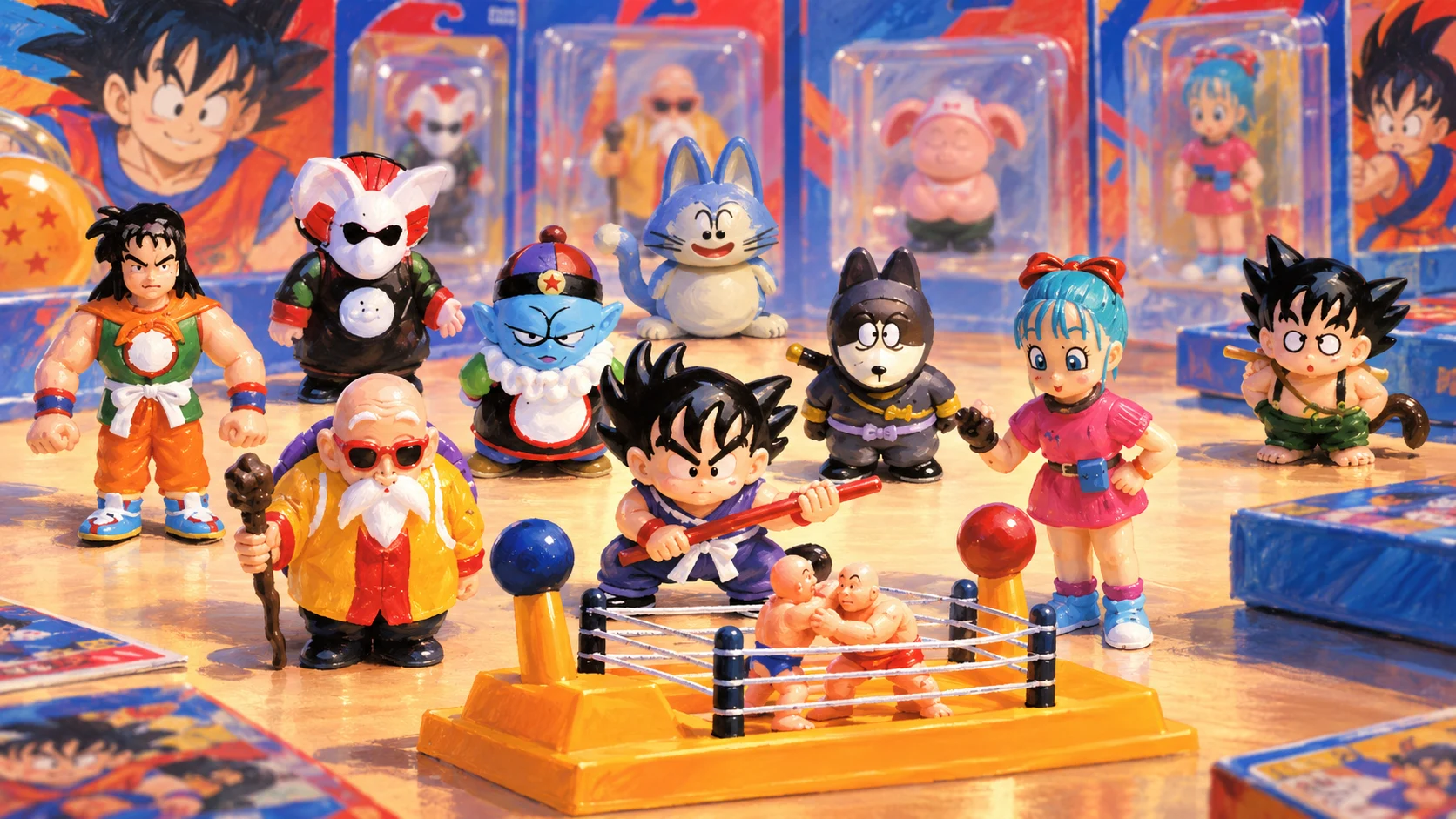
Bandai’s 1990 American catalogue paired painted collectibles with bare figures, a two-player wrestling ring and a video cassette: a cartoon world to watch and then set in motion.
AI editorial illustration · Rewind: Northwest Retro
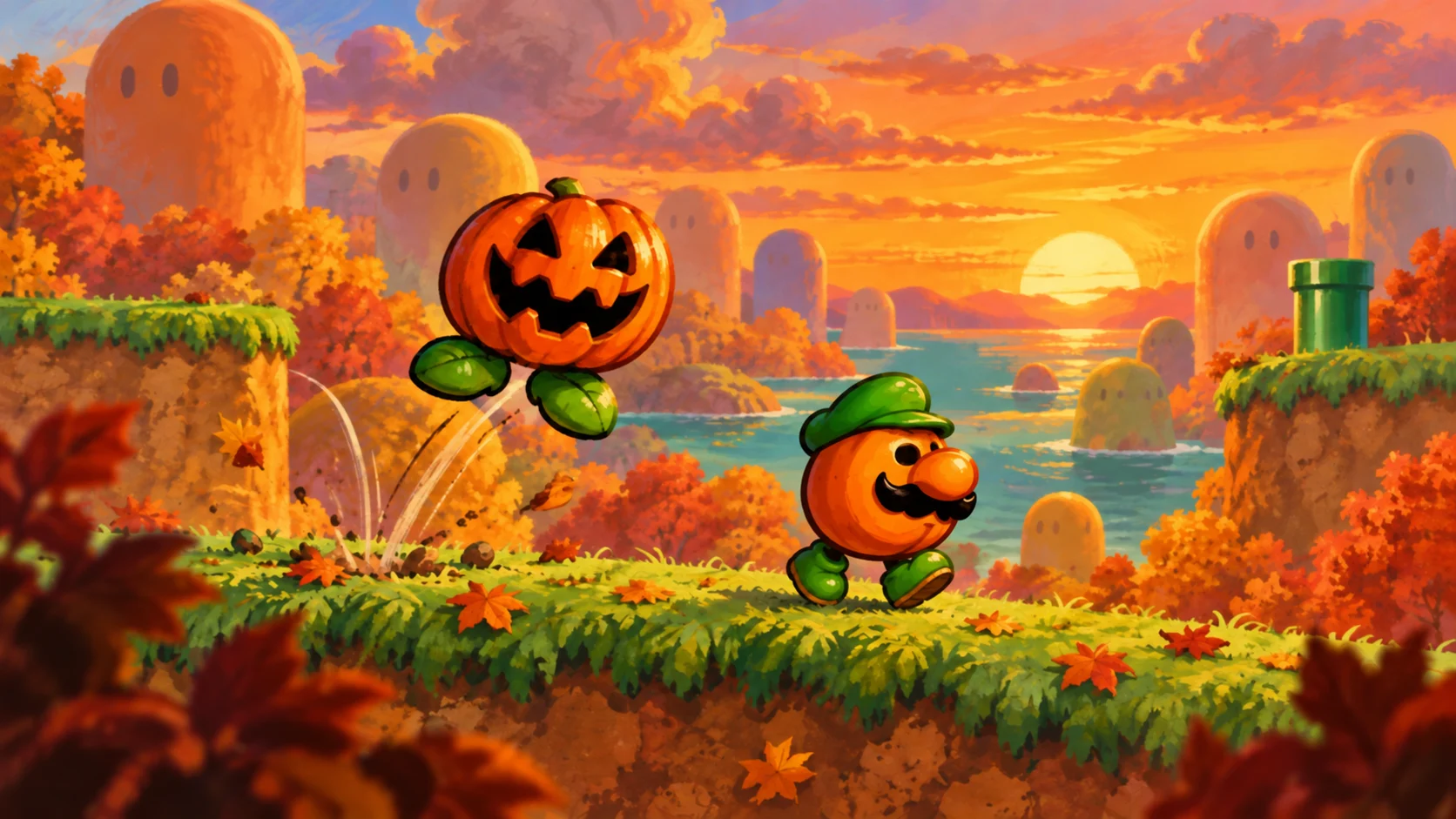
Pumpkin-headed plants, Koopas wearing Mario masks, and an autumn-colored Dinosaur Land: one of Super Mario World's best rewards makes a familiar game feel wonderfully strange again.
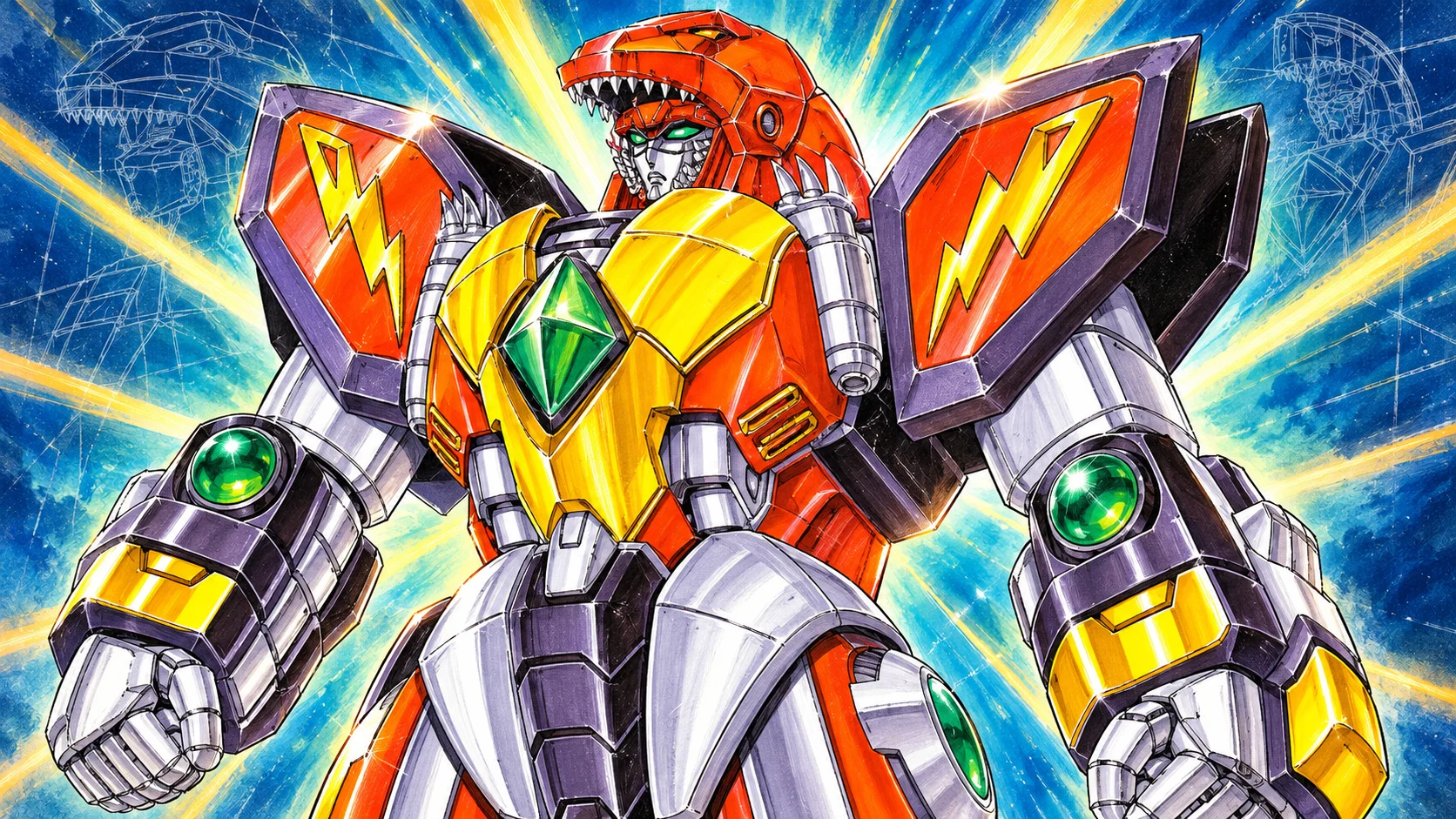
In a 2002 Japanese art book, a page of robots drawn for Power Rangers' 1994 rollout carries one blunt caption: they went unused, and Dairenoh arrived as Thunder Megazord instead.
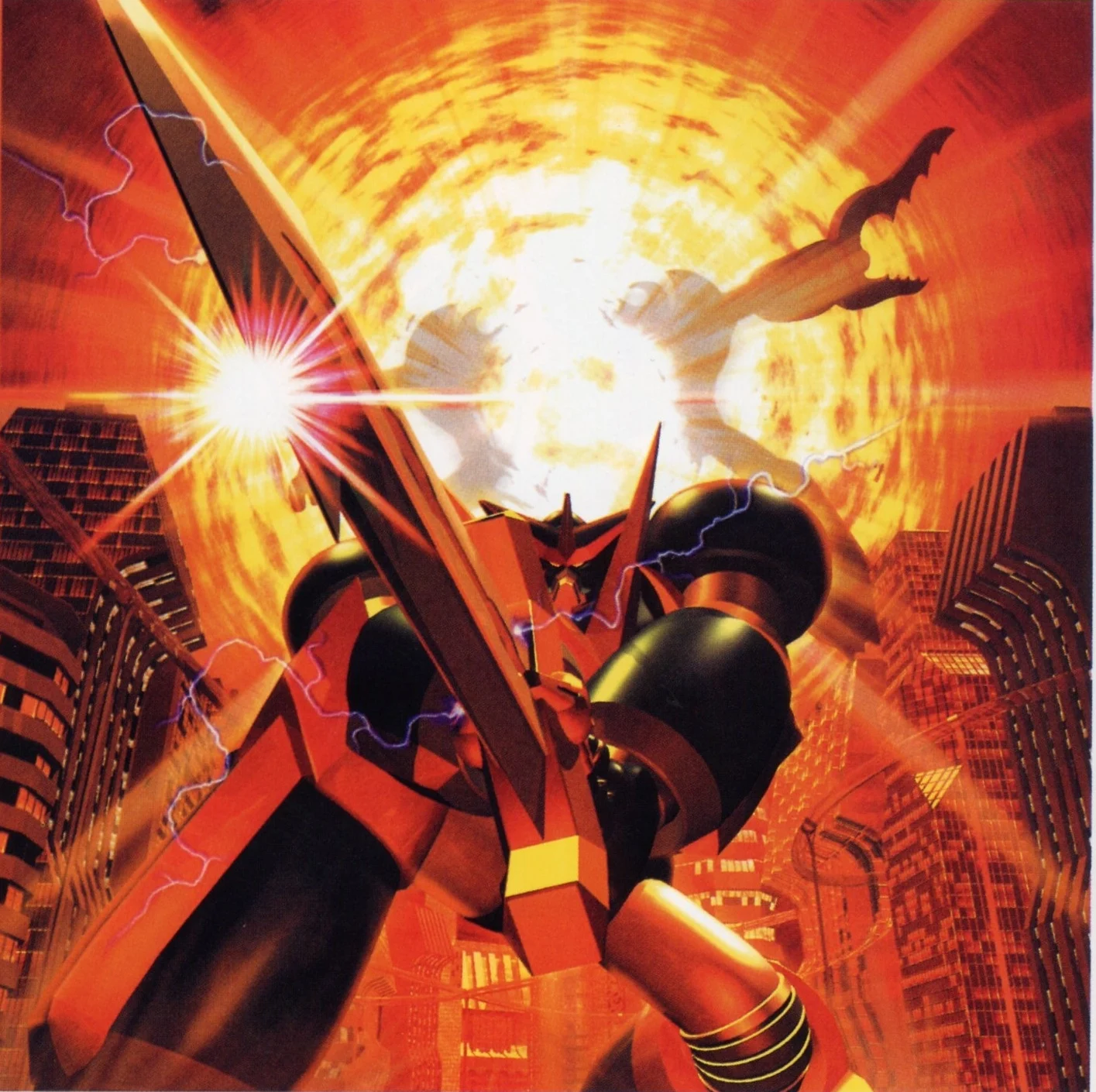
Capcom gave every giant robot its own kind of show. The paintings, pilots, and imaginary series logos in Capcom Design Works reveal the idea behind this exuberant arcade and Dreamcast fighter.