From the archive Dragon Ball
Dragon Ball in a Tiny Wrestling Ring
Bandai’s 1990 American catalogue paired painted collectibles with bare figures, a two-player wrestling ring and a video cassette: a cartoon world to watch and then set in motion.
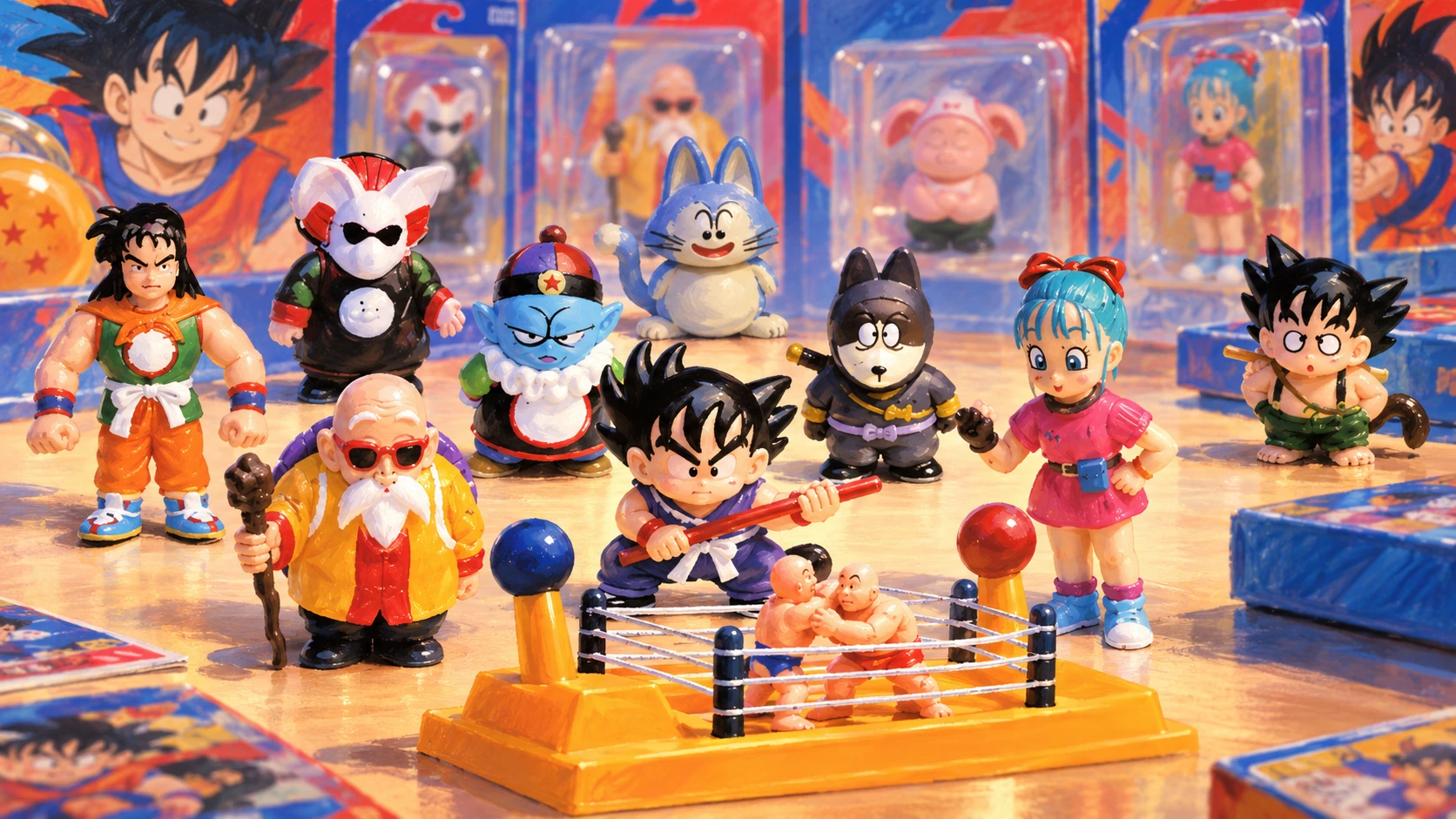
Original editorial illustration inspired by Bandai America’s 1990 Dragon Ball catalogue page. The historical page appears below.
AI editorial illustration · Rewind: Northwest RetroDesign reference ↗01 Historical source
Bandai America, Inc. · p. 015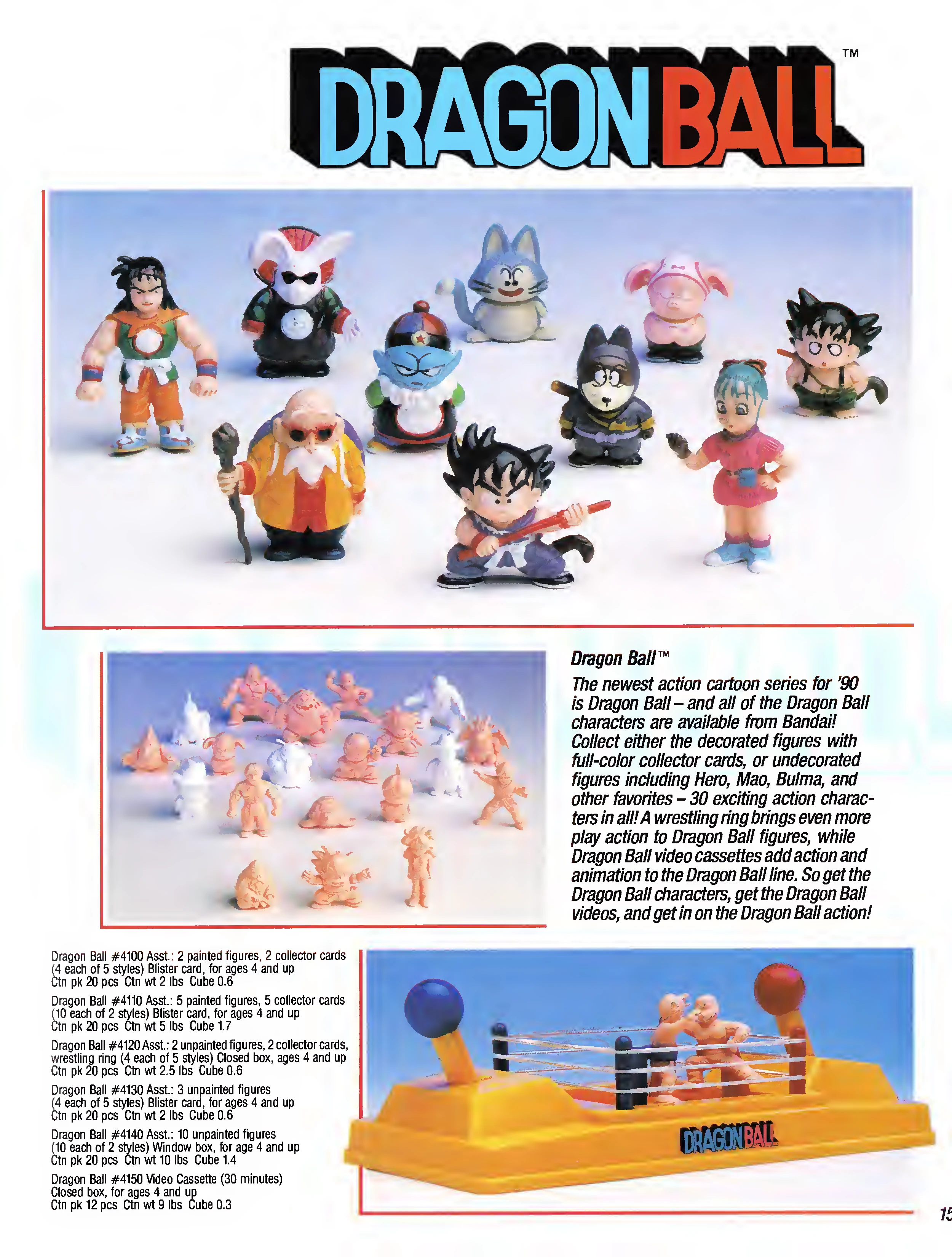
Dragon Ball in Bandai America's 1990 catalogue: painted figures, unpainted figures and the wrestling ring. p. 015.
Bandai America Toy Catalog 1990 · printed p. 015 · scan p. 17Dragon Ball’s 1990 American toy pitch ends in a tiny wrestling ring. Two unpainted figures face one another inside a yellow arena, with a red ball-topped control at one end and a blue one at the other. On the same page, Bandai offers painted figures, a crowd of undecorated ones and a thirty-minute video cassette. Watch the characters, collect them, then give them a fight of your own.
A cast in two finishes
Eleven painted figures occupy the biggest photograph. Below them, the undecorated figures appear in a loose, mostly flesh-colored group. Paint picks out clothes, faces and accessories in the first photograph; poses and silhouettes carry the second. It is a visible choice between individually colored characters and a larger crowd in one finish.
The packs reinforce that distinction. Painted figures come in twos or fives, each with a collector card. The unpainted figures come in threes or tens—or as two opponents with a ring. Bandai promises thirty characters across the range, naming Hero, Mao and Bulma in the copy without identifying which figures the first two names belong to.
Two sides of the ring
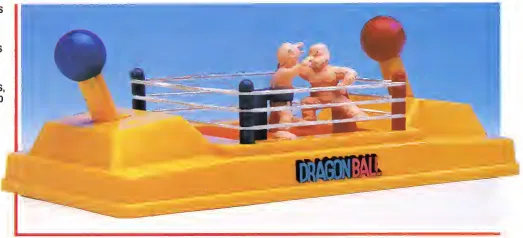
Two figures, opposing controls and a tabletop arena. Detail from Bandai America 1990, printed p. 015.
The red and blue controls loom over the tiny fighters. The ropes and posts frame an encounter, while the contrasting ends give two players somewhere to take sides. The figures that looked like a loose collection farther up the page now have a shared stage.
The ring set also includes two collector cards, linking it back to the painted packs. The distinction between collecting and playing stays loose: the bare figures get both the arena and the cards. That little overlap makes the page more interesting than a simple choice between a display figure and an action toy.
Watch, then play
The video cassette is the only listing without figures. Its thirty-minute running time offers another way to meet the cast, and the sales copy explicitly puts the videos and toys together. The catalogue is pitching the moving cartoon and the objects on the shelf as parts of the same experience.
That connection gives the ring its appeal. On a screen, someone else stages the encounter; on the tabletop, the opposing red and blue controls invite the players to take over. Among all the characters pictured, the small pair inside the ropes has the clearest job to do.
Read the catalogue’s product listings
- #4100: two painted figures and two cards, blister card.
- #4110: five painted figures and five cards, blister card.
- #4120: two unpainted figures, two cards and wrestling ring, closed box.
- #4130: three unpainted figures, blister card.
- #4140: ten unpainted figures, window box.
- #4150: thirty-minute video cassette, closed box.
Source note
Bandai America Toy Catalog 1990, printed p. 015 (scan p. 17). The page and ring detail are rendered from the complete layered PDF; the expandable list restates the tiny product specifications. The photographs show the ring’s configuration, not its internal mechanism. The catalogue documents an offer to dealers, without establishing retail availability or a particular television broadcast. Historical material credited to Bandai America; the separate editorial cover is an illustration.
Sources
- Bandai America Toy Catalog 1990 — Dragon Ball · Bandai America, Inc. · 1990 · page 015 · scan page 17
Artwork and toy photographs are credited reproductions from published sources.