From the archive Metal Gear Solid
The Edges of Snake: Looking Closely at Metal Gear Solid Art
Broken outlines let Snake disappear into white paper or a green jungle. An annotated equipment drawing brings every strap back into focus. Four plates show how much a picture can reveal—and how much it can leave for us to complete.
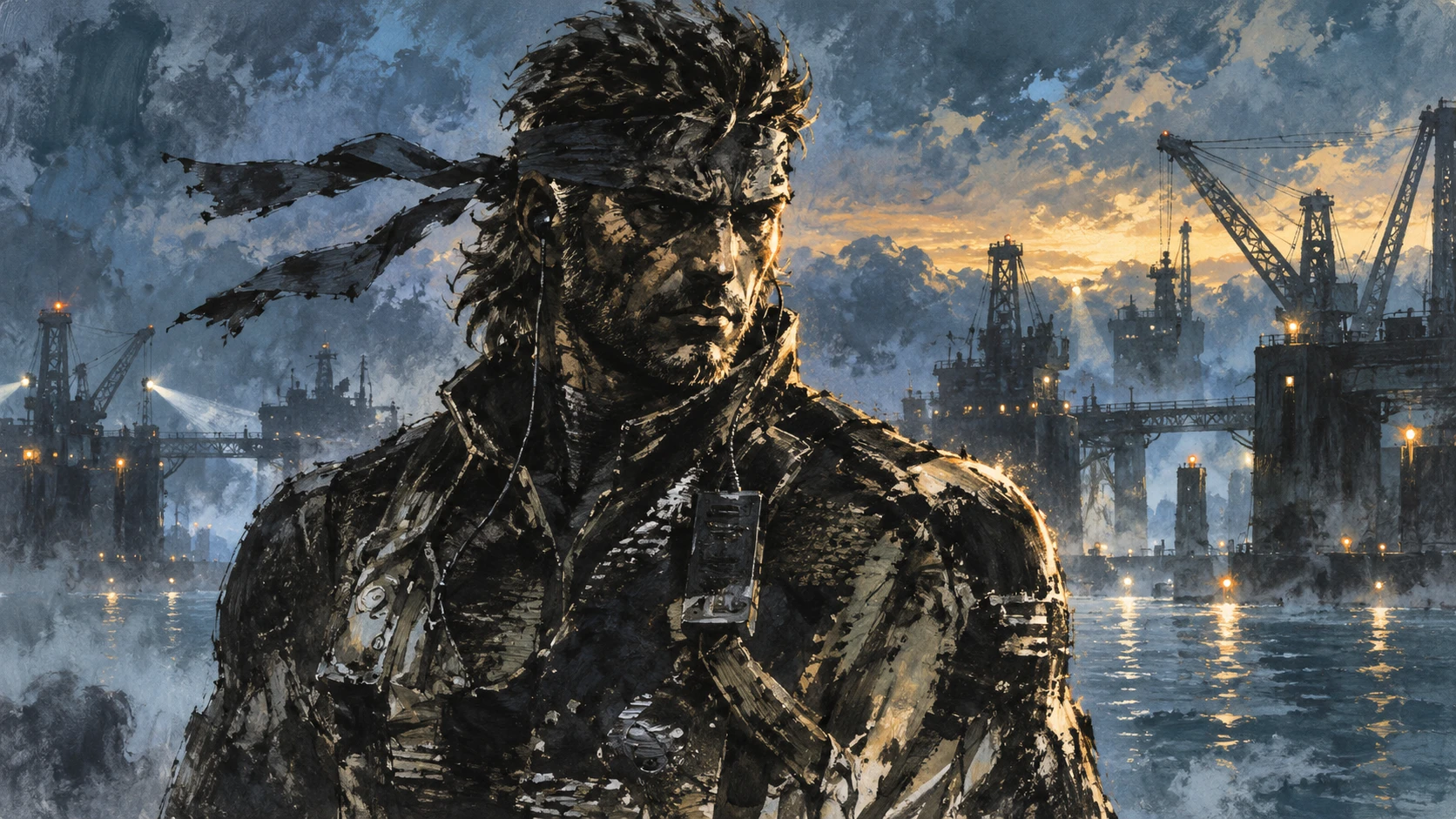
New editorial illustration inspired by the historical material below; the source images remain credited separately.
AI editorial illustration · Rewind: Northwest RetroDesign reference ↗01 Historical source
Internet Archive (scan host) · scan p. 1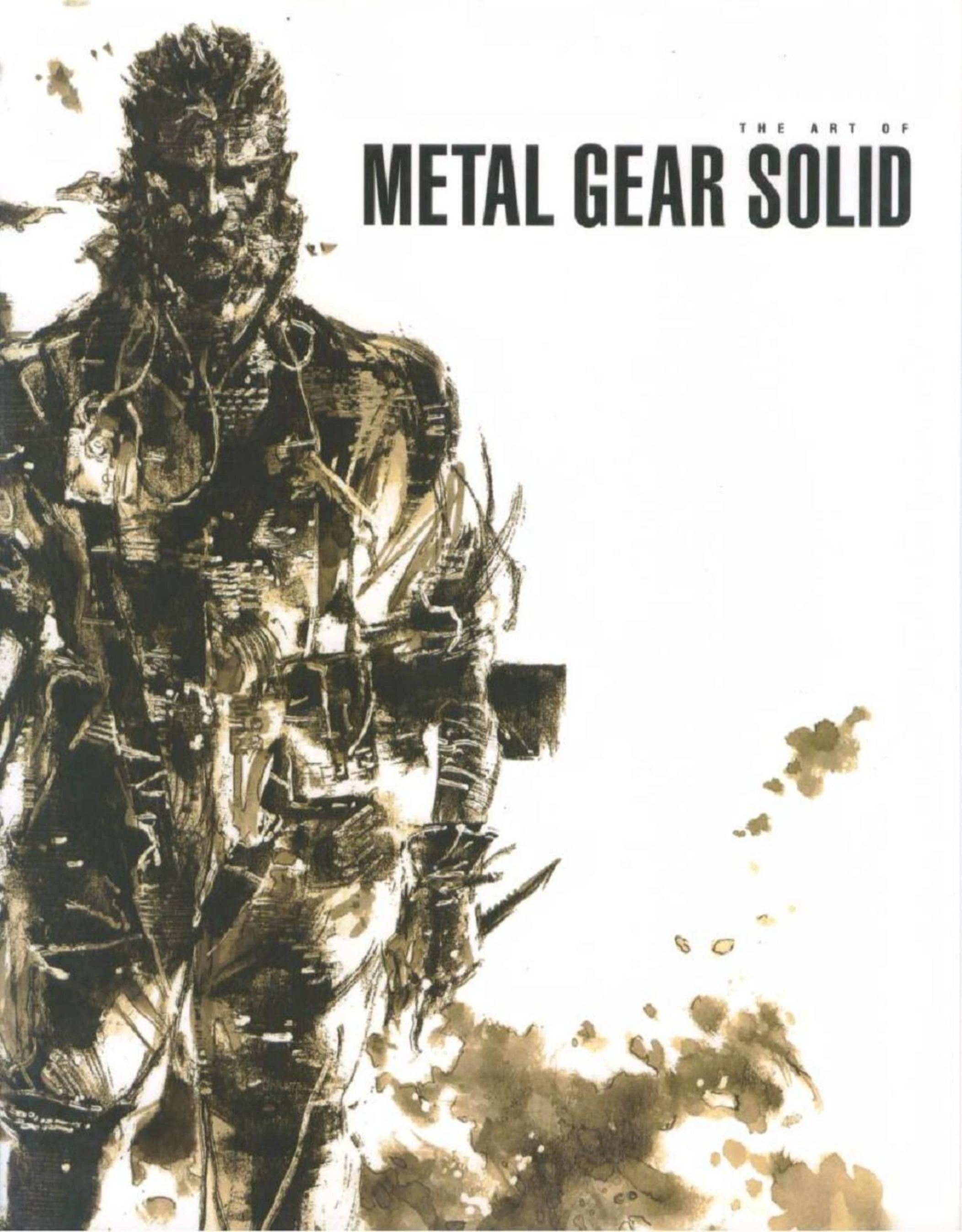
The Art of Metal Gear Solid cover: ink-wash Solid Snake with title THE ART OF METAL GEAR SOLID.
Metal Gear Solid artwork · Konami / Yoji Shinkawa · scan via Internet ArchiveOn the cover of The Art of Metal Gear Solid, the edge to Snake’s right keeps breaking apart. A shoulder becomes a few curved strokes. Equipment at his waist dissolves into brown marks. Below, the figure and a spreading wash meet without a clean dividing line.
Yet the soldier is easy to recognize. The bandana, headset, stern face and loaded torso give us enough to complete him. The drawing is selective about where it becomes precise. Four plates in this scanned collection make that selectivity worth looking at closely.
An outline you finish yourself
The cover’s face is dense with dark marks, while the white to its right is almost empty. That contrast sends attention back to the head.
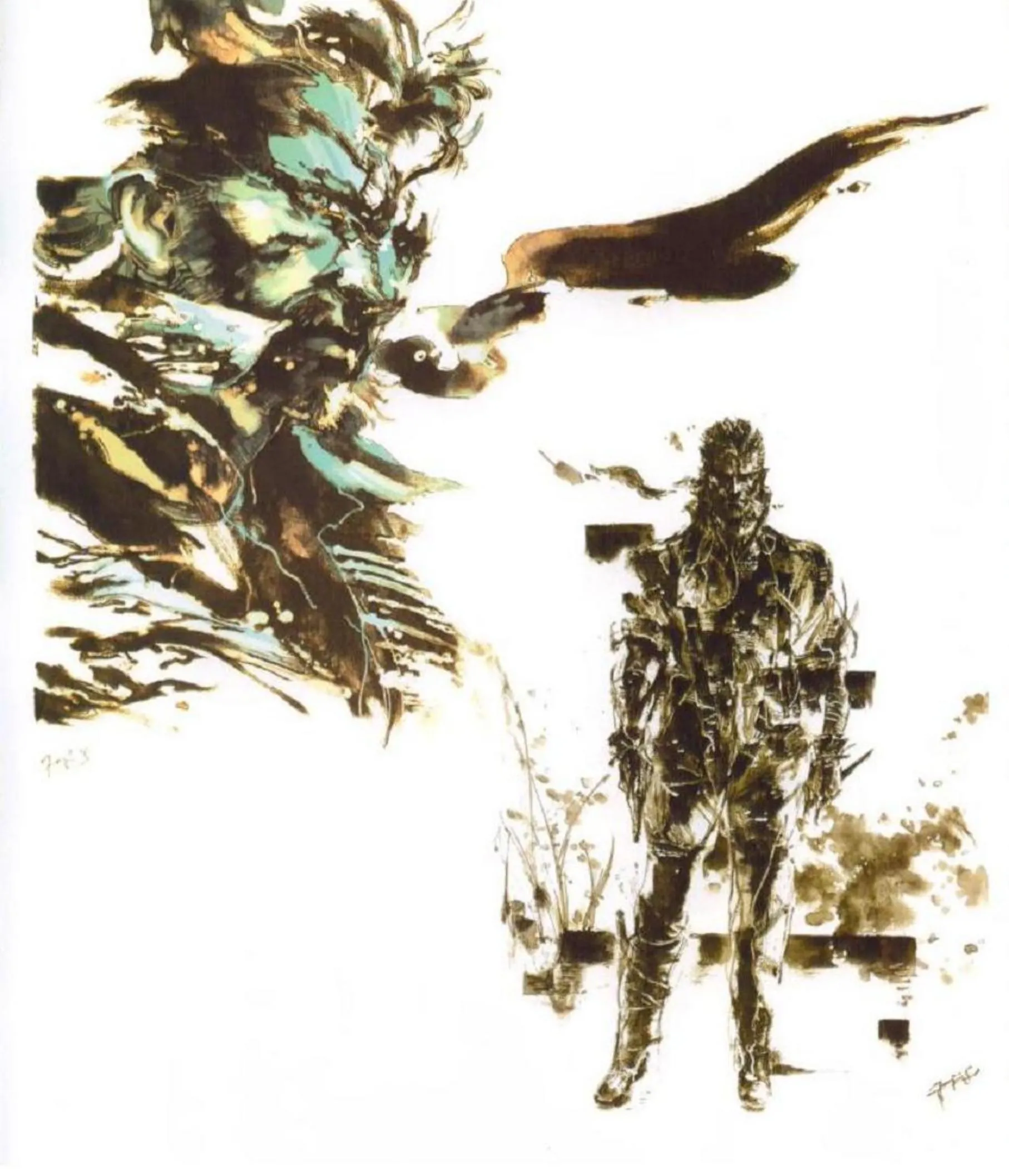
A profile and standing figure test the same brushwork at two scales. Artwork: Konami / Yoji Shinkawa; The Art of Metal Gear Solid, PDF p. 4.
Page 4 makes the effect easier to compare. The large profile gives room to the nose, brow and folds around the neck, but horizontal strokes break up the back of the head and clothing. Beside it, the smaller standing figure remains legible even though the boots and equipment trail into loose marks.
The bandana tails help both images: a few long strokes point away from the head and give the surrounding white a direction. Empty space becomes part of the pose. The picture does not need to fill every gap to keep its character together.
When the figure shares the jungle’s color
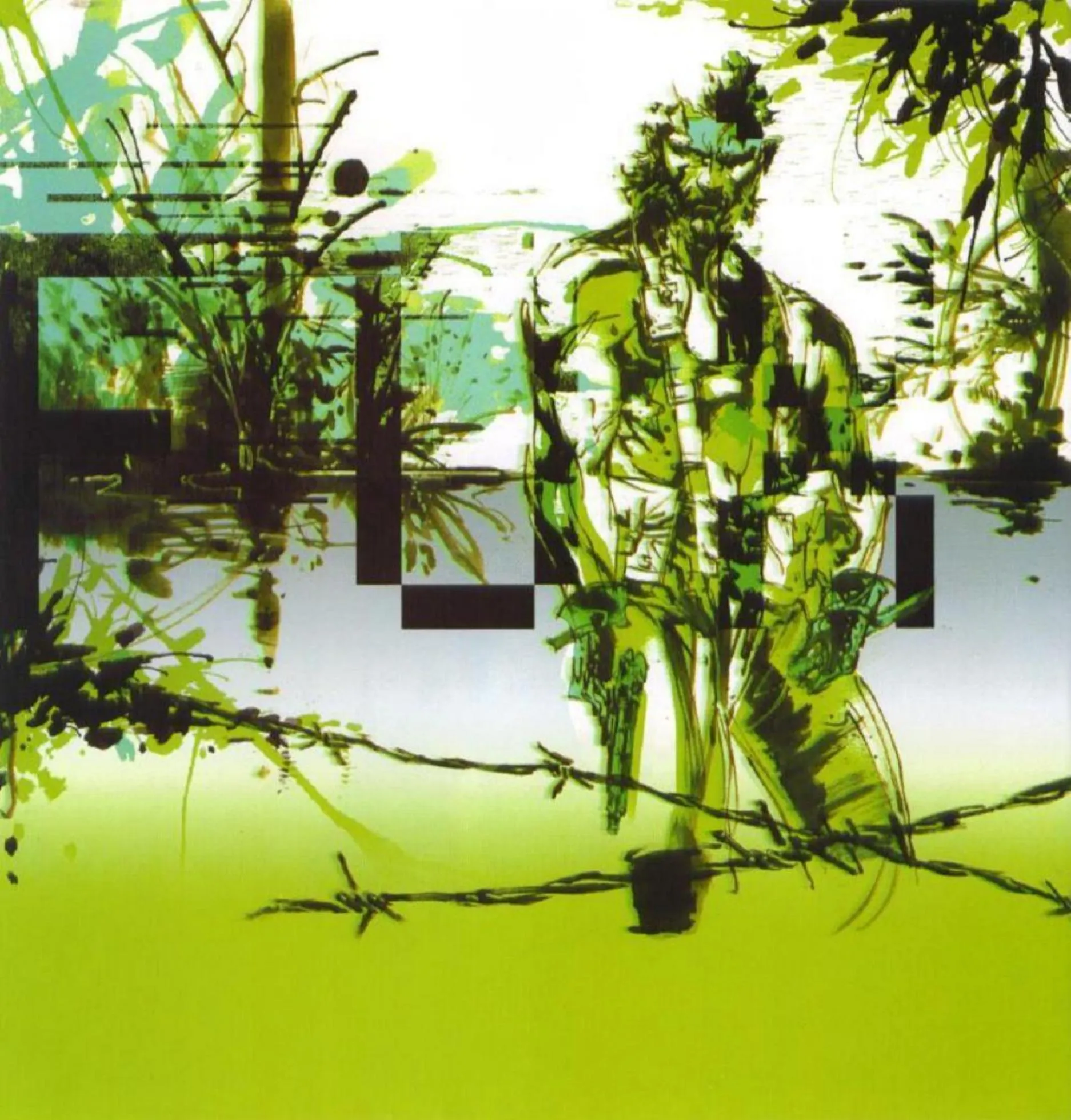
Green crosses the boundary between soldier and setting. Artwork: Konami / Yoji Shinkawa; PDF p. 3.
The jungle plate uses a similar broken contour in a much busier setting. Green passes through the clothing and surrounding washes; dark strokes describe both the figure and the growth around him. The soldier shares the picture’s colors instead of standing in front of a separately colored backdrop.
Look at the face and equipment, then let your eye move outward. Thin lines hold together enough of the body to find it, while broad splashes make the edges less certain. The black rectangular blocks add a different kind of mark: hard, straight interruptions among the brush strokes.
The barbed wire supplies a firm foreground. It crosses in front of the soldier and runs across the page, giving the loose washes a readable depth. Where the cover uses white to separate the figure, this plate uses overlapping marks to draw him into a place.
A boot sole needs a different kind of drawing
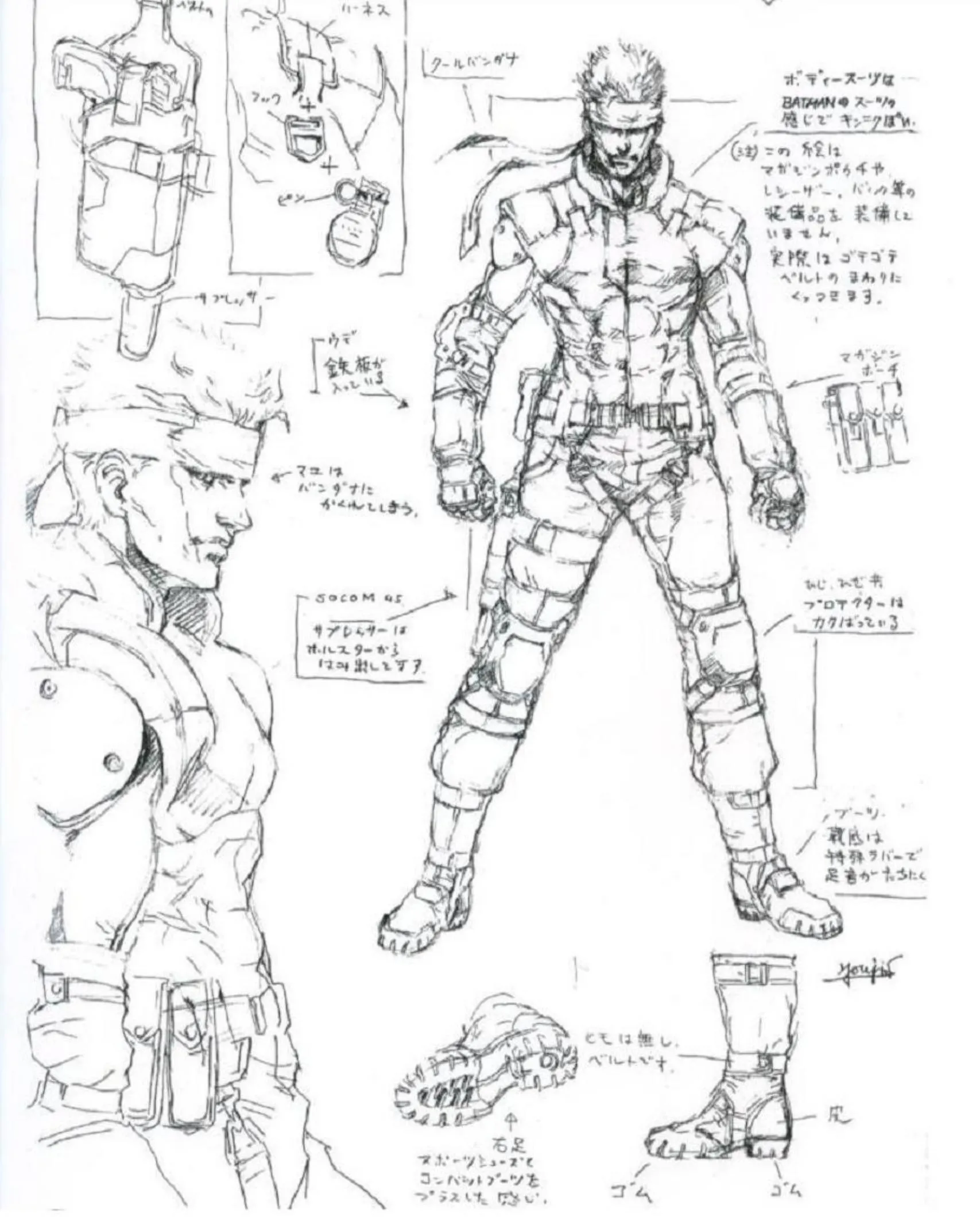
Separate views make the equipment explicit. A Yoji mark appears at lower right. Artwork: Konami / Yoji Shinkawa; PDF p. 20.
The equipment sheet asks for slower, more practical looking. A full figure establishes where the straps and protective pieces sit. Smaller drawings isolate a holster, pouches and a boot. The underside of the sole gets its own view—information a standing portrait would hide.
Here the white around the figure leaves room for annotations and separate parts. Lines connect notes to particular areas, and the equipment is pulled apart on the page so each piece can be understood. We can see that explanatory structure without translating every handwritten instruction.
Return to the cover after the boot sole. Its gaps now feel especially deliberate as a visual choice: the picture can leave an edge unfinished because the face, stance and equipment already tell us where to look. The equipment sheet rewards finding the small part. The portrait rewards finding the person among the marks.
Source note
These are visual readings of PDF pages 1, 3, 4 and 20 in the 96-page scan titled The Art of Metal Gear Solid. They do not establish the artist’s stated intentions or a production sequence. The uploader’s filename includes “BradyGames - 2004,” but the inspected pages do not establish an imprint or publication date. Original excerpts are reproduced unchanged; the handwritten Japanese notes are not translated here. The opening editorial illustration is labeled separately from these historical images.
Sources
- The Art of Metal Gear Solid — original 96-page scan; imprint/date unestablished · Internet Archive (scan host)
Artwork and toy photographs are credited reproductions from published sources.