From the archive GeGeGe no Kitaro
W Over 2: Reading the 1985 GeGeGe no Kitaro Color Design Sheets
A fraction beside Kitaro’s eye leads to a shadow table. Other notes switch shadows off, add a second stage or change an eye for a close-up—small instructions that keep an animated cast consistent.
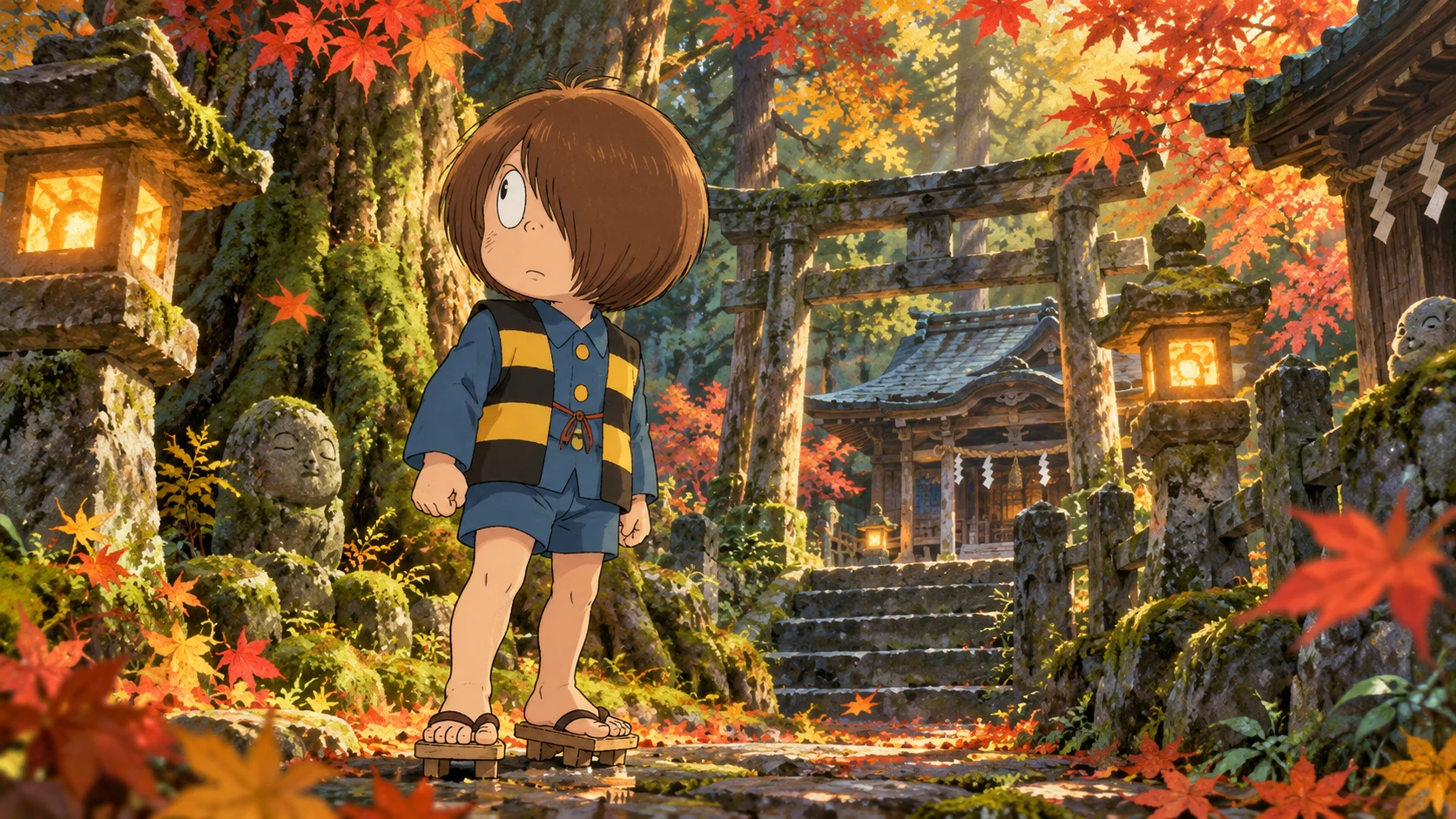
New editorial illustration inspired by the historical material below; the source images remain credited separately.
AI editorial illustration · Rewind: Northwest RetroDesign reference ↗01 Historical source
Internet Archive · Source image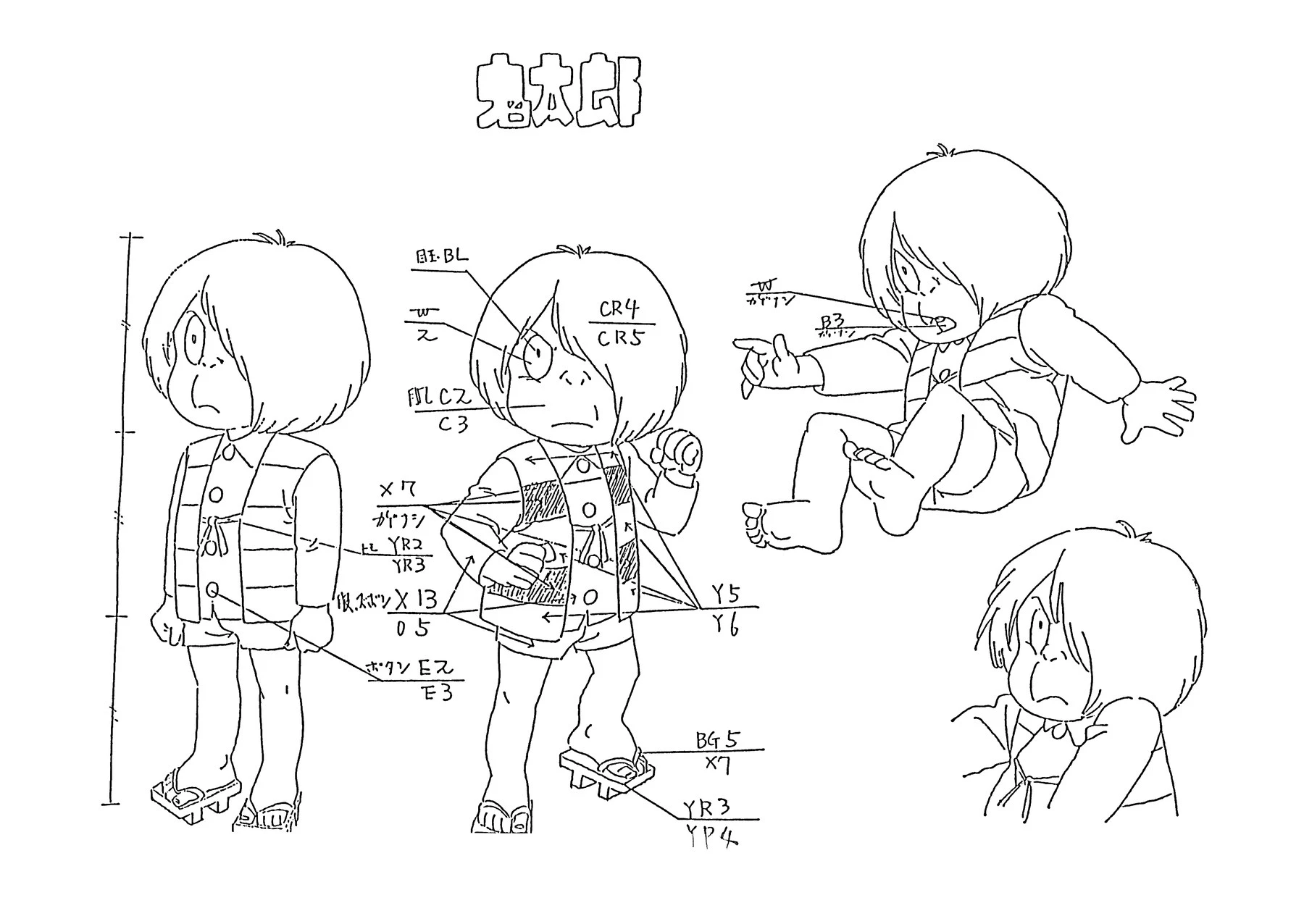
Line-art color design sheet of Kitaro in four poses, standing beside a height scale, with a raised fist, leaping, and in close-up, with leader lines to paired codes such as CR4 over CR5 and Y5 over Y6 and a 鬼太郎 logo at the top.
GeGeGe no Kitaro (1985) color design sheet © Mizuki Production / Toei Animation. Scan: Internet Archive item gggnk-1985-main-chara-color-settei, file '01 Kitaro.jpg' (uploader-scanned and cleaned). · IA file '01 Kitaro.jpg'The fraction beside Kitaro’s eye is not arithmetic. W over 2 is a compact instruction—and a second sheet helps explain how to read it.
Match the drawing to the table
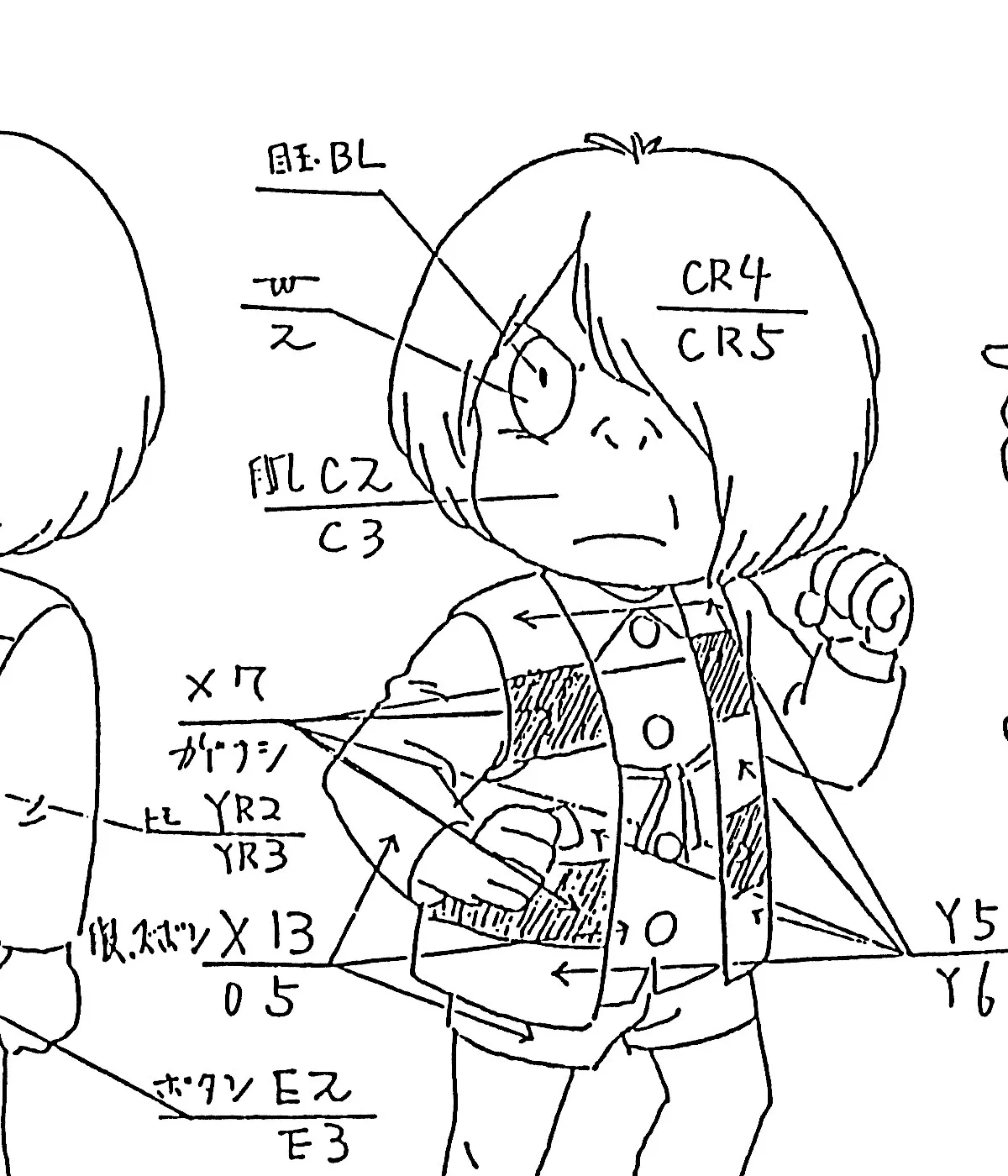
Kitaro’s drawing assigns pairs of codes to specific areas. Find W over 2 beside the eye, then C2 over C3 for skin. GeGeGe no Kitaro · 1985-series color-design scans.
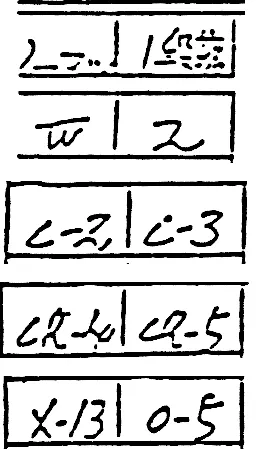
Four details stacked at native scale: W → 2, C2 → C3, CR4 → CR5 and X13 → O5. The first retains the column headings. 1985-series color-design scans.
The table is headed as a shadow list. Its normal-color column pairs W with 2, C-2 with C-3, and CR-4 with CR-5—the same pairs found on Kitaro’s eye, skin and hair. That match supports reading the upper code as the normal color and the lower one as its shadow counterpart.
The codes do not always advance neatly to the next number. X-13 becomes O-5, crossing from one letter group to another. A painter needed the specified relationship, not a guess that the next pot would be darker. The scans name no paint manufacturer, so the letters remain codes rather than identified commercial colors.
Inspect the complete shadow table
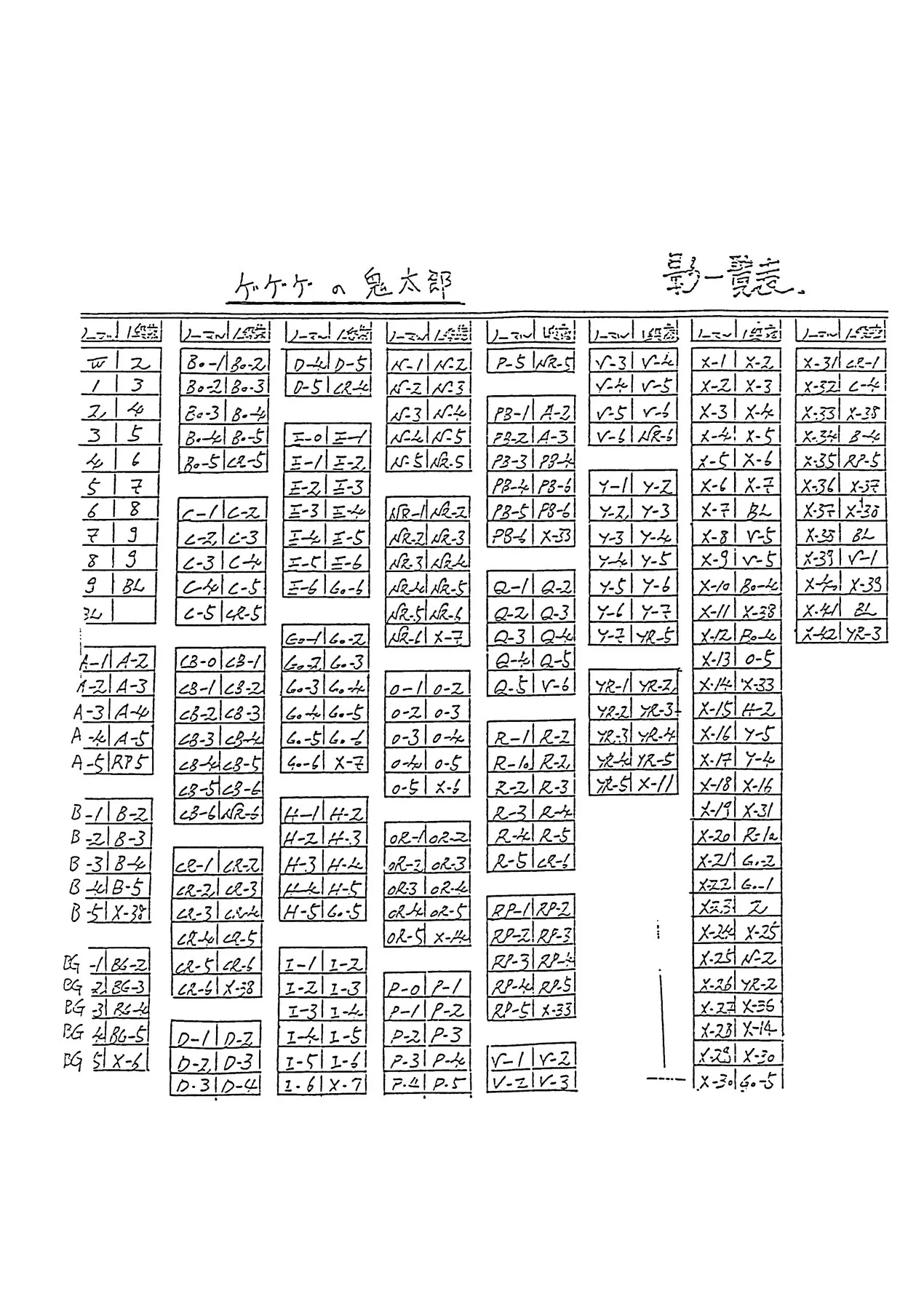
The complete table preserves the cross-family pairs as well as the simple adjacent numbers. GeGeGe no Kitaro · 1985-series color-design scans.
A rule can say to stop
Kitaro’s dark vest stripes carry X7 with a note meaning no shadow. Other areas receive two codes, but this one explicitly declines the second treatment. The exception is written where it will be used, beside the drawing.
Medama-Oyaji, the eyeball character, goes further in the other direction. The back of his round head receives a shadow note and a second-step shadow note. The sheet asks for more than a single normal/shadow pair.
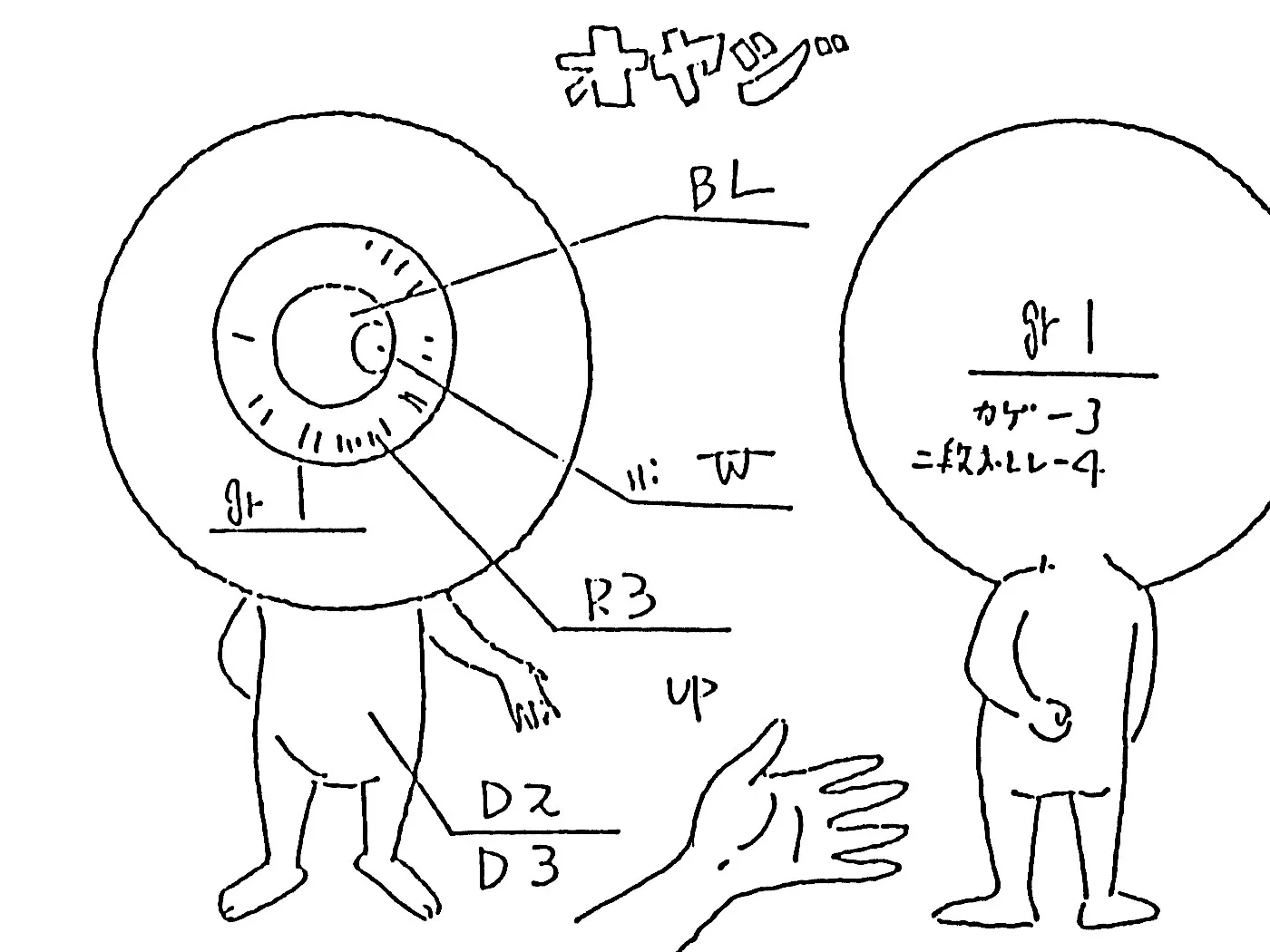
Medama-Oyaji’s back view adds a second shadow level. The handwritten instructions distinguish it from the ordinary two-code pairs. GeGeGe no Kitaro · 1985-series color-design scans.
Together these examples show three possibilities in the same working system: a paired color, an instruction to omit shadow, and an extra shadow stage. The drawings are doing more than naming colors.
The camera changes the rule
Yumeko’s sheet gives another kind of exception. In a long shot, her eyes use BL and W. For a close-up, a separate diagram adds a CR5 iris ring. The additional detail belongs to the closer view.
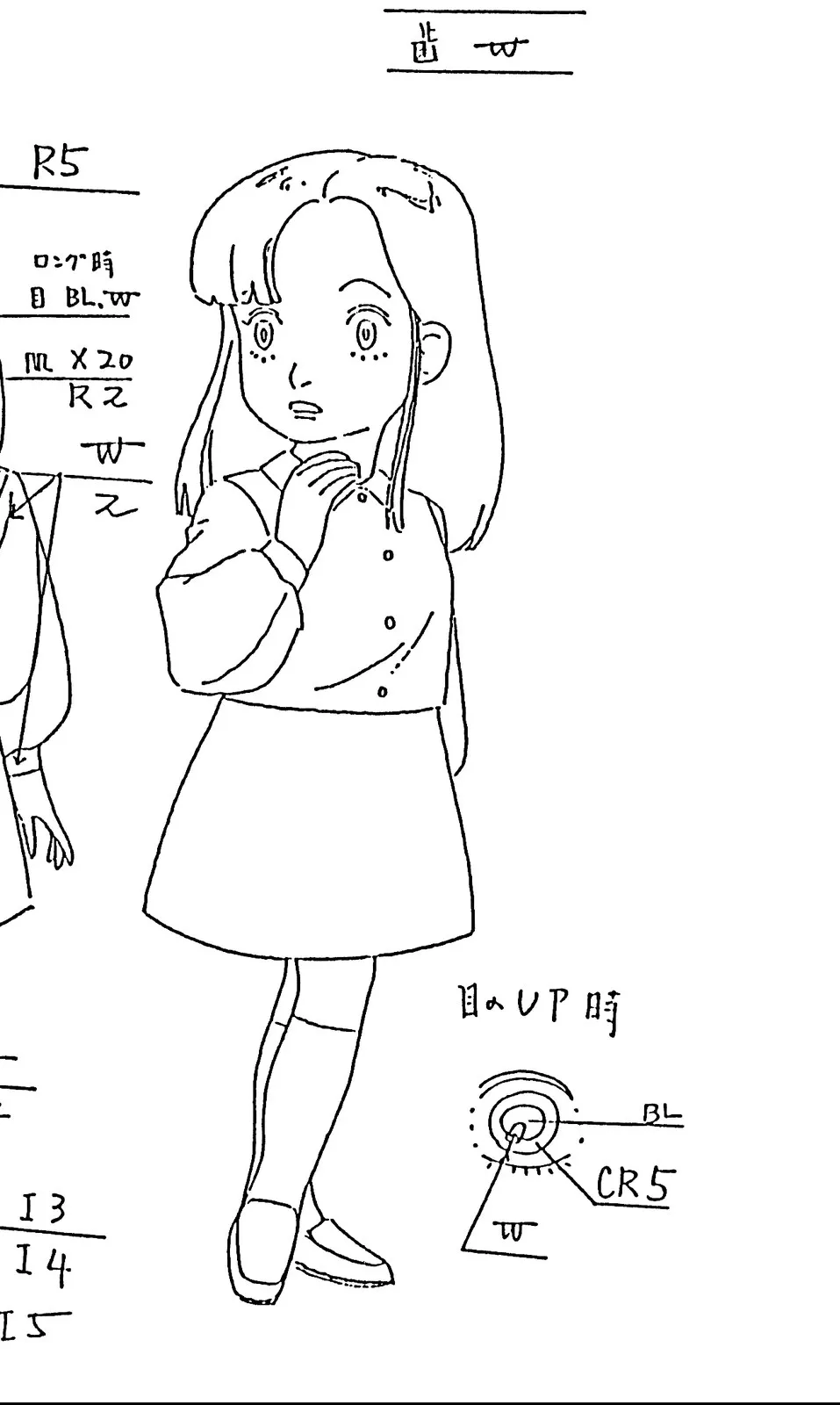
Yumeko’s long-shot instruction and eye close-up diagram: the closer view adds an iris color between pupil and highlight. GeGeGe no Kitaro · 1985-series color-design scans.
The useful discovery is the relationship between scale and detail. A tiny face does not need every color that a close-up can carry; the sheet tells painters which version of the eye the camera needs.
These unpainted guides make color decisions visible through marks alone. A fraction sends you to a table, a short note switches shadow off, and a small diagram changes the eye for a close-up. The character remains consistent because the instructions allow carefully specified differences.
About the surviving sheets
The Internet Archive batch is incomplete and described by its uploader as scanned and cleaned color-design material for the 1985 series. Its cover calls it a revised edition but supplies no date. Japanese readings here are working translations; the normal/shadow interpretation follows the matching codes and table heading, whose second column label is smudged. No individual artist or paint brand is inferred from the unsigned sheets. Original scan set.
Sources
- (INCOMPLETE) Gegege no Kitaro (1985) Main Character Color Design Settei Sheets · Internet Archive
- ゲゲゲの鬼太郎(第3期) · Toei Animation
- GE-GE-GE NO KITARO 3 · Toei Animation (English)
- スタッフ · Toei Animation
- 第73話 シーサー登場!!沖縄大決戦 · Toei Animation
- GeGeGe no Kitarō (1985 TV series) · Wikipedia
Artwork and toy photographs are credited reproductions from published sources.