From design to toy · 1990s
Delta Mega: The Monster Inside the Shuttle
An angular space monster became a shuttle, a robot and armor for a larger partner. Follow Delta Mega’s early drawings into the original Japanese DX toy.
- From the world of
- Denji Sentai Megaranger
- Toy maker
- Bandai
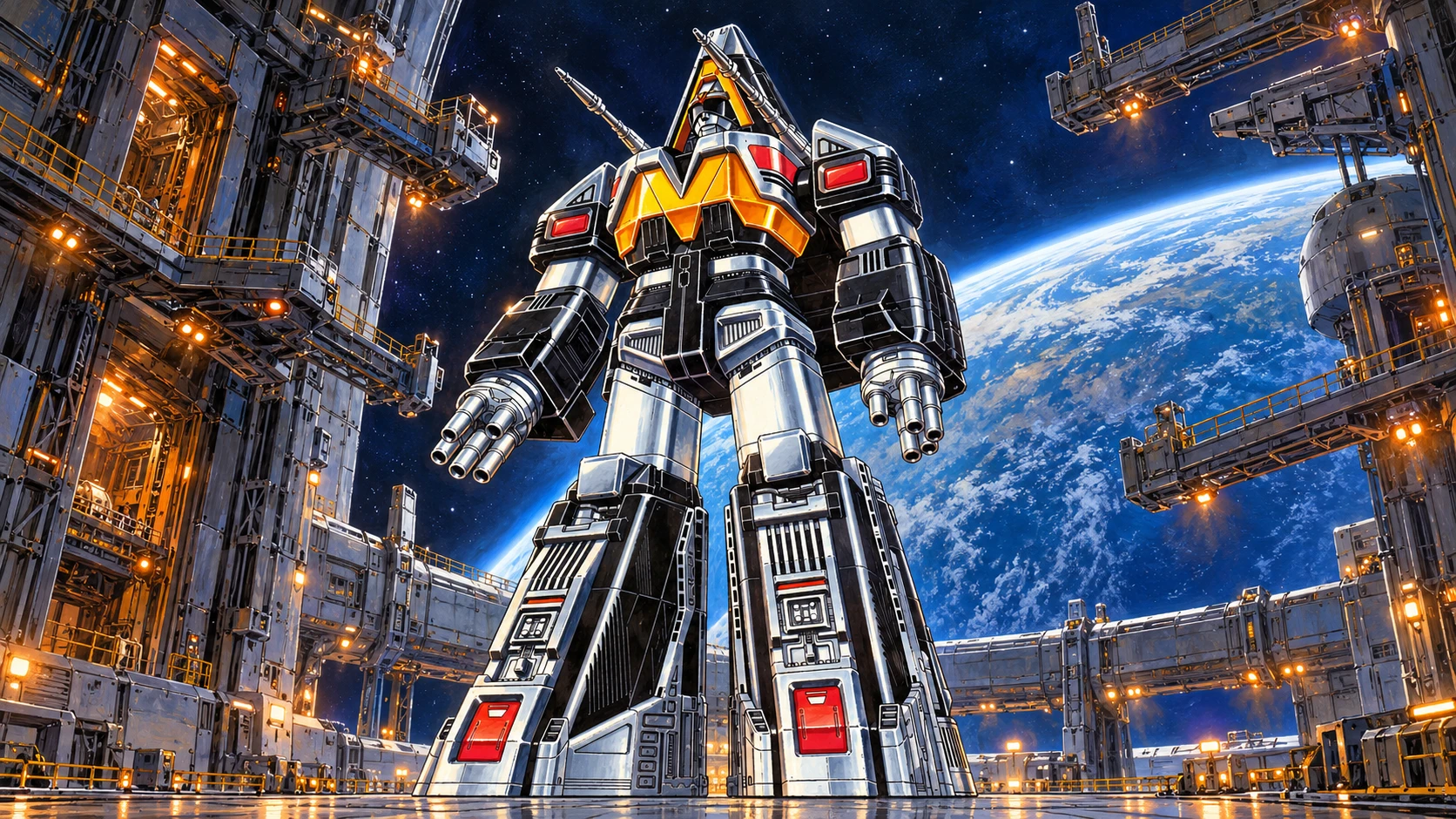
Delta Mega in an imagined orbital dock. Original development drawings and toy photographs follow.
AI cover illustration - OpenAI ImageGenDesign reference ↗01 / The design
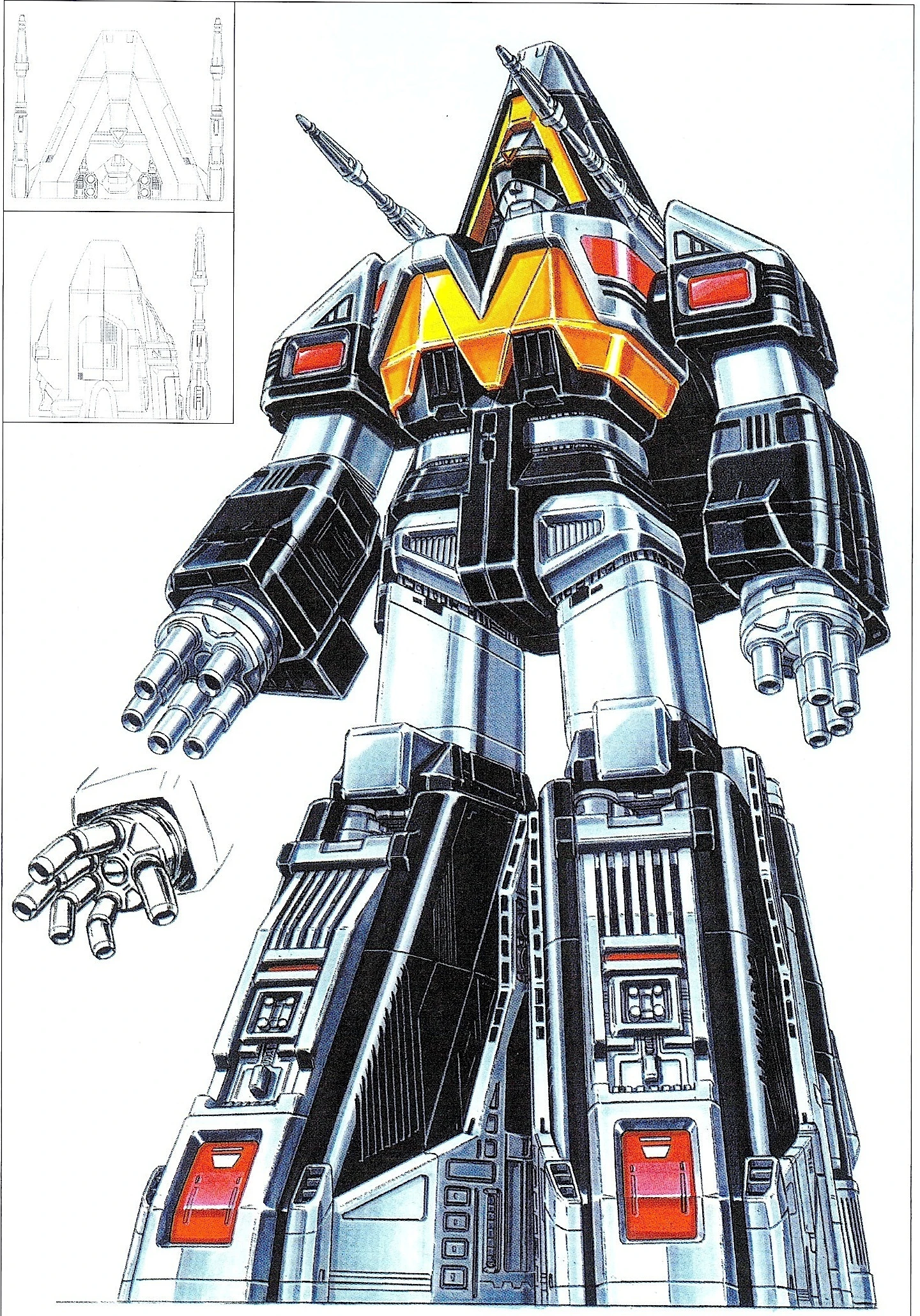
The finished Delta Mega: a triangular frame, a bright yellow chest and cannon hands.
Super Sentai Art Collection - MediaWorks, 2002 · printed p. 048 · PDF p. 56
02 / The toy
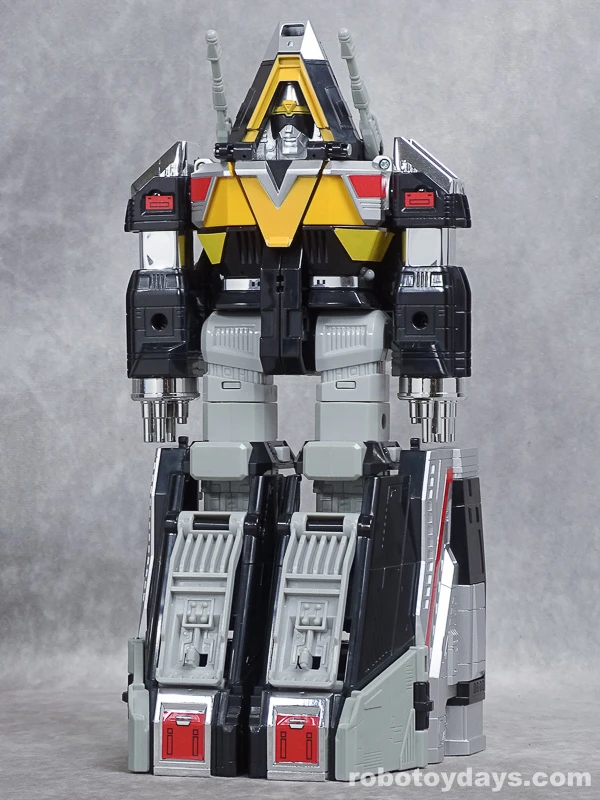
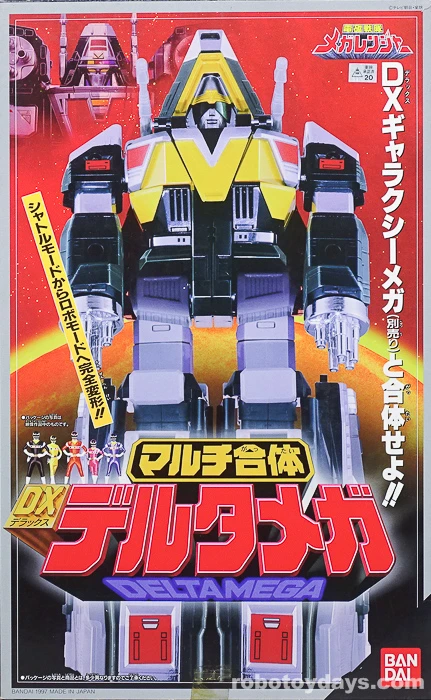
Original Japanese DX Delta Mega. The shuttle nose rises behind its face.
Before the robot, there was a monster
The sharp triangle behind Delta Mega’s head looks like a spacecraft nose because it is one. But the early drawings take that shape somewhere stranger: into a space monster with a pointed head, angular wings and clawed limbs.
The artbook identifies drawing 2 as Delta Mega’s initial image, labeled “Space Monster No. 7, Mega Polygon.” By drawing 4, the body has become humanoid, although the accompanying creature drawing shows that the earlier idea has not disappeared. In drawings 5–7, a monster face remains in the shuttle, and fangs occupy the robot’s chest. This was a design in transition, not an extra transformation of the finished toy. Development drawings, p. 146.
Look from the pointed creature to the tall robot. The silhouette grows more orderly, but the triangle keeps its place. A shape that first helped suggest an animal also works as the nose of a machine.
Look closer
A creature becomes a standing figure
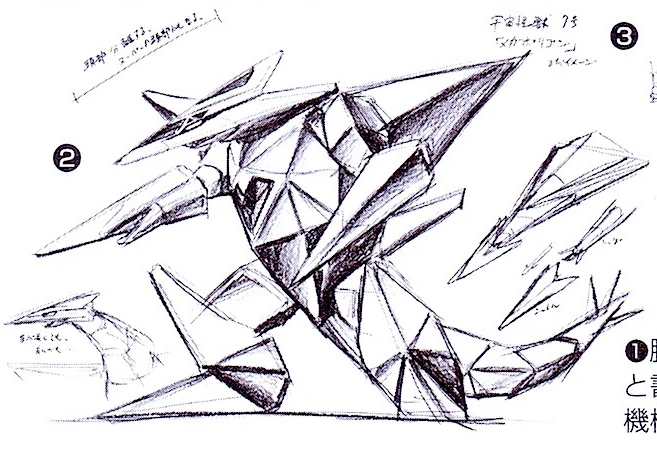
Drawing 2: the first idea was a polygonal space monster.
Super Sentai Art Collection - MediaWorks, 2002 · printed p. 146 · PDF p. 154
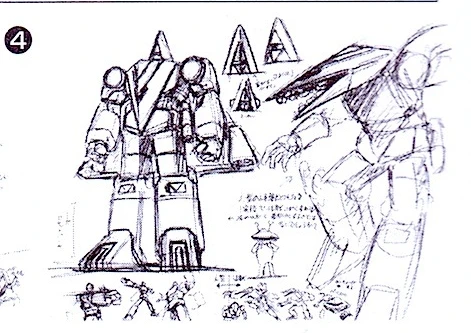
Drawing 4: a humanoid body appears, while the creature is still visible beside it.
Super Sentai Art Collection - MediaWorks, 2002 · printed p. 146 · PDF p. 154
The monster lingers
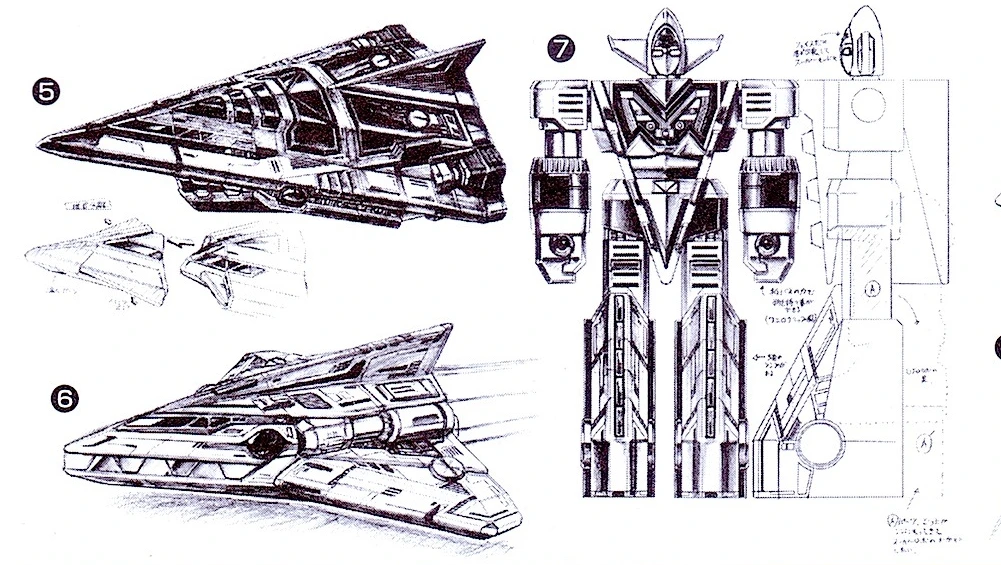
Drawings 5–7: the spacecraft still has a face, and the robot carries fangs on its chest.
Super Sentai Art Collection - MediaWorks, 2002 · printed p. 146 · PDF p. 154
The triangle takes flight
The finished Delta Mega is Megaranger’s second robot, remotely controlled by Mega Red through the Battle Riser. Its alternate form is a shuttle, with two long Delta Lasers projecting beside the nose. In robot form, its main weapons are the Gatling Blasters at the ends of both arms. Artbook, p. 048.
The shuttle drawing makes a useful puzzle: where is the yellow chest? Most of the upper surface is silver and black, with a red panel near the middle. The familiar yellow sits on the other side. Turning the vehicle into the robot changes which surface gets to be the front.
Look closer
The finished shuttle
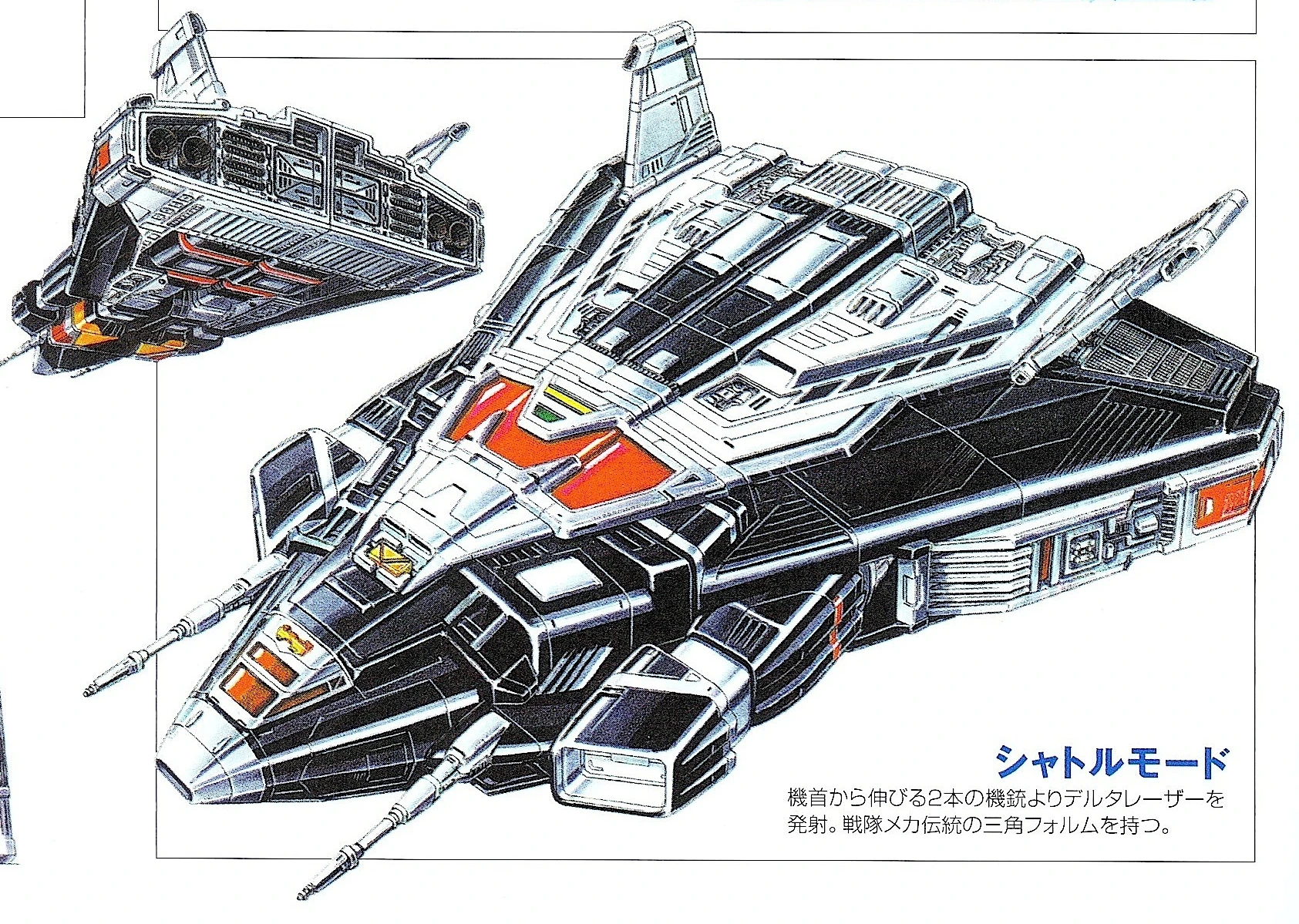
Finished shuttle mode: the pointed nose and broad rear make one long triangle.
Super Sentai Art Collection - MediaWorks, 2002 · printed p. 048 · PDF p. 56
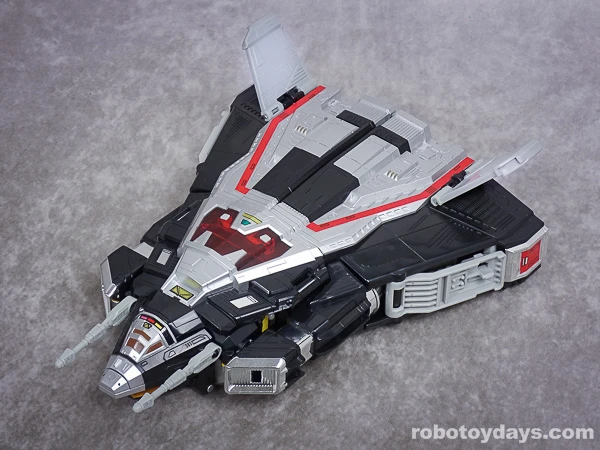
Take the back off to stand it up
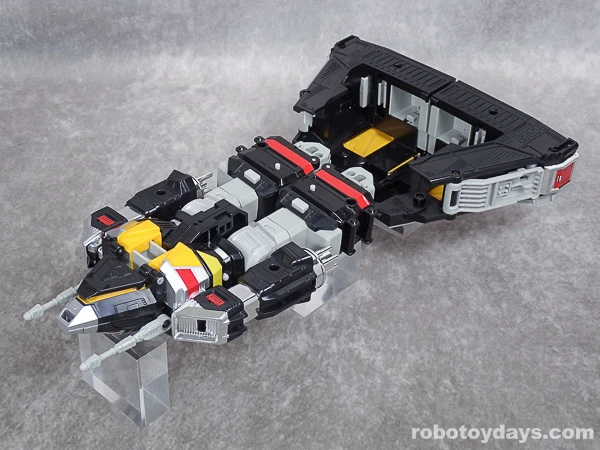
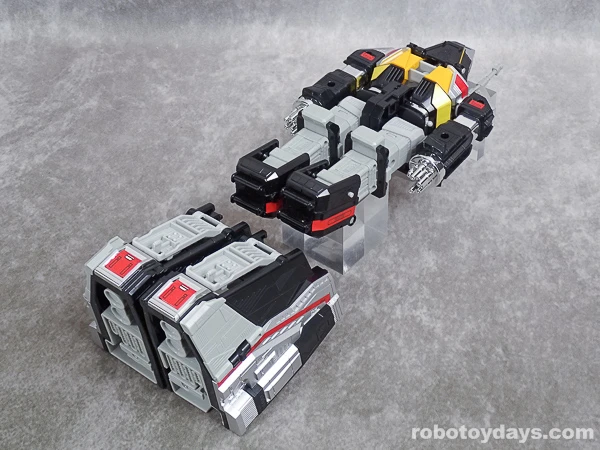
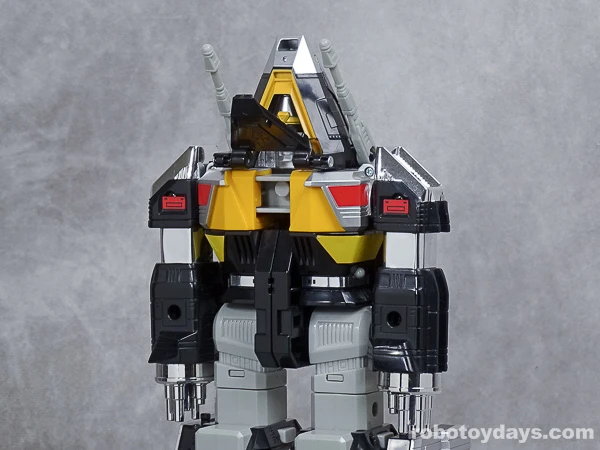
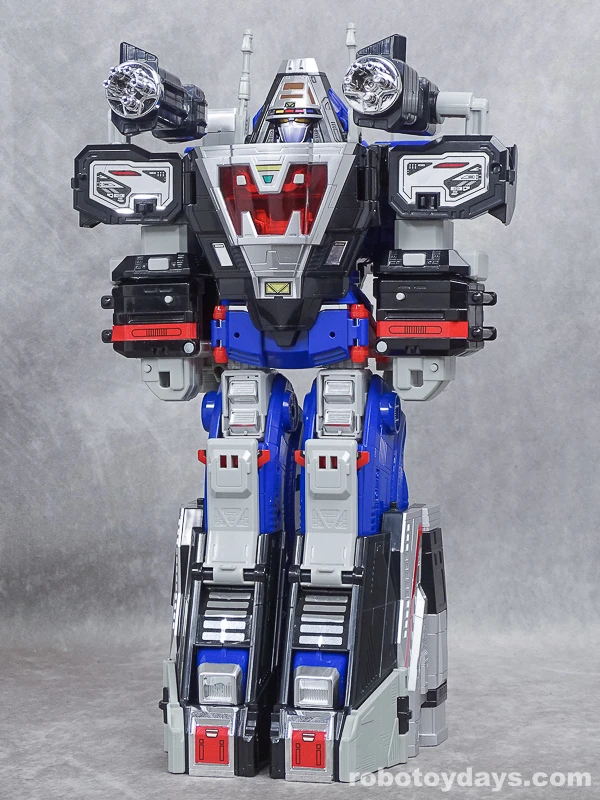
The original Japanese Bandai DX Delta Mega makes that change through separation and reassembly. The broad rear comes off, divides into two sides, and reconnects as the legs. The central body turns to reveal the yellow chest; opening the panel inside the triangular nose exposes the face. The photographs follow that sequence on the same original DX edition. Original DX transformation.
Notice how much of the shuttle survives below the waist. The broad rear becomes two long wedge-shaped shins. Above them, the nose still towers over the face. The robot has a different outline, but its biggest pieces remain easy to find.
Look closer
Three steps to a robot
A mouth and a head that did not stay
The monster idea lasted beyond the first sketches. Drawings 15–16 give the triangular face an opening mouth; the artbook describes these as lingering attachment to the creature mode. That mouth would have made the nose read as a head in its own right. The finished design instead places a small silver humanlike face beneath the tall nose.
Another proposal, drawings 17–18, explored exchanging the head with Mega Shuttle, the small craft that becomes Galaxy Mega’s head. These drawings imagine a different relationship between the two robots. They are development possibilities, rather than functions of the DX Delta Mega pictured here. Development drawings, p. 146.
Look closer
Two paths considered
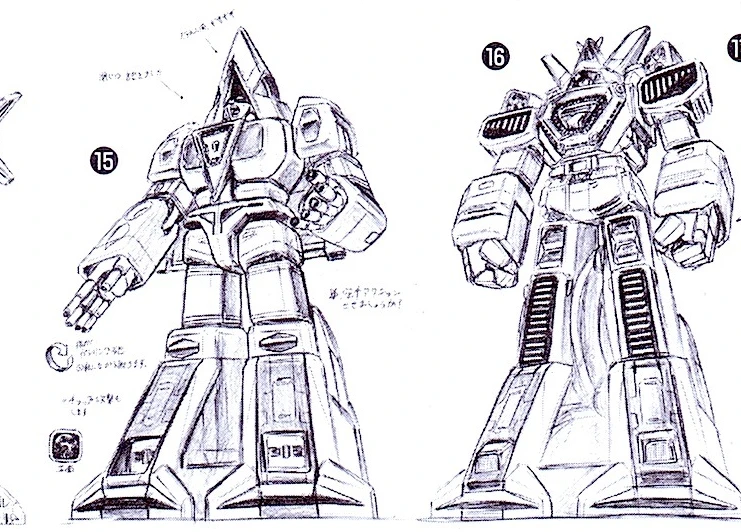
Drawings 15–16: an opening mouth keeps the creature idea alive.
Super Sentai Art Collection - MediaWorks, 2002 · printed p. 146 · PDF p. 154
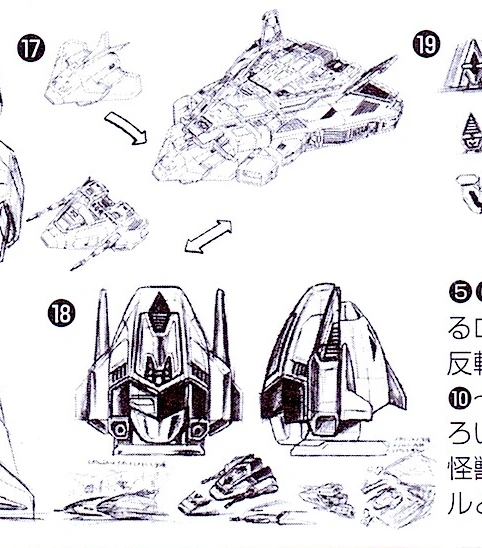
Drawings 17–18 propose exchanging the head with Mega Shuttle.
Super Sentai Art Collection - MediaWorks, 2002 · printed p. 146 · PDF p. 154
Follow the yellow chest around the back
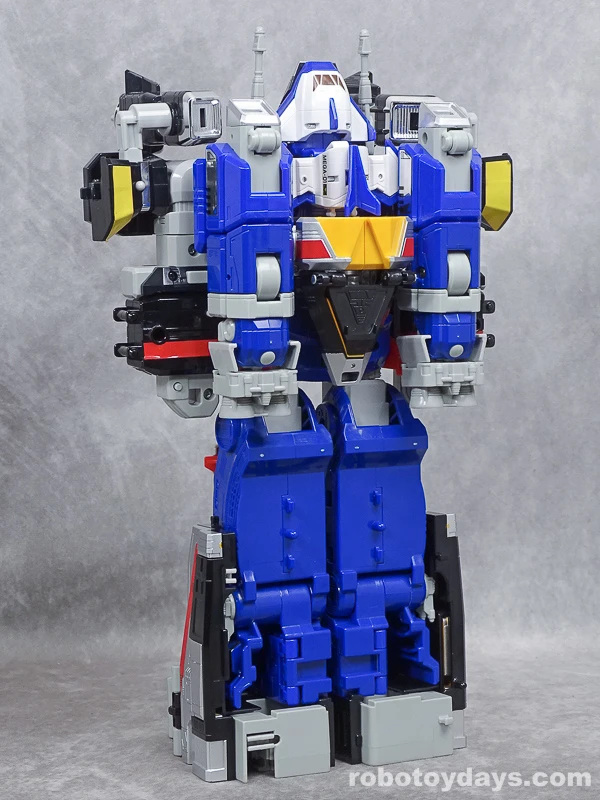
The finished partnership takes a larger form. Delta Mega joins Galaxy Mega as Super Galaxy Mega: silver leg armor surrounds the blue robot, and the Gatling Blasters move up to the shoulders. The combination requires both DX robots. Artbook, p. 049; original DX combination.
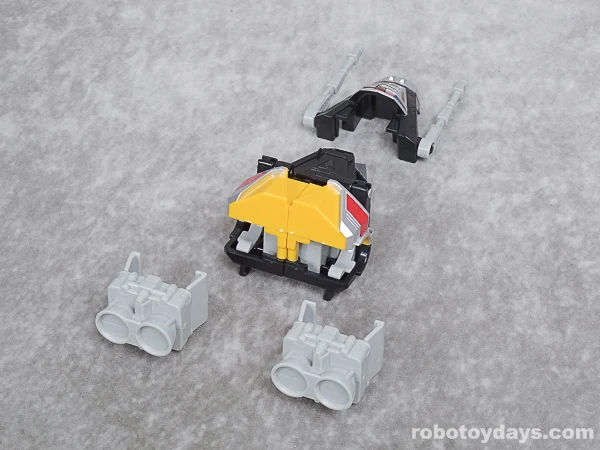
Small parts change jobs too. The artbook identifies the engine blocks beneath Delta Mega’s feet as covers for Galaxy Mega’s fists during combination. And the yellow chest, so prominent when Delta Mega stands alone, moves around to the back.
That rear view is the final reveal. Delta Mega began on the drawing board as a creature, became a spacecraft that could stand up, and finished by wrapping around another robot. The monster proposal was left behind; the pleasure of finding familiar parts in an unfamiliar body remained.
Look closer
Two robots become one
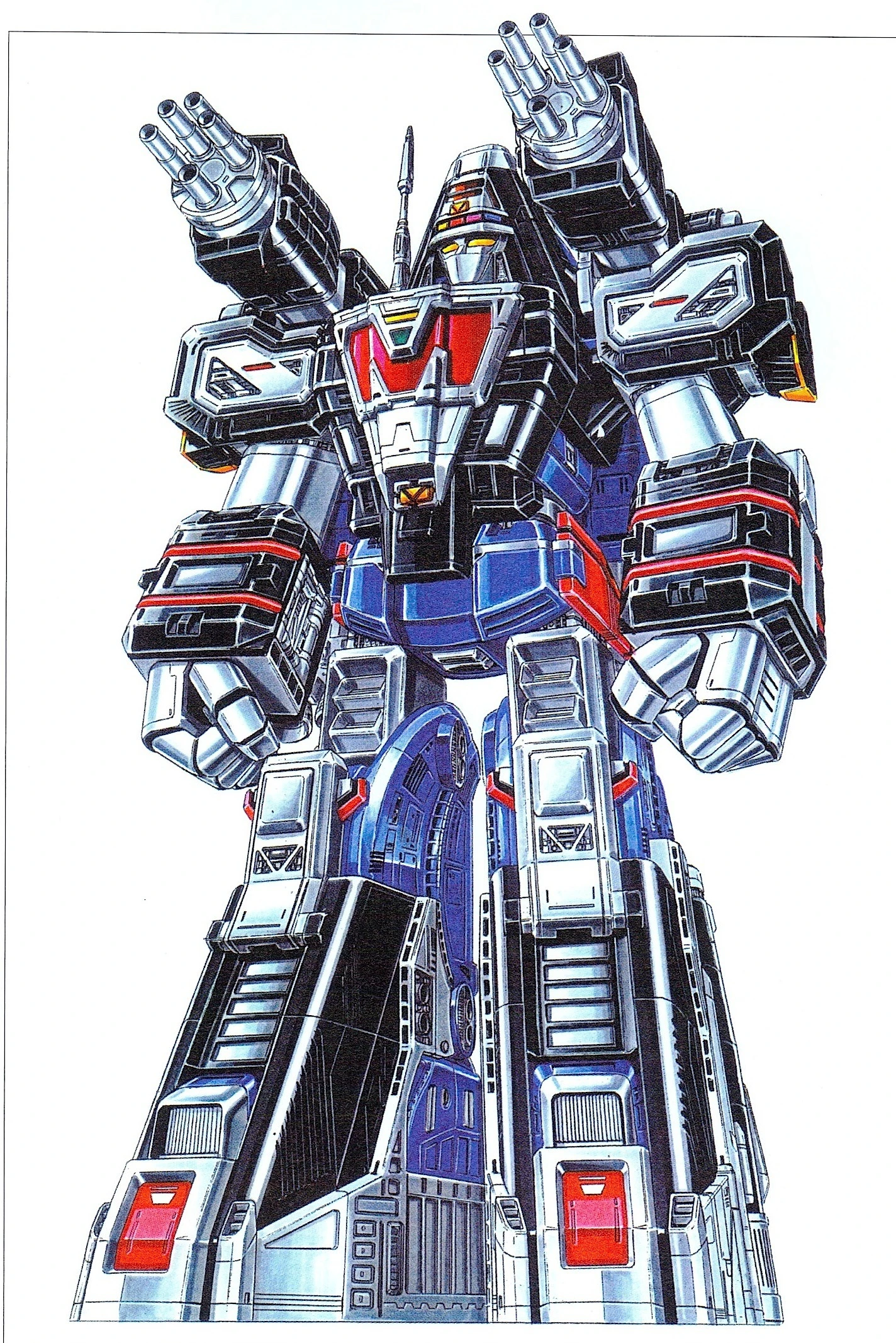
Super Galaxy Mega: Delta Mega supplies the outer armor and shoulder cannons.
Super Sentai Art Collection - MediaWorks, 2002 · printed p. 049 · PDF p. 57
Sources
- Super Sentai Art Collection - Delta Mega · MediaWorks · 2002 · page 048 · scan page 56
- Super Sentai Art Collection - Delta Mega development drawings 2–20 · MediaWorks · 2002 · page 146 · scan page 154
- Super Sentai Art Collection - Super Galaxy Mega · MediaWorks · 2002 · page 049 · scan page 57
- RoboToyDays - original Japanese Bandai DX Delta Mega · RoboToyDays
- RoboToyDays - original Japanese DX Super Galaxy Mega combination · RoboToyDays
Artwork and toy photographs are credited reproductions from published sources. This is a virtual exhibit.