From design to toy · 1998
GigaBitus: The Shark That Opens into a Launch Base
A shark-shaped carrier stands up and opens into a two-level launch base. Follow its ramps, hidden flight decks and ten miniature passengers.
- From the world of
- Seijuu Sentai Gingaman
- Toy maker
- Bandai
- Release year
- 1998
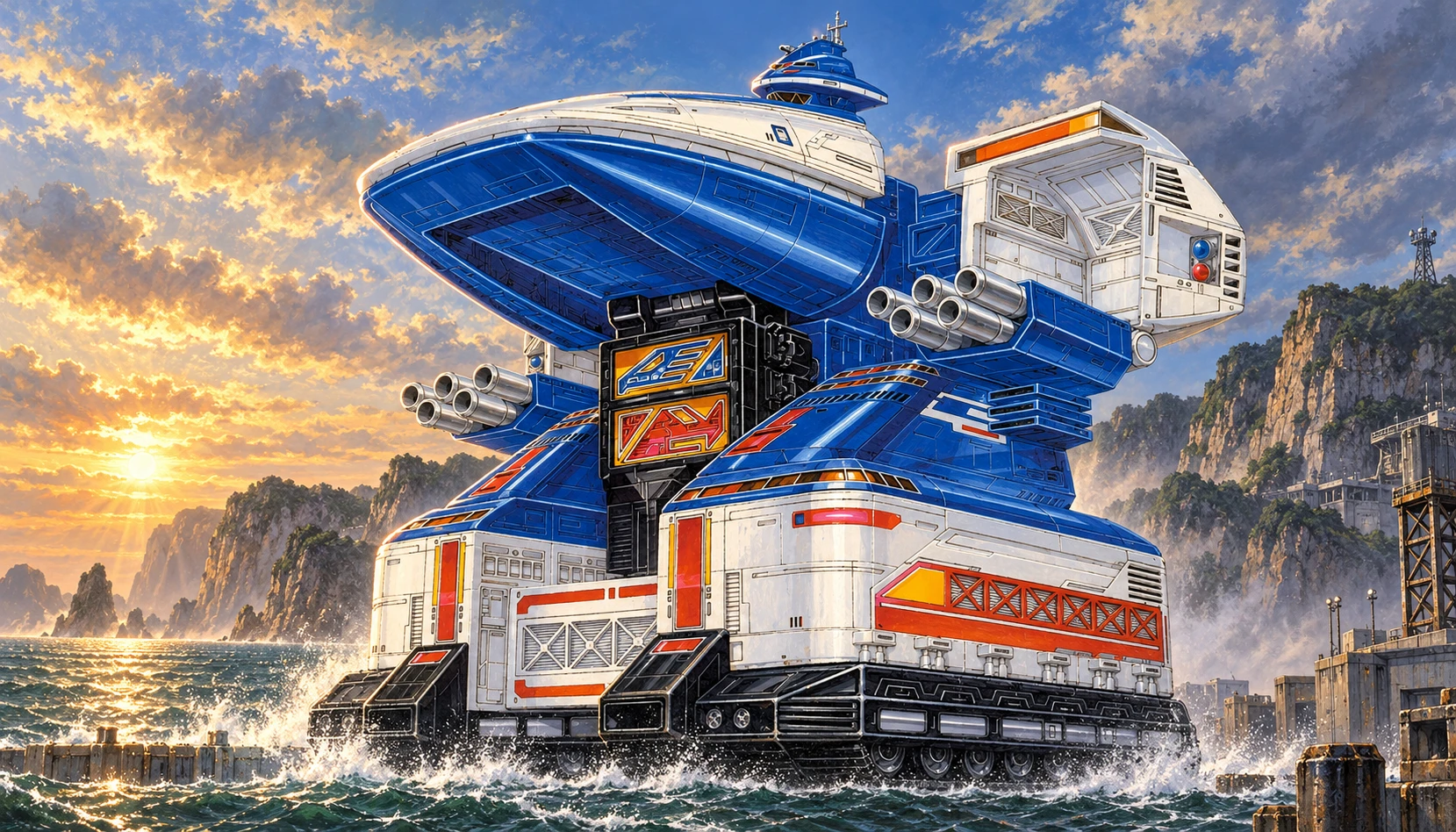
An imagined coastal harbor, painted from the finished Scramble Mode design. Original drawings and toy photographs follow.
AI cover illustration · Rewind: Northwest RetroDesign reference ↗01 / The design
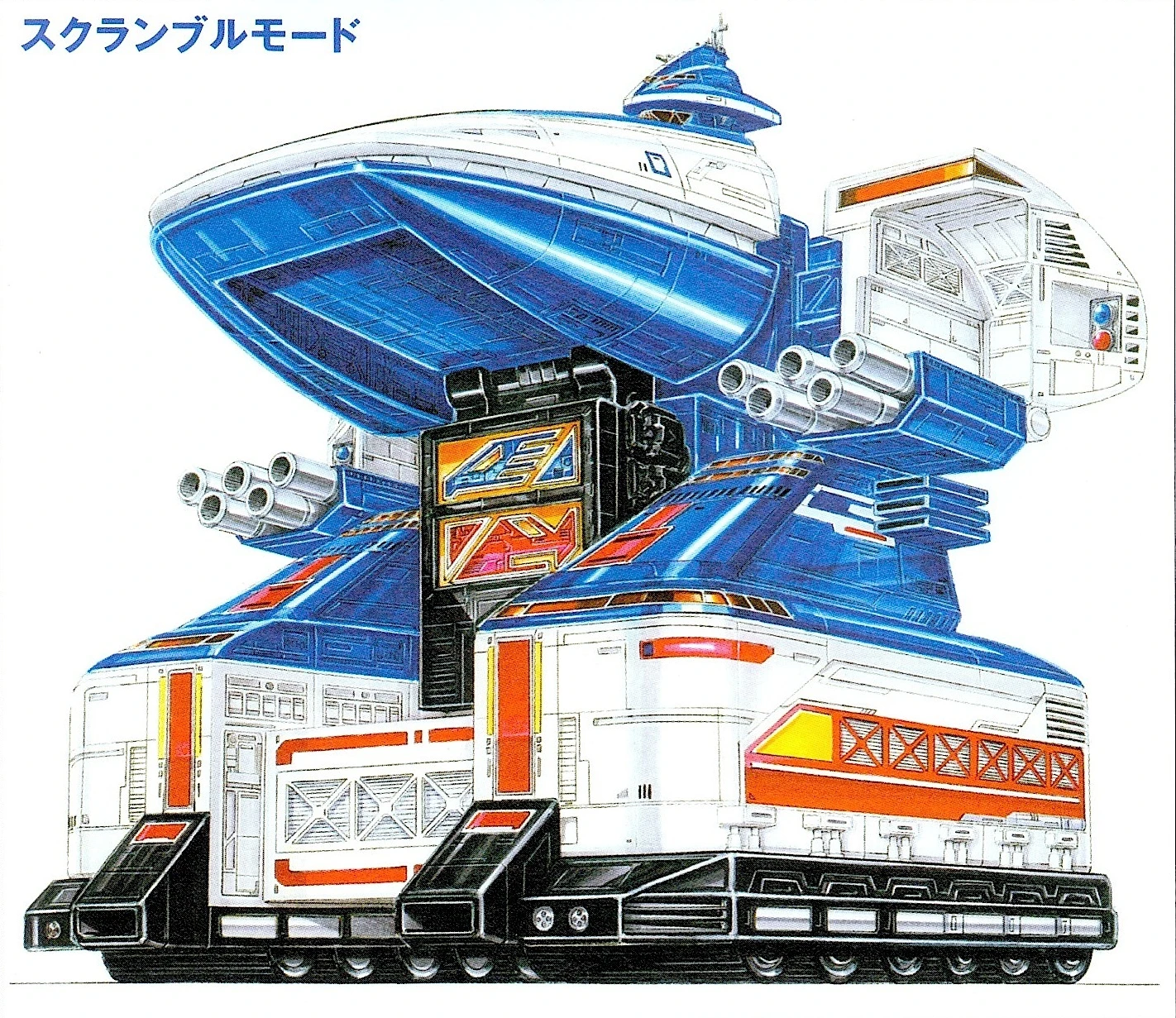
Scramble Mode: the shark bow rises above the lower hangars.
Super Sentai Art Collection · MediaWorks, 2002 · printed p. 043 · PDF p. 51
02 / The toy
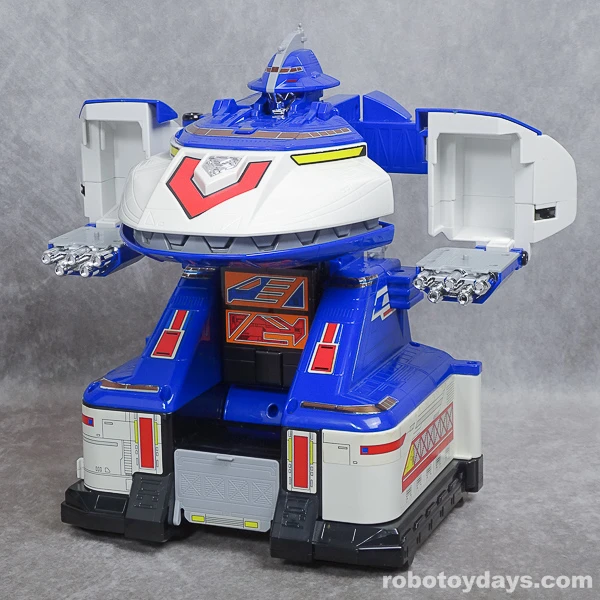
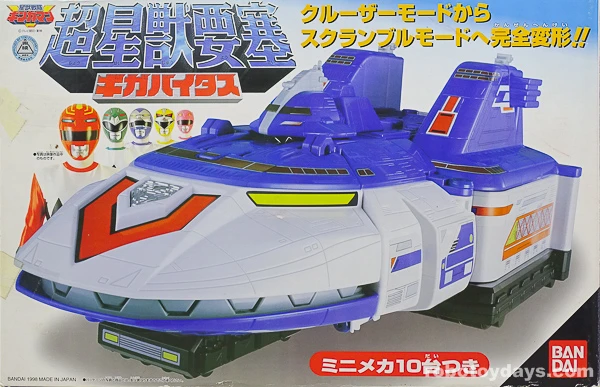
Bandai’s original Japanese Super Starbeast Fortress GigaBitus.
A carrier that stands up
A shark-shaped ship has become a towering robot, but its broad feet are still on the ground and its bow still points forward. GigaBitus changes the height of its hangars. That is the useful trick behind its two forms.
In Seijuu Sentai Gingaman, this giant Steel Starbeast carries the machines that form GigaRhinos and GigaPhoenix. The long, low Cruiser Mode becomes the upright Scramble Mode. Follow the white shark bow in the pictures: it rises into the chest, leaving a second level beneath it. The two blue towers that stood behind the bridge now slope toward the lower hangars. Artbook, p. 043.
The toy’s side view catches the change halfway through. It is a useful angle for seeing how much of the ship lifts together.
Look closer
Cruiser Mode
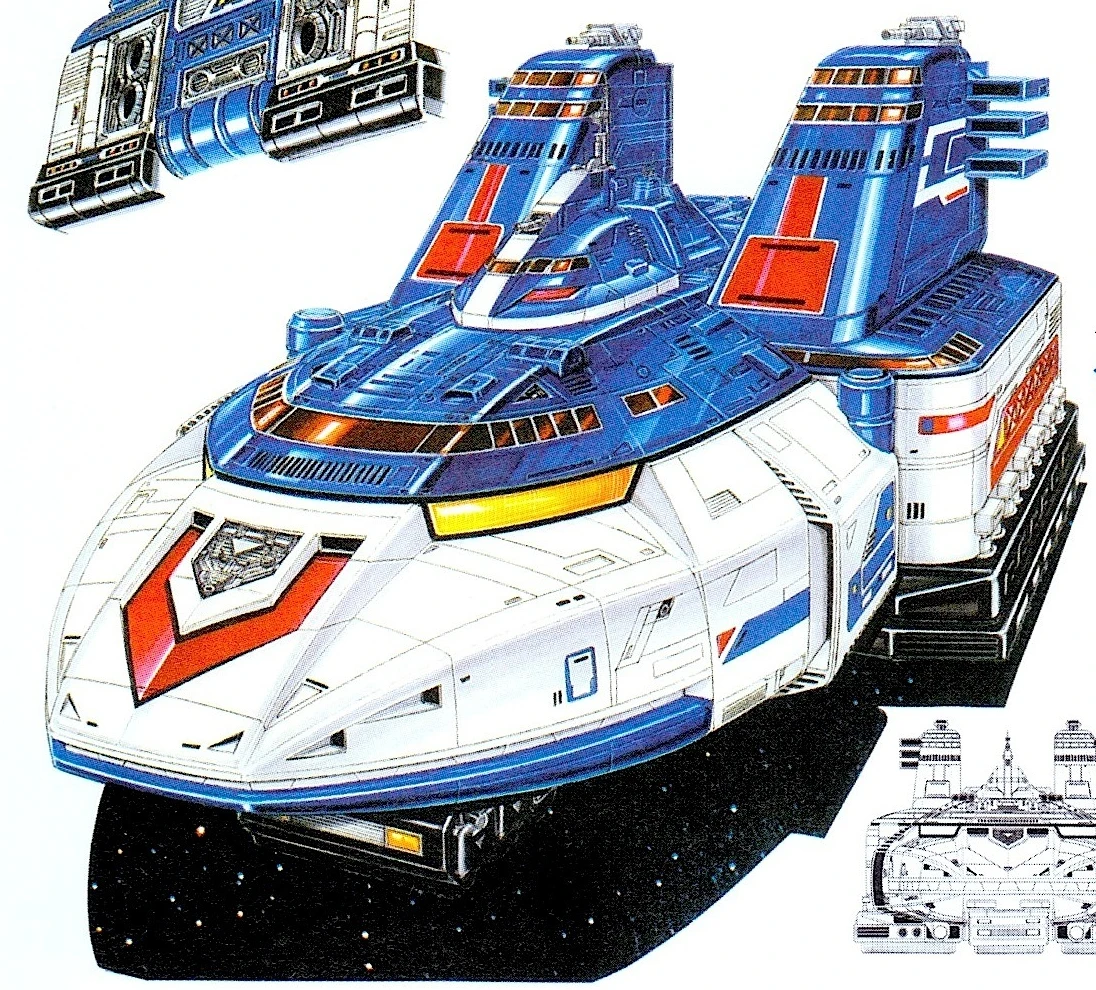
Cruiser Mode. Follow the shark bow and the two blue towers into the upright design above.
Super Sentai Art Collection · MediaWorks, 2002 · printed p. 043 · PDF p. 51
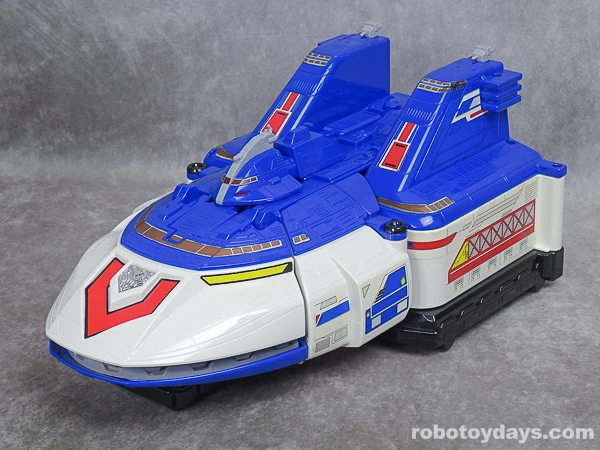
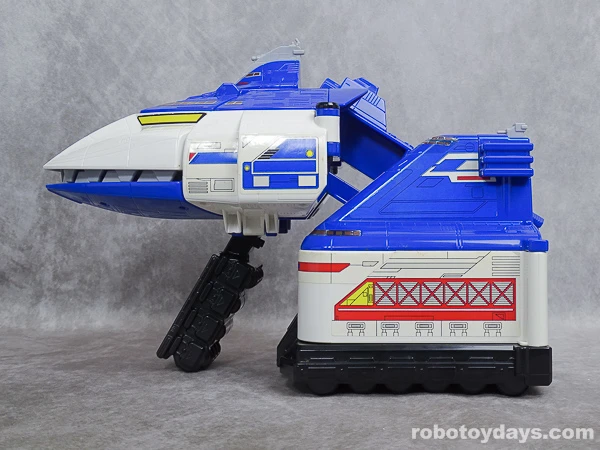
Roads below, runways above
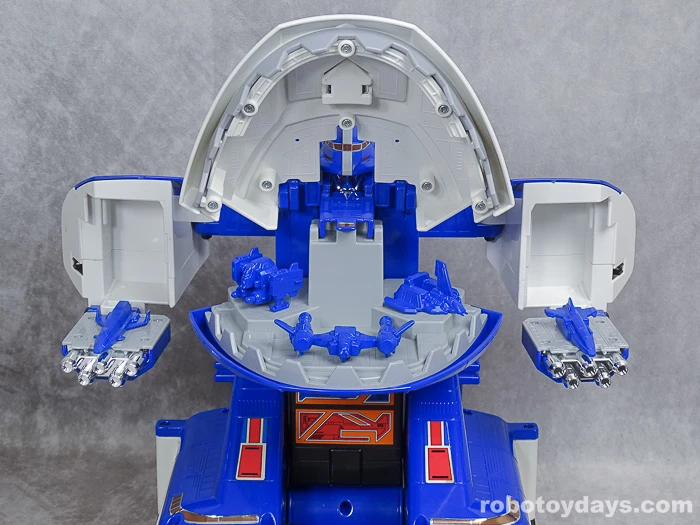
Standing up gives the two fleets different exits. The GigaWheels, the ground machines associated with GigaRhinos, leave through the lower bays. The GigaWings, the aircraft associated with GigaPhoenix, emerge from the chest and side pods. The design drawings show both kinds of door doing a second job: opened panels become routes out of the carrier. Artbook, p. 043.
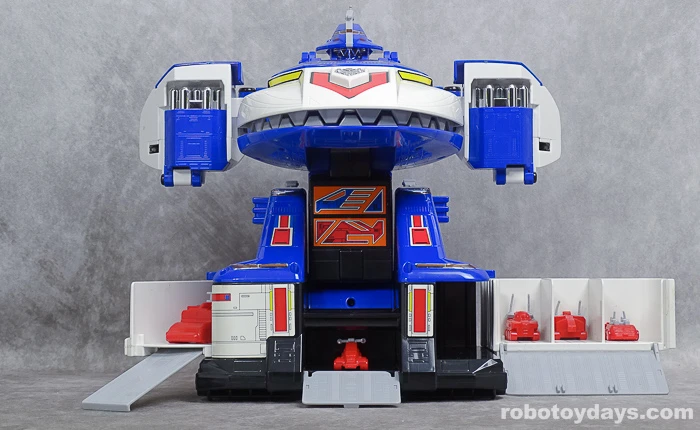
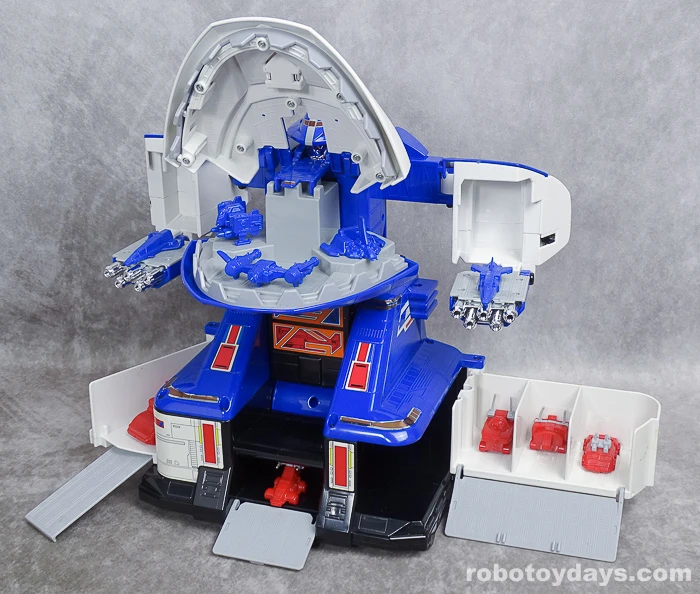
Look for three red vehicles sharing one lower compartment. Upstairs, three blue aircraft occupy the shark’s mouth, with the other two in the side pods. Opening everything makes the toy’s body readable as a small building. Original toy photographs.
Look closer
Ground level
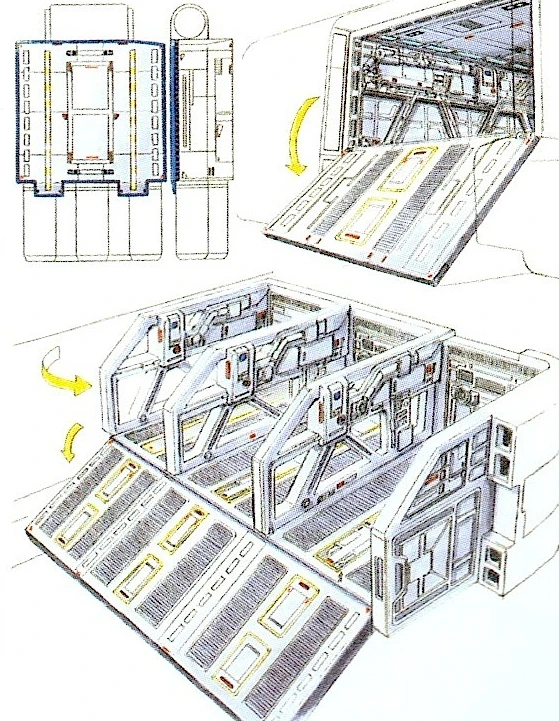
Doors become roads: the lower hangars open outward and down.
Super Sentai Art Collection · MediaWorks, 2002 · printed p. 043 · PDF p. 51
Flight deck
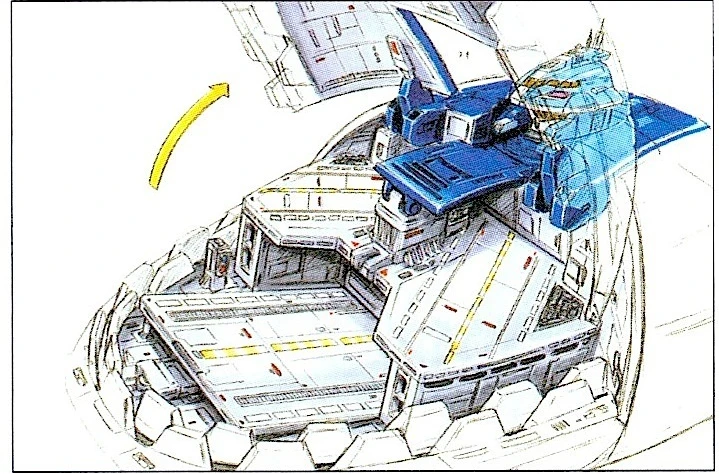
The shark chest opens to expose an aircraft launch deck.
Super Sentai Art Collection · MediaWorks, 2002 · printed p. 043 · PDF p. 51
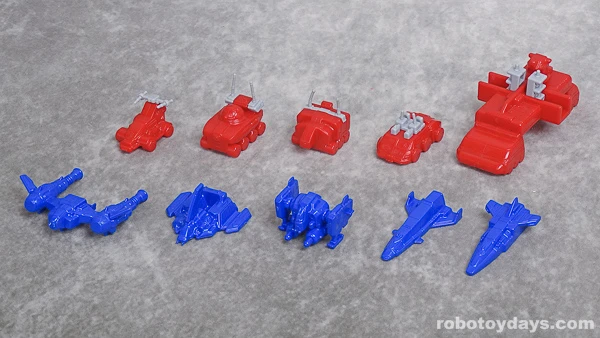
Ten small passengers
The photographs show Bandai’s original Japanese Super Starbeast Fortress GigaBitus. Its cargo is a set of ten miniatures. These are the little red and blue machines pictured below; the separate DX combining toys do not fit inside this carrier. Original package and contents.
The artbook records a tantalizing alternative: an overseas deluxe version able to store the DX Chogokin toys was planned, but never realized. It does not explain why. That makes the miniature fleet a significant part of the released toy’s identity: you can open a complete network of hangars without assembling a much larger collection inside it. Artbook, p. 043.
The launch came first
Drawing 47 shows an earlier GigaBitus surrounded by departing machines. The book identifies the carrier as a preliminary design. Its blunt, angular front looks different from the finished shark, yet the action is already familiar: aircraft fan out above while vehicles roll down ramps below.
Compare the sketch with the opened toy. The silhouette changed, but this particular drawing already makes the two-level launch the center of attention. It lets us see the intended spectacle before the polished blue-and-white exterior. Early Sketches, p. 145.
Look closer
Before the finished shark
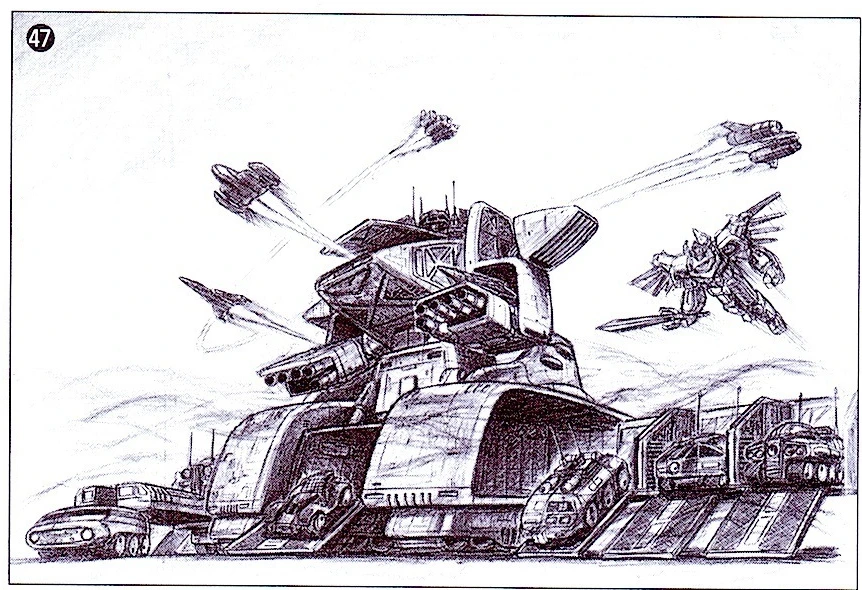
Drawing 47: a preliminary carrier, already organized around two launch levels.
Super Sentai Art Collection · MediaWorks, 2002 · printed p. 145 · PDF p. 153
Find the second face
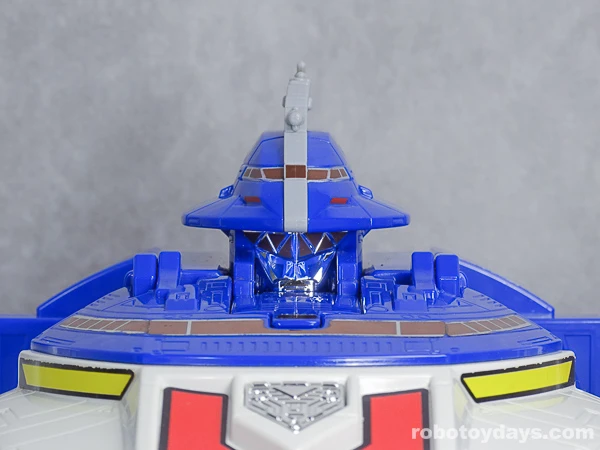
There are two faces to find. The enormous shark bow is easy. Above it, the small blue bridge becomes a head of its own. The artbook points out the toothlike trim shared with the other Steel Starbeasts; a silver face sits beneath it. Artbook, p. 043.
That little head makes the carrier look back at you. Open the bays below it, and the rest of the design reveals its job: a mouth becomes a flight deck, doors become ramps, and a closed shark-shaped hull becomes a place from which an entire fleet can leave.
Look closer
Two faces
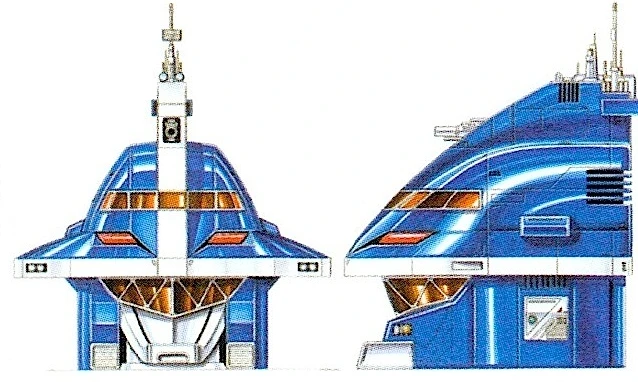
The small bridge becomes a head with a silver face and toothlike brow.
Super Sentai Art Collection · MediaWorks, 2002 · printed p. 043 · PDF p. 51
Sources
- Super Sentai Art Collection — GigaBitus · MediaWorks · 2002 · page 043 · scan page 51
- Super Sentai Art Collection — Early Sketches, drawing 47 · MediaWorks · 2002 · page 145 · scan page 153
- RoboToyDays — original Japanese Bandai Super Starbeast Fortress GigaBitus · RoboToyDays
Artwork and toy photographs are credited reproductions from published sources. This is a virtual exhibit.