From design to toy · 1990s
GigaPhoenix: When Engines Become Arms
Thrusters hide fists, a dark fin opens into a bright chest, and jet noses become feet. Follow five aircraft into GigaPhoenix.
- From the world of
- Seijuu Sentai Gingaman
- Toy maker
- Bandai
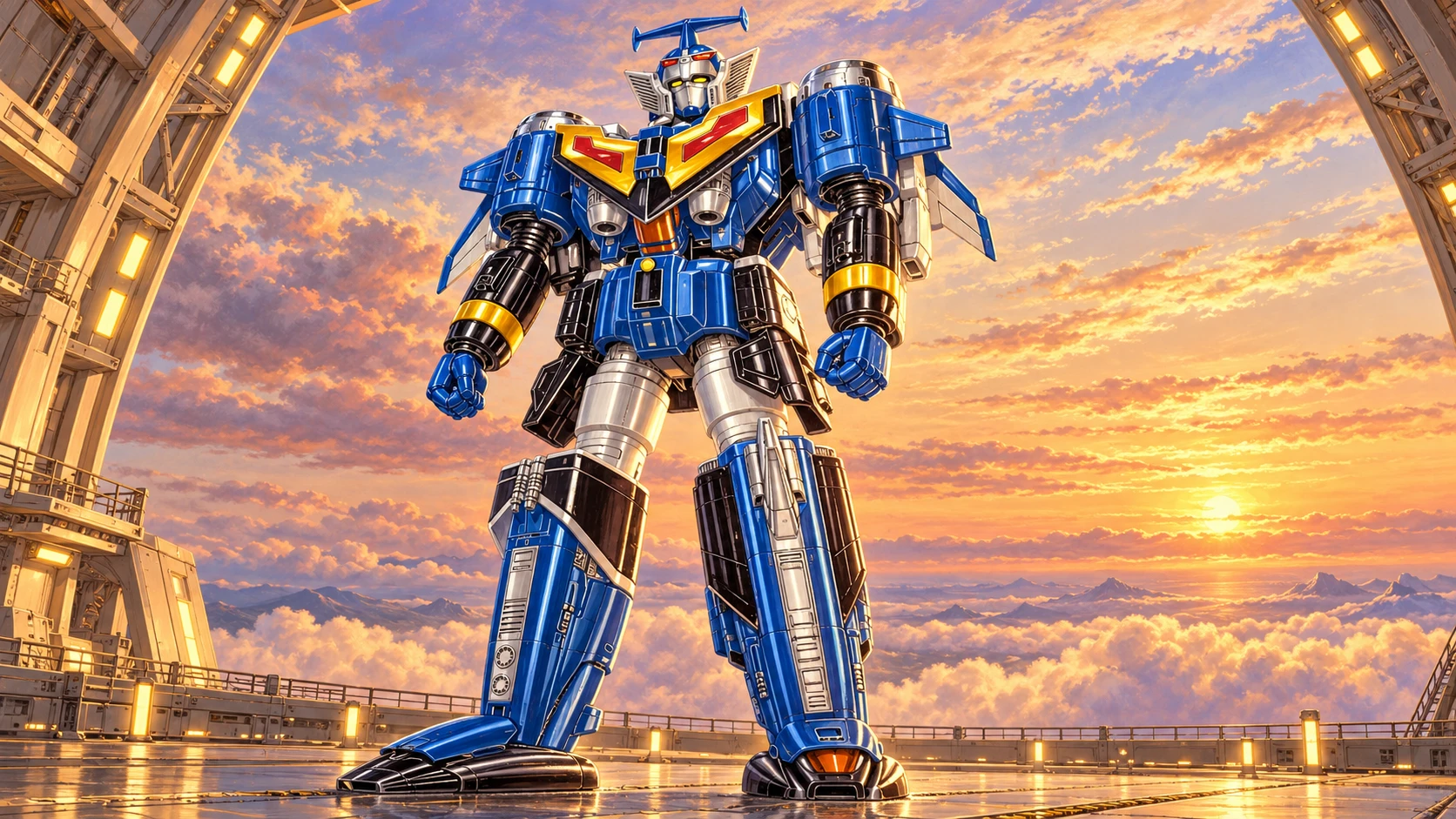
GigaPhoenix above the clouds in an imagined hangar. A new illustration based on the finished design; authentic art and toy photographs follow.
AI cover illustration - Rewind: Northwest RetroDesign reference ↗01 / The design
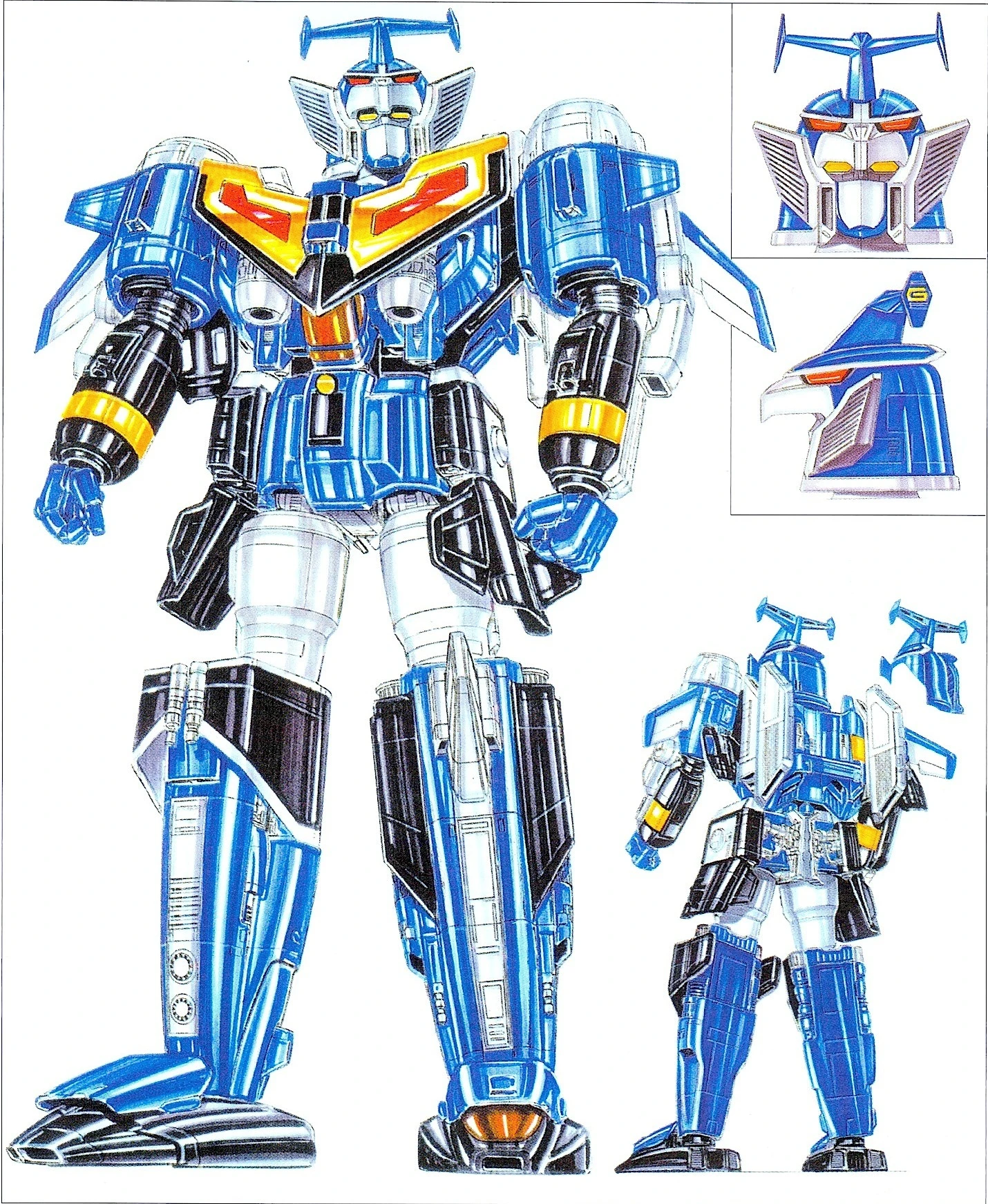
The finished design: find the aircraft engines in the arms and the jet noses along the shins.
Super Sentai Art Collection - MediaWorks, 2002 · printed p. 045 · PDF p. 53
02 / The toy
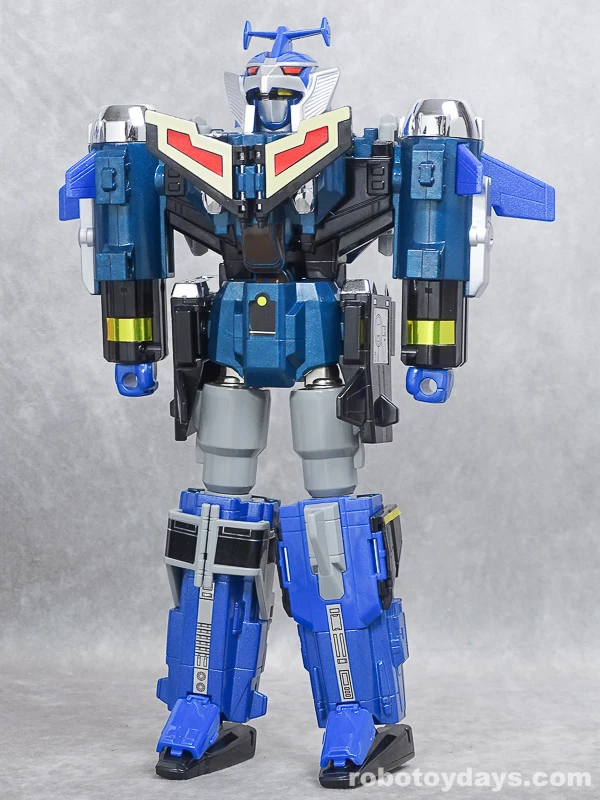
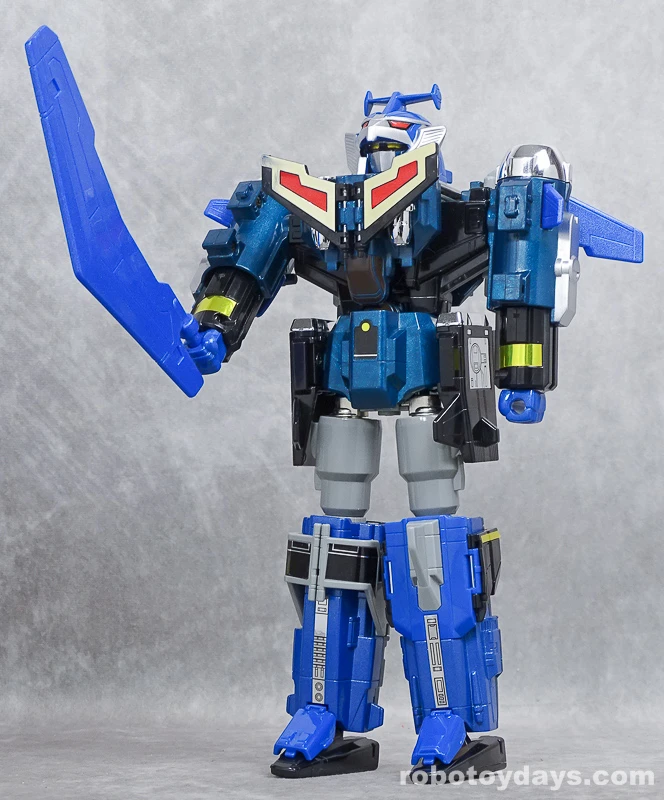
Bandai’s original Japanese GD-14 DX Chogokin. The blue tones of this photographed example vary with age and lighting.
The engines have fists
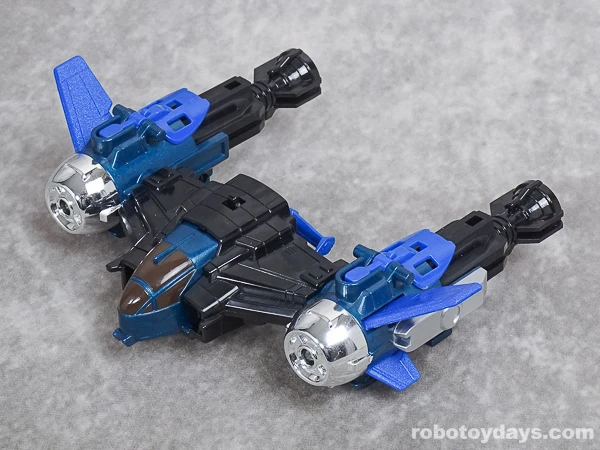
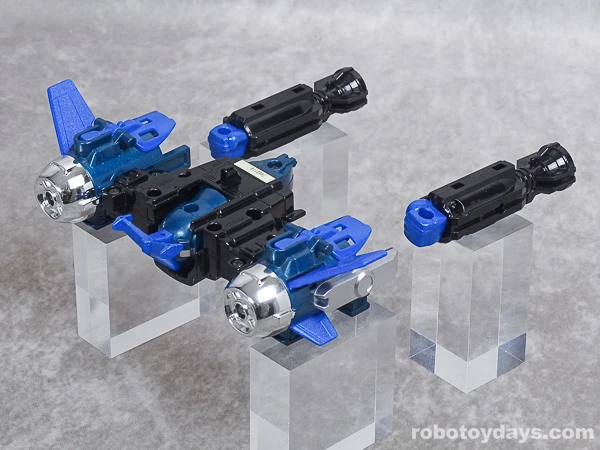
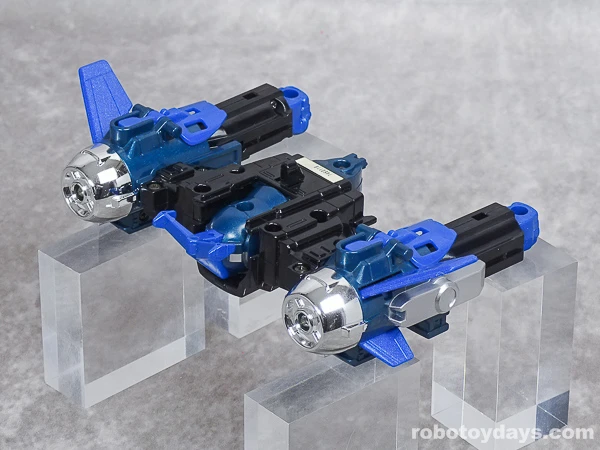
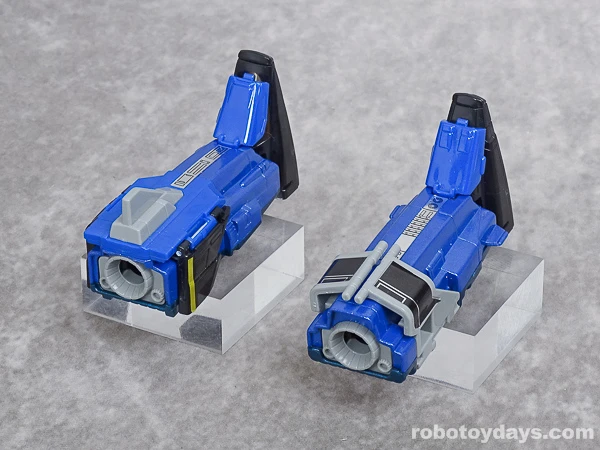
The long black cylinders look ready to push GigaWing 1 through the sky. On the robot, those same shapes hang below the shoulders. They are the forearms, with blue fists waiting at the other end.
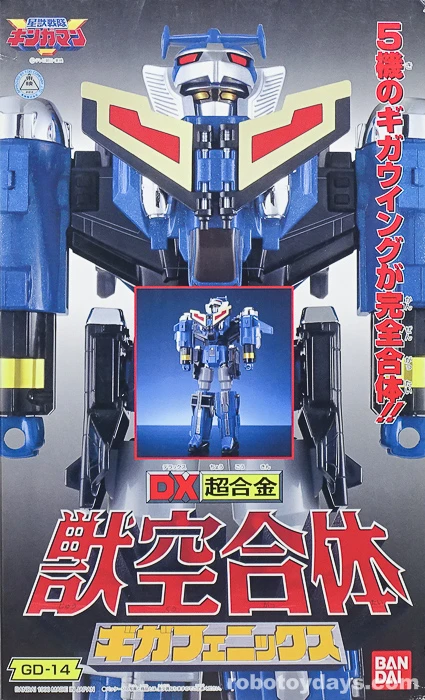
GigaPhoenix is one of the Steel Starbeasts in Seijuu Sentai Gingaman. Five GigaWings unite through “Beast Sky Combination” to form it. The aircraft have cockpits, yet the artbook makes an unusual distinction: these beings have wills of their own, so the Gingaman are not shown climbing aboard to pilot them. Artbook, p. 045.
The original Japanese GD-14 DX Chogokin makes the engine trick tangible. The thrusters detach, reverse and plug back in as forearms. The artbook also records a firing mechanism in each arm. An engine has become both a limb and a launchable part. Original toy sequence.
Look closer
GigaWing 1 / The arms are already aboard
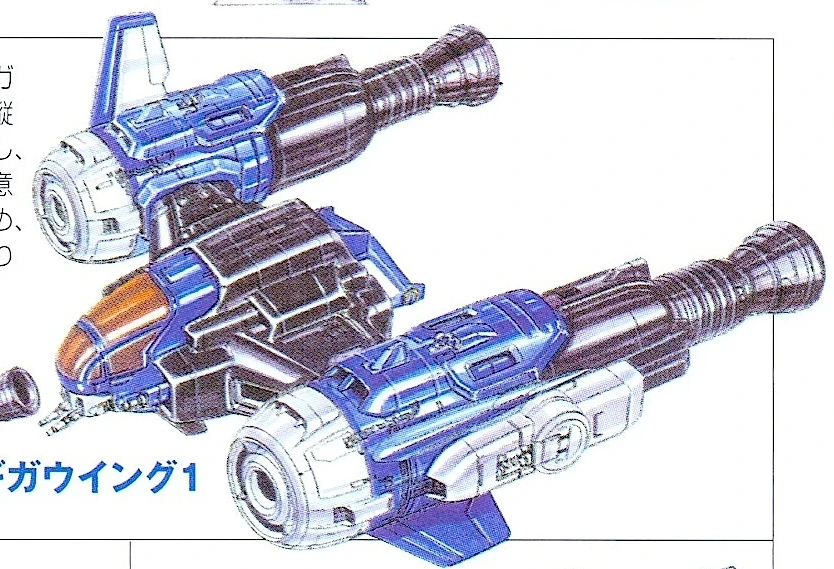
GigaWing 1: follow the two long black cylinders.
Super Sentai Art Collection - MediaWorks, 2002 · printed p. 045 · PDF p. 53
Two cockpits down the middle
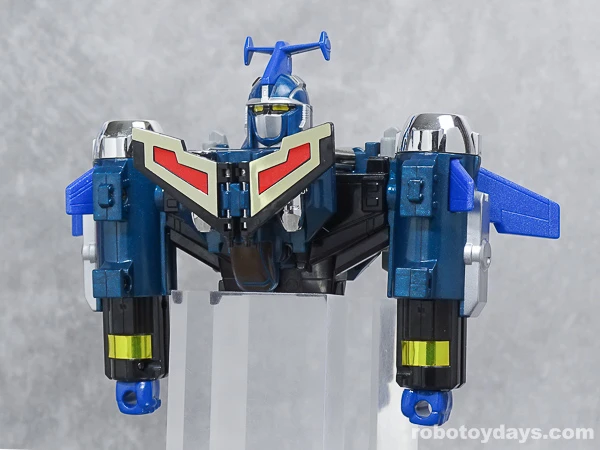
GigaWing 2 hides the robot’s brightest marking. Its tall dark fin opens into the red-and-gold V across the chest. Set it over GigaWing 1, and the upper body starts to make sense: silver engine intakes sit beneath the V, while a small head rises behind it.
Below that assembly, GigaWing 3 compresses into the waist. Follow the cockpit and its yellow dot between the drawing and the folded toy. The broad side panels settle beside the hips, and silver thighs emerge underneath. Original DX assembly photographs.
Look closer
GigaWing 2 / Chest
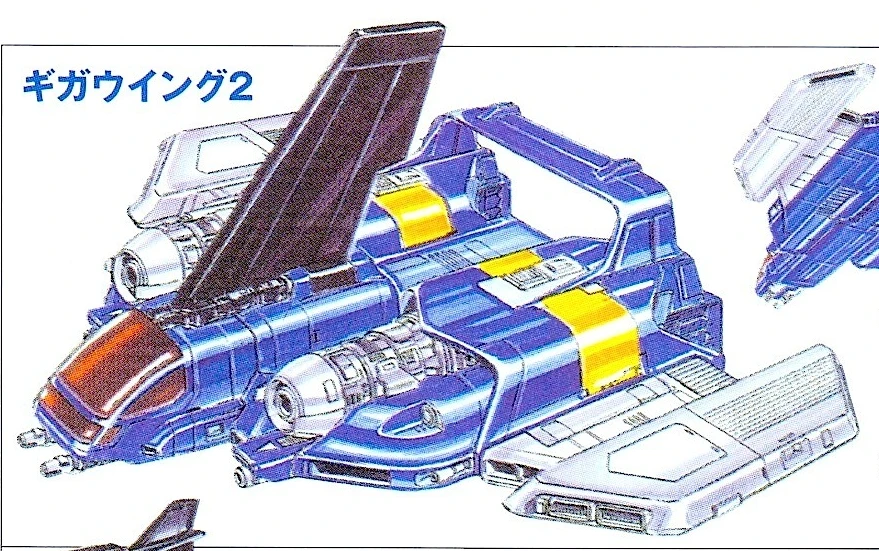
GigaWing 2 carries the chest’s folded V.
Super Sentai Art Collection - MediaWorks, 2002 · printed p. 045 · PDF p. 53
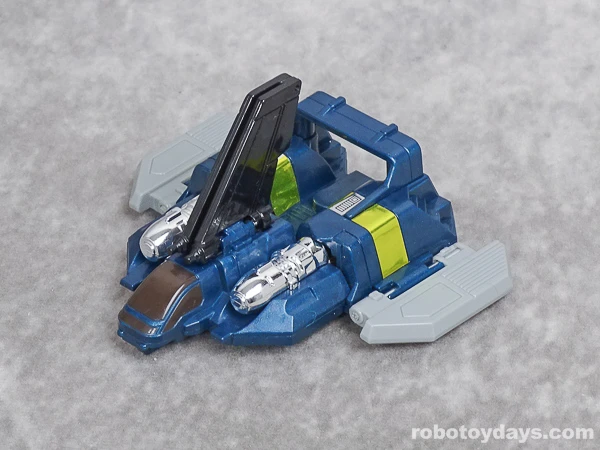
The chest opens; the head rises
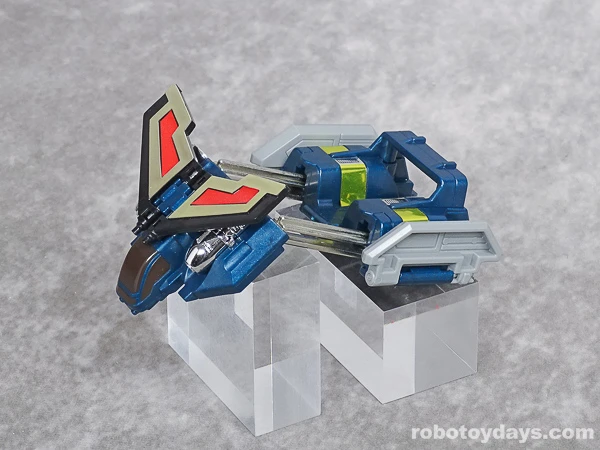
GigaWing 3 / Waist
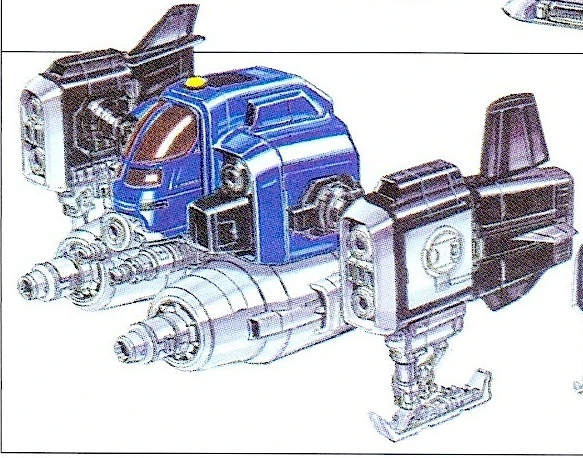
GigaWing 3: the cockpit becomes the waist.
Super Sentai Art Collection - MediaWorks, 2002 · printed p. 045 · PDF p. 53
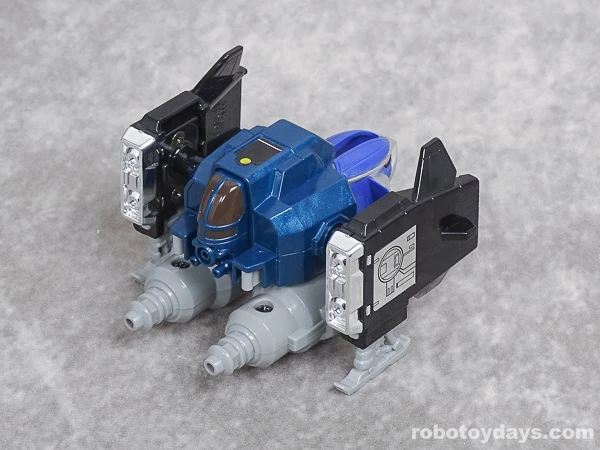
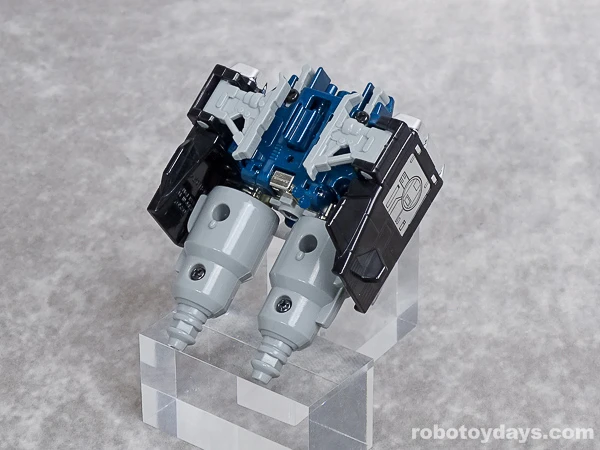
Landing on two jet noses
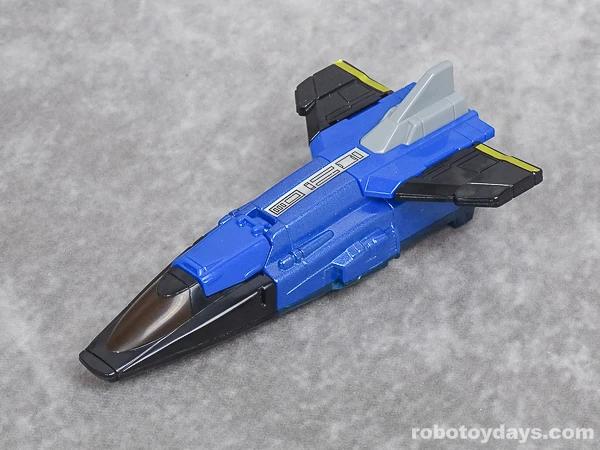
The last two aircraft look more like familiar jets. GigaWing 4 and GigaWing 5 have long noses, swept wings and different tail arrangements. Place the drawings beside the finished robot and those long blue fuselages become easy to recognize along the shins.
The toy folds their noses into feet. The artbook says the legs are designed to open into a slightly splayed stance, reproducing the character’s proportions. That small spread matters visually: five narrow aircraft can stand as a broad-shouldered figure without losing their long, lean shape. Artbook, p. 045.
Look closer
GigaWing 4 / Right leg
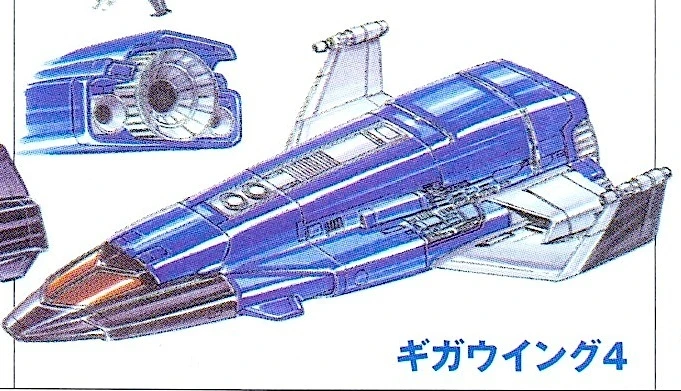
GigaWing 4 supplies the right leg.
Super Sentai Art Collection - MediaWorks, 2002 · printed p. 045 · PDF p. 53
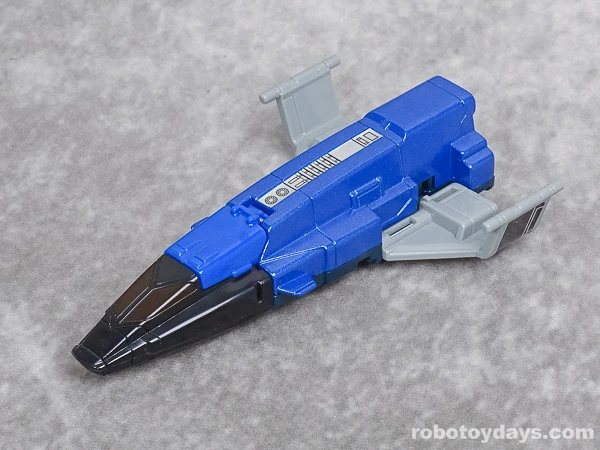
GigaWing 5 / Left leg
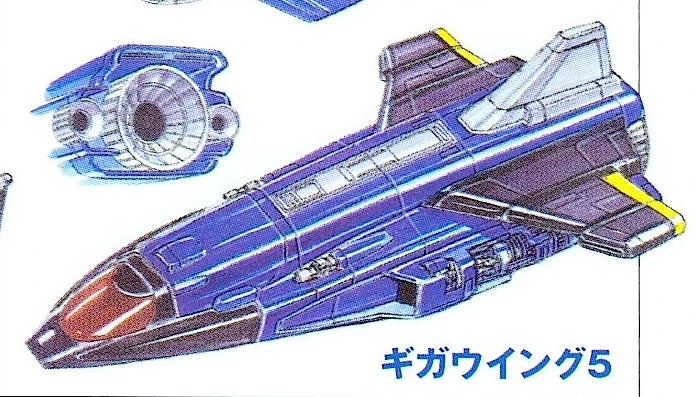
GigaWing 5 supplies the left leg.
Super Sentai Art Collection - MediaWorks, 2002 · printed p. 045 · PDF p. 53
The bird under the machinery
The development drawings offer a different way to recognize GigaPhoenix. Studies 44–45 show its Starbeast form as a creature with spread wings, a long neck and a sharply crested head. These are studies of the creature, not a bird transformation offered by the photographed toy. Early Sketches, p. 145.
Now look at the finished helmet from the side. The projecting beak is unmistakable. From the front, the helmet allows a silver robot face to look out beneath it; from the side, the bird takes over. The machinery changes the body’s vocabulary, but this little profile keeps the creature present.
Look closer
A creature and its mechanical echo
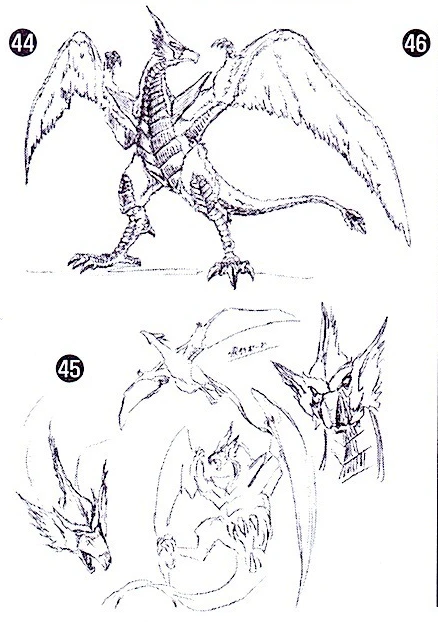
Drawings 44–45: GigaPhoenix as an organic Starbeast.
Super Sentai Art Collection - MediaWorks, 2002 · printed p. 145 · PDF p. 153
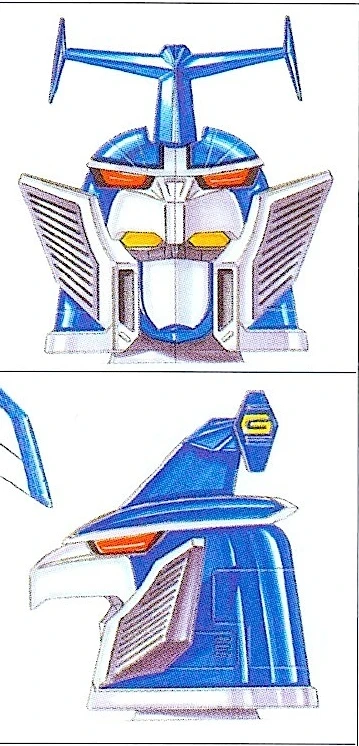
Turn to the profile: a bird’s beak sits above the robot face.
Super Sentai Art Collection - MediaWorks, 2002 · printed p. 045 · PDF p. 53
A wing in the hand
GigaPhoenix carries the Gigannic Boomerang, a long blue weapon with an angled blade. Its broad shape gives the assembled figure one more winglike edge. The design drawings and original toy show how much silhouette that single accessory adds. Artbook, p. 045.
Look back at the robot now: engines hang as arms, cockpits stack through its middle, and jet noses meet the ground. Above them all, a bird still looks out from the helmet.
Look closer
One final wing shape
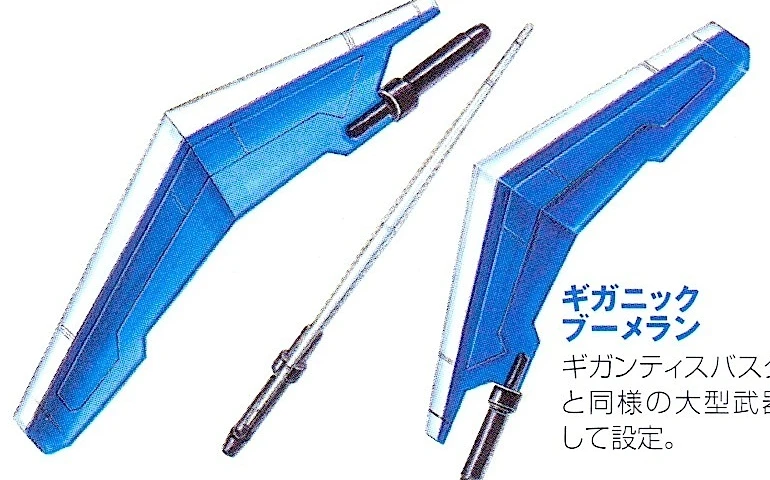
The broad angled Gigannic Boomerang.
Super Sentai Art Collection - MediaWorks, 2002 · printed p. 045 · PDF p. 53
Sources
- Super Sentai Art Collection - GigaPhoenix · MediaWorks · 2002 · page 045 · scan page 53
- Super Sentai Art Collection - GigaPhoenix Starbeast studies 44-45 · MediaWorks · 2002 · page 145 · scan page 153
- RoboToyDays - original Japanese Bandai GD-14 DX Chogokin GigaPhoenix · RoboToyDays
Artwork and toy photographs are credited reproductions from published sources. This is a virtual exhibit.