From design to toy · 1990s
GingaiOh: Five as One
Five beasts become one metal warrior.
- From the world of
- Seijuu Sentai Gingaman
- Toy maker
- Bandai
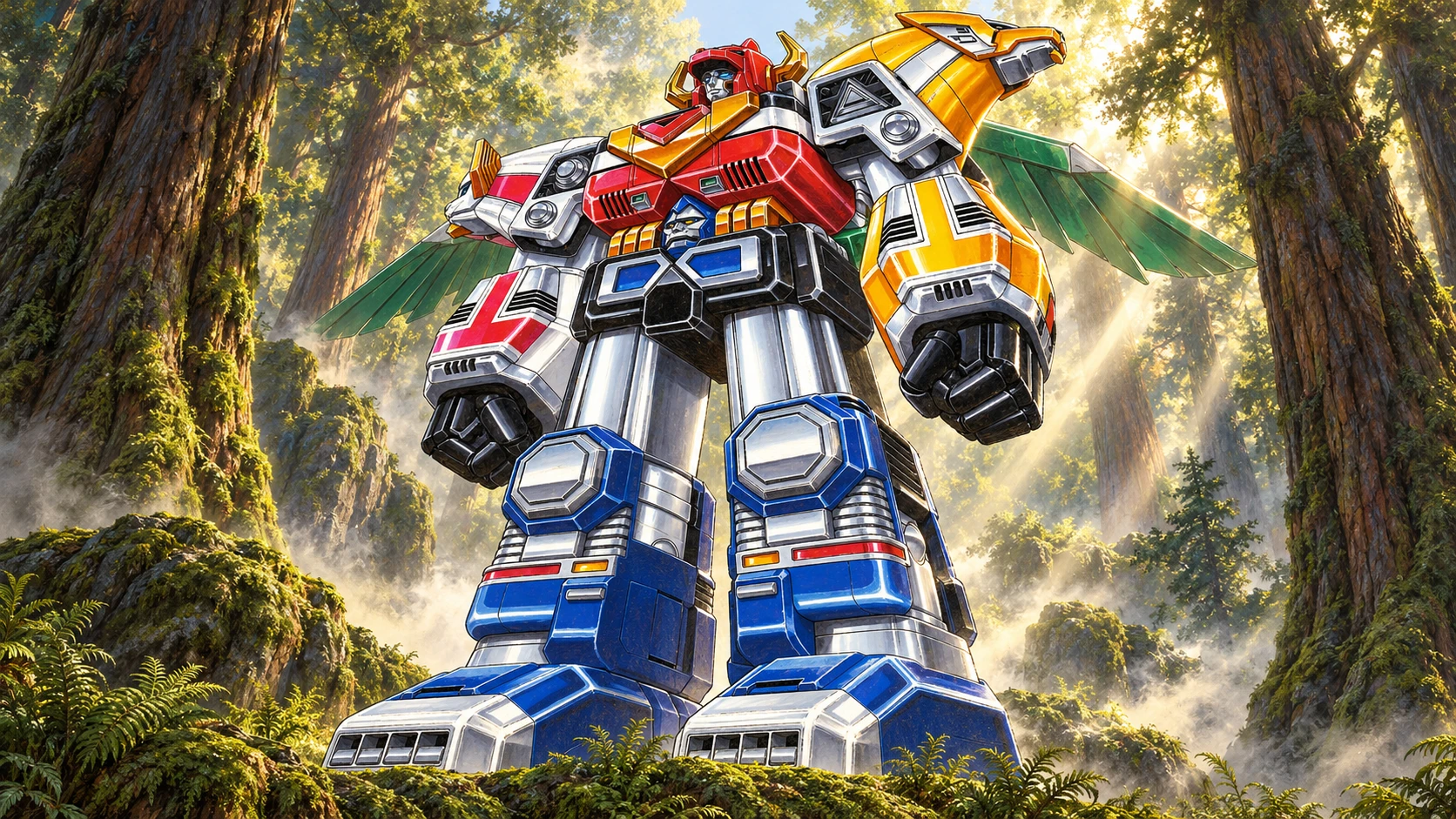
An imagined forest clearing, painted from the standard GingaiOh design. Historical drawings and original Japanese DX photographs follow.
AI cover illustration · Rewind: Northwest RetroDesign reference ↗01 / The design
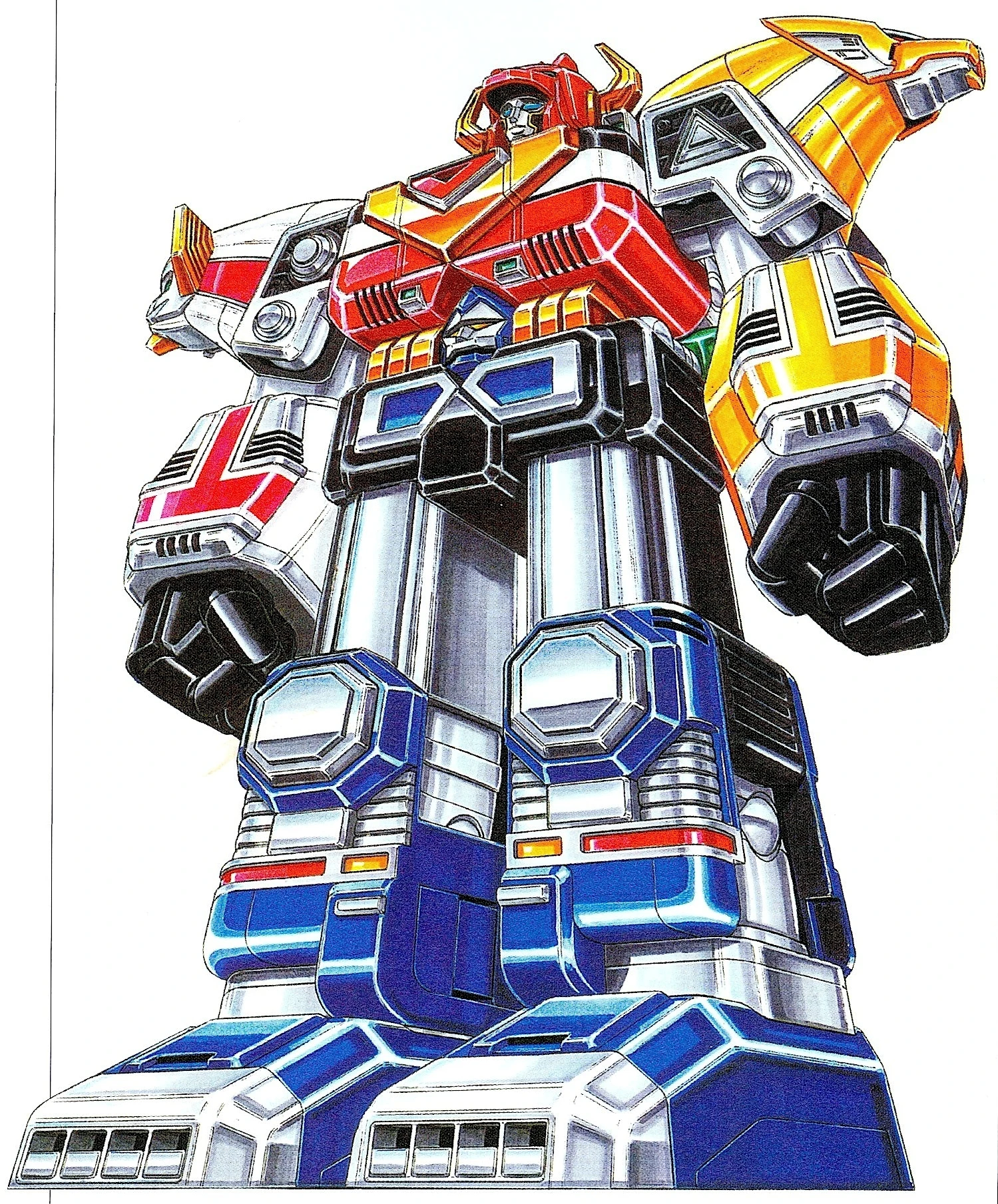
The finished design keeps five animal identities visible. Look for the gorilla face just below the red chest.
Super Sentai Art Collection · MediaWorks, 2002 · printed p. 040 · PDF p. 48
02 / The toy
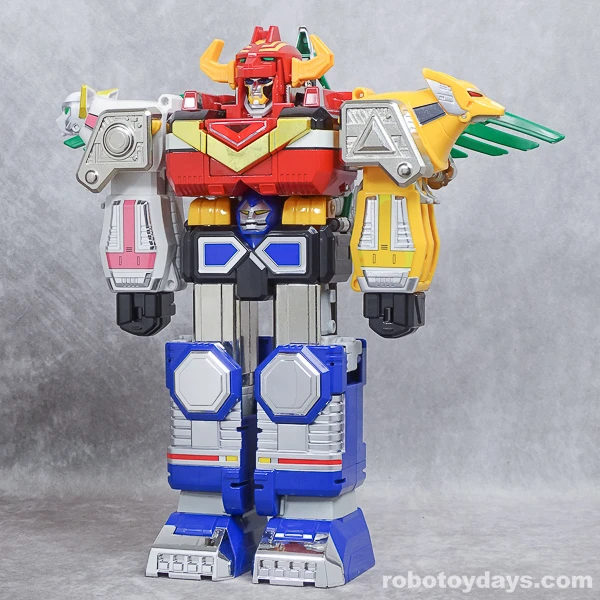
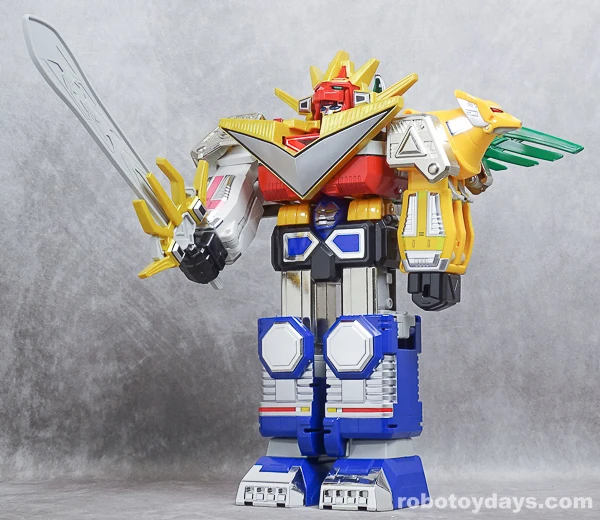
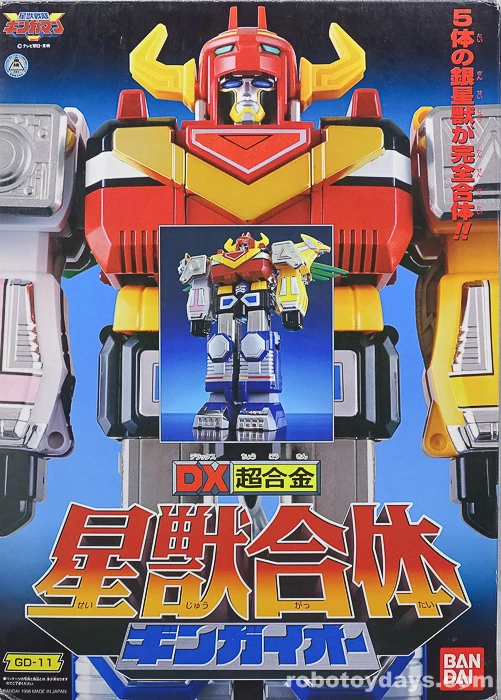
Original Japanese GD-11 DX, standard colors.
Which animal gets the legs
The finished GingaiOh gives both legs to the blue gorilla. That choice was once very different. In drawings 23-24, the yellow wolf and white cat become the legs, with the animal faces all looking forward. Drawing 25 reshapes the gorilla dramatically to make a combination work.
Even drawings 26-29, which look closer to the finished warrior, use different torso structures. The artbook describes a difficult search for the assembly system beneath the styling. Look from these proposals back to the opening pair: moving an animal from leg to arm changes the whole warrior. Early Sketches, printed 144 / PDF 152.
Look closer
Different combination systems
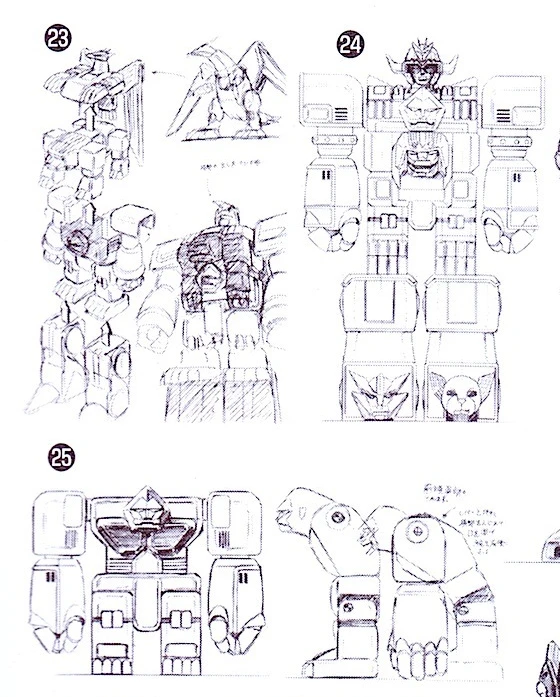
Drawings 23-25: the cat and wolf can be legs here. Drawing 25 changes the gorilla to suit the combination.
Super Sentai Art Collection · MediaWorks, 2002 · printed p. 144 · PDF p. 152
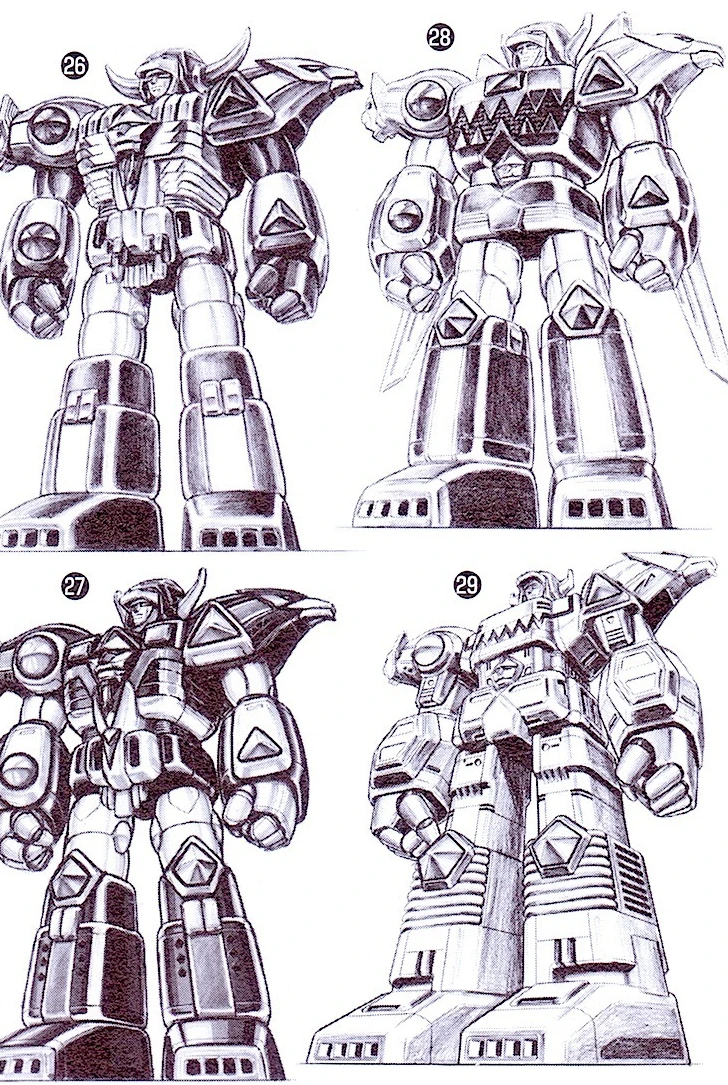
Drawings 26-29 look close to the final warrior, but the book says their torso structures differ from one another.
Super Sentai Art Collection · MediaWorks, 2002 · printed p. 144 · PDF p. 152
In the story
The animals are partners. In Seijuu Sentai Gingaman, the Starbeasts have minds of their own and fight beside the heroes against the space pirates Balban. Gingaleon, Gingalcon, Gingarilla, Gingaverick and Gingat begin as living creatures: lion, dragon, gorilla, wolf and cat. Their first designs make that living quality clear, from the gorilla’s muscular torso to the dragon’s yellow wing membranes.
Before they can combine, the five undergo Great Rebirth, taking on mechanical bodies as the Silver Starbeasts. GingaiOh first forms in chapter seven. The images below show the partners before that change; the five comparisons that follow show their metal forms and the matching original DX units. Artbook, printed 040-041 / PDF 48-49.
Look closer
Before the metal bodies
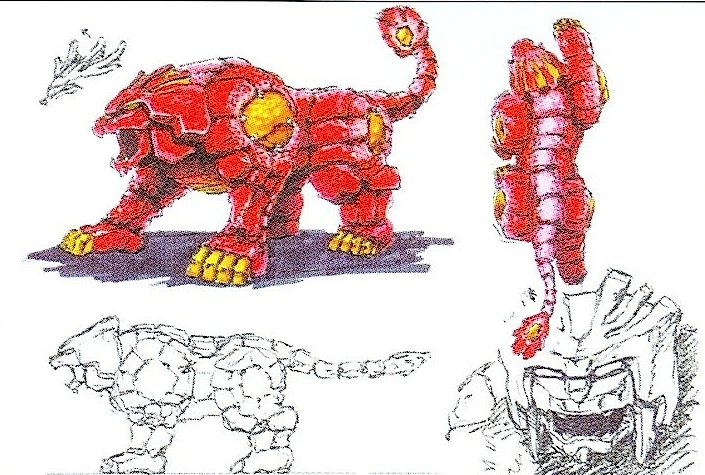
Gingaleon, the red lion: a living companion before the mechanical transformation.
Super Sentai Art Collection · MediaWorks, 2002 · printed p. 041 · PDF p. 49
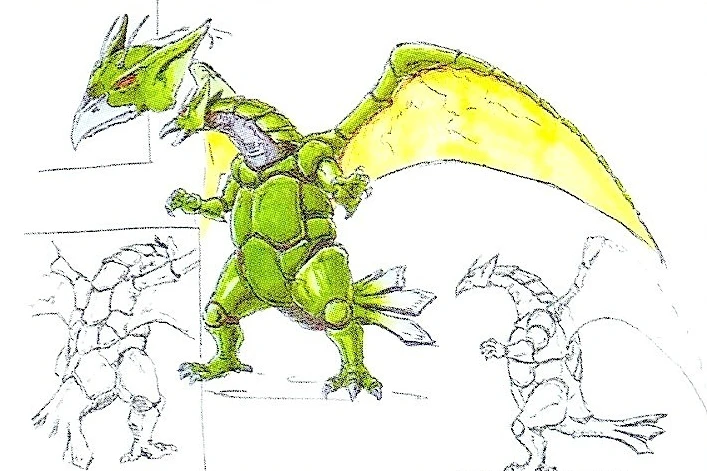
Gingalcon begins as a winged dragon, with a rounder body and membrane wings.
Super Sentai Art Collection · MediaWorks, 2002 · printed p. 041 · PDF p. 49
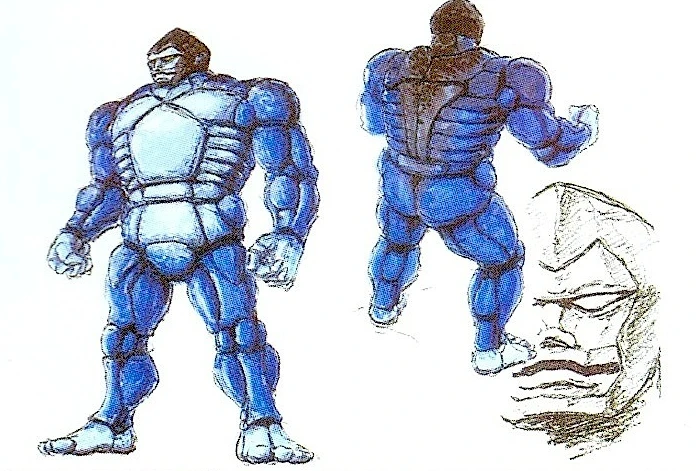
Gingarilla: the blue gorilla already has a broad chest and upright stance.
Super Sentai Art Collection · MediaWorks, 2002 · printed p. 041 · PDF p. 49
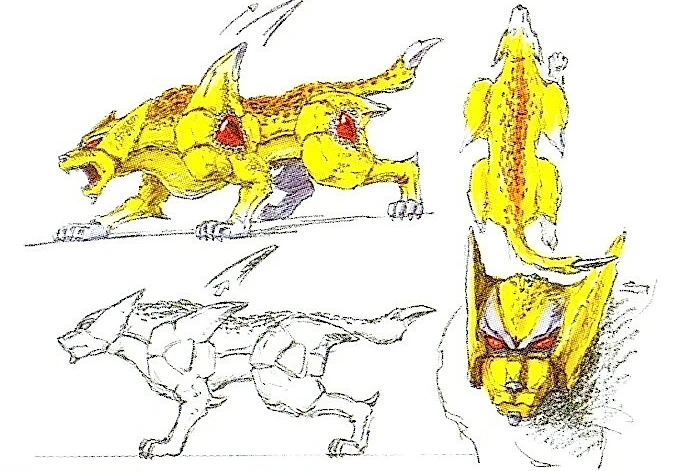
Gingaverick, the yellow wolf: compare the long, pointed ears with its mechanical successor.
Super Sentai Art Collection · MediaWorks, 2002 · printed p. 041 · PDF p. 49
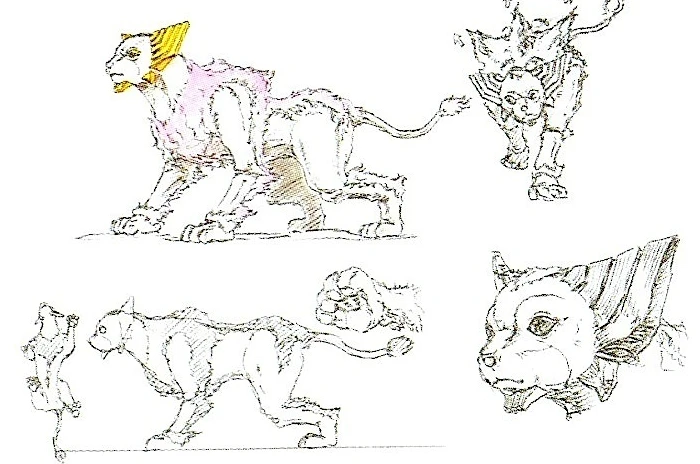
Gingat, the cat: pale fur and a compact face distinguish it from the wolf.
Super Sentai Art Collection · MediaWorks, 2002 · printed p. 041 · PDF p. 49
Five bodies to follow
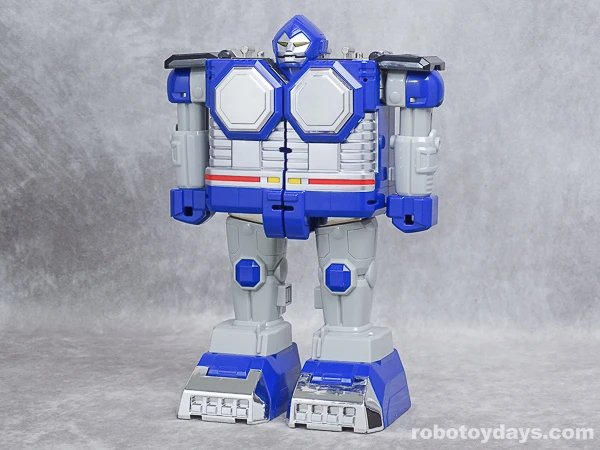
Follow the five mechanical partners into the finished body. Gingaleon, the red lion, supplies the chest and helmet. Gingarilla, the blue gorilla, provides the waist and both legs. Gingalcon, the green bird, spreads its wings across the back.
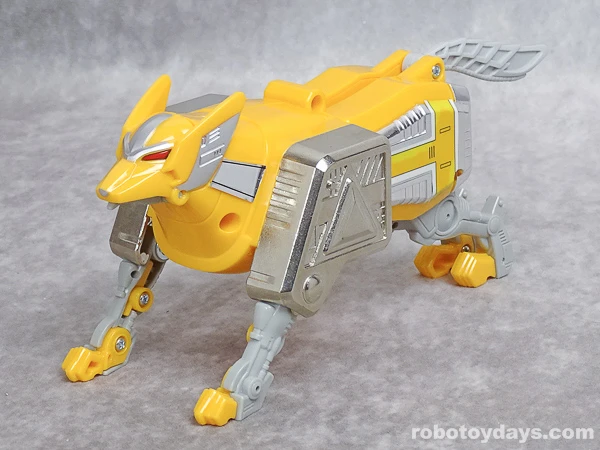
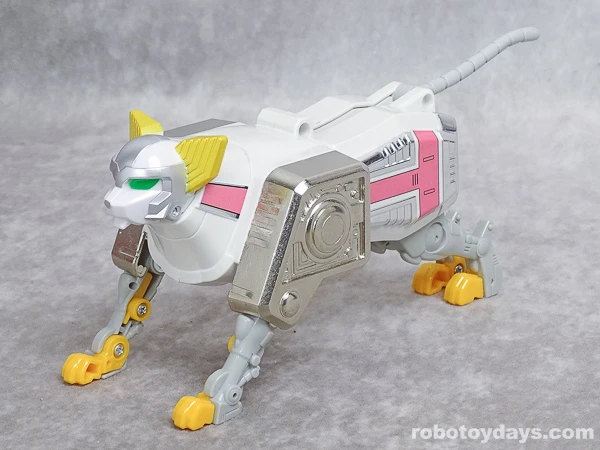
The two quadrupeds become the arms: yellow Gingaverick on the robot’s left and white-and-pink Gingat on its right. In a front view, those sides are reversed for us. Compare each design with its original Japanese DX unit, then find its animal face in the opening warrior. Finished designs, printed 040-041 / PDF 48-49.
Look closer
Gingaleon - the red chest
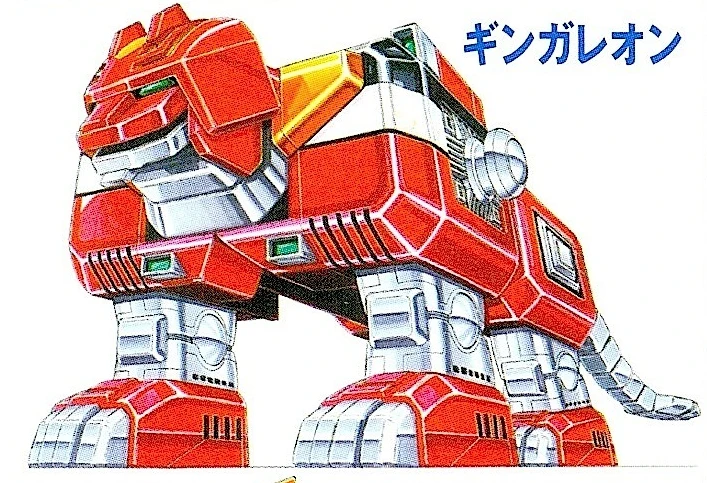
Gingaleon: follow this red lion into the red chest and horned head.
Super Sentai Art Collection · MediaWorks, 2002 · printed p. 041 · PDF p. 49
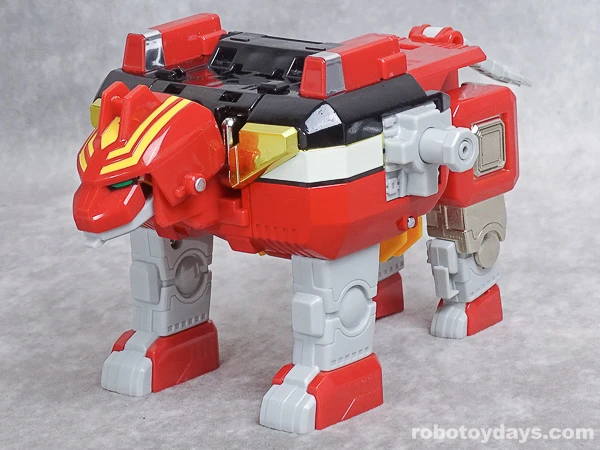
Gingalcon - the green wings
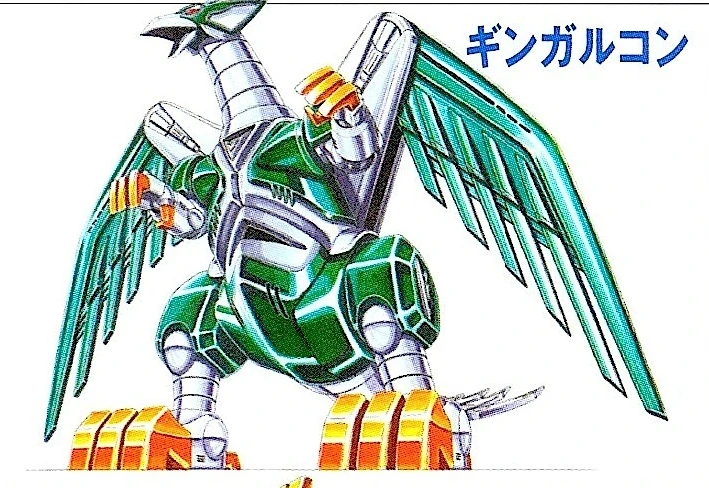
Gingalcon: follow this green bird into the back and spread wings.
Super Sentai Art Collection · MediaWorks, 2002 · printed p. 041 · PDF p. 49
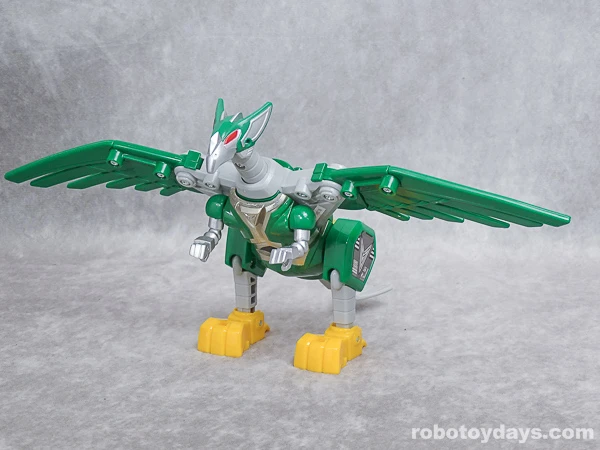
Gingarilla - the blue legs
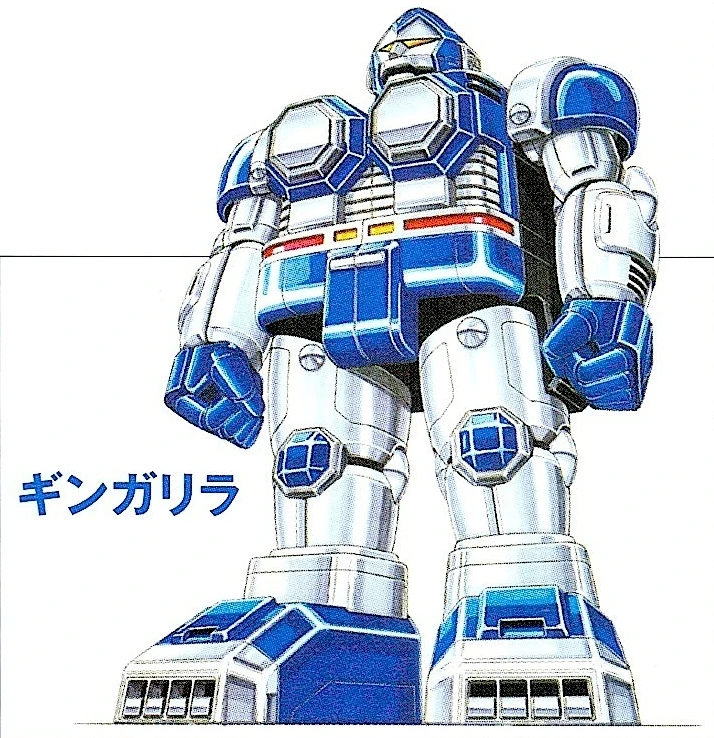
Gingarilla: follow this blue gorilla into the waist and both legs.
Super Sentai Art Collection · MediaWorks, 2002 · printed p. 041 · PDF p. 49
Gingaverick - the yellow left arm
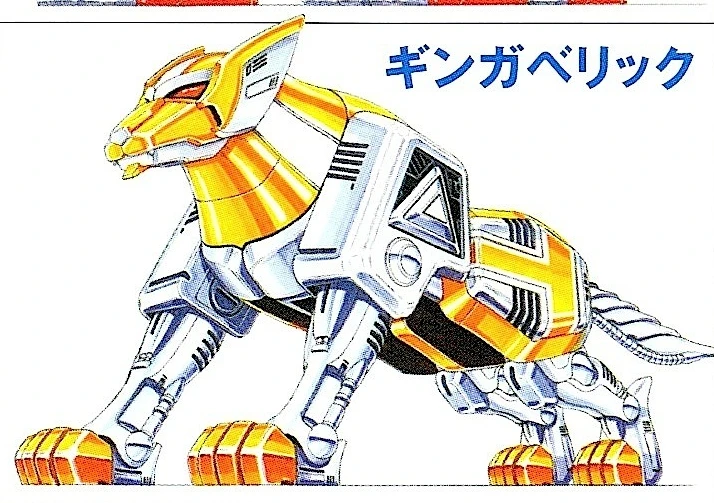
Gingaverick: follow this yellow wolf into the left arm.
Super Sentai Art Collection · MediaWorks, 2002 · printed p. 041 · PDF p. 49
Gingat - the white right arm
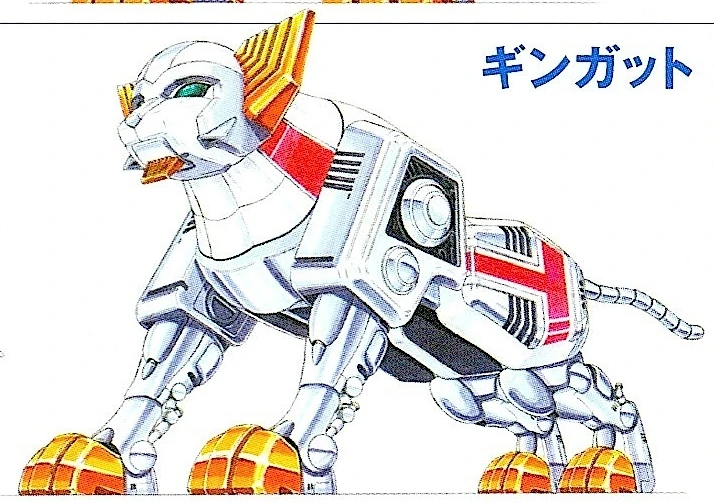
Gingat: follow this white cat with pink accents into the right arm.
Super Sentai Art Collection · MediaWorks, 2002 · printed p. 041 · PDF p. 49
A lion folds into a warrior
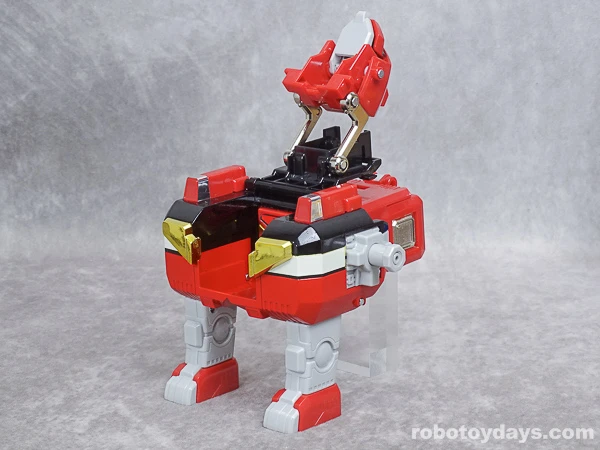
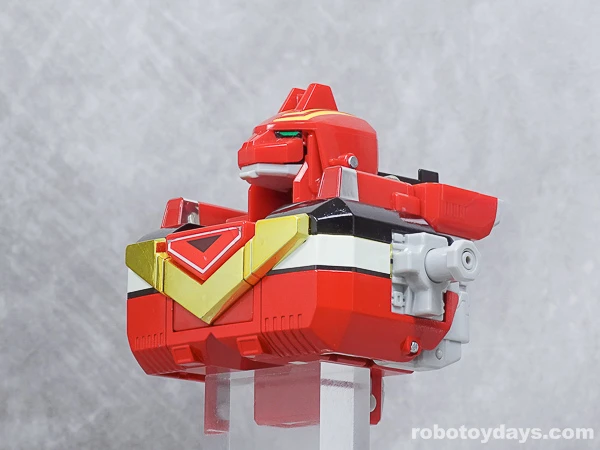
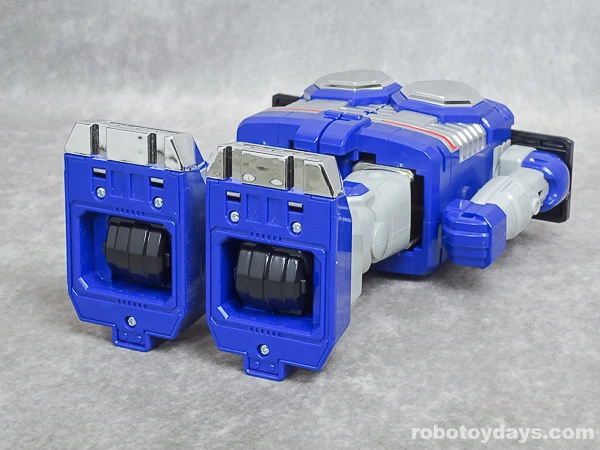
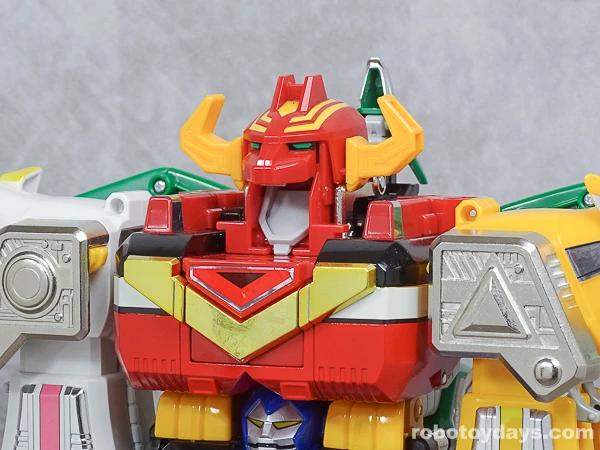
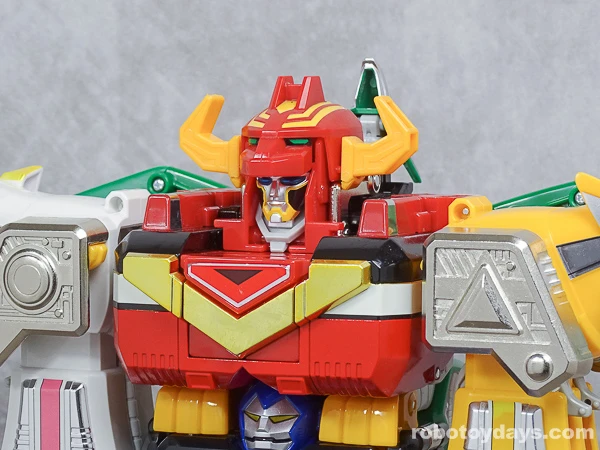
Watch the red body become compact. The original DX photographs show the lion’s raised head and folding body, then the assembled torso and face reveal. The artbook’s product note singles out two storage details: the horns attach beneath Gingaleon’s belly in animal form, and the fists tuck into the soles. Those loose parts participate in the change of shape. Artbook DX note, printed 040 / PDF 48; original toy photographs.
Once the five units join, the lion helmet opens to frame a silver humanoid face. Compare that small reveal with the finished front and side head drawings. The broad warrior is assembled from different animals, yet the helmet gives it a single expression.
Look closer
Fold, join, reveal
The finished face
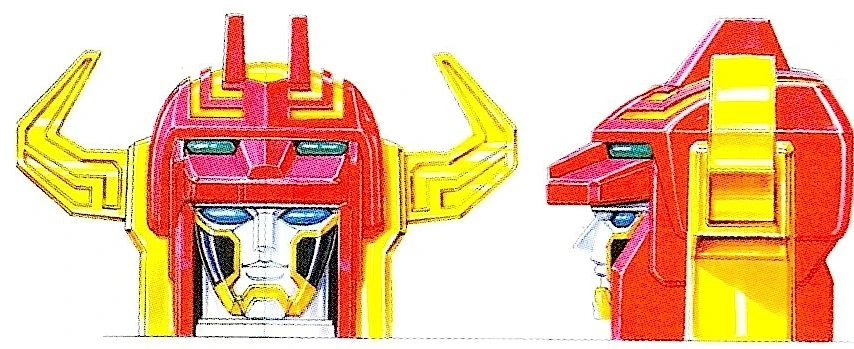
The finished head studies show a human-shaped face framed by the lion helmet.
Super Sentai Art Collection · MediaWorks, 2002 · printed p. 040 · PDF p. 48
A 32-second original DX demonstration: the lion body compacts and its head rises above the chest.
The bird becomes a weapon
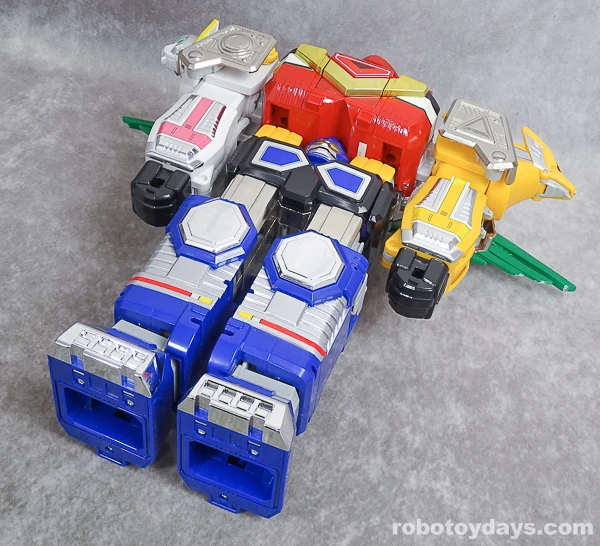
Gingaiken is the great sword; Galcon Bowgun has the green bird’s unmistakable wings. The book describes the bird body transforming into the bowgun and notes that an early setting also had the sword change into it. Keep that story idea separate from the physical toy: the photographs show the separate sword and the bird-shaped weapon held by the DX. Weapon notes, printed 040 / PDF 48.
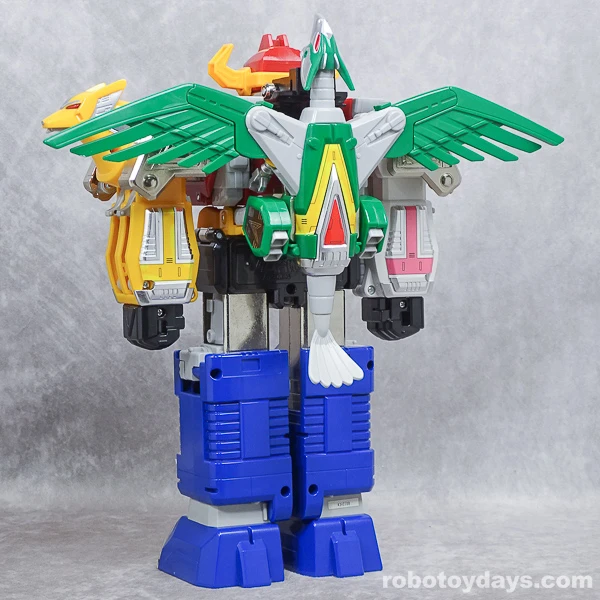
Look at the rear pair first. The green body sits between the shoulders, with its wings reaching behind the arms. In the weapon drawings, that same bird identity becomes a long, pointed shape. On the sword, the book points out Gingaleon’s face worked into the blade decoration.
Look closer
At the back
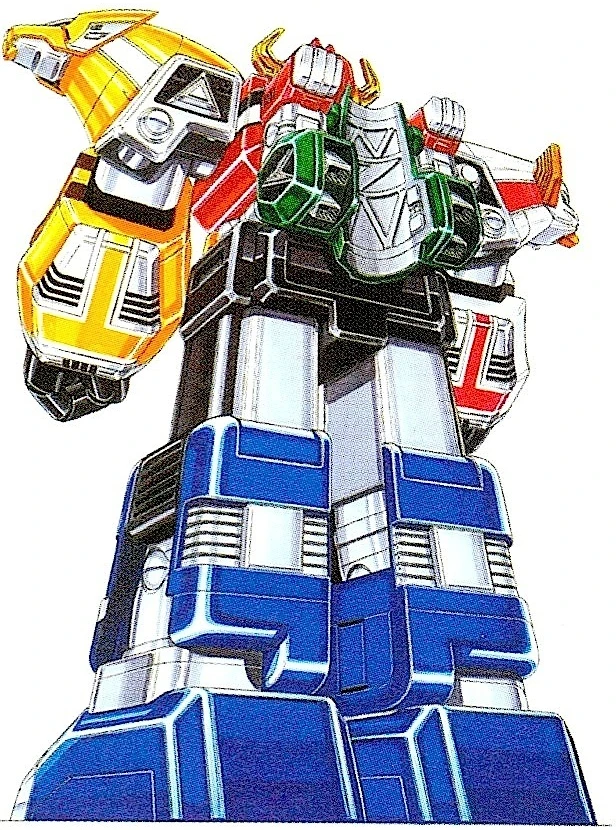
The back view reveals the green bird body between the shoulders.
Super Sentai Art Collection · MediaWorks, 2002 · printed p. 040 · PDF p. 48
Two weapons
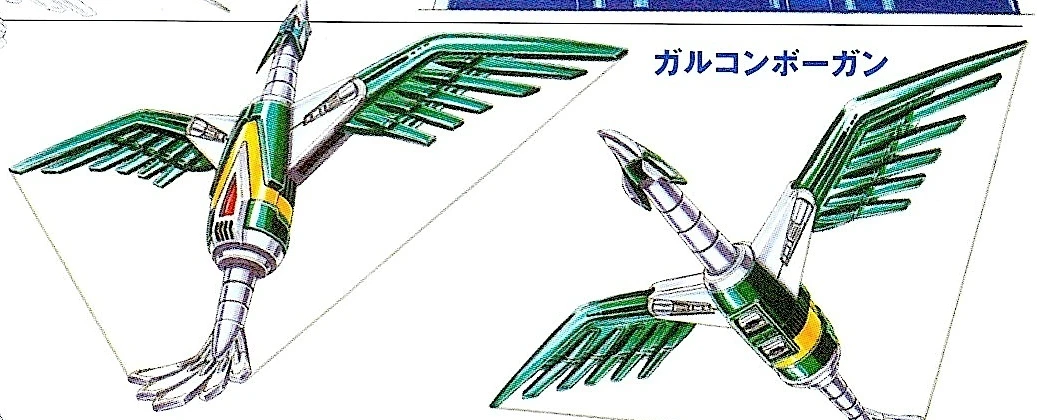
Galcon Bowgun drawings: the bird body supplies the weapon shape.
Super Sentai Art Collection · MediaWorks, 2002 · printed p. 040 · PDF p. 48
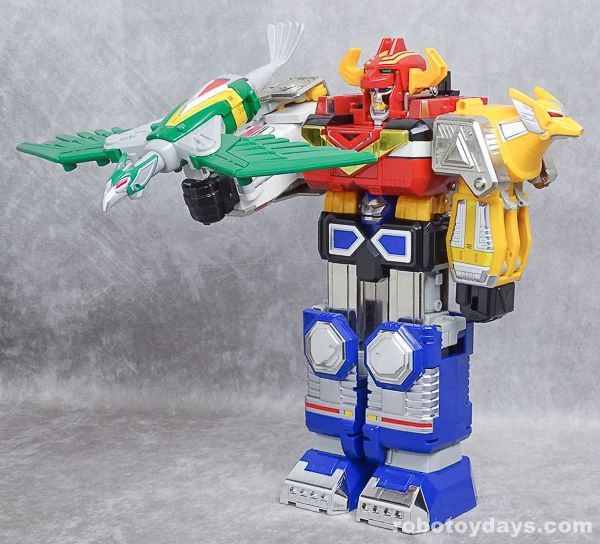
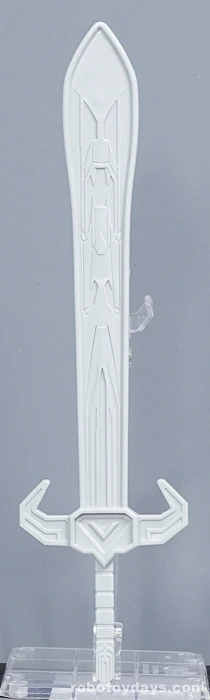
A second layer of armor
Super Armor Shine GingaiOh gains the Light of Ginga, an enlarged head crest and chest plate, and an upgraded Cho Gingaiken. The book places its introduction in chapter 24. The drawing makes the change easy to spot: a radiant gold headpiece and a much larger V dominate the upper body. Artbook, printed 041 / PDF 49.
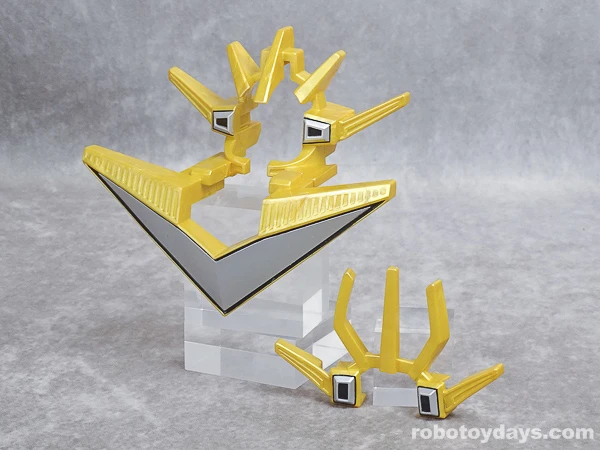
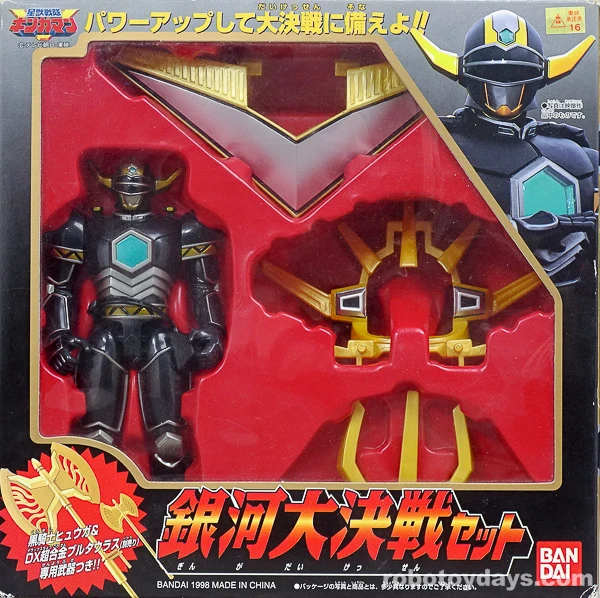
The matching toy photograph uses the original DX with armor from Bandai’s separate Ginga Daikessen accessory set. Its larger chest V and radiant headpiece fit over the familiar body; the loose parts and separate package show how that extra layer was supplied. Accessory set photographs and packaging.
Look closer
The powered-up form
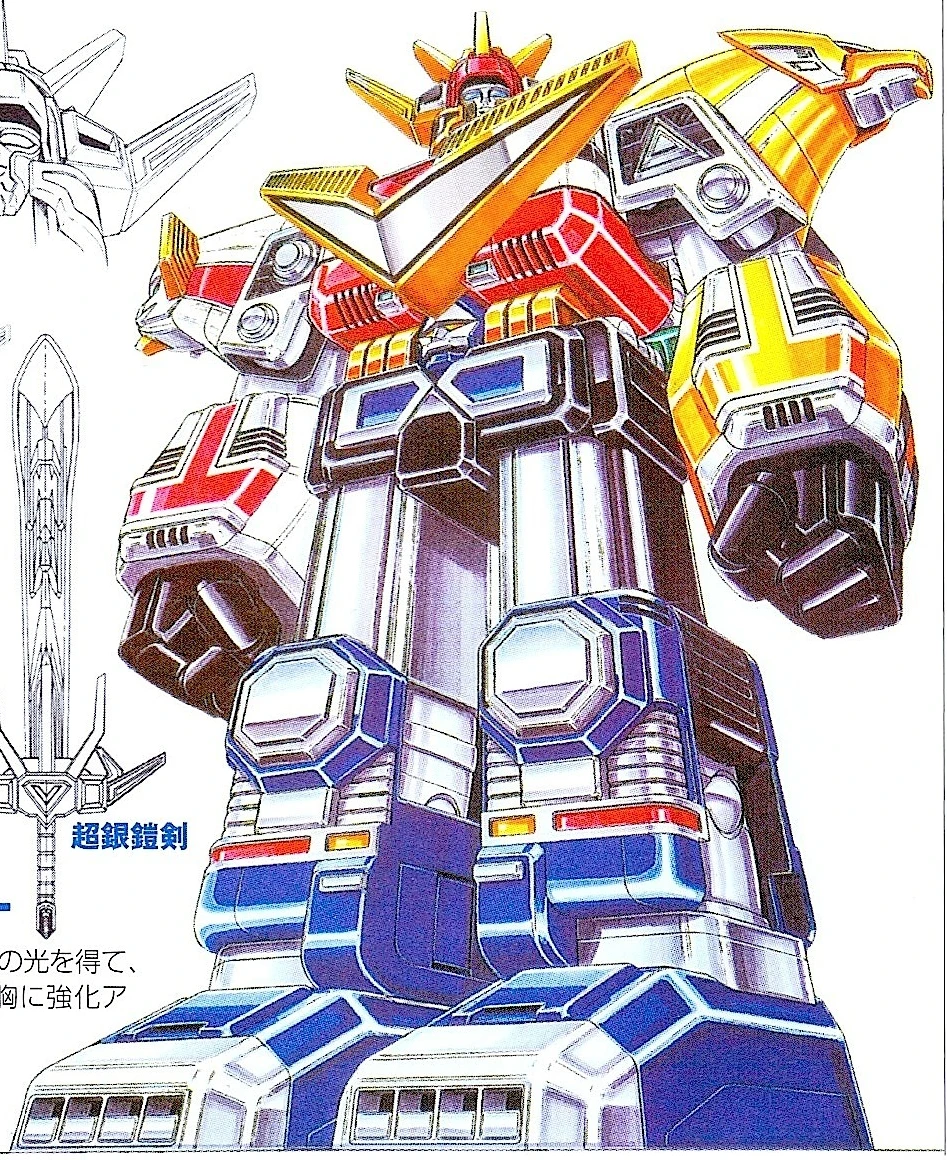
Super Armor Shine adds a radiant crest and a much larger chest V to the same five-part body.
Super Sentai Art Collection · MediaWorks, 2002 · printed p. 041 · PDF p. 49
On the toy shelf
Bandai’s 1998 catalog presents these five mechanical animals as DX Chogokin Seijuu Gattai GingaiOh, advertises the die-cast body and lists ¥9,500. The original Japanese package carries the GD-11 identifier. Its straight-standing robot makes a useful comparison with the dramatic, low-angle finished artwork. Contemporary catalog, unnumbered DX page / PDF 6.
Look closer
The contemporary listing
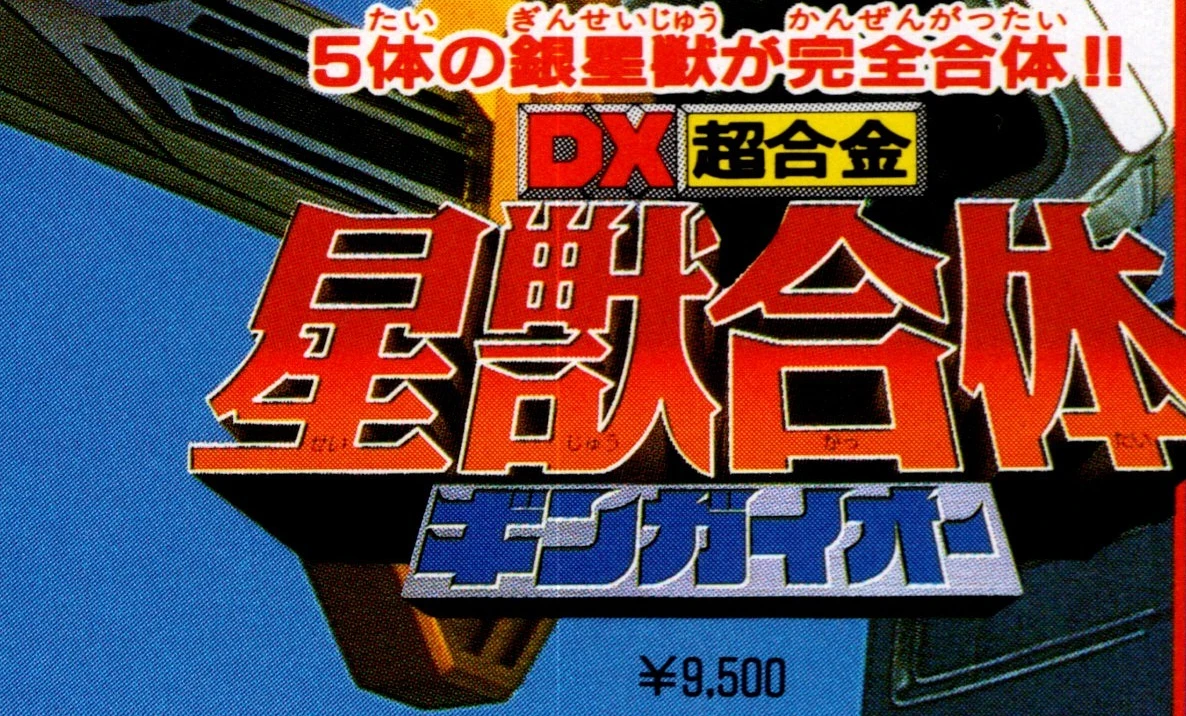
The 1998 catalog identifies the DX Chogokin set at ¥9,500, a historical listing.
Bandai Toy Catalog · Bandai, 1998 · printed p. Unnumbered DX GingaiOh page · PDF p. 6
Five units in the catalog

The catalog lines up all five mechanical units, including the white cat and yellow wolf.
Bandai Toy Catalog · Bandai, 1998 · printed p. Unnumbered DX GingaiOh page · PDF p. 6
On the drawing board
The first animal sketches explore geometric faces as well as bodies. Drawings 1-3 precede the settled names and final mechanical forms. Look for circles, sharp triangles and mask-like faces in the early ideas.
The book says the mechanical Great Rebirth concept arrived late in development. Earlier work aimed to combine the animals while retaining more of their living forms. Drawings 12-21 document that search, including armored bird and gorilla ideas. Some proposals look much closer to the living creatures than the final Silver Starbeasts do. These are alternative development studies, rather than successive retail releases. Early Sketches, printed 144 / PDF 152.
Look closer
First ideas
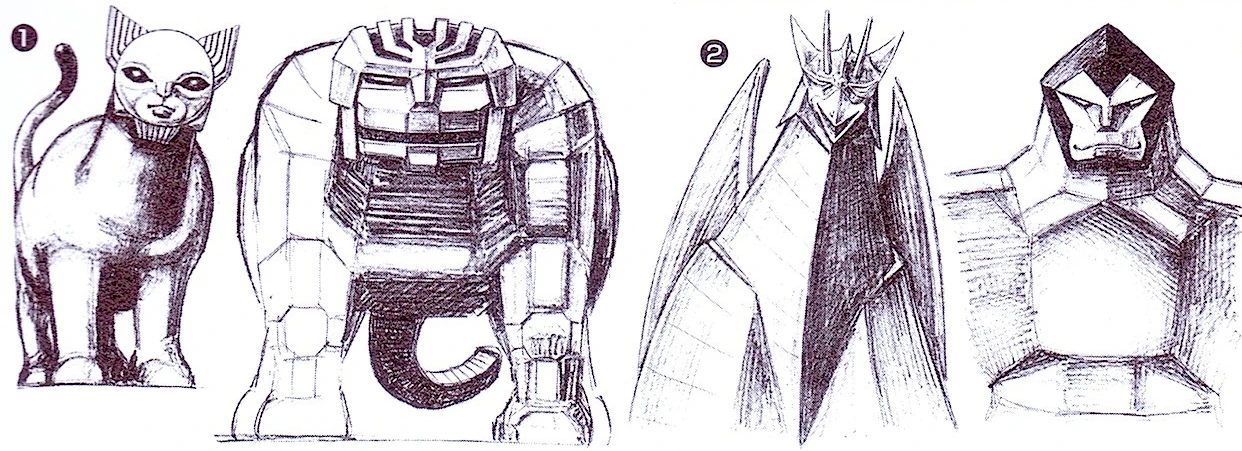
Drawings 1-2: early animal images precede the final mechanical bodies.
Super Sentai Art Collection · MediaWorks, 2002 · printed p. 144 · PDF p. 152
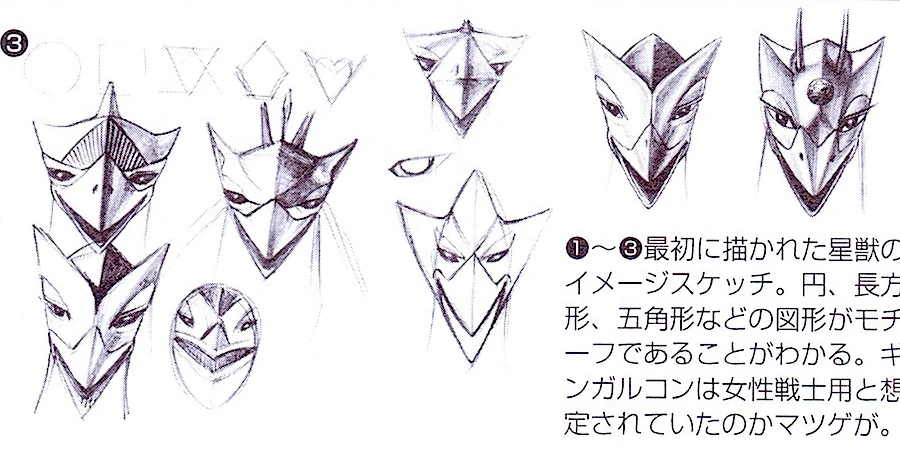
Drawing 3 explores circles, triangles and pointed mask shapes.
Super Sentai Art Collection · MediaWorks, 2002 · printed p. 144 · PDF p. 152
Five evolving bodies
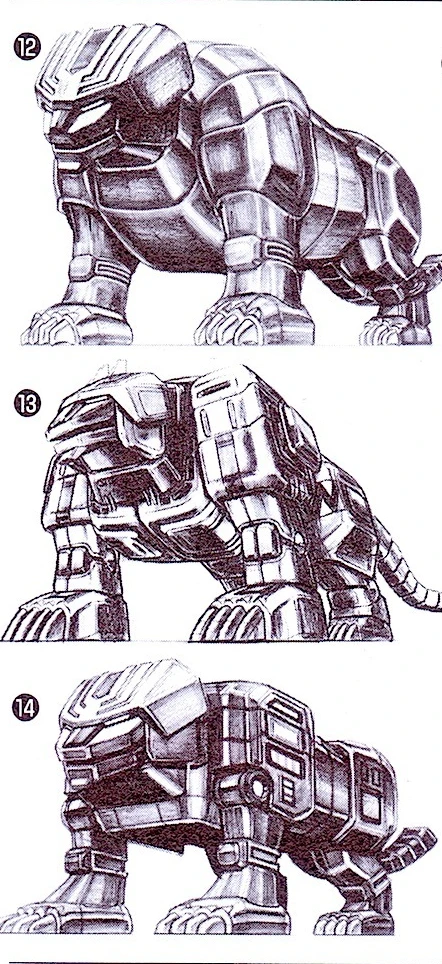
Drawings 12-14. Three proposals move from an animal-like lion toward the blockier mechanical body.
Super Sentai Art Collection · MediaWorks, 2002 · printed p. 144 · PDF p. 152
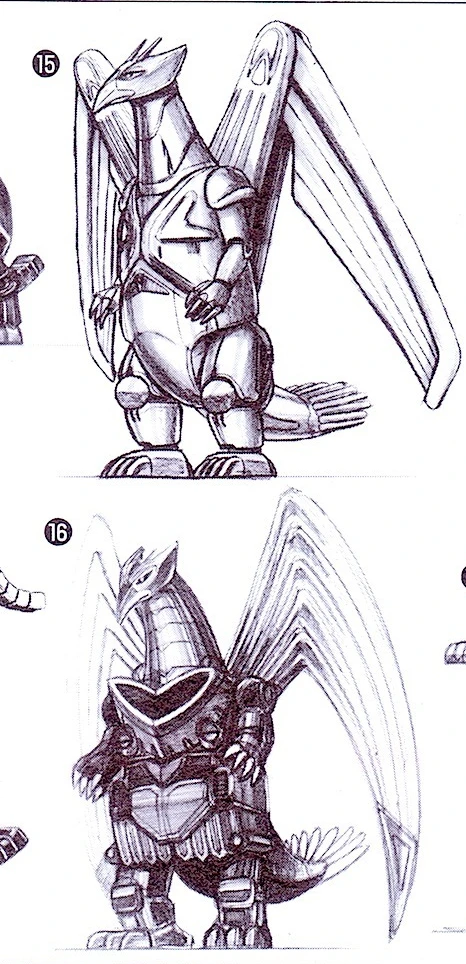
Drawings 15-16. Two bird studies contrast a light body with a heavier armored proposal.
Super Sentai Art Collection · MediaWorks, 2002 · printed p. 144 · PDF p. 152
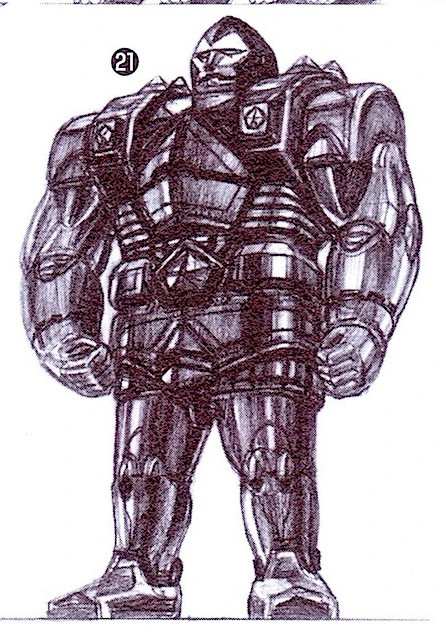
Drawings 21. An armored gorilla proposal keeps its familiar upright stance.
Super Sentai Art Collection · MediaWorks, 2002 · printed p. 144 · PDF p. 152
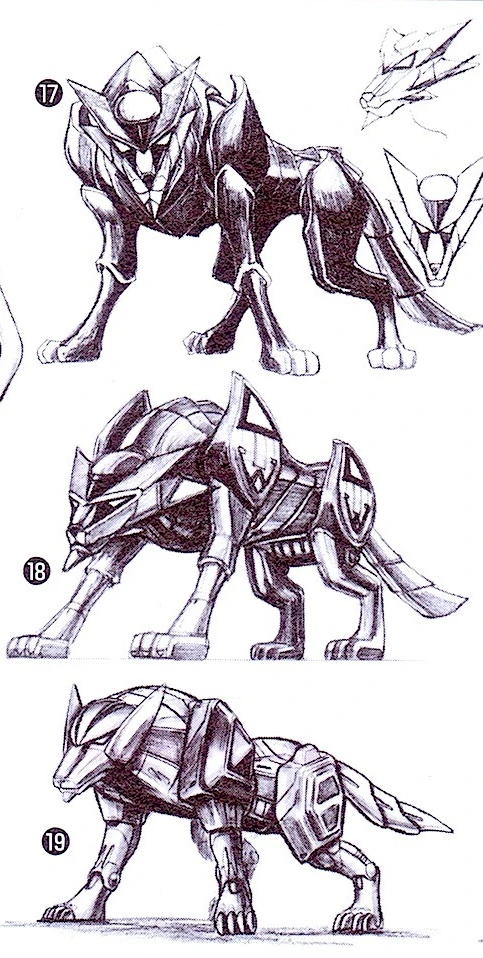
Drawings 17-19. Wolf proposals vary the torso and leg construction before the final yellow unit.
Super Sentai Art Collection · MediaWorks, 2002 · printed p. 144 · PDF p. 152
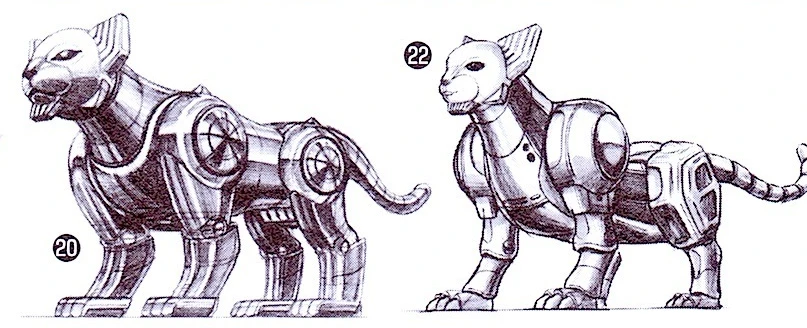
Drawings 20 and 22. Cat studies retain a rounded head while the body construction changes.
Super Sentai Art Collection · MediaWorks, 2002 · printed p. 144 · PDF p. 152
Another rebirth for space
One further possibility survives in drawings 48-52: new transformed bodies for the five Starbeasts to fight in space. The book reports that their combined form was not found. These five sketches preserve an idea without establishing a completed combination or a manufactured toy. Notice how the animal heads remain legible even as the bodies acquire spacecraft-like shapes. Early Sketches, printed 145 / PDF 153.
Look closer
Unrealized space forms
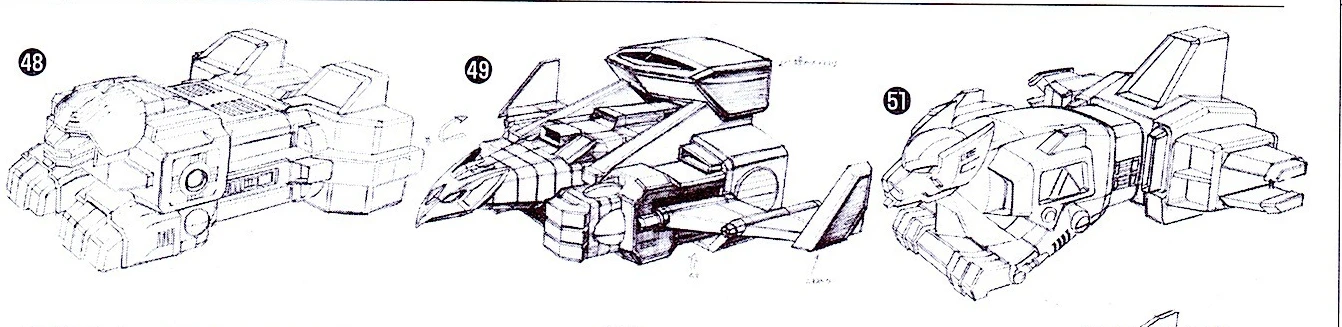
Drawings 48, 49 and 51: space-combat forms proposed for three of the Starbeasts.
Super Sentai Art Collection · MediaWorks, 2002 · printed p. 145 · PDF p. 153
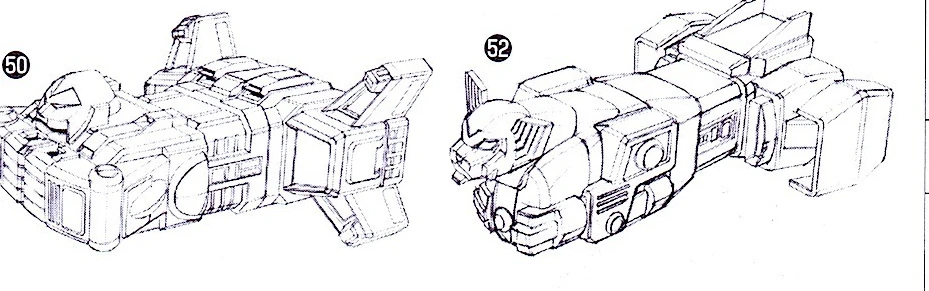
Drawings 50 and 52 complete the five proposed space forms. These are development drawings, not product photographs.
Super Sentai Art Collection · MediaWorks, 2002 · printed p. 145 · PDF p. 153
Five faces, one warrior
Try the five-face invitation again. The lion frames the warrior’s face, the gorilla looks out below the chest, and the cat and wolf sit high on the shoulders. Turn to the rear view for the fifth face: the green bird that can leave the back and become a weapon.
Those positions changed from one proposal to the next. The early cat-and-wolf legs make the finished solution easier to appreciate: one warrior, with a visible way back to each of its five partners.
Sources
- Super Sentai Art Collection - GingaiOh and the Starbeasts · MediaWorks · 2002 · page 040 · scan page 48
- Super Sentai Art Collection - GingaiOh and the Starbeasts · MediaWorks · 2002 · page 041 · scan page 49
- Super Sentai Art Collection - Early Sketches: GingaiOh · MediaWorks · 2002 · page 144 · scan page 152
- Super Sentai Art Collection - Early Sketches: Starbeast space-combat proposals · MediaWorks · 2002 · page 145 · scan page 153
- Bandai Toy Catalog 1998 - DX Chogokin Seijuu Gattai GingaiOh · Bandai · 1998 · page Unnumbered DX GingaiOh page · scan page 6
- RoboToyDays - original Japanese Bandai GD-11 DX GingaiOh photographs · RoboToyDays
- RoboToyDays - original Bandai Ginga Daikessen accessory set and DX armor photographs · RoboToyDays
- Original DX GingaiOh demonstration, excerpt 2:08-2:40 · TokuVN Media Team / YouTube
Artwork and toy photographs are credited reproductions from published sources. This is a virtual exhibit.