From design to toy · 1995
Gunmazin: The Giant Behind the Mask
A monumental blue face opens into a gold-crested warrior. Follow Gunmazin from the first smiling sketches to the two forms, golden key and spring-loaded surprise of Bandai's original DX toy.
- From the world of
- Chouriki Sentai Ohranger
- Toy maker
- Bandai
- Release year
- 1995
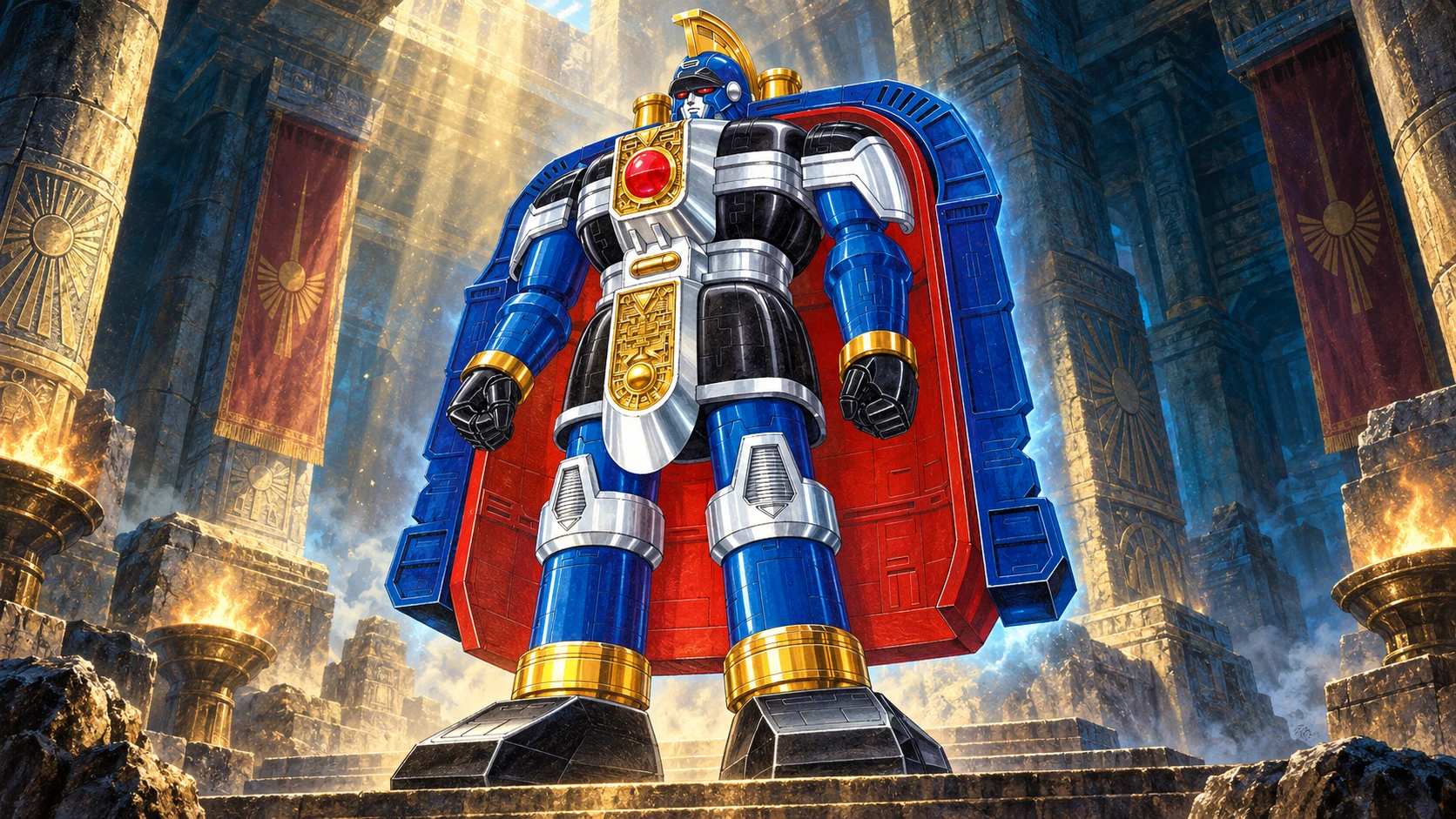
Original interpretive cover inspired by Gunmazin's finished design. Historical artwork and toy photographs appear below.
AI cover illustration - Rewind: Northwest RetroDesign reference ↗01 / The design
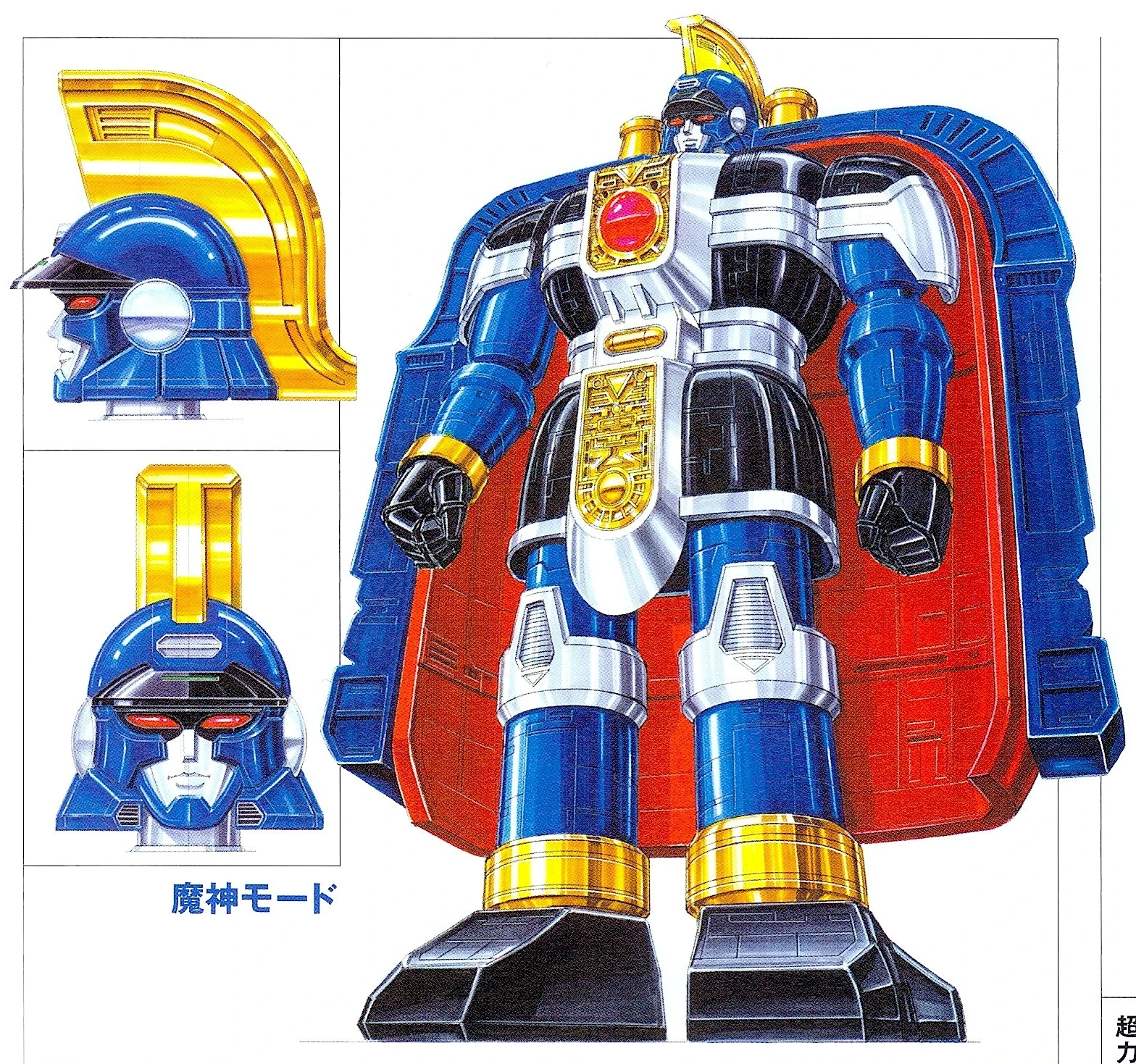
Majin Mode. The open shell frames the warrior; gold ornament, silver bands and the red chest jewel break up its blue and black armor. The helmet studies preserve the small face inside the larger transforming design.
Super Sentai Art Collection - MediaWorks, 2002 · printed p. 069 · PDF p. 77
02 / The toy
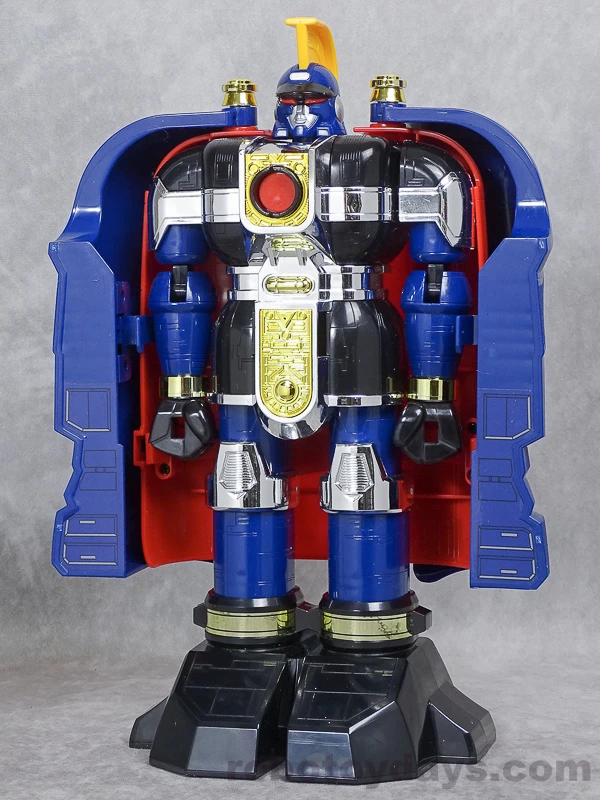
The original Japanese DX toy in its open warrior form. Compare the broad shell, long gold waist panel and silver knee guards with the finished drawing.
A face with a secret
A huge blue face rests on short black feet. Its long nose, narrow eyes and slight smile make it look like a monument. Open the surrounding shell and another face appears inside: a small silver warrior beneath a swept gold crest. Gunmazin makes the change from object to character the center of its design.
The artbook places this legendary being in Chouriki Sentai Ohranger, arriving in episode 37. Its story reaches back 600 million years, and an incantation summons it again. The Legendary Key revives Gunmazin; the character follows the person who possesses it. The key therefore belongs to both halves of the exhibit: a story device in the artwork and a working accessory on the toy. Artbook, p. 069.
The smile becomes the design
Early studies 37 and 38 already place the two identities beside each other. One is a standing warrior with a broad frame behind its shoulders, a high crest and a decorated waist panel. The other is almost entirely face, with a small base beneath it. Their proportions differ from the finished drawings, but the contrast between a person-like figure and a monumental object is already clear.
The accompanying caption gives an unusually direct account of the idea: the archaic smile carried by many Sentai robot faces becomes a face that transforms into a robot itself. The sketches preserve that starting point. They do not establish a manufactured prototype or a dated sequence of mechanical revisions. Early sketches, p. 148.
Look closer
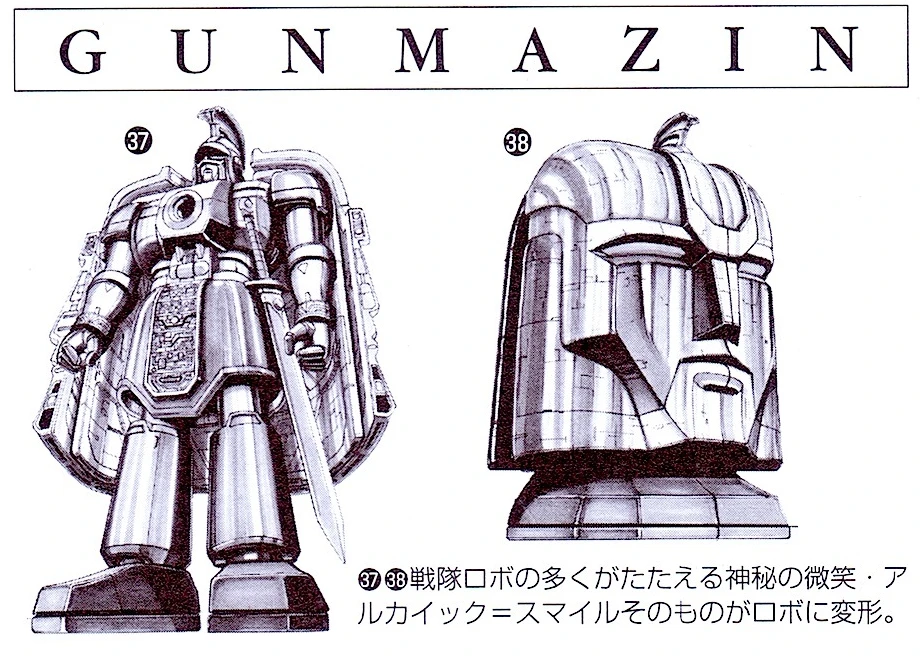
Drawings 37 and 38. The caption starts with the archaic smile seen on many Sentai robot faces and makes that face itself the transforming object. Both silhouettes are present in these early studies.
Super Sentai Art Collection - MediaWorks, 2002 · printed p. 148 · PDF p. 156
Two faces, one shell
The finished sheet calls the warrior Majin Mode and the folded face Shinmen Mode. In warrior form, blue armor surrounds a black torso crossed by silver bands. Gold concentrates attention on the helmet crest, wrists, ankles and long waist panel. A red chest jewel echoes the red interior of the open shell.
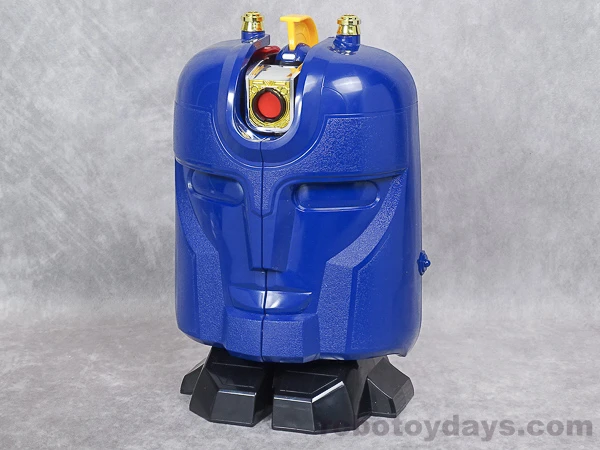
That surrounding structure is the visual link between the forms. Open, it frames the arms and shoulders like a rigid backdrop. Closed, the blue surface becomes the enormous smiling face. The images below pair its finished drawing with a photograph of the original toy in the same configuration, so the folded form receives as much attention as the warrior. Finished forms, p. 069.
Look closer
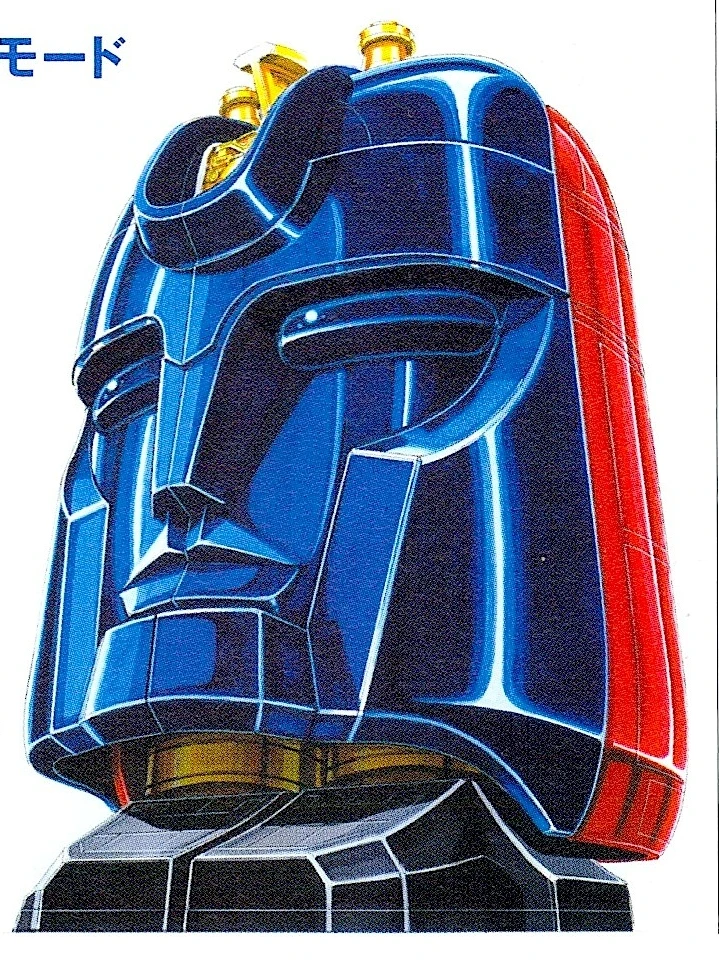
Shinmen Mode, the divine-face form. The warrior's surrounding shell becomes the main subject: a blue monumental face on a compact base.
Super Sentai Art Collection - MediaWorks, 2002 · printed p. 069 · PDF p. 77
A key that does something
Bandai carried the revival idea into DX Gunmazin. The artbook describes a die-cast Legendary Key: inserting it activates a spring-operated transformation of the face. The close-up photograph shows where the key enters the forehead. It documents the accessory in place; the mechanism description comes from the printed toy note. DX product note, p. 069.
The note also records two face sculpts associated with different production periods. It does not date the change or identify the pictured review toy’s production run. Those details remain open, while the original Japanese DX box anchors the edition shown here. Original DX photographs and packaging — RoboToyDays.
The 1995 Bandai Christmas catalog lists DX Gunmazin at ¥5,500. This contemporary listing places the transforming face and warrior on the toy shelf alongside the season’s other Ohranger releases. 1995 catalog, p. 2.
With the shell open and the yellow-bladed Majin Saber in hand, the toy returns to a familiar warrior silhouette. Close it again and the smile takes over. The early design idea remains legible in both positions: the face is the object waiting to come alive.
Look closer
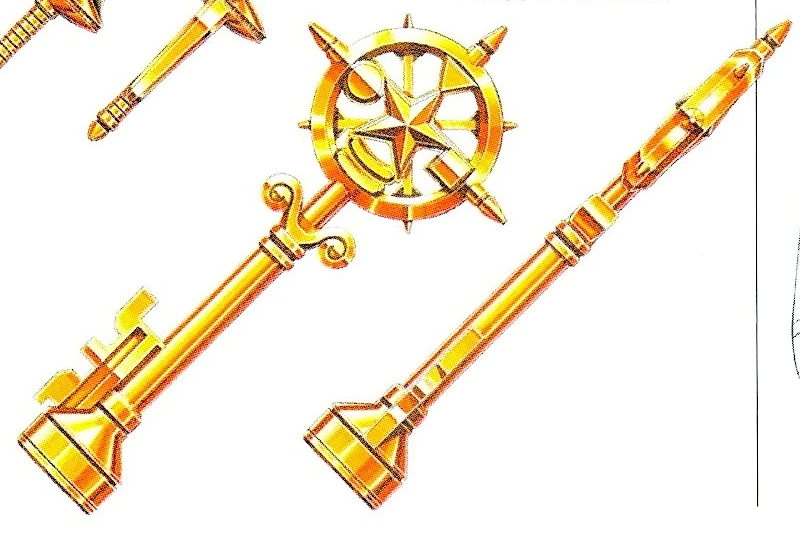
The Legendary Key, in two design views. Its circular bow and broad tip give this small accessory a recognizable silhouette.
Super Sentai Art Collection - MediaWorks, 2002 · printed p. 069 · PDF p. 77
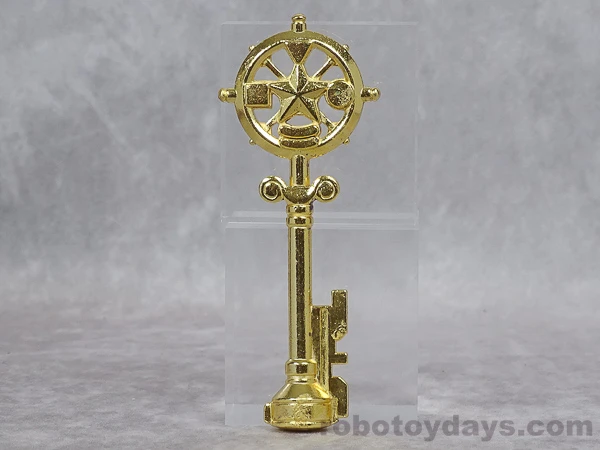
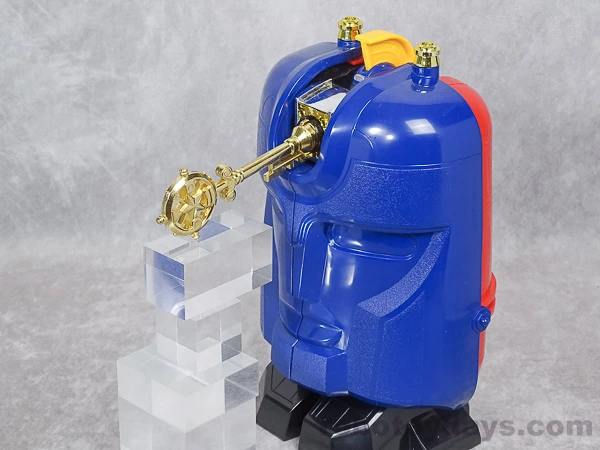
The key enters the forehead of the closed face. Clear blocks support it for the photograph; the artbook describes the toy's spring-operated face transformation.
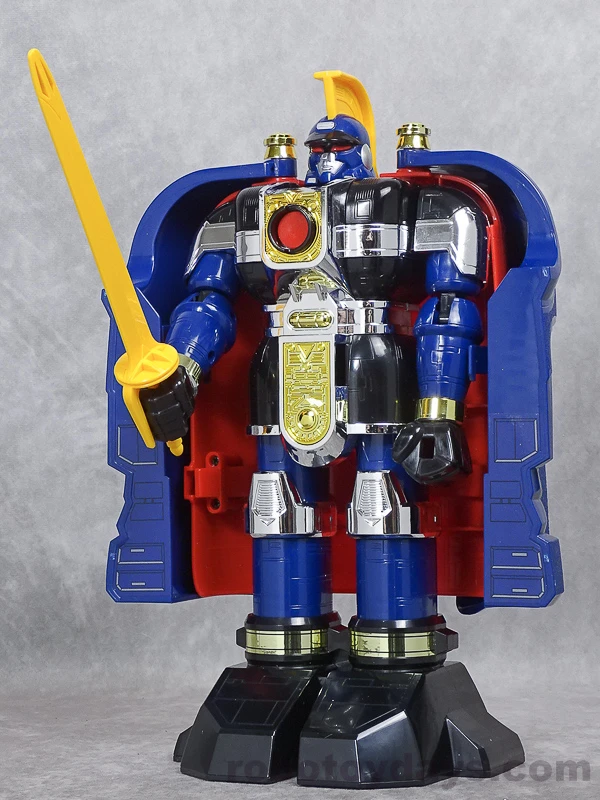
Warrior form with the Majin Saber accessory. Its yellow blade gives the toy a different accent from the pale metallic blade shown on the artbook's design page.
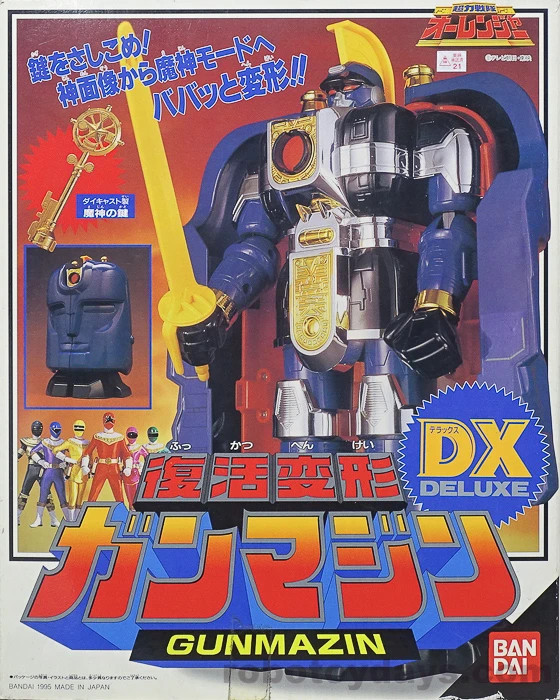
Sources
- Super Sentai Art Collection - Gunmazin, finished forms, accessories and DX toy note · MediaWorks · 2002 · page 069 · scan page 77
- Super Sentai Art Collection - Early Sketches, Gunmazin · MediaWorks · 2002 · page 148 · scan page 156
- 1995 Bandai X'mas Book Catalog - DX Gunmazin listing · Bandai · 1995 · page 2 · scan page 2
- RoboToyDays - original Japanese DX Gunmazin photographs · RoboToyDays
Artwork and toy photographs are credited reproductions from published sources. This is a virtual exhibit.