From design to toy · 1990s
Mega Voyager: A Rocket Through the Middle
A rocket passes through a flying saucer, a small robot folds into a waist, and a tank becomes two feet. Follow five space machines into Mega Voyager—and meet the walking tank left on the drawing board.
- From the world of
- Denji Sentai Megaranger
- Toy maker
- Bandai
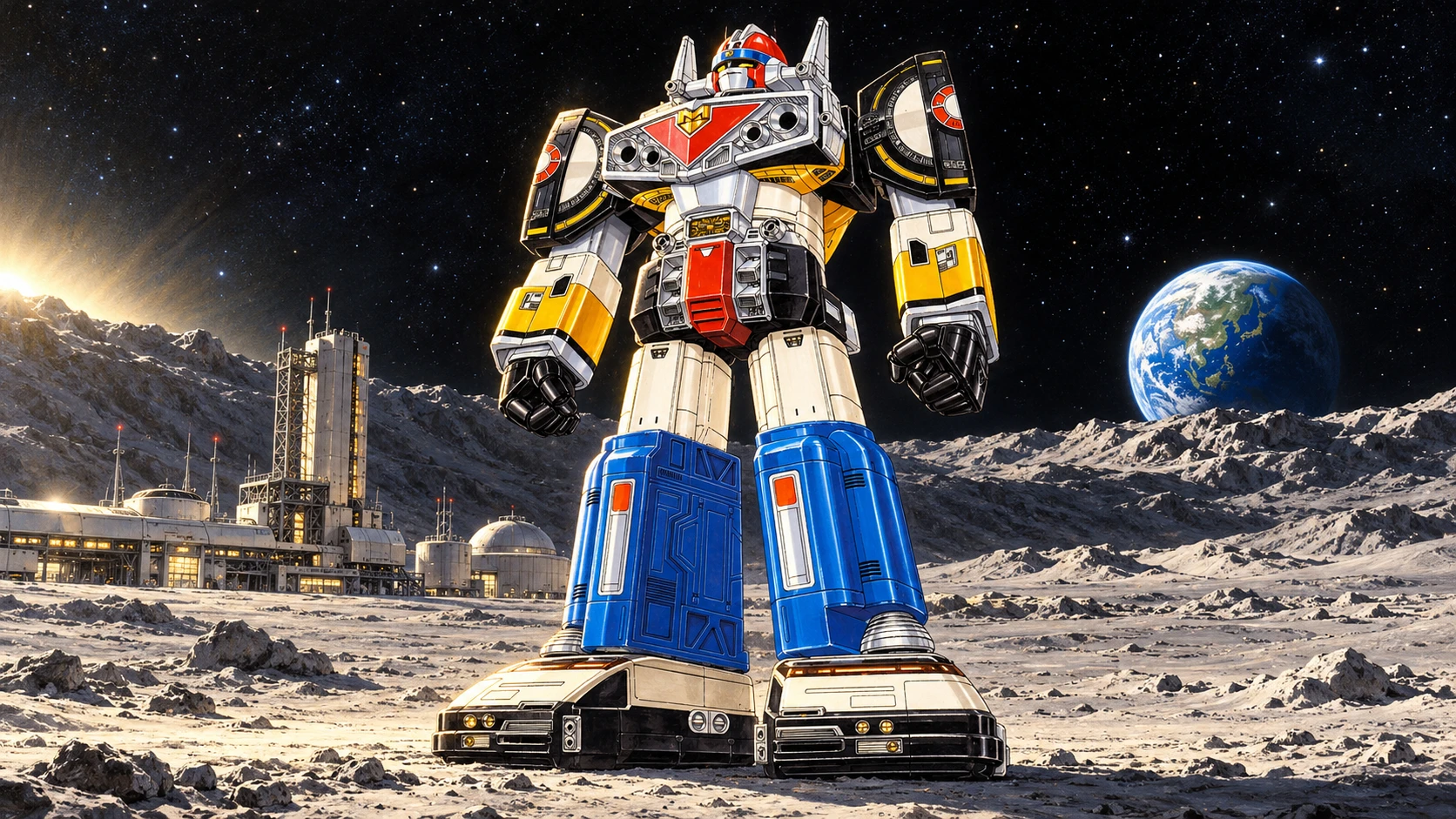
Mega Voyager at an imagined lunar base. Original drawings and toy photographs follow.
AI cover illustration - OpenAI ImageGenDesign reference ↗01 / The design
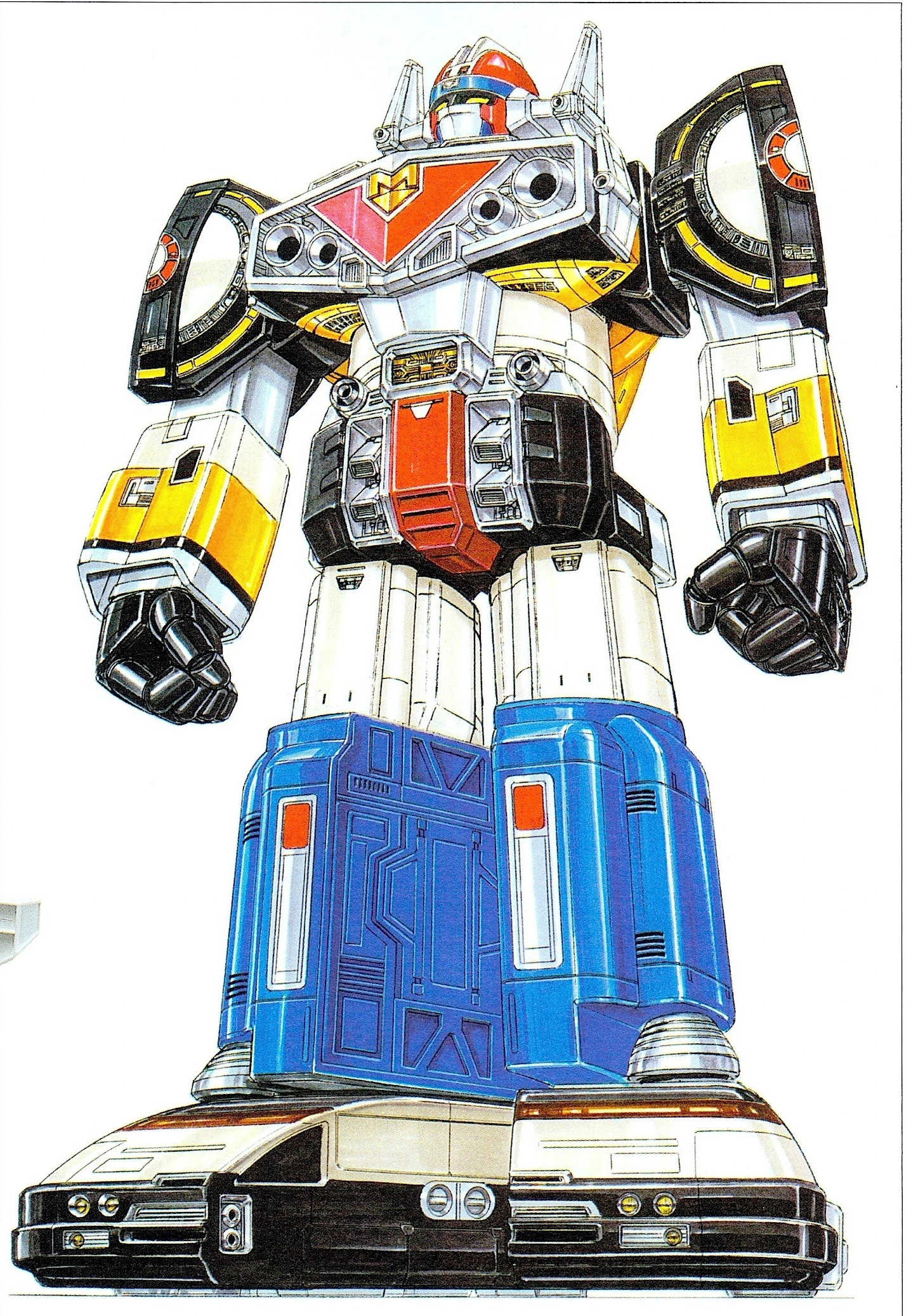
Follow the curved shoulders and blue shins back to their spacecraft origins.
Super Sentai Art Collection - MediaWorks, 2002 · printed p. 050 · PDF p. 58
02 / The toy
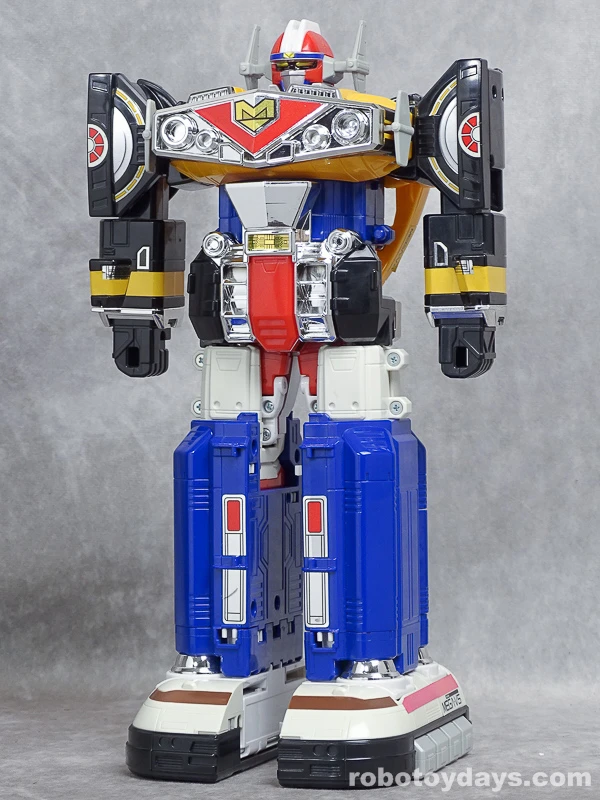
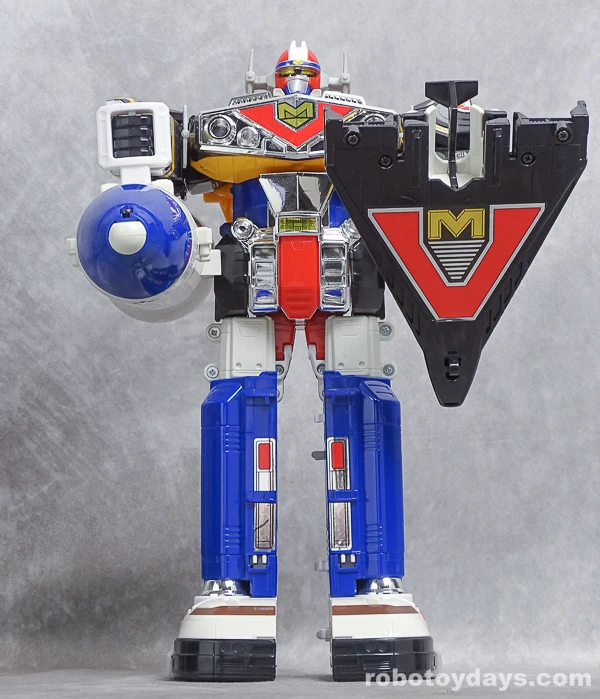
The original Japanese DX, assembled.
Thread a rocket through a saucer
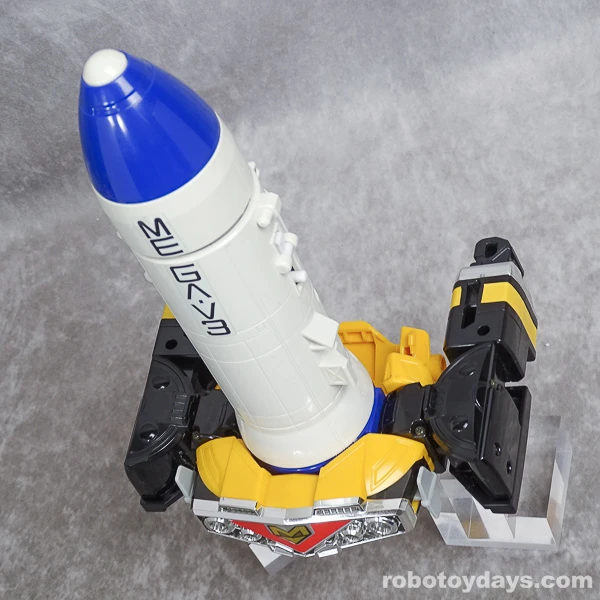
The blue cylinders below Mega Voyager’s knees look like rocket engines because that is what they were. The dark arcs at its shoulders once lay flat on a yellow flying saucer. The surprise is how these two machines meet.
In Denji Sentai Megaranger, five Voyager Machines are built in secret at I.N.E.T.’s lunar base and combine as Mega Voyager. The finished designs give each machine a different silhouette: a robot, shuttle, rocket, saucer and tank. Artbook, pp. 050–051.
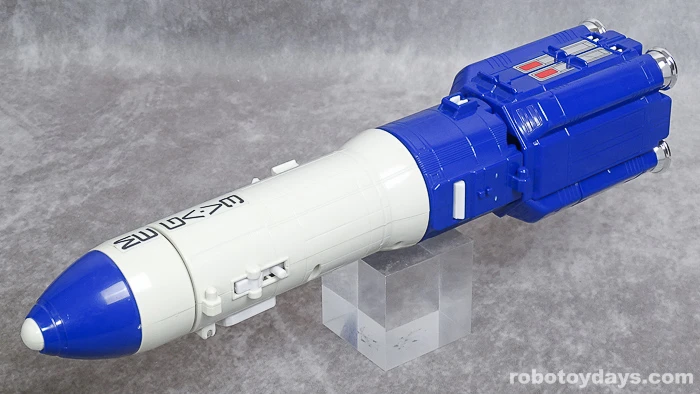
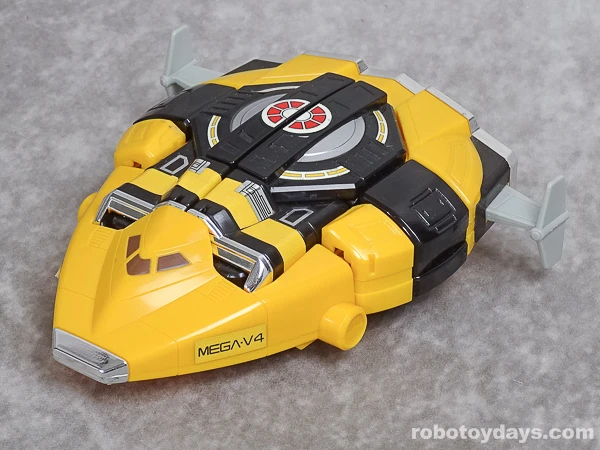
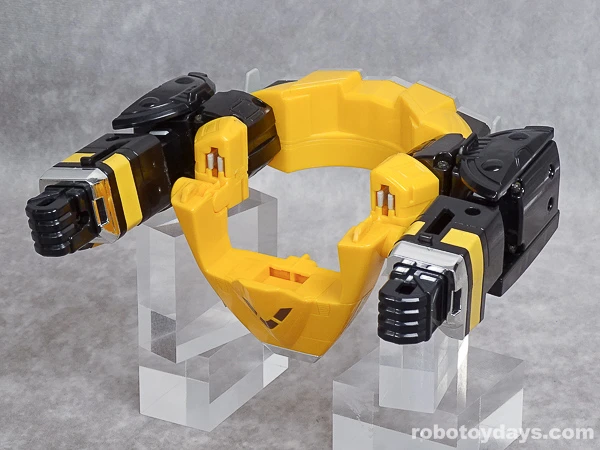
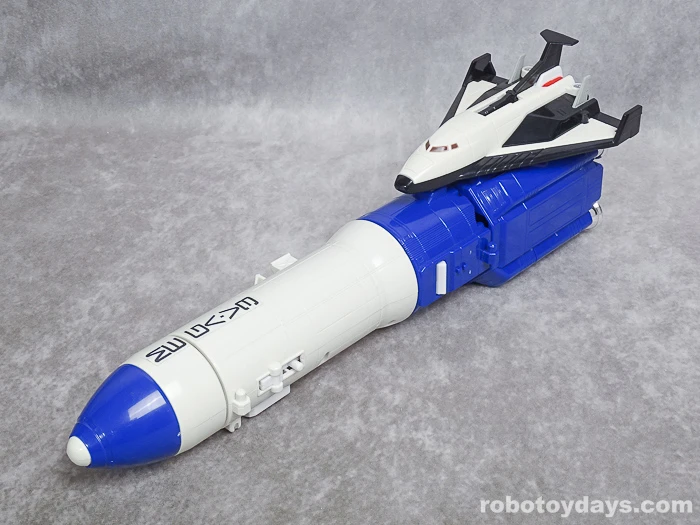
The original Japanese Bandai DX Mega Voyager makes the meeting literal. Saucer Voyager 4 opens into the chest and arms, leaving a hole through its center. The white body of Rocket Voyager 3 passes through that opening; its blue rear section separates to form the lower legs. Look at the two assembly photographs: an ordinary-looking saucer has become a ring around a rocket. DX assembly photographs.
Look closer
The rocket
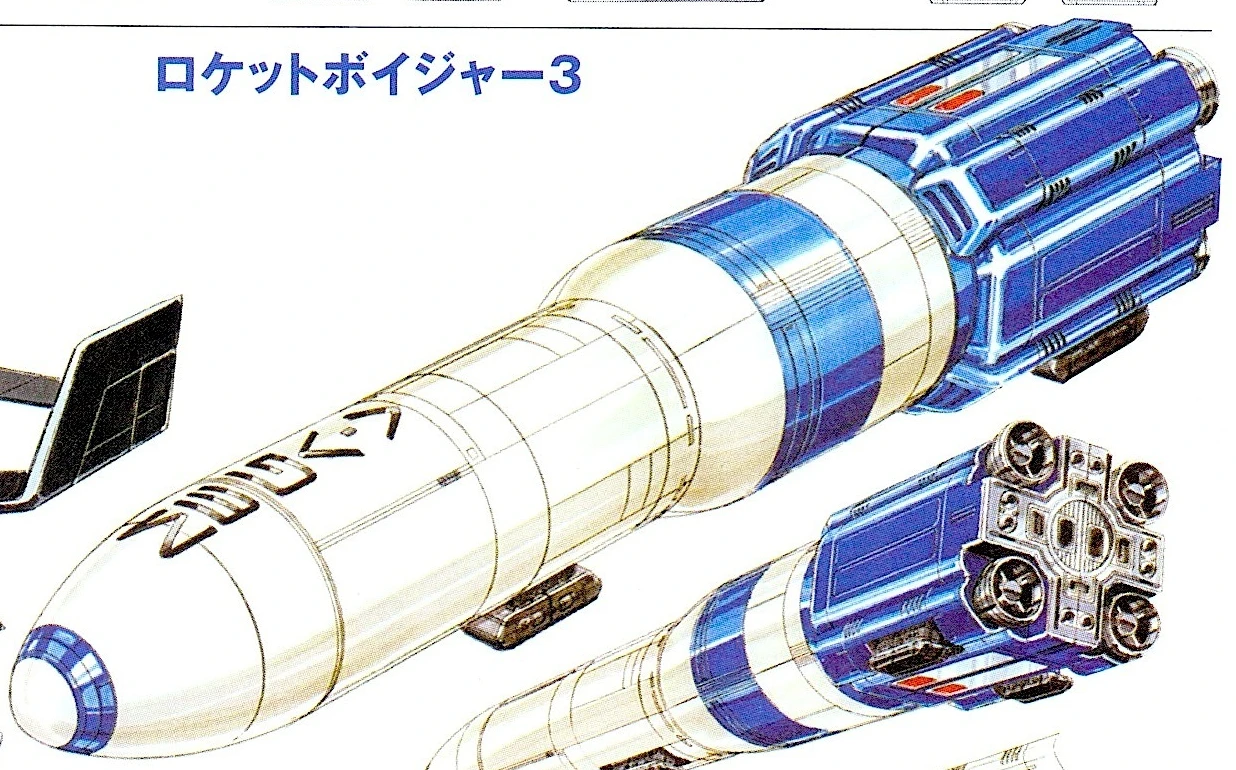
Rocket Voyager 3: the blue engine section will become the shins.
Super Sentai Art Collection - MediaWorks, 2002 · printed p. 051 · PDF p. 59
The saucer
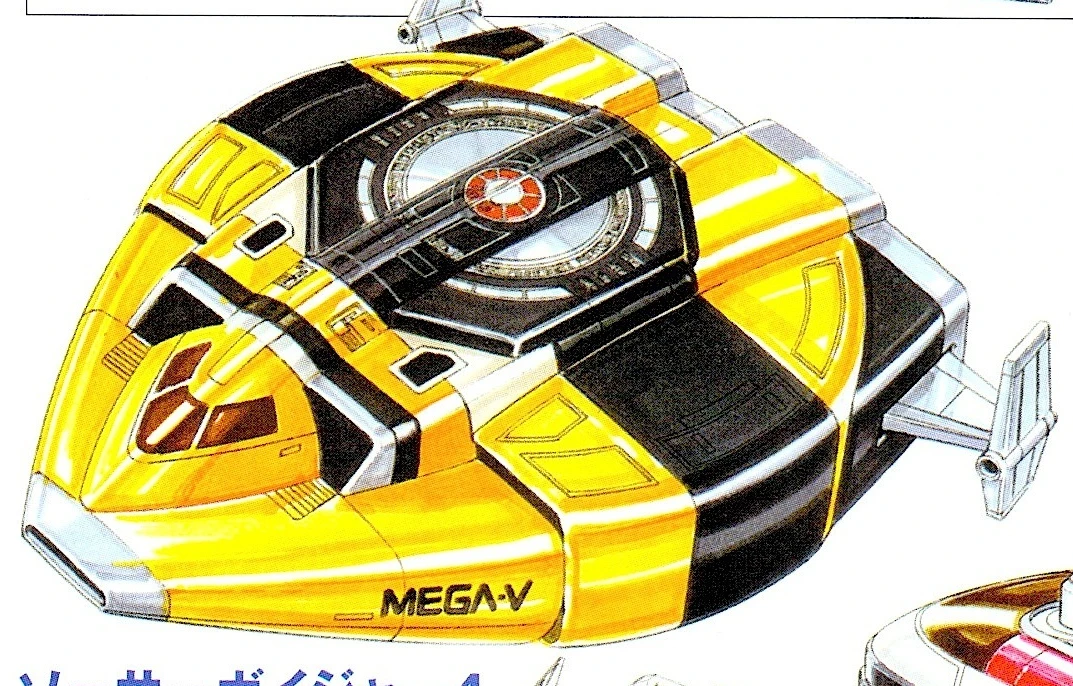
Saucer Voyager 4: look for the two dark semicircles that become the shoulders.
Super Sentai Art Collection - MediaWorks, 2002 · printed p. 051 · PDF p. 59
The small robot hides in the waist
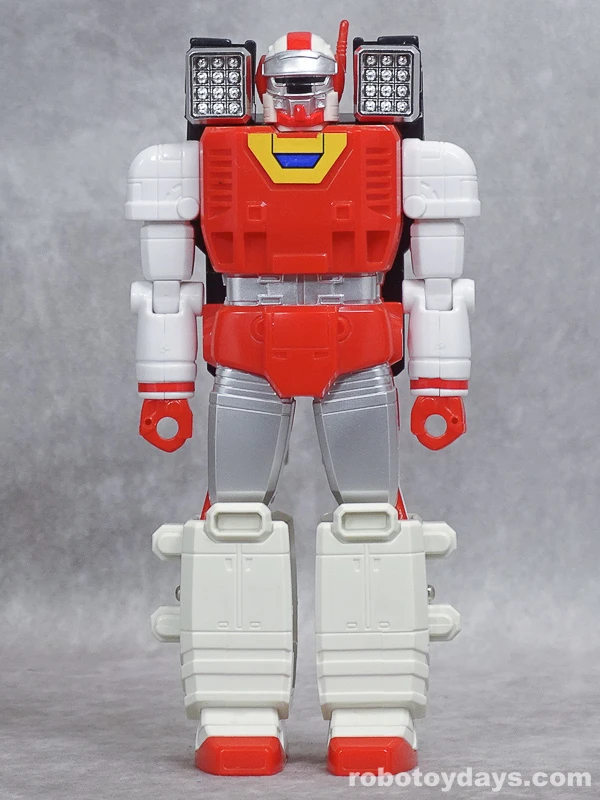
Ro Voyager 1 already has a head, hands and feet. Its red suit-like torso, ribbed white limbs and dark visor give it the look of a mechanical astronaut. In the finished drawing, the missile pods sit behind its shoulders like oversized equipment packs.
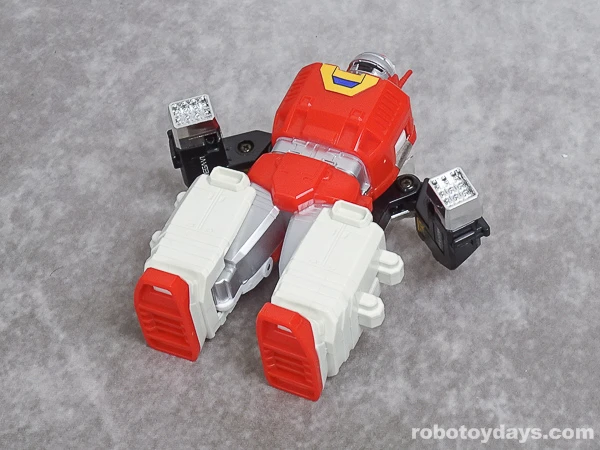
During assembly, the DX’s arms fold away and its legs shorten. Turn it around and the red panel on its back becomes Mega Voyager’s front waist. The little robot’s face disappears into a much larger body. The laid-out parts make the change easier to follow: find the red piece between the yellow chest and the blue legs. Machine designs, p. 051; DX sequence.
Look closer
The robot inside the robot
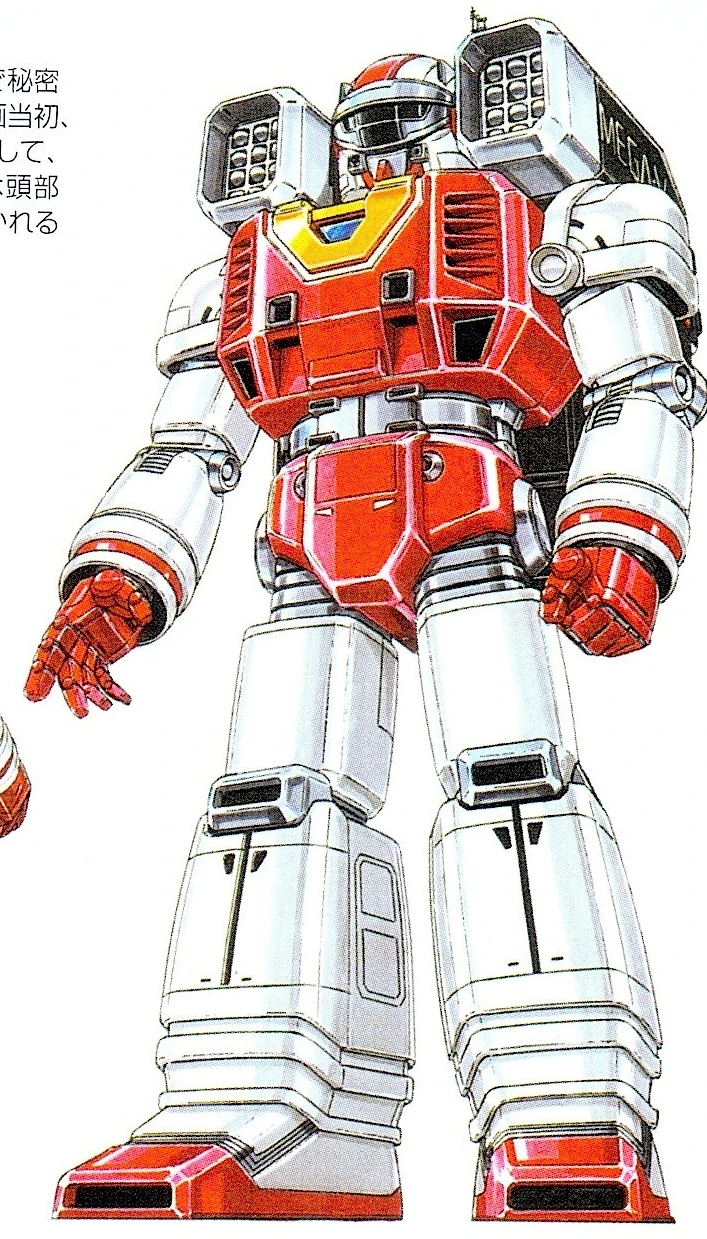
Ro Voyager 1 looks like a complete hero before it joins the others.
Super Sentai Art Collection - MediaWorks, 2002 · printed p. 051 · PDF p. 59
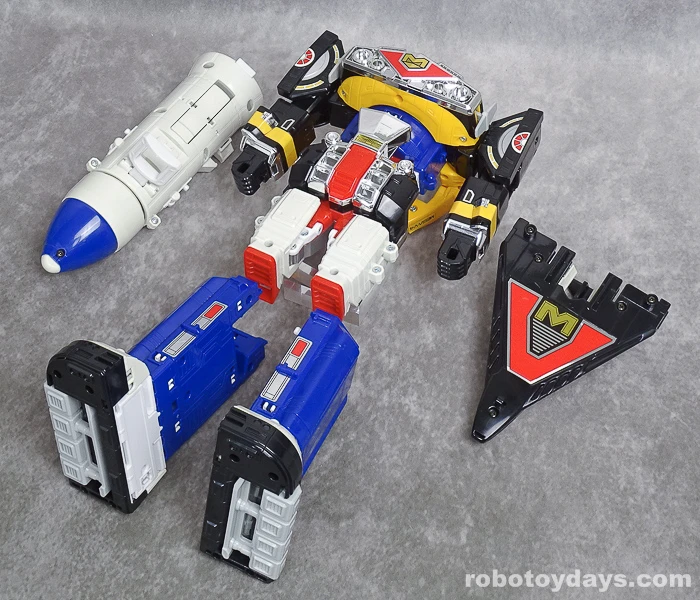
A shuttle delivers the head
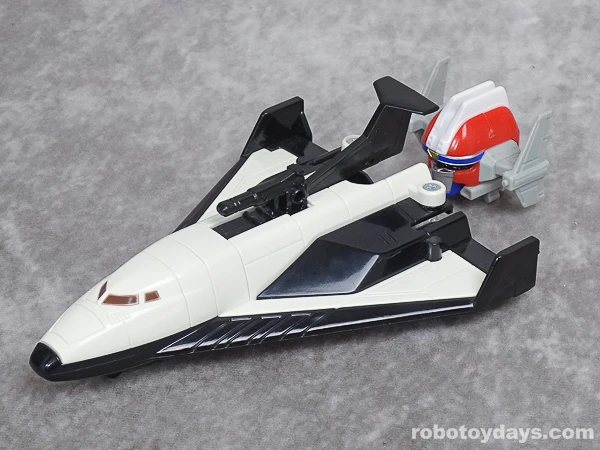
Shuttle Voyager 2 has a passenger hidden underneath: Mega Voyager’s helmet. The design drawing shows it tucked into the rear, and the toy photograph shows it removed. The shuttle body then becomes the Voyager Shield. One small machine supplies both the face and something for the hand to hold. Artbook, pp. 050–051.
That arrangement was not the starting point. The artbook says the head was initially treated as a separate landing craft. The shuttle was added later as its carrier. Knowing that makes the little helmet feel less like a concealed part and more like a tiny vehicle that acquired its own transport.
Look closer
The smallest spacecraft
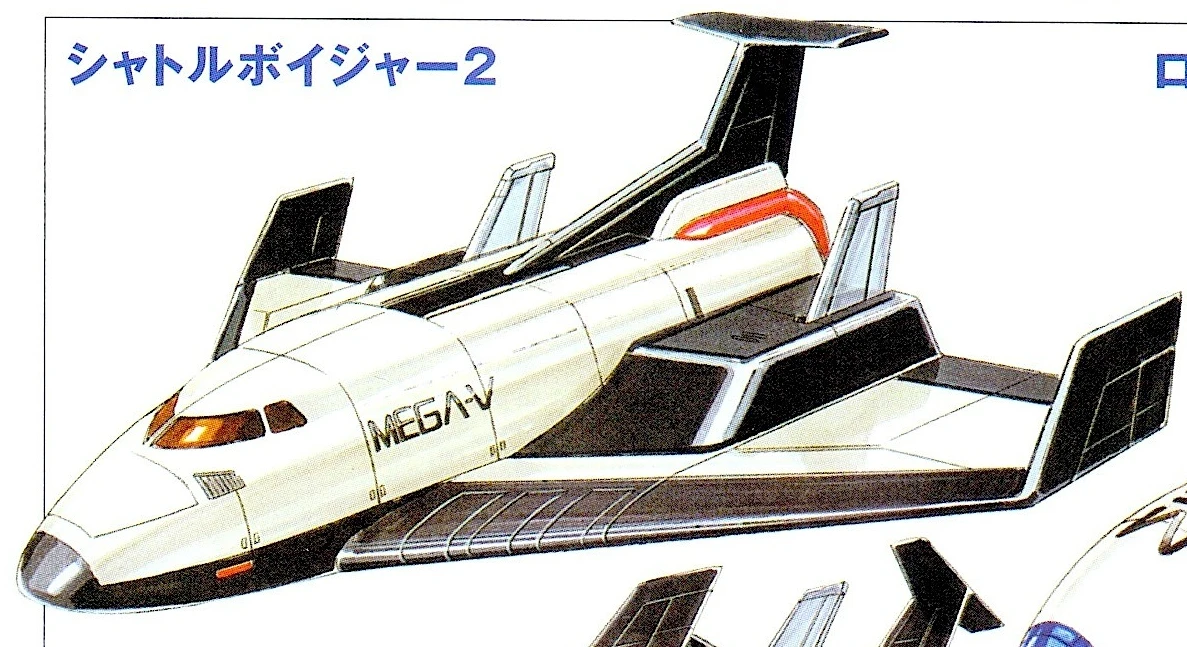
Shuttle Voyager 2 carries more than its shape suggests.
Super Sentai Art Collection - MediaWorks, 2002 · printed p. 051 · PDF p. 59
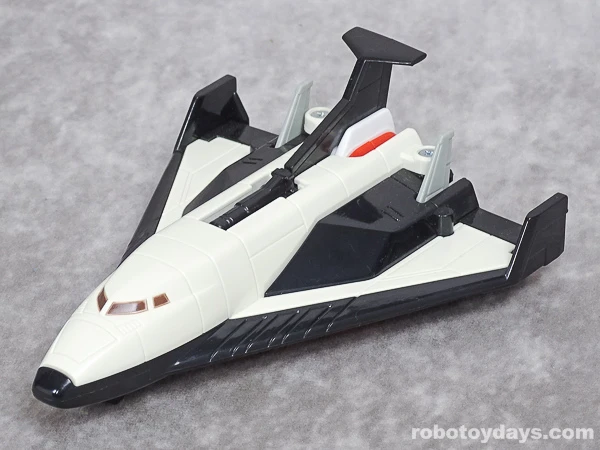
The passenger
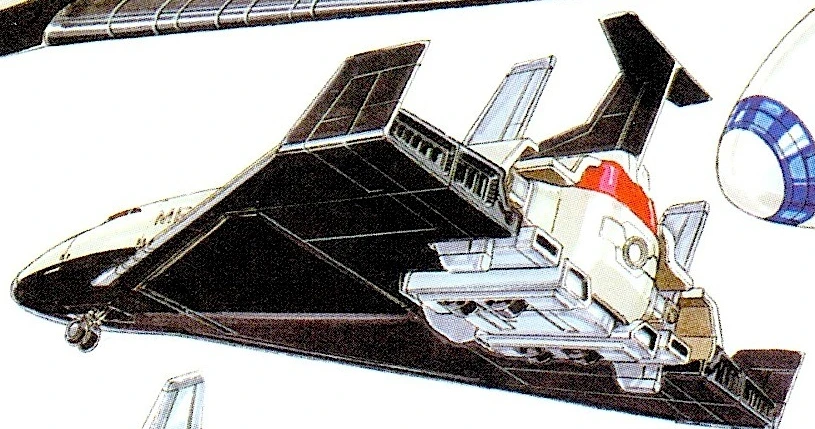
The underside drawing reveals the helmet tucked inside.
Super Sentai Art Collection - MediaWorks, 2002 · printed p. 051 · PDF p. 59
A tank underfoot and a rocket in hand
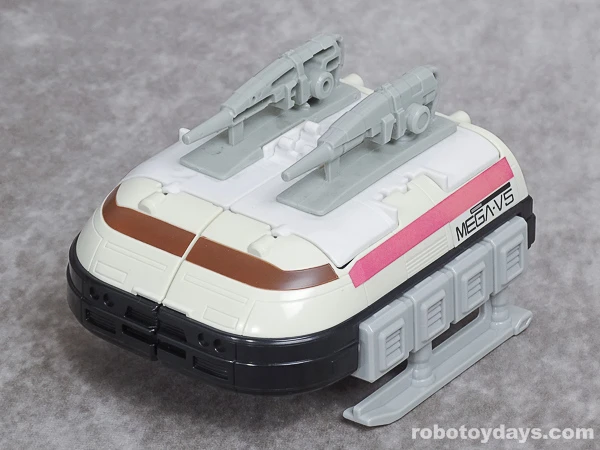
The wide front of Tank Voyager 5 supplies the easiest parts to spot: split it down the middle and each half becomes a foot. Its low, broad body gives the towering rocket legs a substantial base. Compare the paired windows and front panels with Mega Voyager’s toes. Machine designs, p. 051.
The remaining rocket body becomes Voyager Spartan, the robot’s missile weapon. With the shuttle used as a shield, the assembled warrior still carries two unmistakable spacecraft. The artbook also records a DX feature that keeps them together before robot assembly: the shuttle can attach to the rocket. Artbook, p. 050.
Look closer
The last vehicle
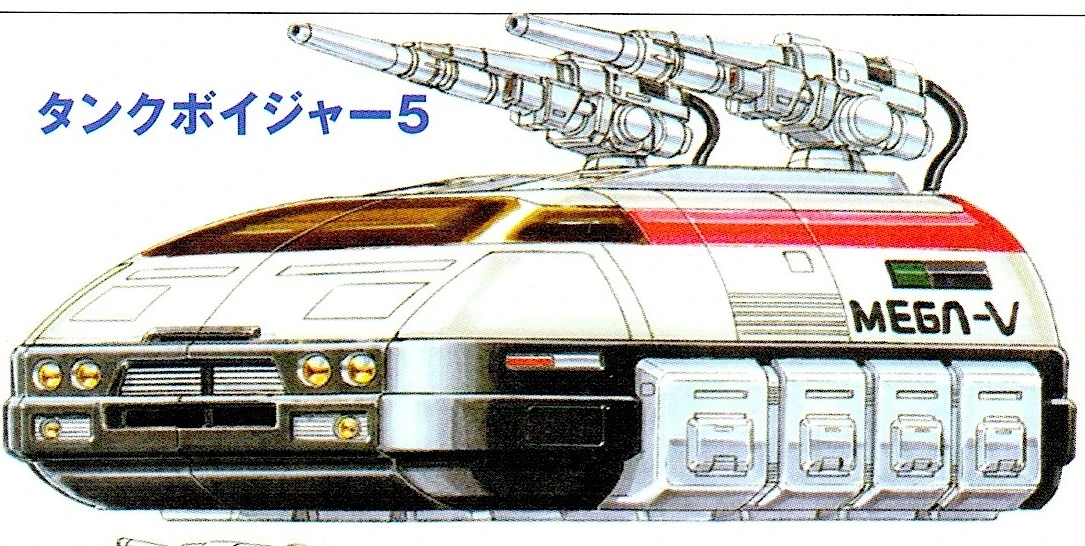
Tank Voyager 5: divide its broad front into two feet.
Super Sentai Art Collection - MediaWorks, 2002 · printed p. 051 · PDF p. 59
The tank that might have walked
The finished machines look settled enough to make their arrangement seem inevitable. The development drawings suggest otherwise. Drawing 22 shows a different configuration that the artbook says reached a prototype before being rejected. Its front, side and rear views let you compare an earlier distribution of the same broad ingredients. The caption does not give a reason for the rejection.
The tank’s alternatives are stranger. Drawing 32 makes it a launch platform. Drawing 33 raises the hull onto four legs; the caption says a walking machine was seriously considered. In drawings 34–35, a long cannon was intended to combine with Rocket Voyager 3 as a large lance. These are abandoned proposals, not extra modes of the DX pictured above. Development drawings, p. 146.
Look back at the finished tank after the four-legged sketches. The vehicle that became two sturdy feet might once have needed four feet of its own.
Look closer
A different arrangement
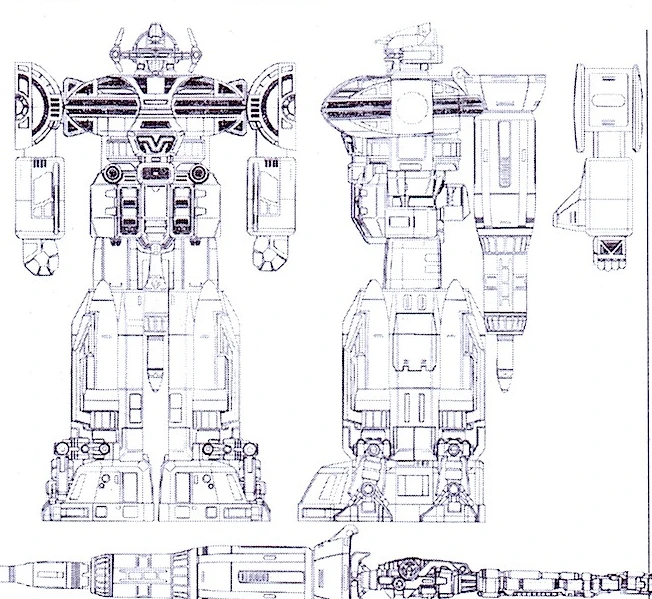
Drawing 22: a design that reached a prototype, then was rejected.
Super Sentai Art Collection - MediaWorks, 2002 · printed p. 146 · PDF p. 154
More than one way to travel
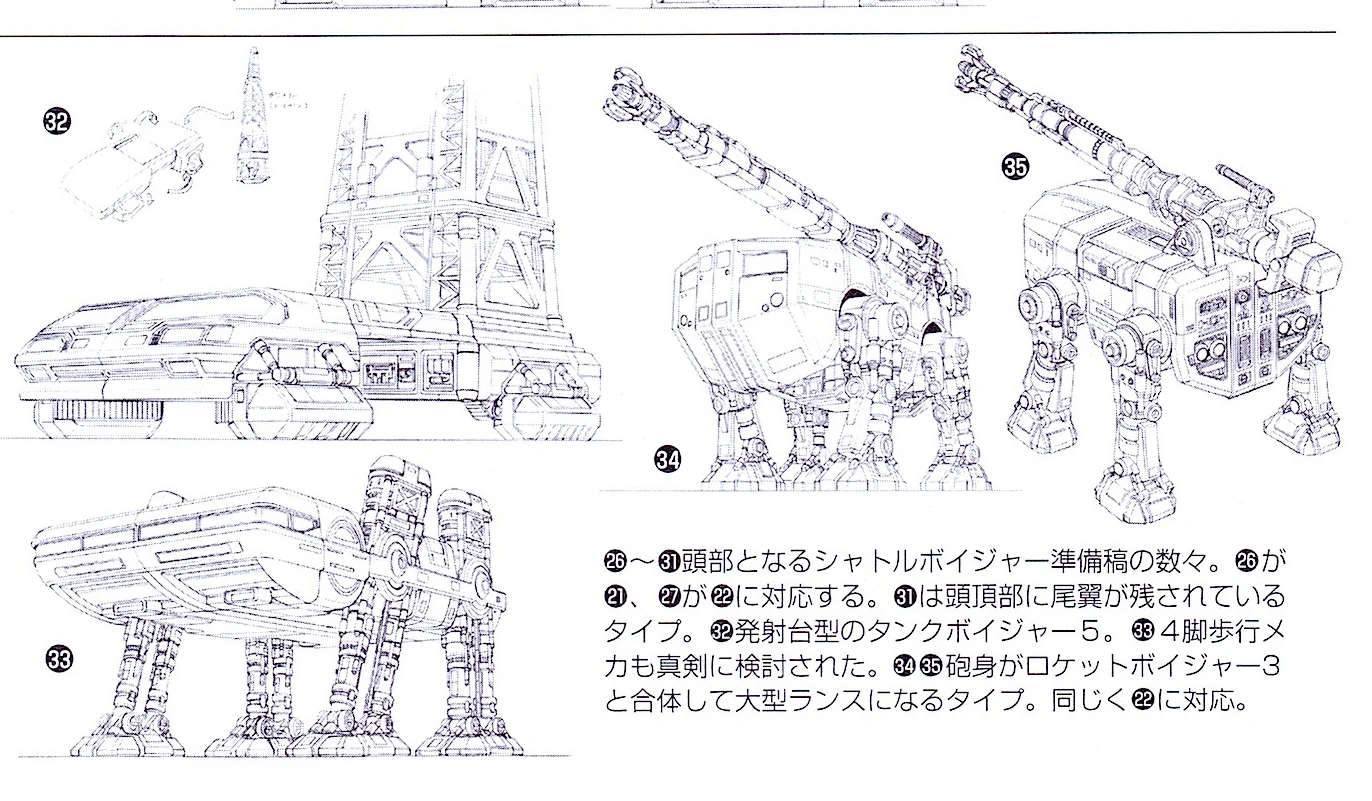
Drawings 32-35: a launch platform, a walking tank, and a cannon intended to join the rocket as a lance.
Super Sentai Art Collection - MediaWorks, 2002 · printed p. 146 · PDF p. 154
The walking proposal, closer
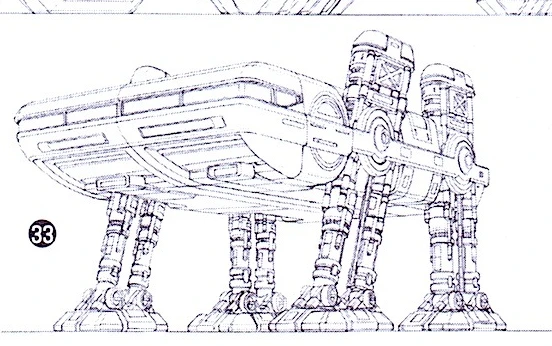
Drawing 33, closer: the tank stands on four jointed legs.
Super Sentai Art Collection - MediaWorks, 2002 · printed p. 146 · PDF p. 154
One more machine lends its wings
There is one last change of outline. Mega Voyager’s component machines belong in space, but the combined robot cannot fly unaided. Mega Winger supplies its detachable Mega Wing, creating Wing Mega Voyager. The broad wing stretches behind the familiar semicircular shoulders; the five-machine body remains recognizable underneath. Artbook, p. 053.
The original Japanese DX combination uses the wing from the separate Mega Winger toy. It is a fitting final addition to a robot whose parts keep changing jobs: a saucer becomes shoulders, a tank becomes feet, a shuttle carries a face—and another machine lends it the sky.
Look closer
A borrowed pair of wings
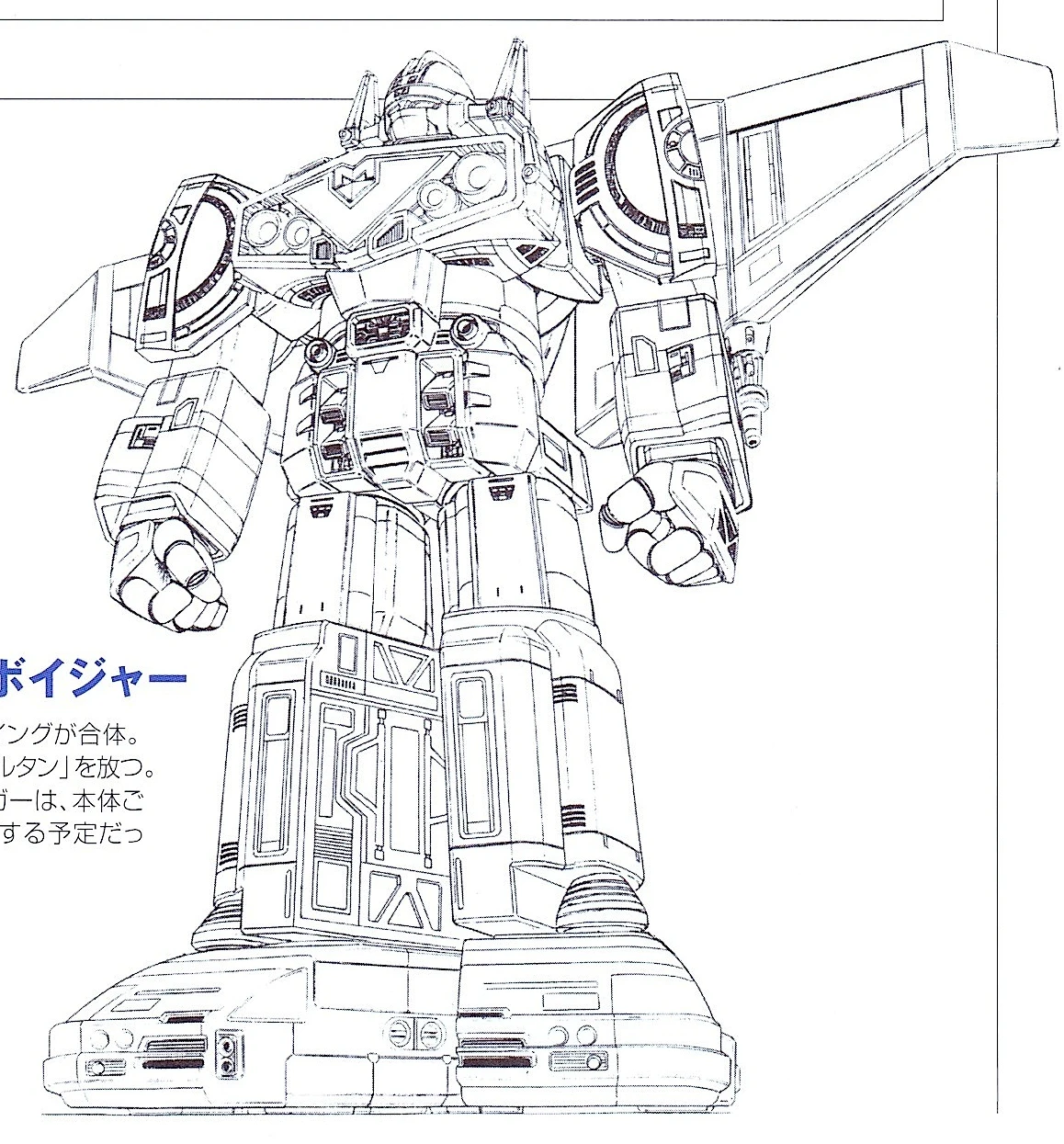
Wing Mega Voyager keeps the five-machine body and adds Mega Winger’s wing.
Super Sentai Art Collection - MediaWorks, 2002 · printed p. 053 · PDF p. 61
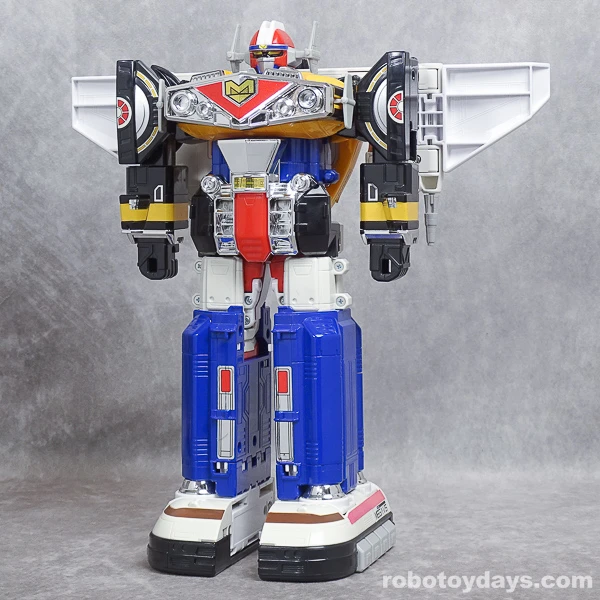
Sources
- Super Sentai Art Collection - Mega Voyager · MediaWorks · 2002 · page 050 · scan page 58
- Super Sentai Art Collection - Voyager Machines · MediaWorks · 2002 · page 051 · scan page 59
- Super Sentai Art Collection - Mega Voyager development drawings 21-35 · MediaWorks · 2002 · page 146 · scan page 154
- Super Sentai Art Collection - Wing Mega Voyager · MediaWorks · 2002 · page 053 · scan page 61
- RoboToyDays - original Japanese Bandai DX Mega Voyager · RoboToyDays
- RoboToyDays - original Japanese DX wing combination · RoboToyDays
Artwork and toy photographs are credited reproductions from published sources. This is a virtual exhibit.