From design to toy · 1990s
Mega Winger: Three Buttons to a Robot
A broad aircraft hides a tall robot. Follow Mega Winger’s spring-assisted transformation, then discover why its wing travels farther than the rest of it.
- From the world of
- Denji Sentai Megaranger
- Toy maker
- Bandai
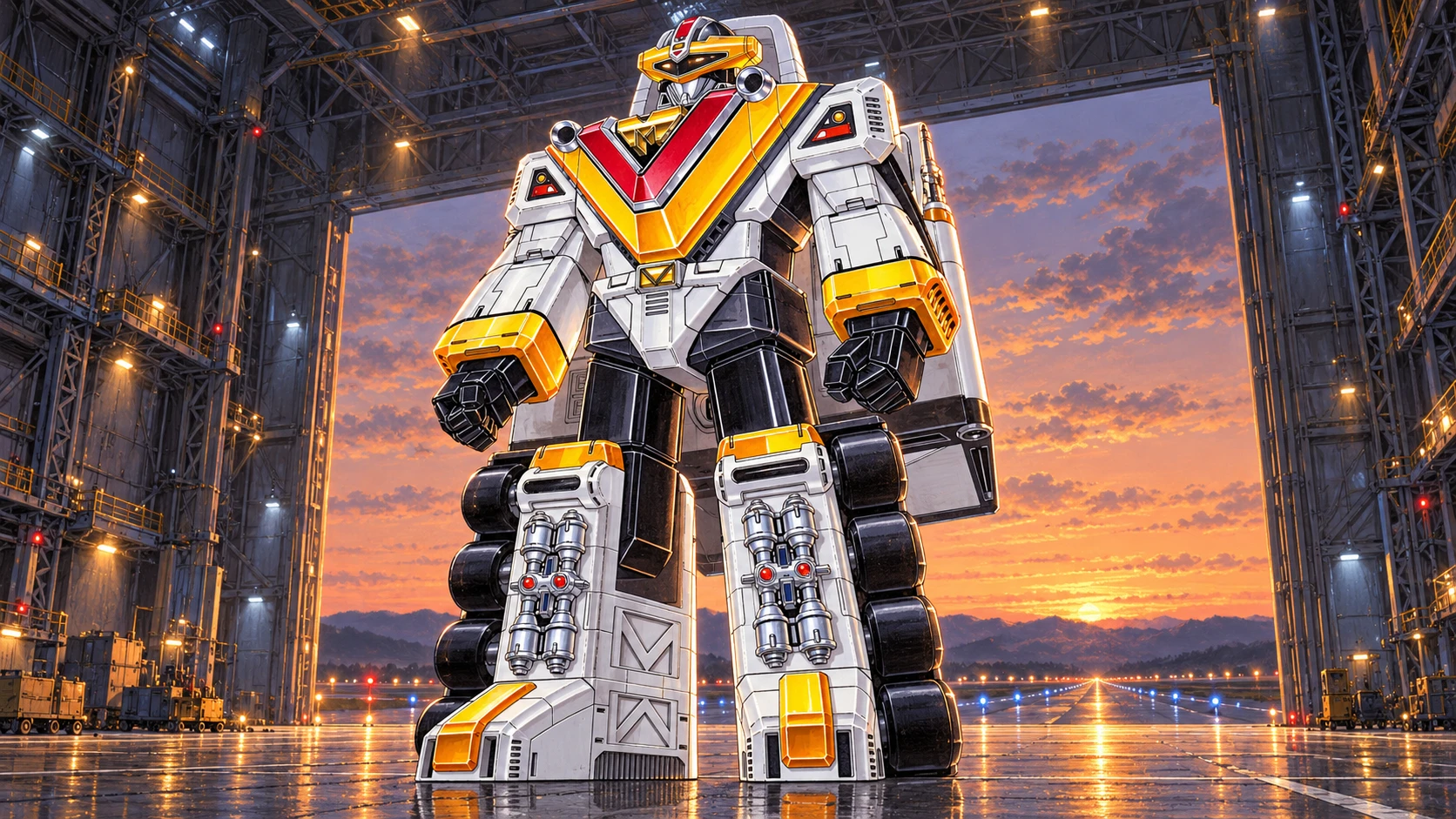
Mega Winger in an imagined hangar at dusk. The original designs and toy follow.
AI cover illustration - OpenAI ImageGenDesign reference ↗01 / The design
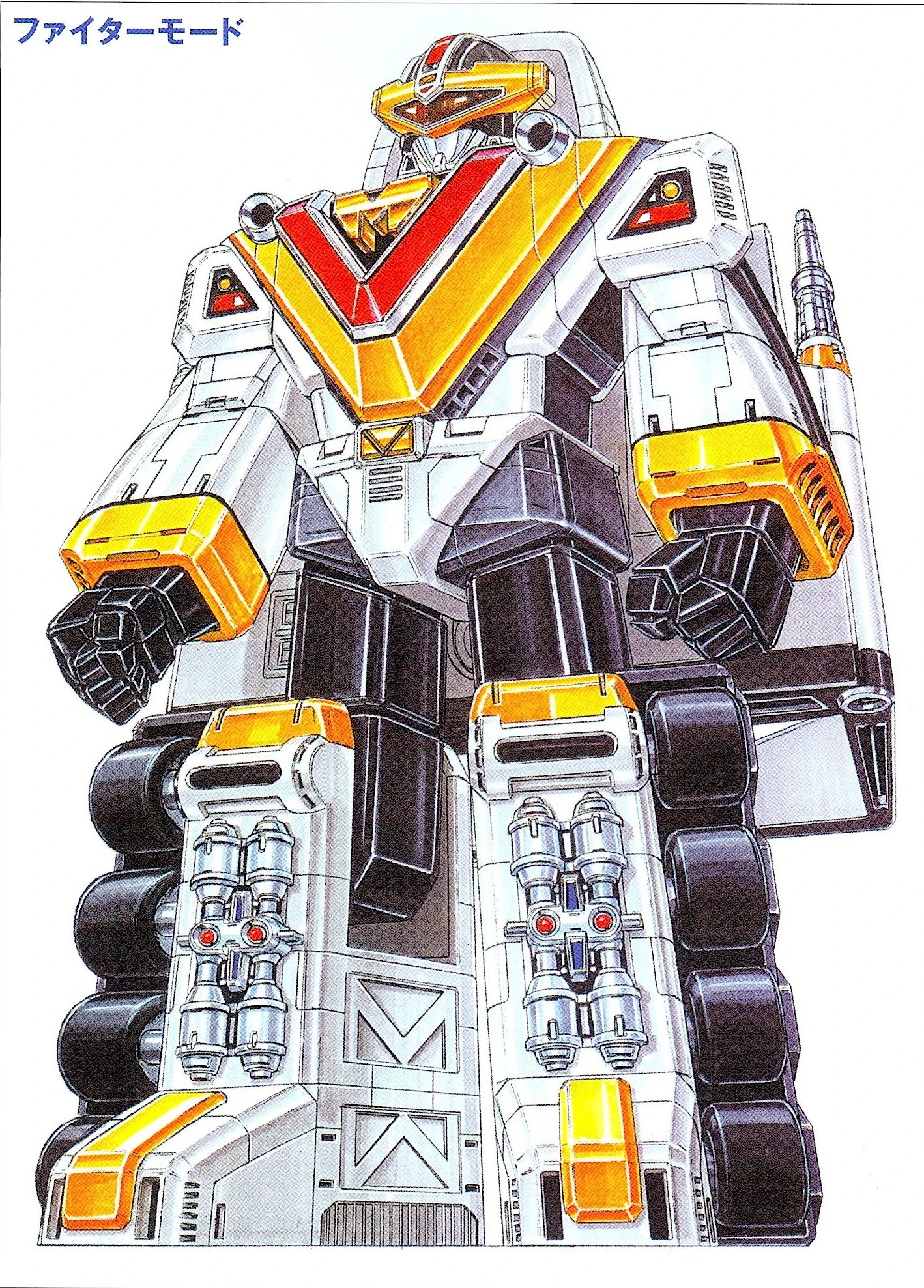
Fighter Mode: the broad V chest contrasts with the vehicle wheels beside the legs.
Super Sentai Art Collection - MediaWorks, 2002 · printed p. 052 · PDF p. 60
02 / The toy
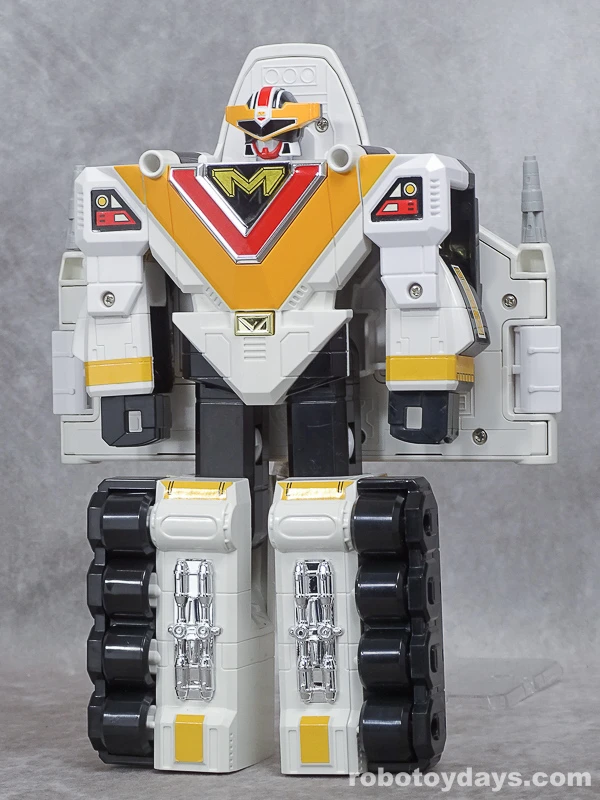
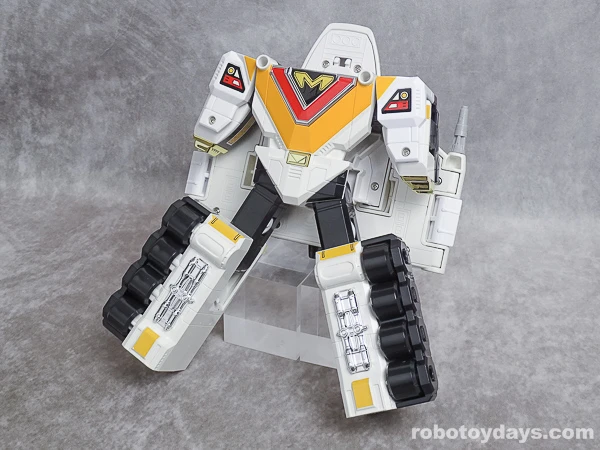
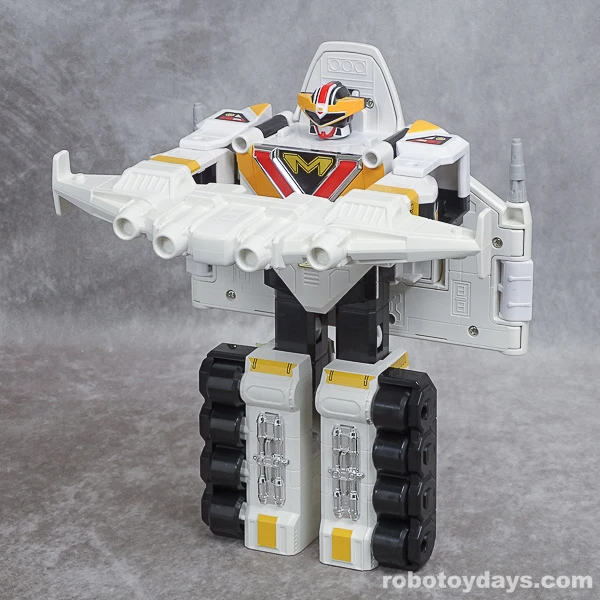
The original Japanese DX in Fighter Mode.
Mega Winger looks like an aircraft that refused to give up its wheels. In Denji Sentai Megaranger, it is Mega Silver’s own robot; on the toy shelf, its party trick is a spring-assisted change from a low vehicle to a standing warrior. Three release buttons do much of the work, with a few parts still finished by hand. Original design and DX description, p. 052.
A flying machine with its wheels still on
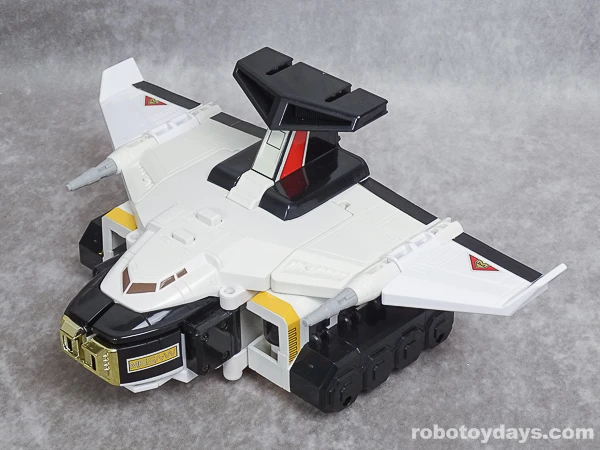
The Flyer Mode drawing mixes two very different outlines. Above is a broad white wing and a tall tail; below is a heavy wheeled body. The orange cockpit windows sit between them, looking out over a blunt, almost bus-like nose.
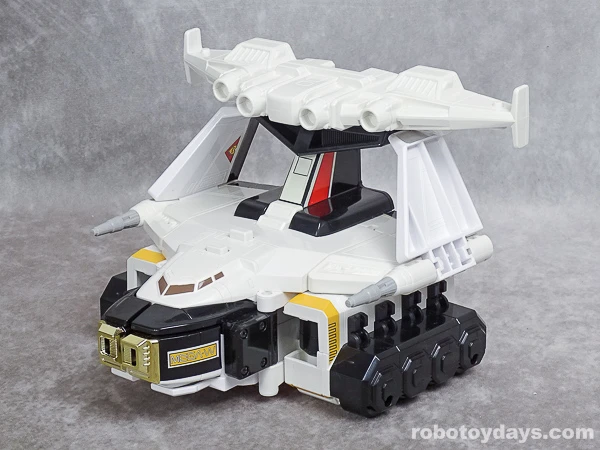
Fold the outer wing panels upward and the shape becomes more compact. The artbook labels this Tank Mode; the original Japanese DX package calls its folded-wing form Lander Mode. The toy photograph also shows the Winger Cannon carried on top. These are changes to one machine, rather than separate vehicles waiting to combine. Vehicle designs, p. 053; original package and toy photographs.
Look closer
Wings open
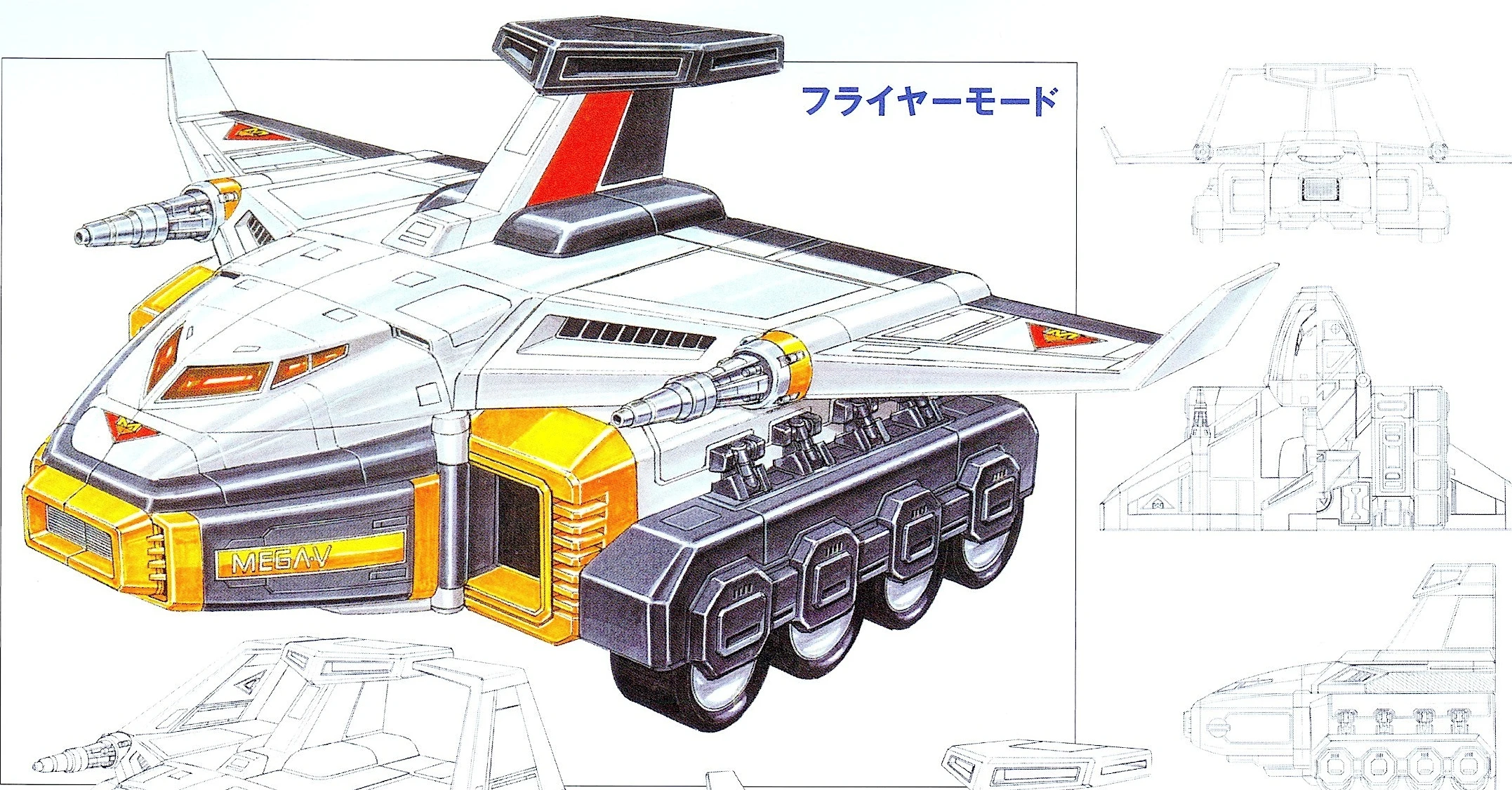
Flyer Mode keeps its wheels beneath a wide wing.
Super Sentai Art Collection - MediaWorks, 2002 · printed p. 053 · PDF p. 61
Wings folded
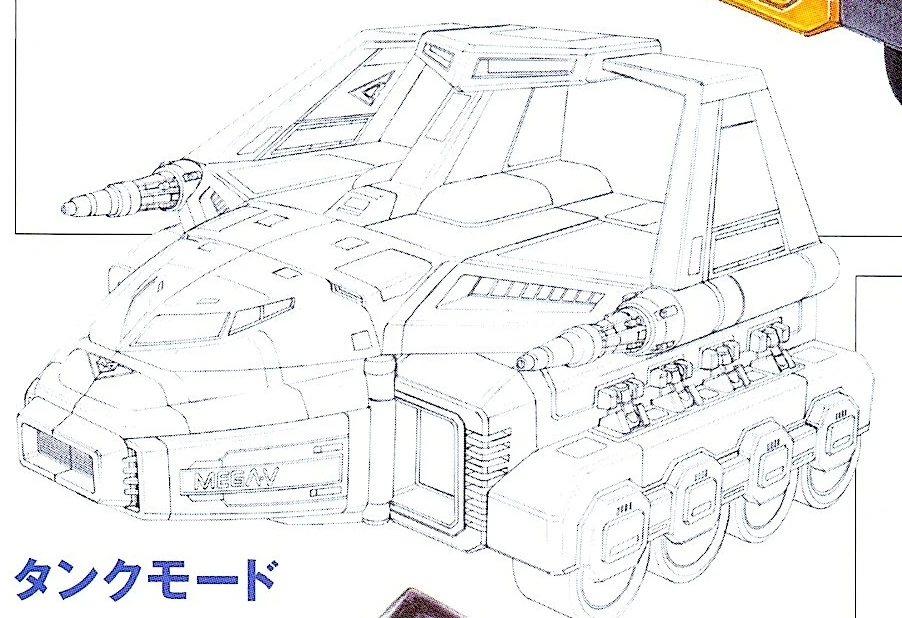
The artbook calls this folded-wing configuration Tank Mode.
Super Sentai Art Collection - MediaWorks, 2002 · printed p. 053 · PDF p. 61
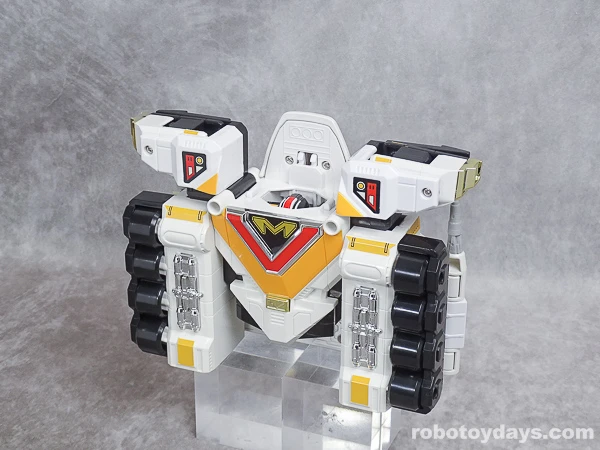
Three releases and a little hand work
The first useful clue is the black wheel bank on each side. On the DX, those side units unfold into legs. The lower nose opens into the arms; its yellow-edged corners become cuffs. The artbook identifies the arms and legs as spring-powered, turning a long unfolding operation into a pair of sudden changes.
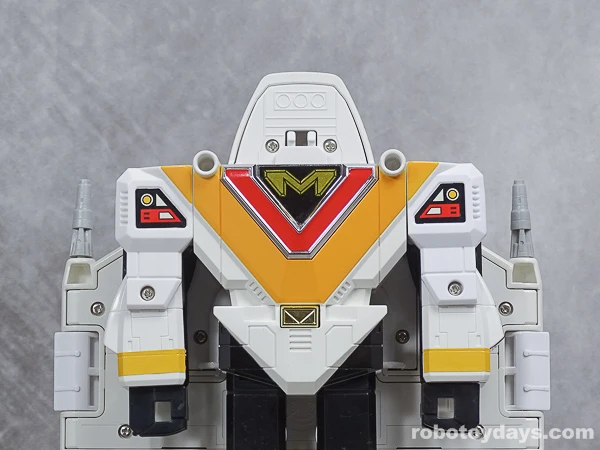
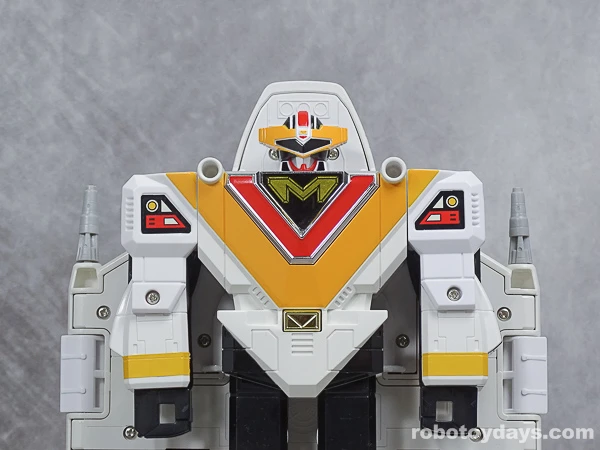
There is still some hand work: the inner arm sections turn and the fists pull out. Then the waist button releases the head. Compare the two close views. A body that already has shoulders, hands and feet gains its face in one last reveal. Artbook DX note, p. 052; original DX sequence and package diagrams.
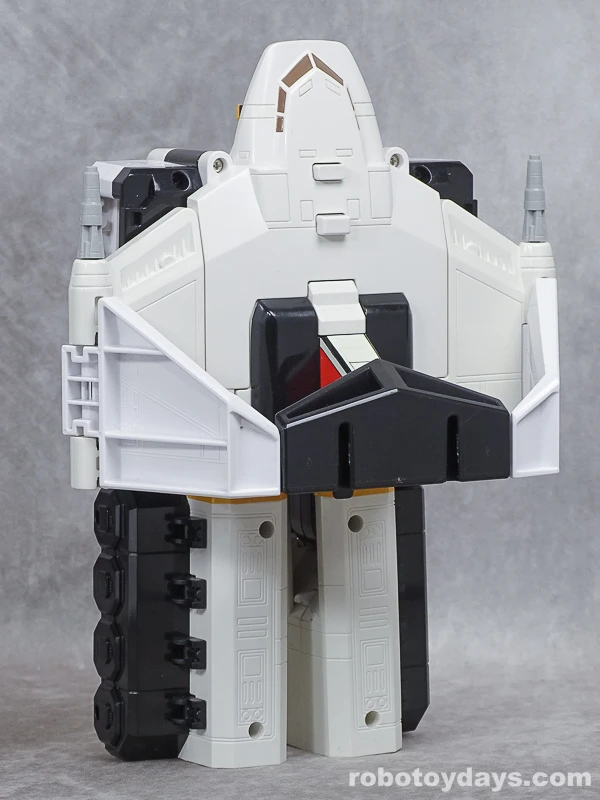
The cockpit stays on the back
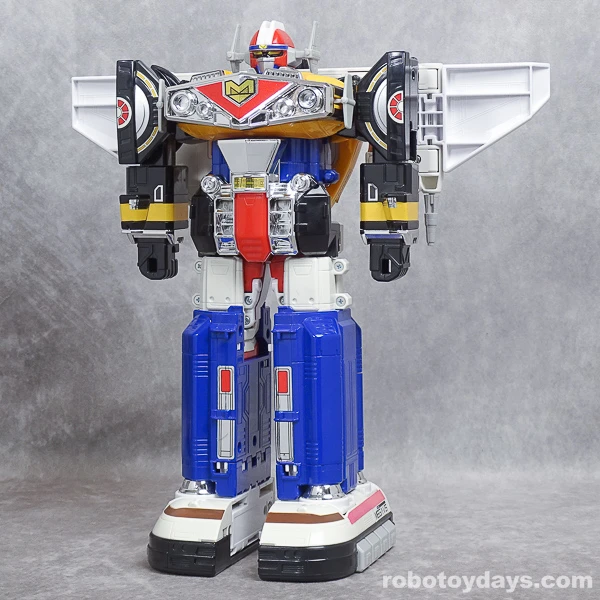
From the front, the yellow and red V commands attention. Turn Mega Winger around and the aircraft reappears. The white cockpit stands behind the helmet, while the folded wing and black tailplane occupy the back. The wheels have changed direction, but the machine has kept enough of its old outline for you to read the transformation backward. Front and rear designs, p. 052.
Look closer
Turn the robot around
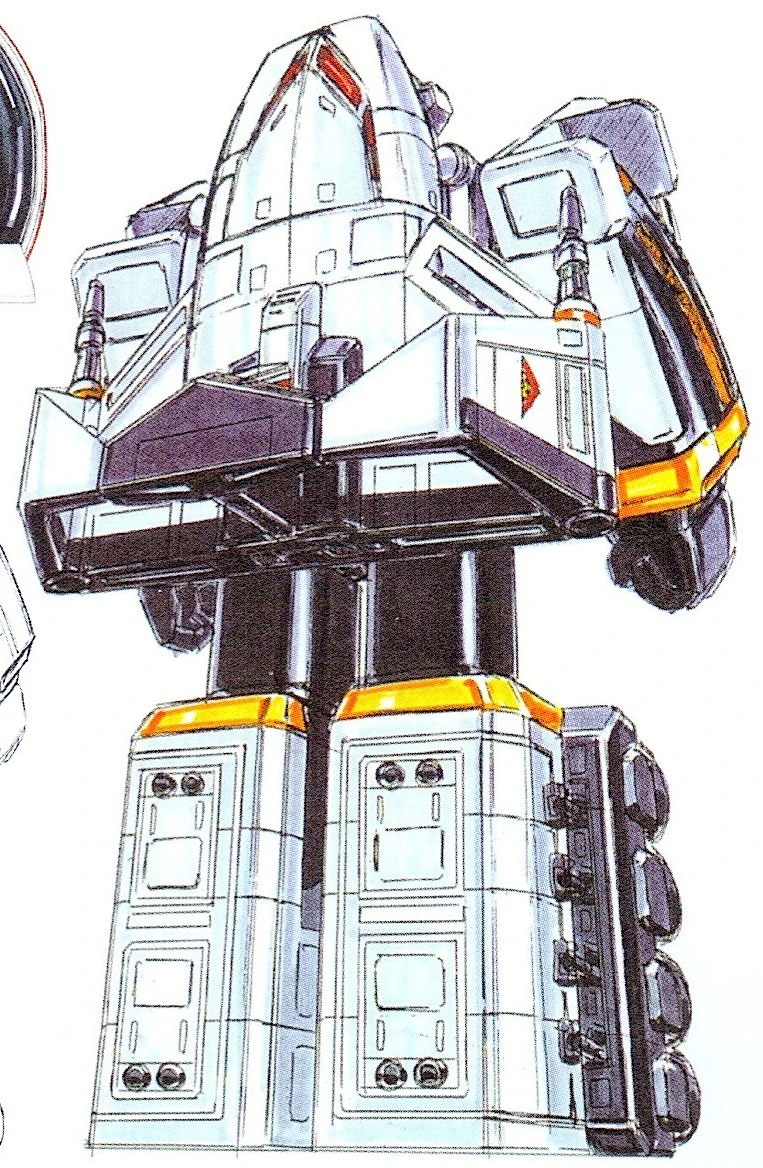
The cockpit survives almost intact behind the shoulders.
Super Sentai Art Collection - MediaWorks, 2002 · printed p. 052 · PDF p. 60
Both hands on the cannon
The Winger Cannon is almost a second wing: a long white span with four forward-facing barrels. The small underside drawing shows the hands tucked into it, explaining how such a wide weapon can be held across the chest. The DX reproduces that two-handed pose. The robot’s spring mechanism has not prevented its arms from having another job once the transformation is over. Cannon drawing and DX description, p. 052.
Look closer
A weapon as wide as the chest
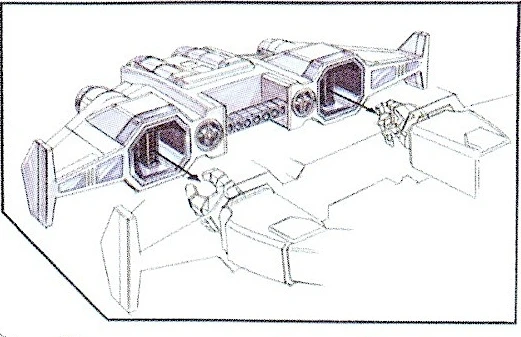
The underside drawing explains the two-handed grip.
Super Sentai Art Collection - MediaWorks, 2002 · printed p. 052 · PDF p. 60
Only the wing joins the next robot
Mega Winger’s final change is something it gives away. Its detachable Mega Wing attaches to Mega Voyager, supplying flight and creating Wing Mega Voyager. The rear drawing makes the arrangement especially clear: a broad flying surface sits behind the shoulders, while Mega Voyager’s body keeps its familiar shape.
The artbook records a more ambitious starting point. Mega Winger was originally intended to combine with Mega Voyager using its whole body. It does not say why that plan changed, and the finished wing attachment is not evidence of an unmade full-body toy.
The result leaves two recognizable robots. One gains a wing; the other can stand beside it. After all the springs and hidden parts, Mega Winger’s last trick is the smallest change of all: it lends the part that lets its partner fly. Combination and development note, p. 053.
Look closer
A detachable flying surface
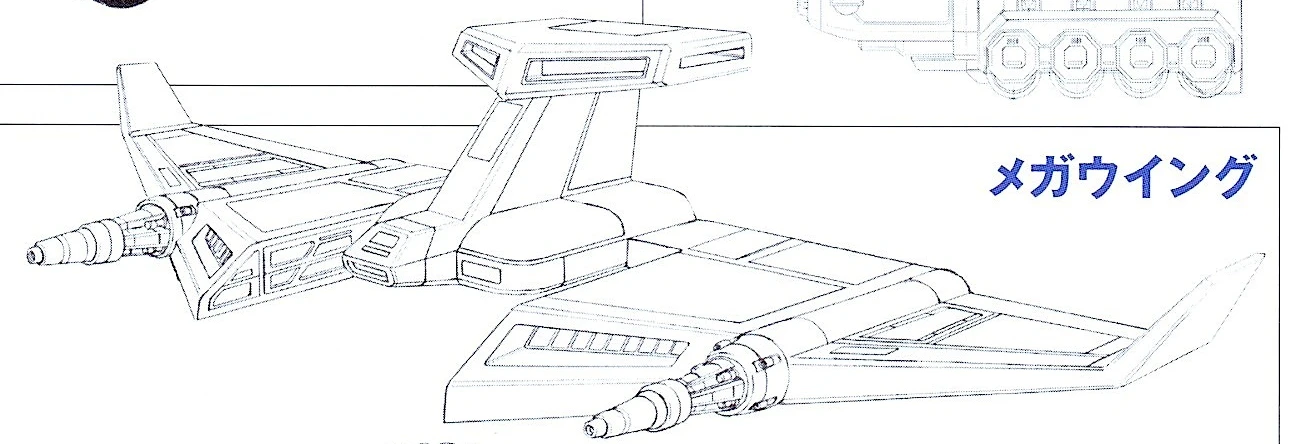
Mega Wing leaves as one broad assembly.
Super Sentai Art Collection - MediaWorks, 2002 · printed p. 053 · PDF p. 61
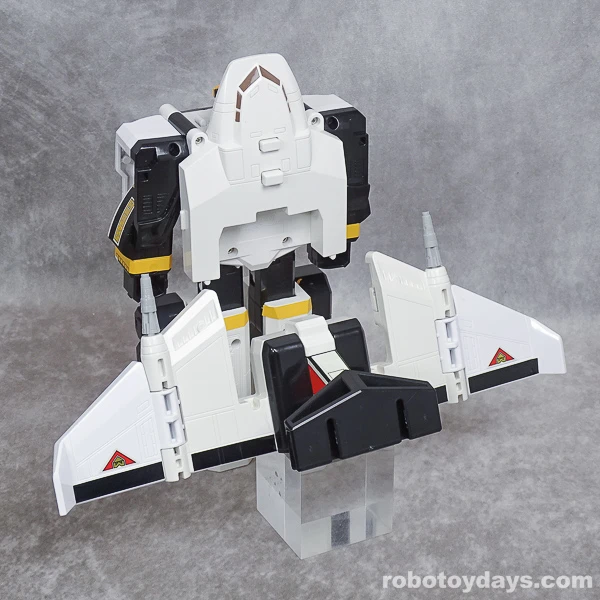
The wing changes partners
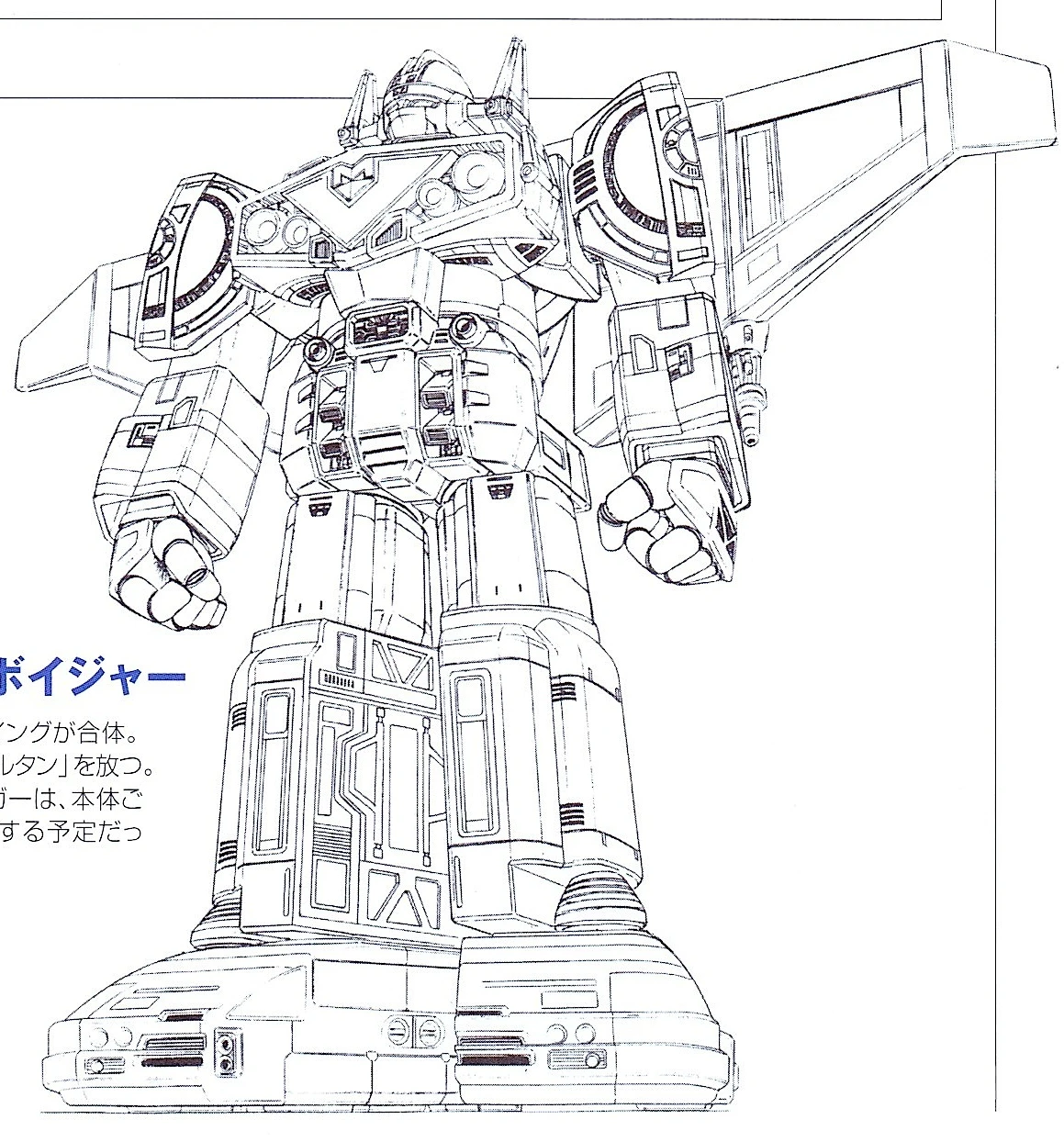
Wing Mega Voyager from behind: the attachment leaves its five-machine body intact.
Super Sentai Art Collection - MediaWorks, 2002 · printed p. 053 · PDF p. 61
Sources
- Super Sentai Art Collection - Mega Winger · MediaWorks · 2002 · page 052 · scan page 60
- Super Sentai Art Collection - Mega Winger · MediaWorks · 2002 · page 053 · scan page 61
- Original Japanese DX Mega Winger: package, forms and transformation photographs · RoboToyDays
Artwork and toy photographs are credited reproductions from published sources. This is a virtual exhibit.