From design to toy · 1990s
Ohranger Robo: One Robot, Five Helmets
A lion-faced robot changes its helmet to suit its pilot. Follow Ohranger Robo from an early aircraft concept to five finished head designs and Bandai's Japanese DX toy.
- From the world of
- Chouriki Sentai Ohranger
- Toy maker
- Bandai
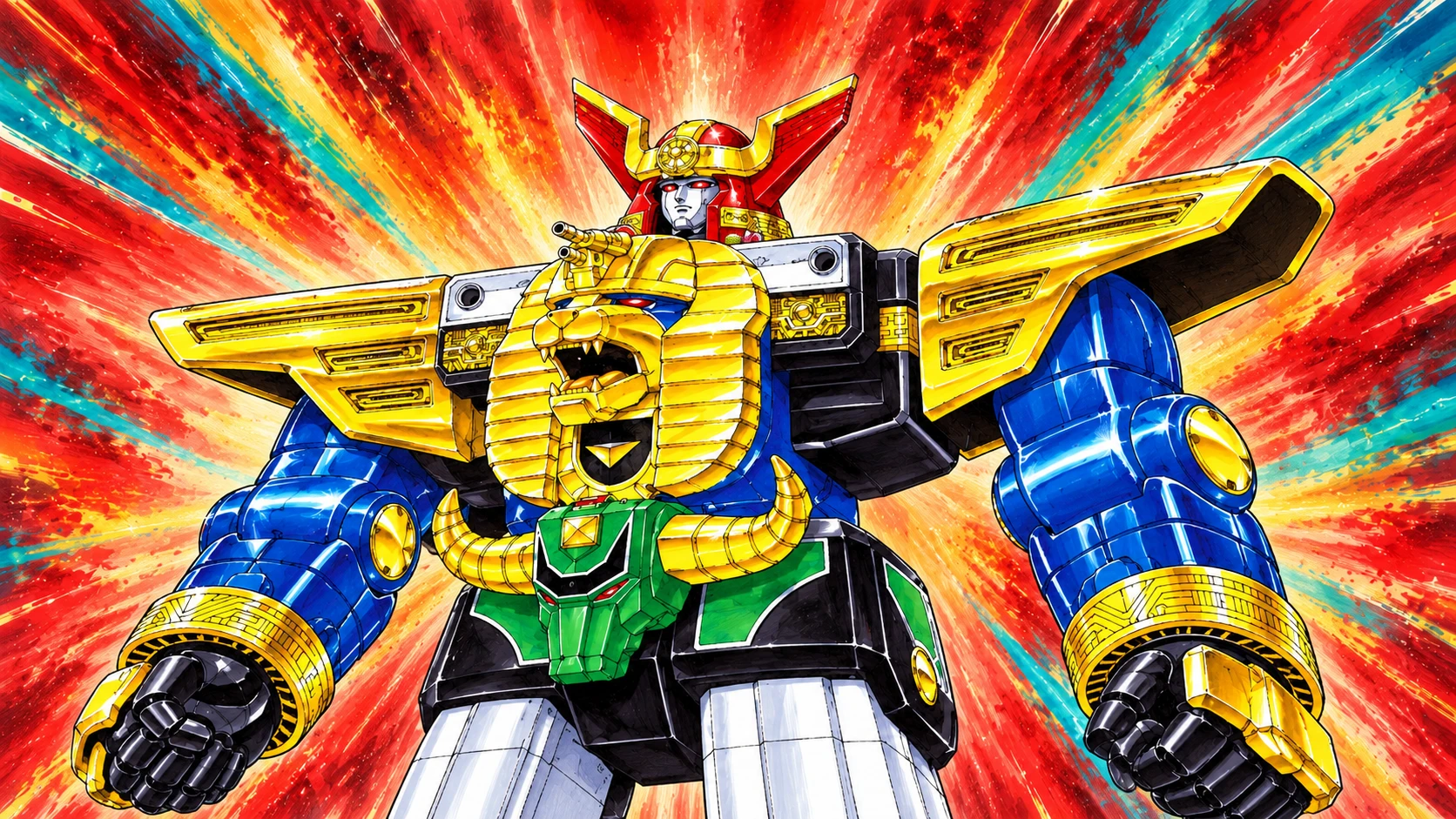
Original AI cover illustration inspired by the character design; historical artwork and toy photographs appear inside the article.
AI cover illustration - Rewind: Northwest RetroDesign reference ↗01 / The design
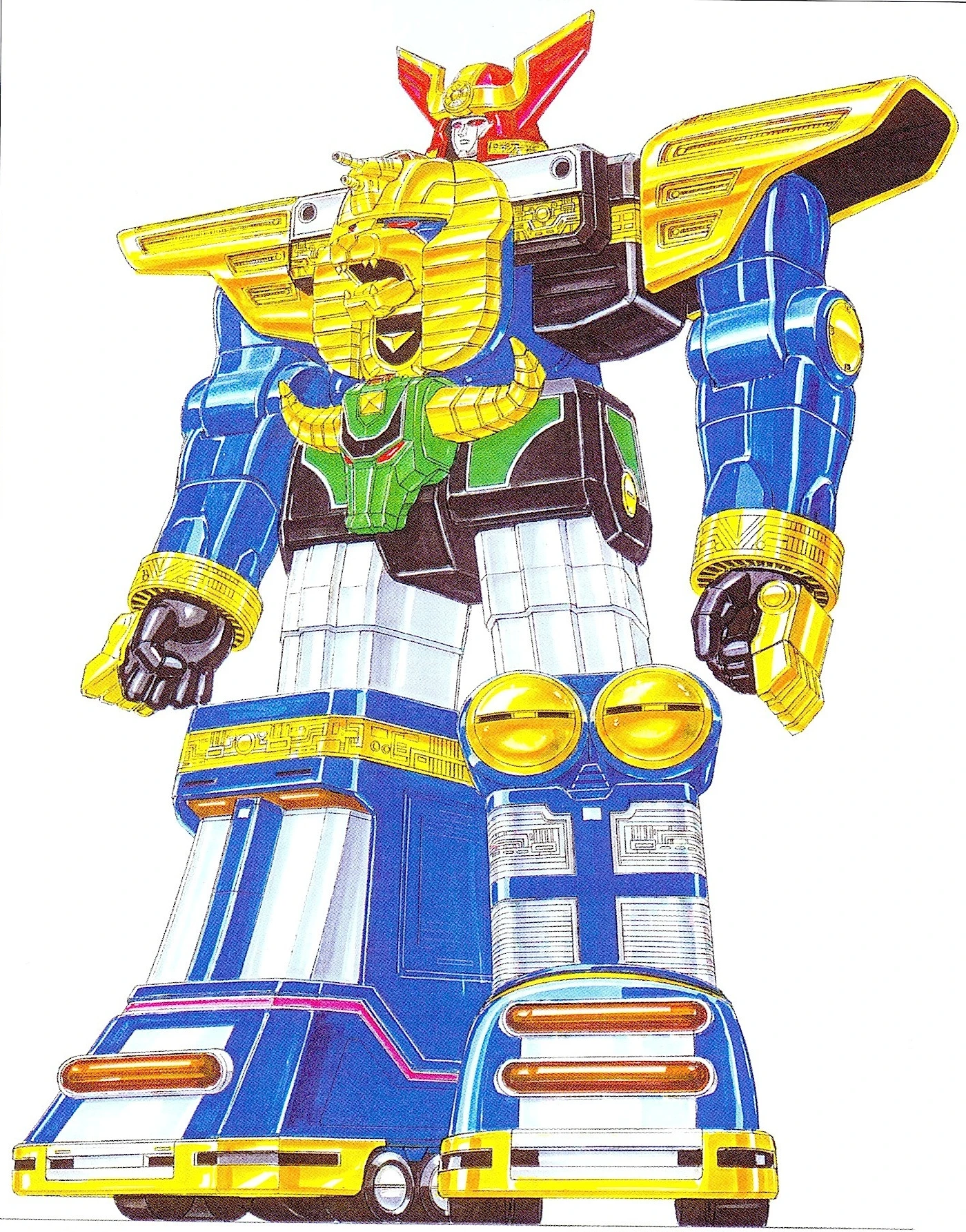
Ohranger Robo in Wing Head configuration. The gold lion face, green bull face and different lower-leg designs preserve the identities of its combining machines.
Super Sentai Art Collection - MediaWorks, 2002 · printed p. 060 · PDF p. 68
02 / The toy
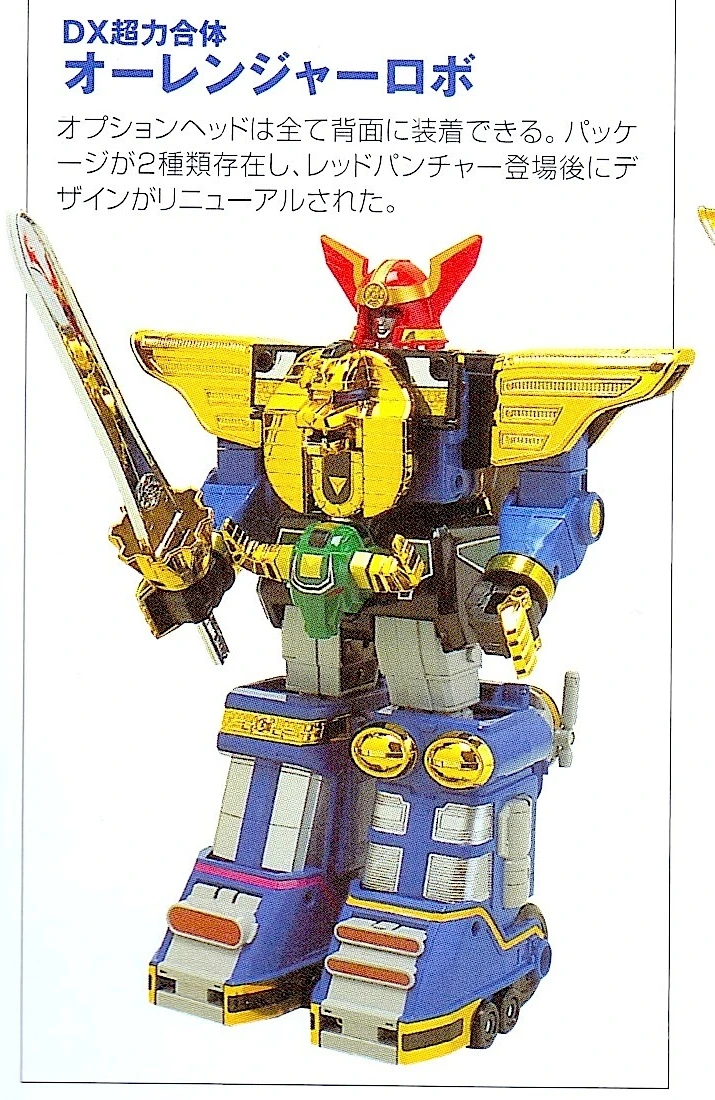
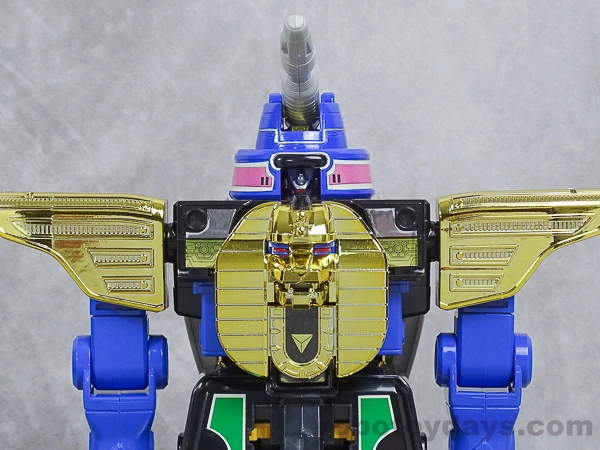
The original Japanese DX Ohranger Robo with Wing Head and sword.
Super Sentai Art Collection - MediaWorks, 2002 · printed p. 060 · PDF p. 68
Five helmets, five pilots
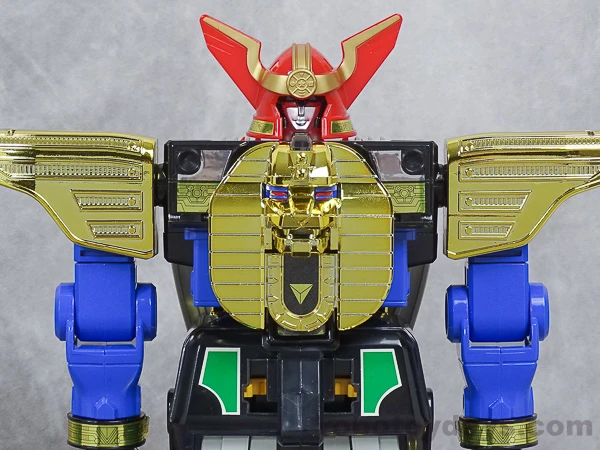
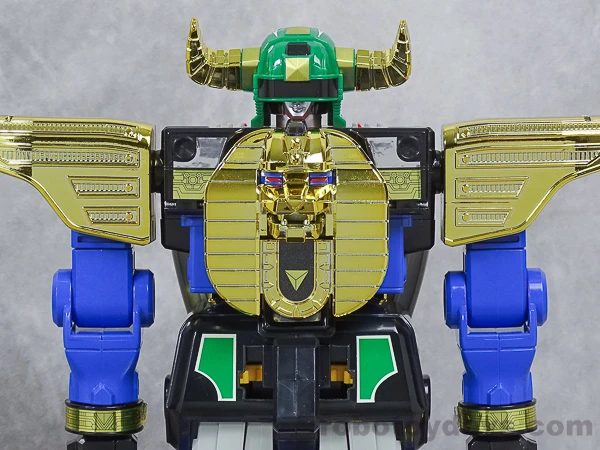
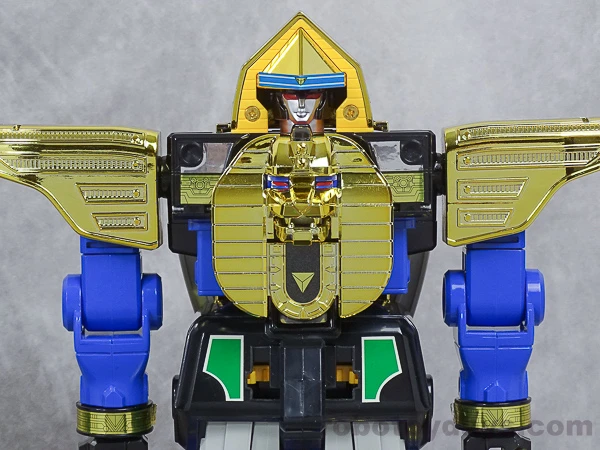
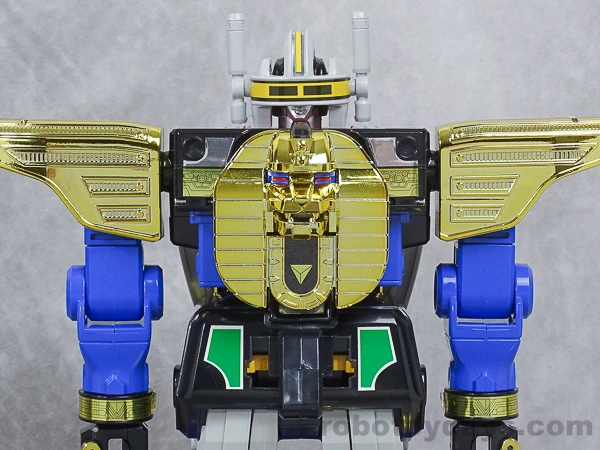
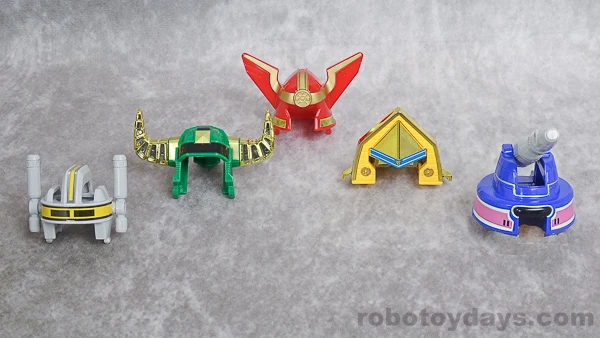
Keep your eyes on the face. Ohranger Robo can wear wings, horns, a pyramid, paired gun barrels or a long cannon while the body beneath stays the same. The Head Change System gives each pilot a turn at the center of the robot’s identity.
The finished sheet assigns Wing Head to OhRed, Horn Head to OhGreen, Graviton Head to OhBlue, Vulcan Head to OhYellow, and Cannon Head to OhPink. The smaller Base Head appears between changes. Artbook, p. 061.
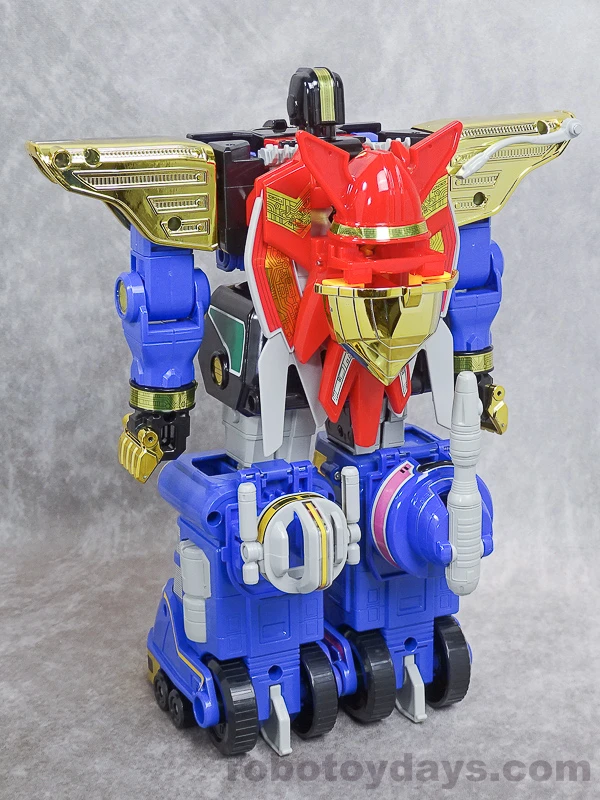
The original Japanese DX photographs put those drawings into three dimensions. Compare the five loose helmets, then their fitted close-ups. The horn and gun shapes change the face’s outline dramatically; the pyramid frames more of the face beneath it. The stored-parts view answers the practical question: where do the other heads go when one is in use? Original DX photographs.
Look closer
The head-change designs
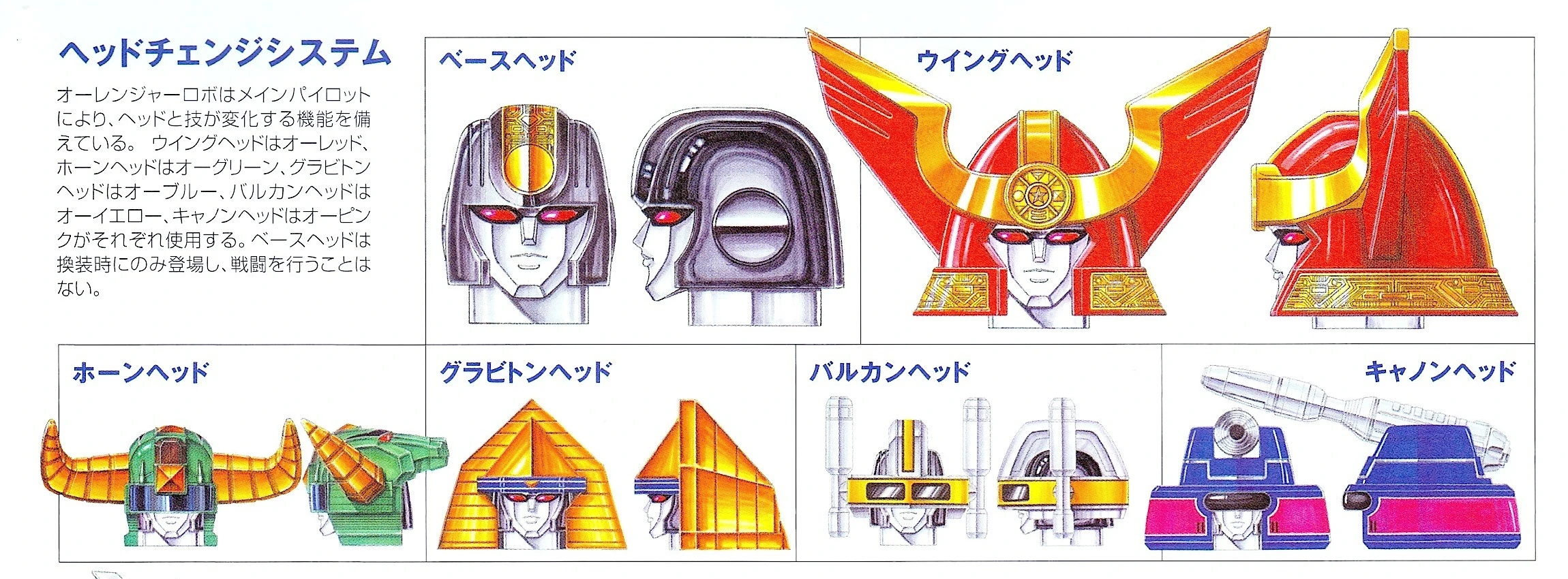
The base head and five finished helmets. A winged crown, bull horns, a pyramid, paired barrels and a long cannon give each configuration its own silhouette.
Super Sentai Art Collection - MediaWorks, 2002 · printed p. 061 · PDF p. 69
Five helmets on the original DX
The machines beneath the helmets
Ohranger Robo first combines in episode 7 of Chouriki Sentai Ohranger. Its five machines mix aircraft, animal and ancient-monument shapes: Sky Phoenix, Gran Taurus, Dash Leon, Dogu Lander and Moa Loader. We use those spellings throughout; other transliterations appear in the sources.
The lion face stays on the chest and the bull face at the waist. The two lower legs retain different designs. The catalog’s separate-machine display lets you trace those features before looking back to the assembled robot. Artbook, pp. 060–061.
Look closer
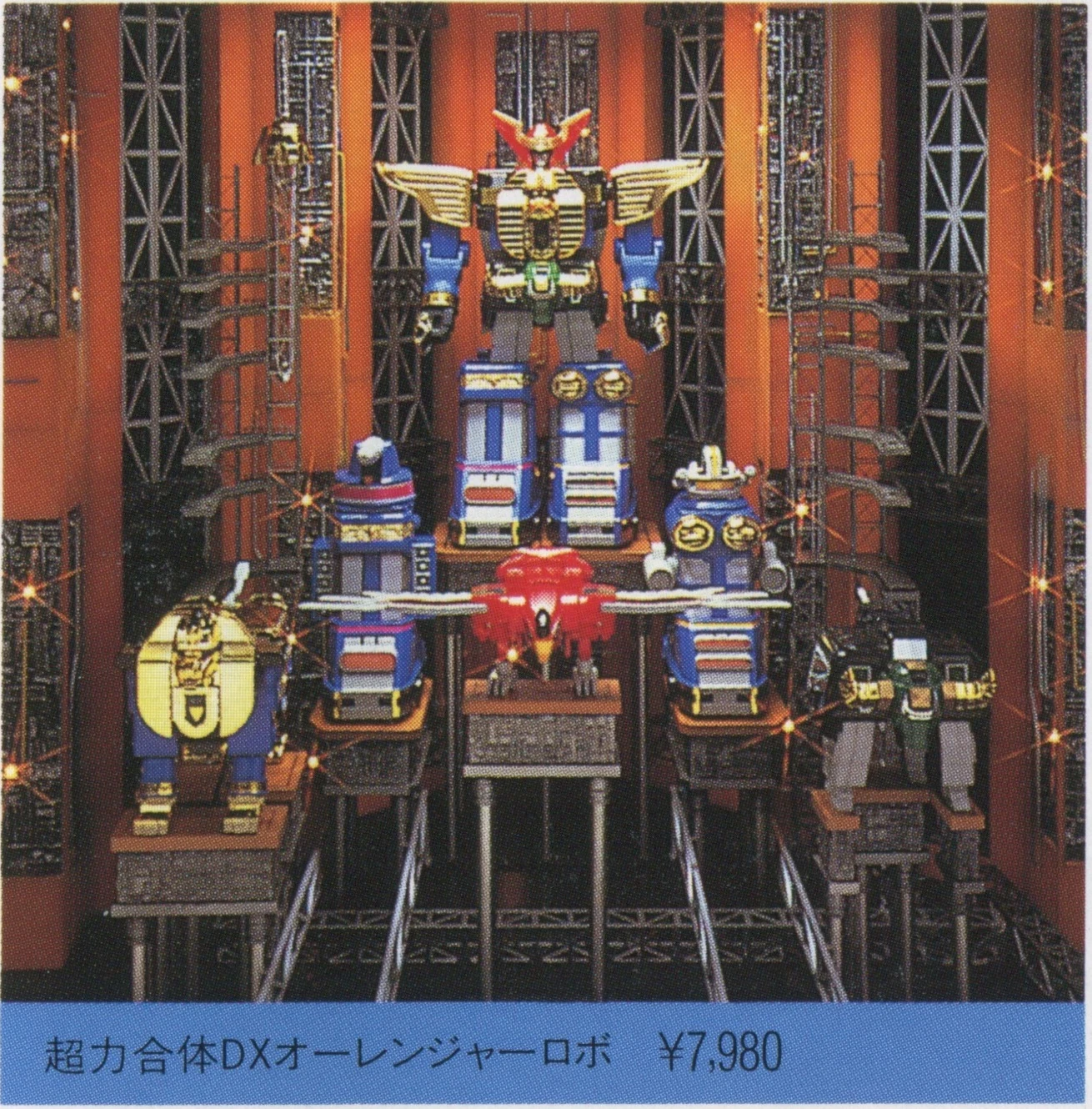
Bandai’s 1995 X’mas catalog: DX Ohranger Robo, its five component machines and a ¥7,980 price. The scenery is photographic staging.
1995 Bandai X'mas Book Catalog - Bandai · printed p. 3 · PDF p. 3
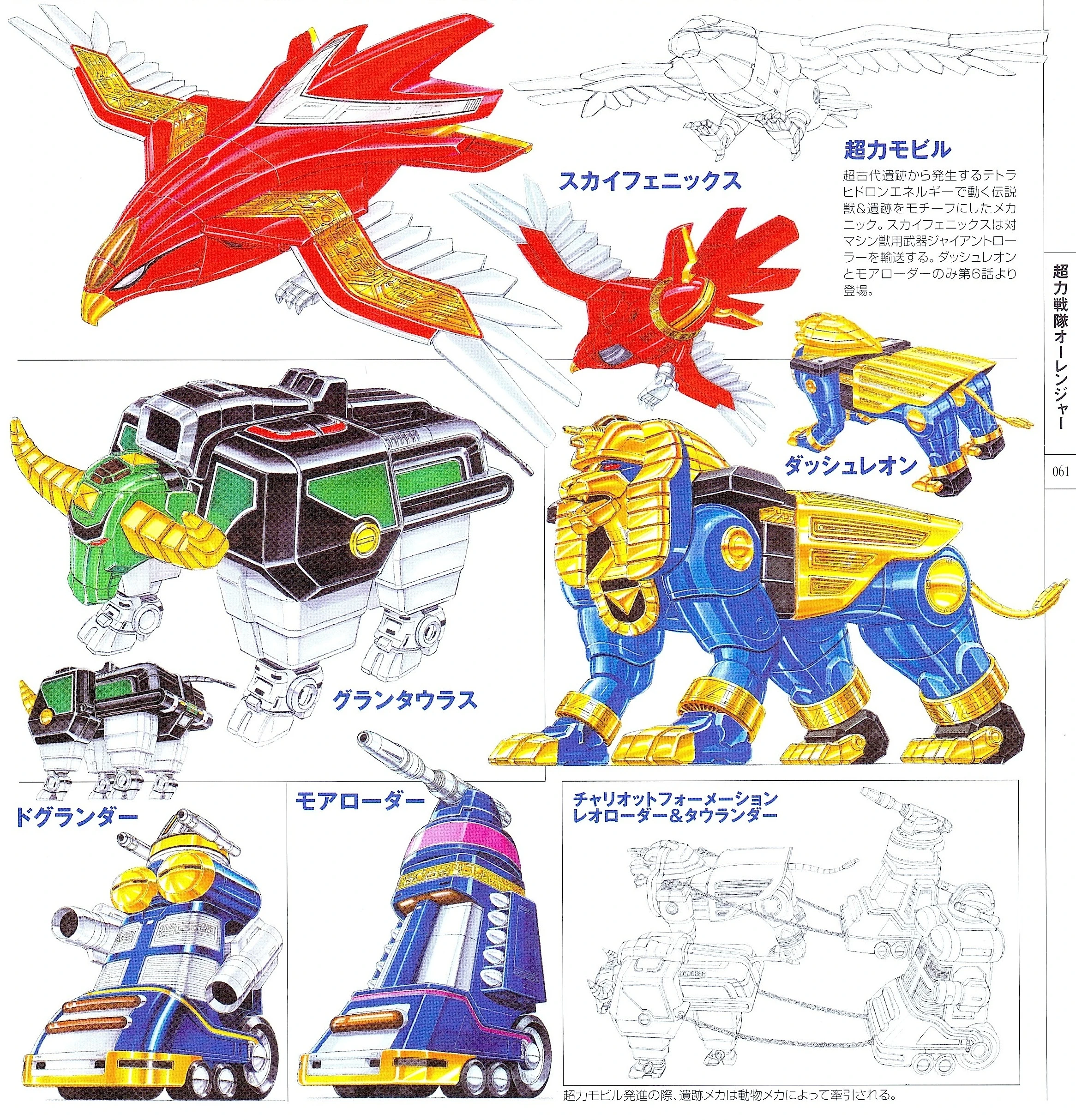
Five separate machines: Sky Phoenix, Gran Taurus, Dash Leon, Dogu Lander and Moa Loader. The lower-right study shows the chariot formation of Moa Loader and Dogu Lander.
Super Sentai Art Collection · MediaWorks, 2002 · printed p. 061 · PDF p. 69
From an aircraft to an animal team
The early proposal was a large aircraft that became a robot. Later studies replace that single vehicle with animal-like machines, including a sphinx that the caption says was to become a lion. Another proposal uses a tiger for the arms and bird wings for the shoulders. The book identifies the finished shoulder armor as a surviving trace of that arrangement. Early sketches, p. 148.
The helmets changed too. The early group emphasizes visor-like faces; the finished sheet gives the alternatives more varied openings and frames. The body was finding its animal vocabulary while the head-change idea was finding five distinct looks.
Look closer

Drawings 5-11. The earliest proposal transforms a large aircraft; the later group develops the animal-machine direction. The book tentatively connects five proposed weapons with the eventual head-change idea.
Super Sentai Art Collection - MediaWorks, 2002 · printed p. 148 · PDF p. 156
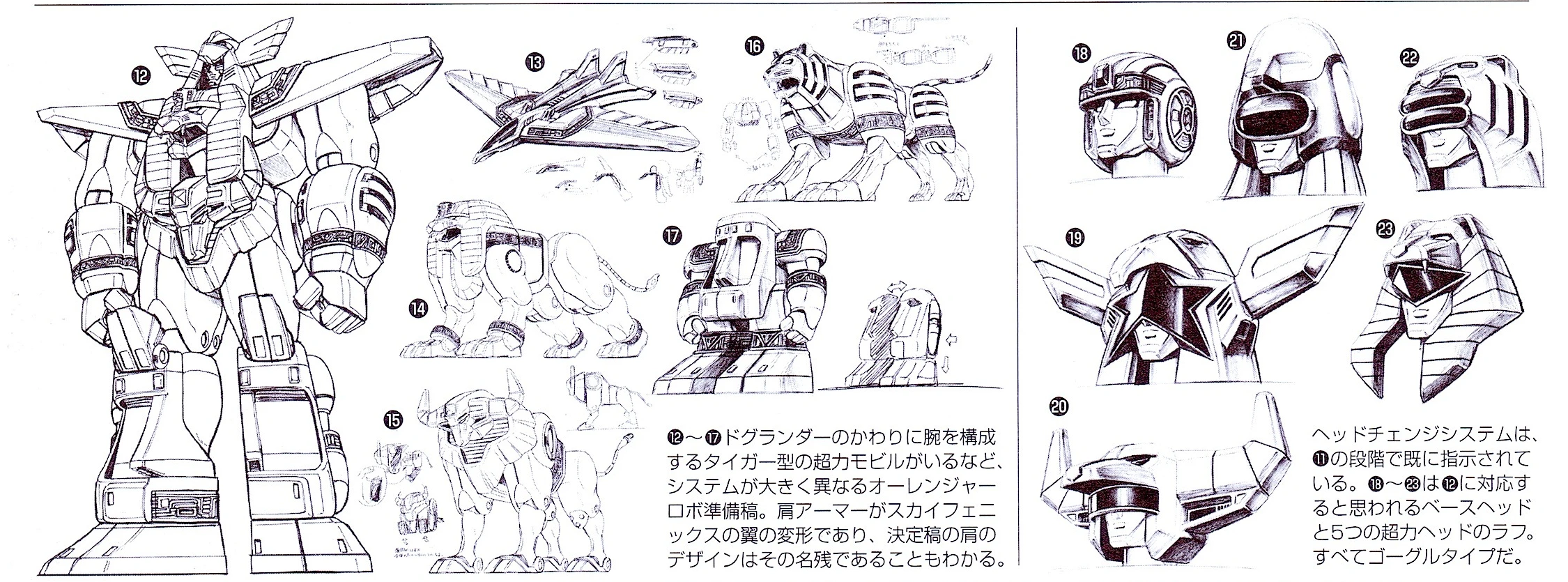
Drawings 12-23. This proposal has a different combination system, including a tiger that contributes the arms. Its shoulder armor comes from the bird's wings; the head studies explore a base head and five helmets.
Super Sentai Art Collection - MediaWorks, 2002 · printed p. 148 · PDF p. 156
One body, a different leader
Bandai’s 1995 X’mas catalog lists DX Chouriki Gattai Ohranger Robo at ¥7,980. Its staged display identifies the Japanese set and its machines; the scenery is photographic staging. Catalog, p. 3; artbook, p. 060.
The helmet system gives the combination a second kind of change. Five machines build the body, but they do not settle its personality once and for all. Change the shape around the face, and a different pilot takes the lead.
Sources
- Super Sentai Art Collection: Sentai Robo Edition 1975-2002 - Ohranger Robo, finished design and DX toy · MediaWorks · 2002 · page 060 · scan page 68
- Super Sentai Art Collection - Ohranger Robo, Head Change System and Chouriki Mobiles · MediaWorks · 2002 · page 061 · scan page 69
- Super Sentai Art Collection - Early Sketches: Ohranger Robo, drawings 5-23 · MediaWorks · 2002 · page 148 · scan page 156
- 1995 Bandai X'mas Book Catalog - Japanese DX Ohranger Robo listing · Bandai · 1995 · page 3 · scan page 3
- RoboToyDays — original Bandai DX toy photographs · RoboToyDays
Artwork and toy photographs are credited reproductions from published sources. This is a virtual exhibit.