From design to toy · 1990s
RV Robo: Five Cars That Keep Their Wheels
Five dream cars become one robot without losing their wheels. Follow RV Robo’s rolling assembly, split-car arms and stubbornly automotive details.
- From the world of
- Gekisou Sentai Carranger
- Toy maker
- Bandai
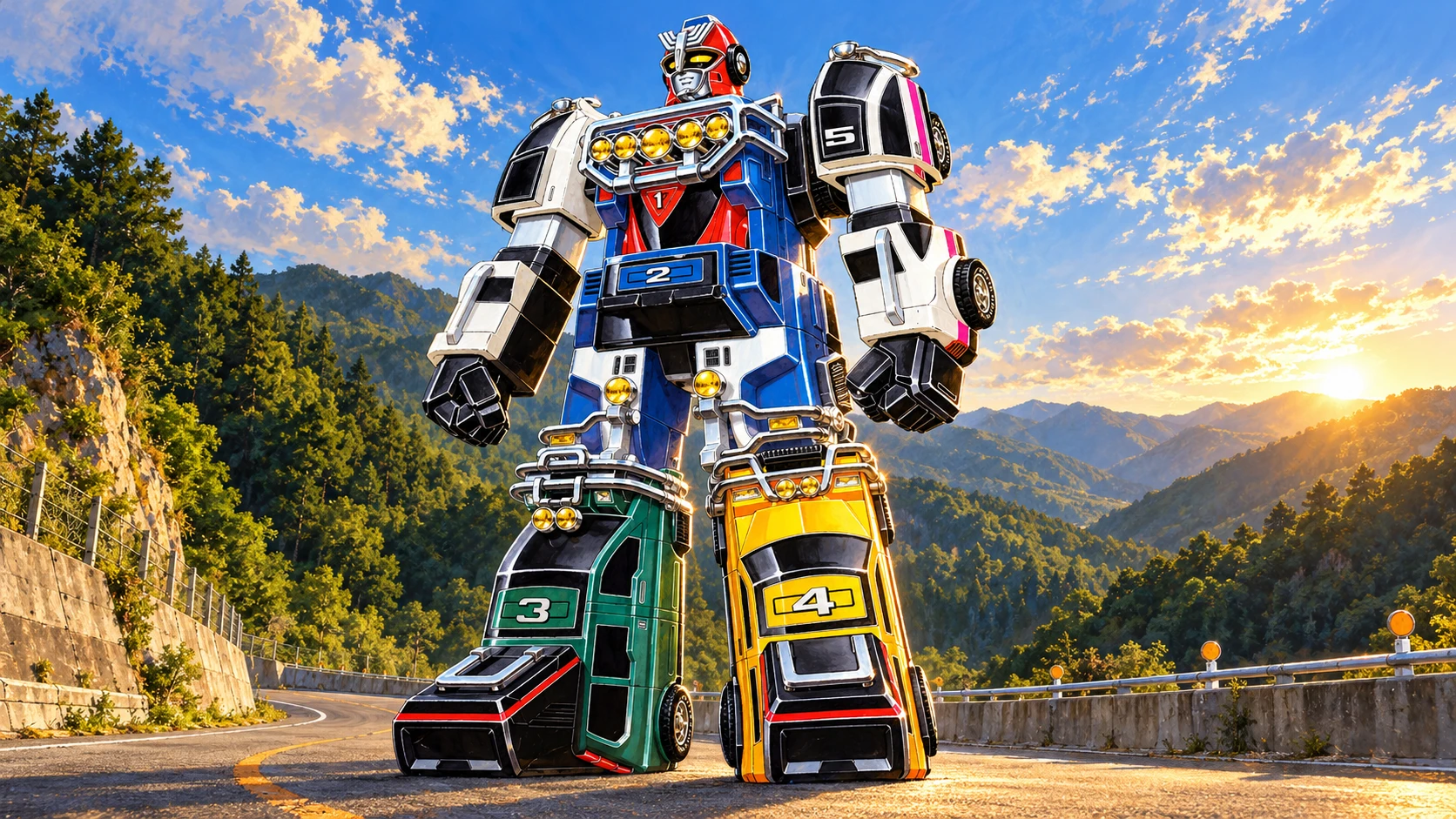
RV Robo on an imagined mountain road. The original designs and toy follow.
AI cover illustration - OpenAI ImageGenDesign reference ↗01 / The design
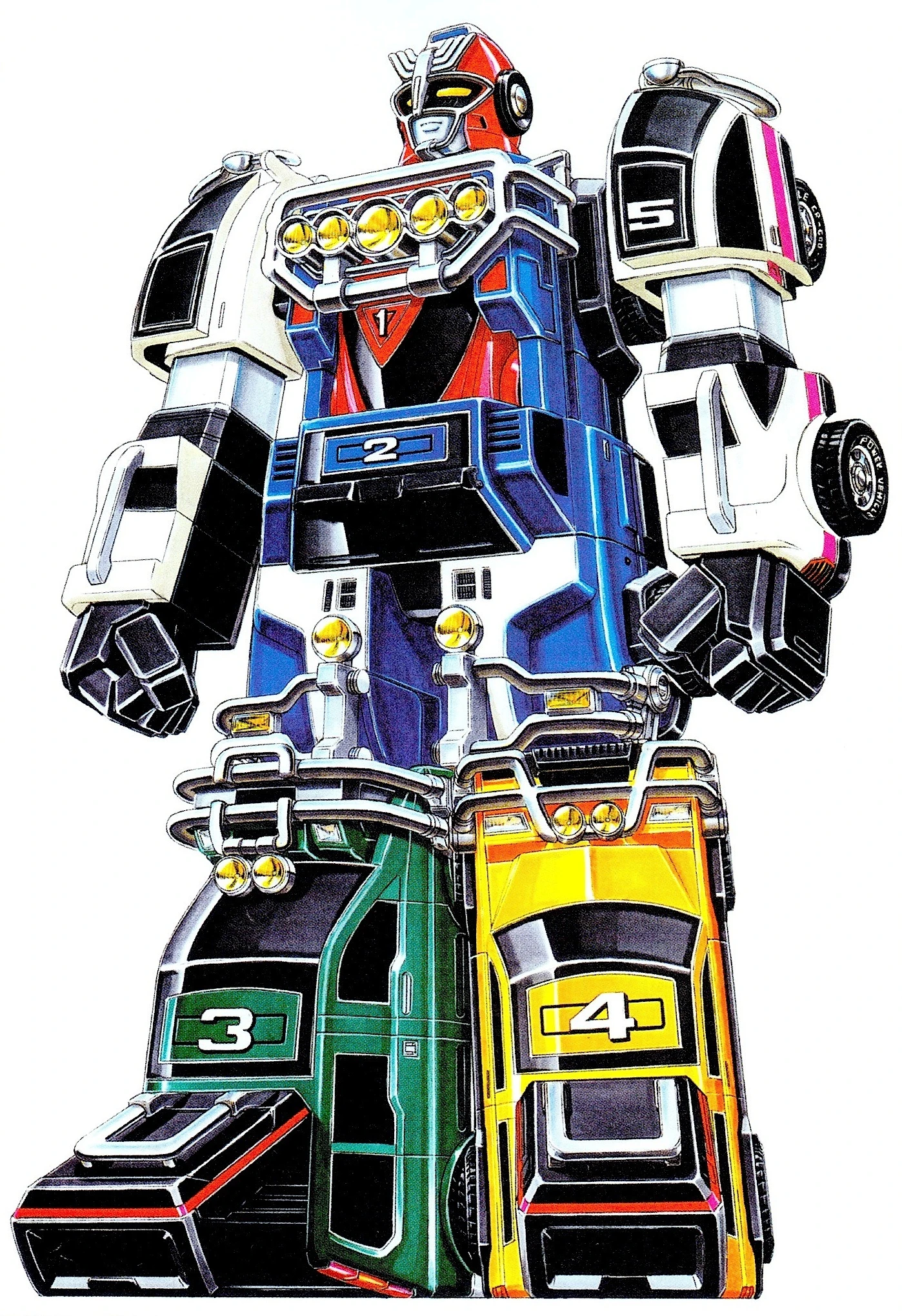
Five numbered cars remain visible in the finished robot. Start at the red 1 and work down.
Super Sentai Art Collection - MediaWorks, 2002 · printed p. 054 · PDF p. 62
02 / The toy
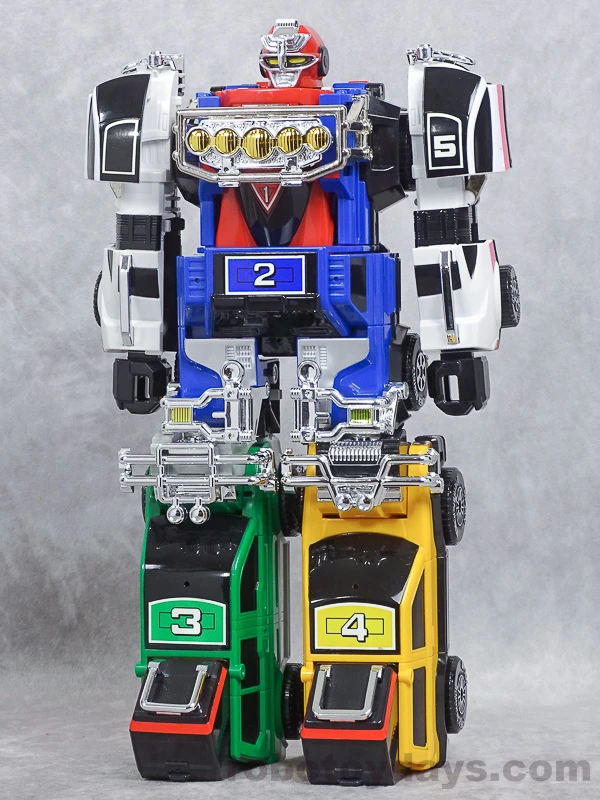
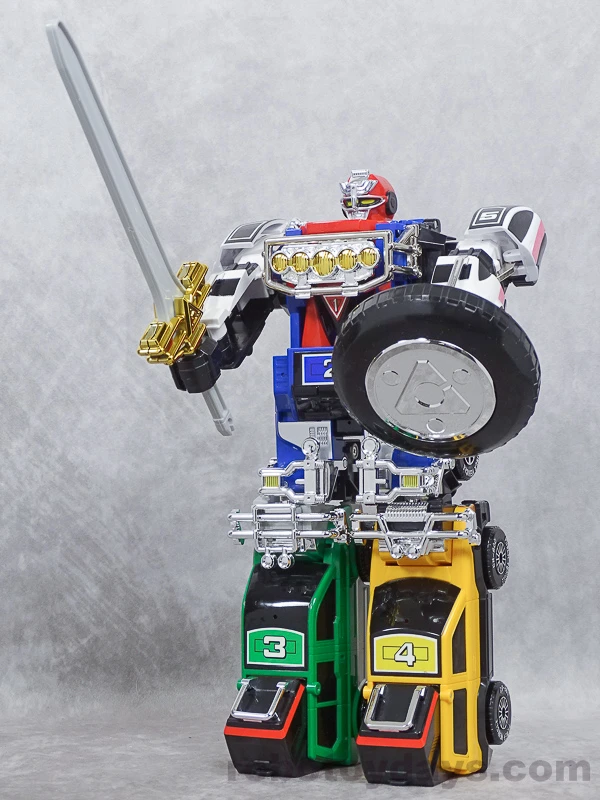
The original Japanese DX: the same car bodies, now joined by bright plated bars.
The cars are easy to find. A green van and a yellow off-roader stand on end below a blue pickup; a white sports car has become two arms. RV Robo wears its traffic on the outside. The original Bandai DX takes the idea further: lay the combined robot down, and it can still roll on its wheels.
The car park becomes a body
In Gekisou Sentai Carranger, the five heroes’ dream-car models receive Kurumagic power and become the Ranger Vehicles. Together they form RV Robo, the giant robot that confronts the space gang Bowzock. The fantasy starts with something a child could already have on a shelf: a model car. [1, 2]
Red Vehicle supplies the head and central red chest. Blue Vehicle provides the main torso, with its five roof lamps moving to the front of the robot. Look for the little red 1 below those lamps and the blue 2 at the waist: the numbers make it possible to retrace the assembly. [1]
Look closer
Red Vehicle - head and chest
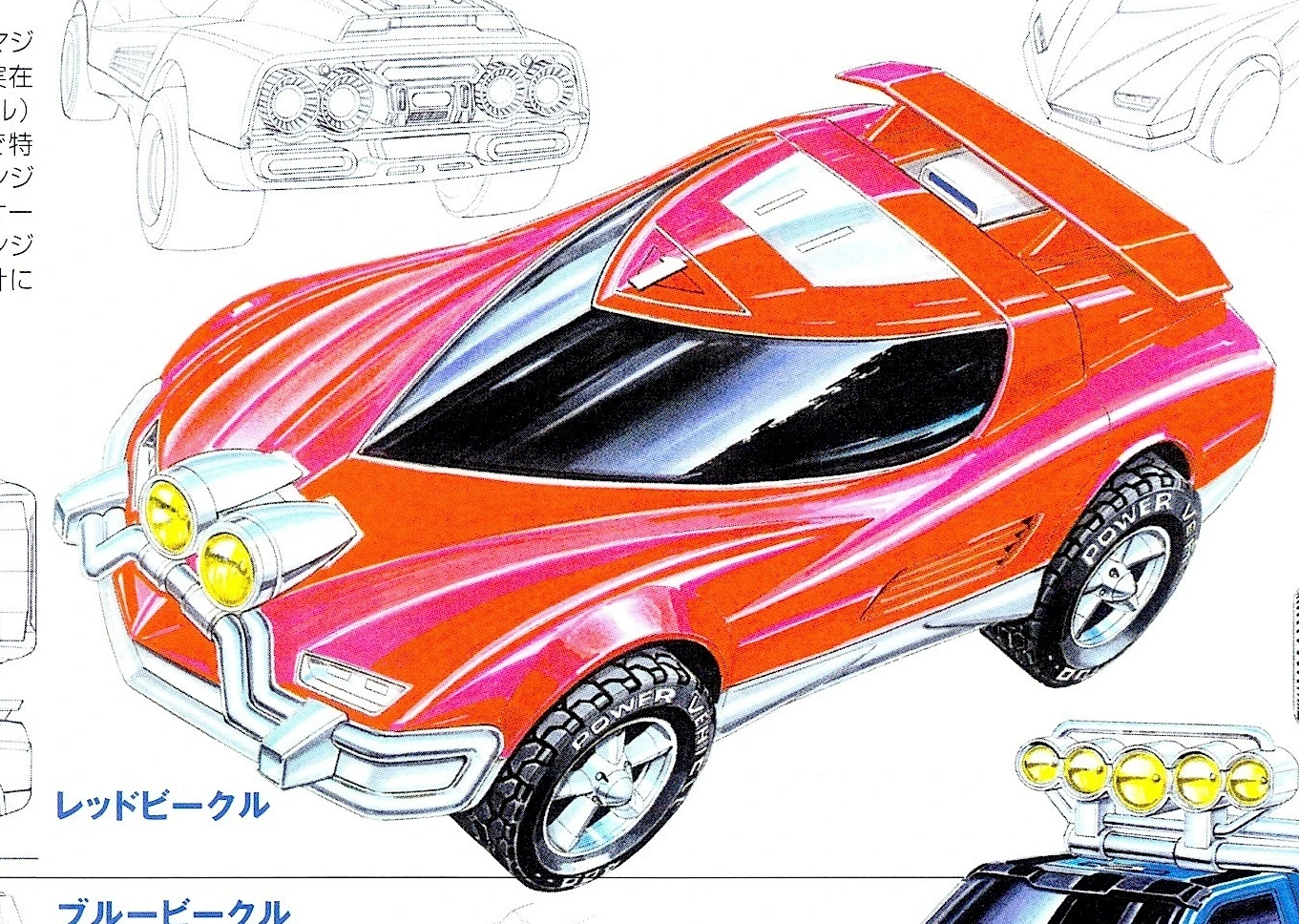
Red Vehicle, No. 1: a low sports car with off-road tires and a broad front bar.
Super Sentai Art Collection - MediaWorks, 2002 · printed p. 055 · PDF p. 63
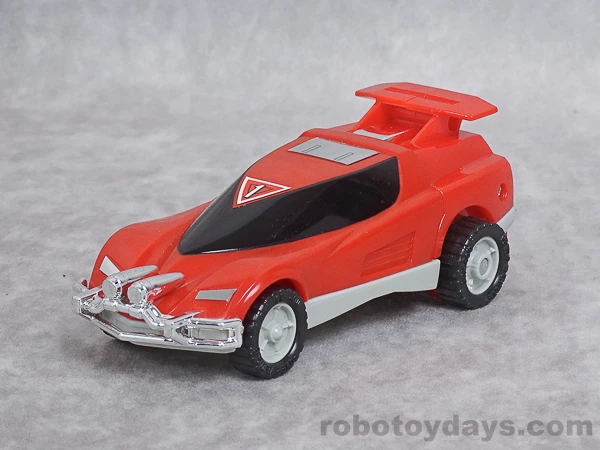
Blue Vehicle - torso
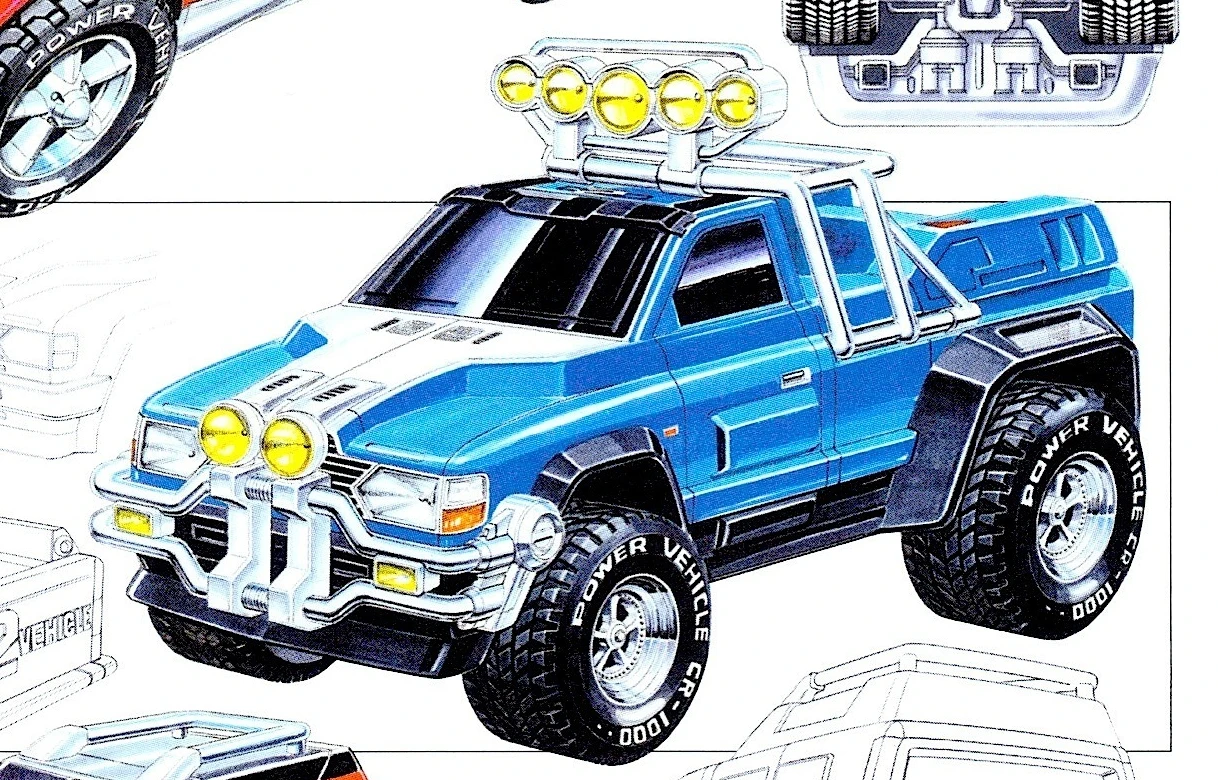
Blue Vehicle, No. 2: follow its roof lamps to the robot chest.
Super Sentai Art Collection - MediaWorks, 2002 · printed p. 055 · PDF p. 63
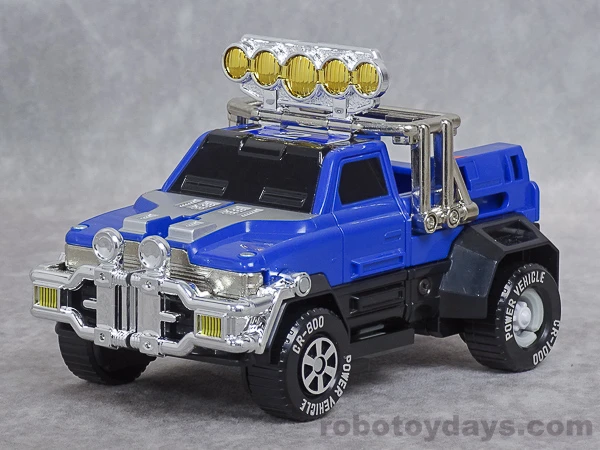
Two tall cars make the legs
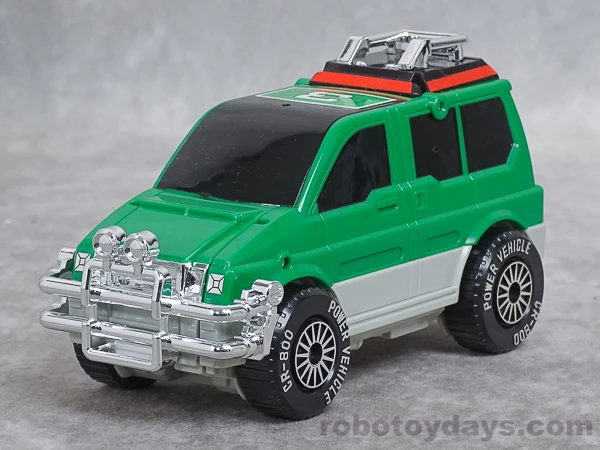
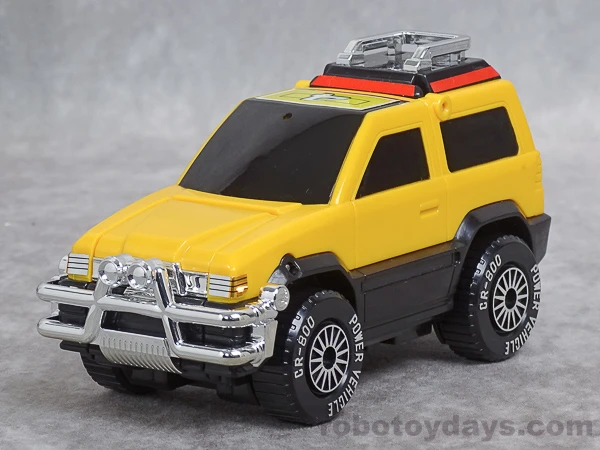
Green Vehicle becomes the right leg and Yellow Vehicle the left. Their roofs face forward, their front bars sit near the knees, and their rear sections unfold into the long feet. The van and the off-roader do the same structural job while remaining visibly different cars. [1, 2]
That coherence was a design concern. The artbook says the Ranger Vehicles were modeled on recreational vehicles and given distinctive roll bars. It also says their relative sizes received attention after differences in scale among the earlier Turboranger machines. The finished lineup gives that account something concrete to look at: five different body styles that can plausibly share a road. [2]
Look closer
Green Vehicle - right leg
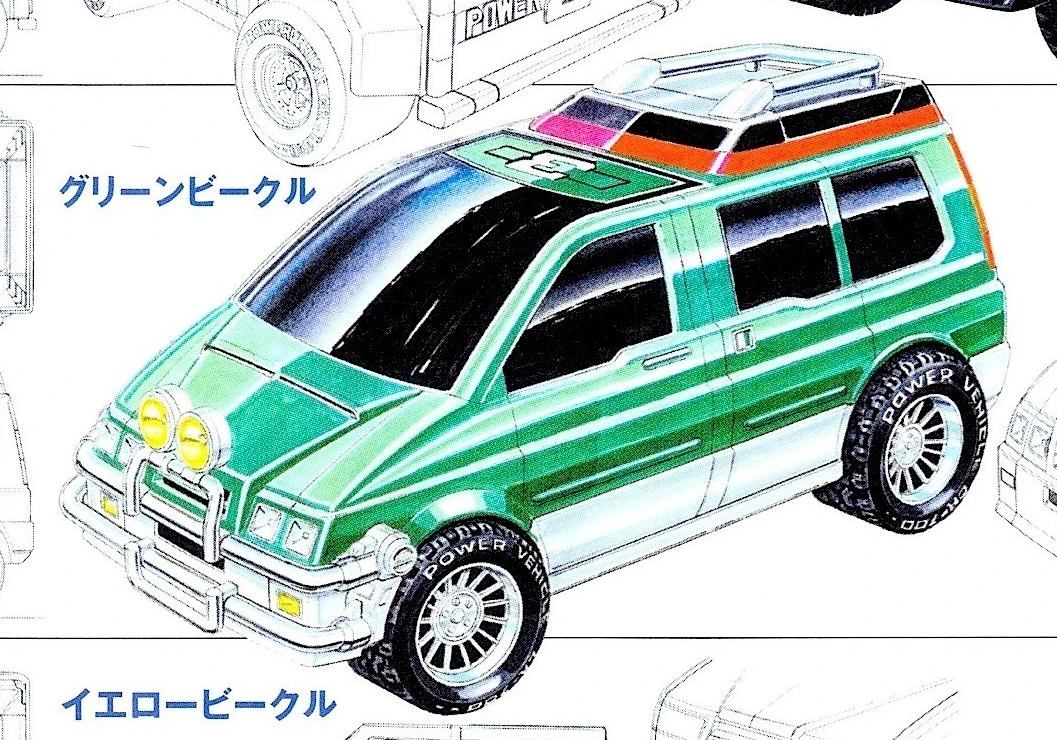
Green Vehicle, No. 3: the long van becomes the robot’s right leg.
Super Sentai Art Collection - MediaWorks, 2002 · printed p. 055 · PDF p. 63
Yellow Vehicle - left leg
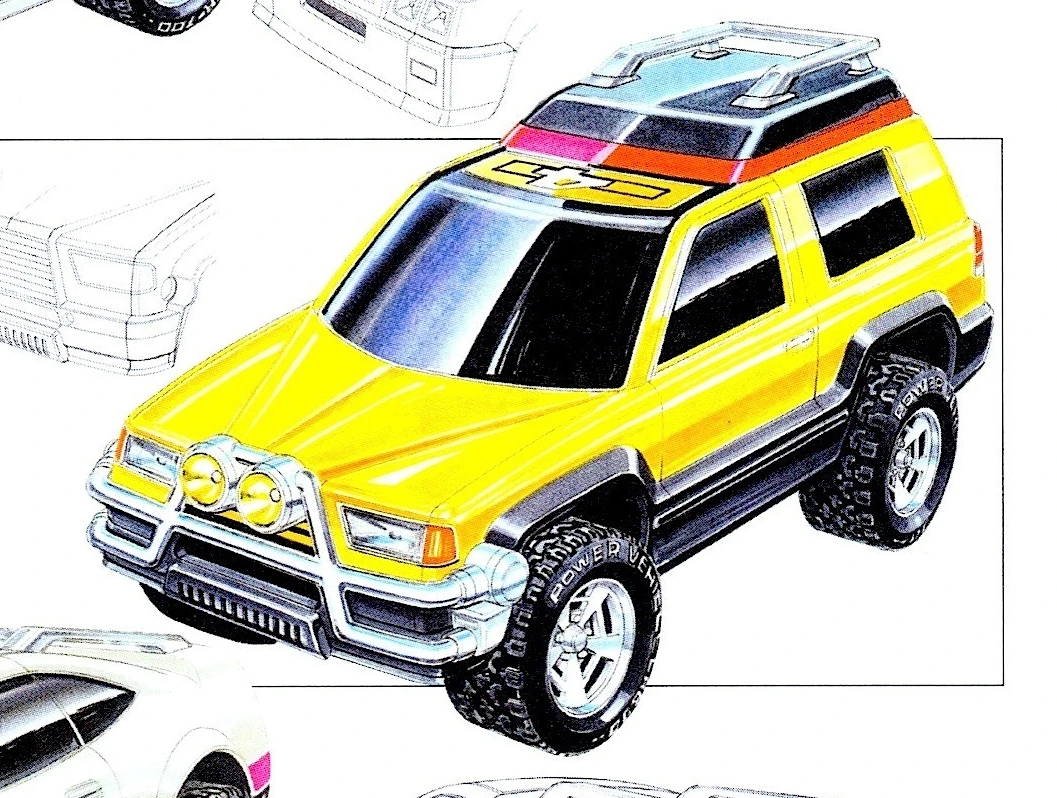
Yellow Vehicle, No. 4: a shorter, squarer body for the left leg.
Super Sentai Art Collection - MediaWorks, 2002 · printed p. 055 · PDF p. 63
One car supplies both arms
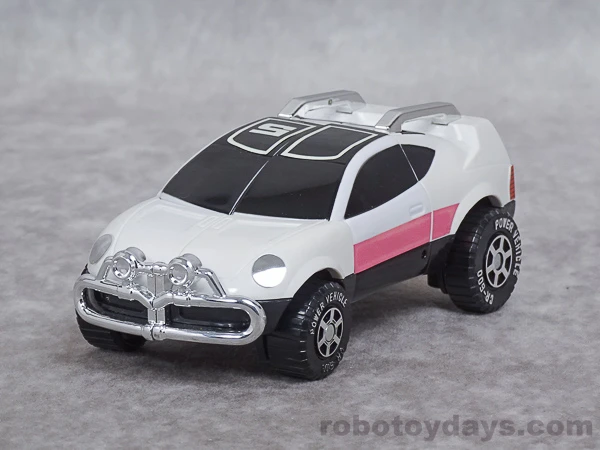
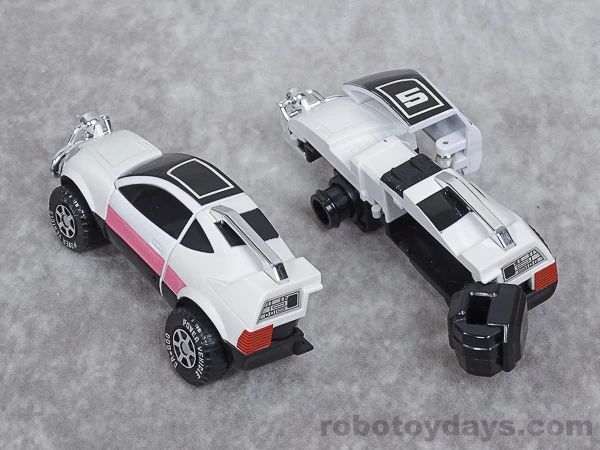
Pink Vehicle is the surprise. Its white body carries a narrow pink stripe, and one car supplies both arms. On the DX, it divides lengthwise; the fists unfold from within the two halves. The black windows become shoulder panels, while the wheels remain along the outside of each arm. The 5 is still readable on a shoulder. [1, 3]
Instead of finding a robot folded inside every vehicle, you can watch a familiar car body become a limb with remarkably little disguise.
Look closer
Pink Vehicle - both arms
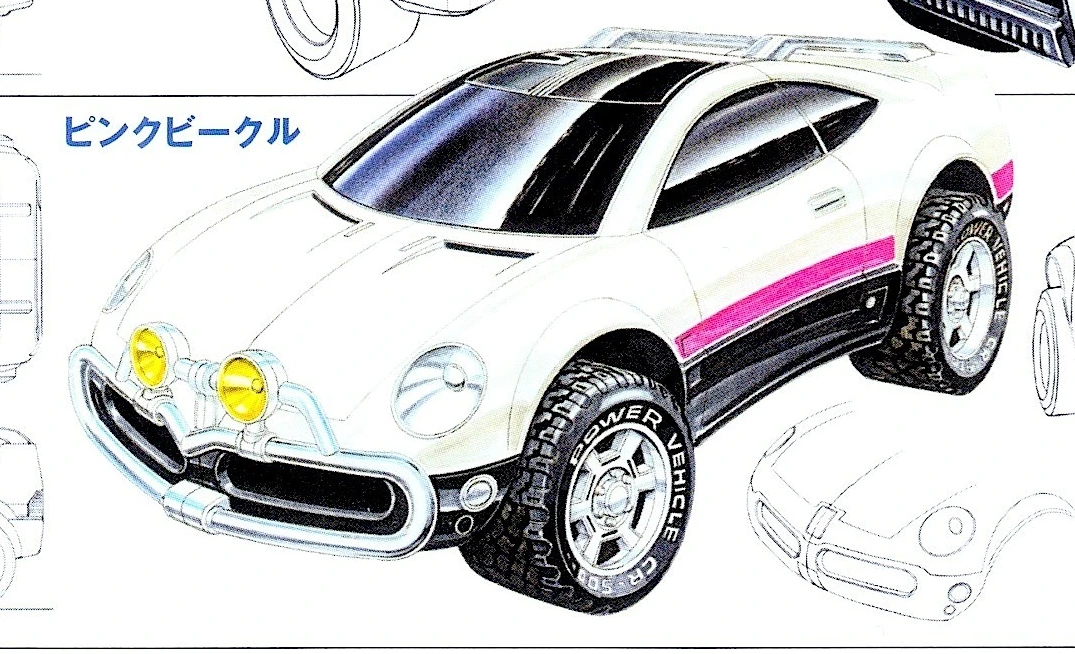
Pink Vehicle, No. 5: the broad white body will divide into both arms.
Super Sentai Art Collection - MediaWorks, 2002 · printed p. 055 · PDF p. 63
Keep the wheels on the road
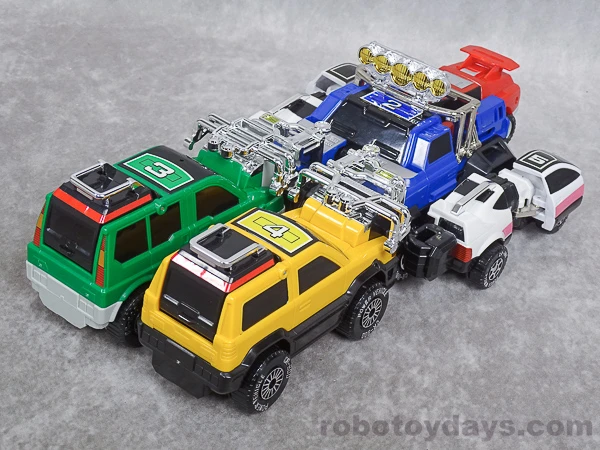
The horizontal assembly makes the arrangement clear. Pink’s halves attach beside Blue, Green and Yellow join at the front, and Red fits into the center from the rear. The result looks briefly like an improbable convoy traveling abreast. It is an assembly position rather than a separate named vehicle mode. [3]
The artbook specifically notes that the DX can roll even after combination, reproducing the running assembly idea. Standing it upright changes the silhouette, but the wheel system survives. Those prominent bars survive too: the book identifies the toy’s roll bars as silver-plated, giving the small cars much of the finished drawing’s shine. [1]
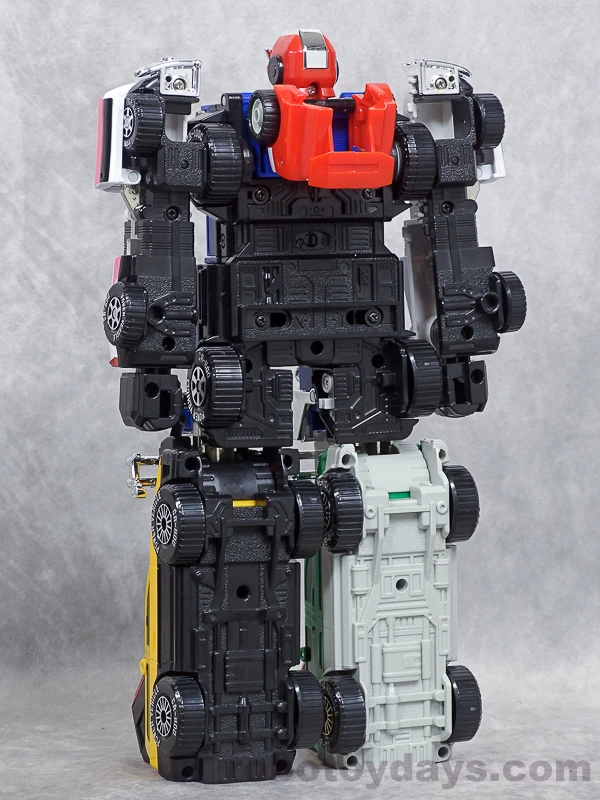
Turn it around
From the front, windows and bodywork sell the robot’s identity. From behind, the chassis are exposed. The rear drawing and the DX photograph agree on the arrangement of wheel banks and vehicle undersides; the green van’s pale bottom is especially easy to pick out. [1, 3]
This is where the rolling trick stops being mysterious. The wheels have not been hidden or replaced. They are waiting along the back and sides of the body for the whole assembly to lie down again.
Look closer
The cars underneath
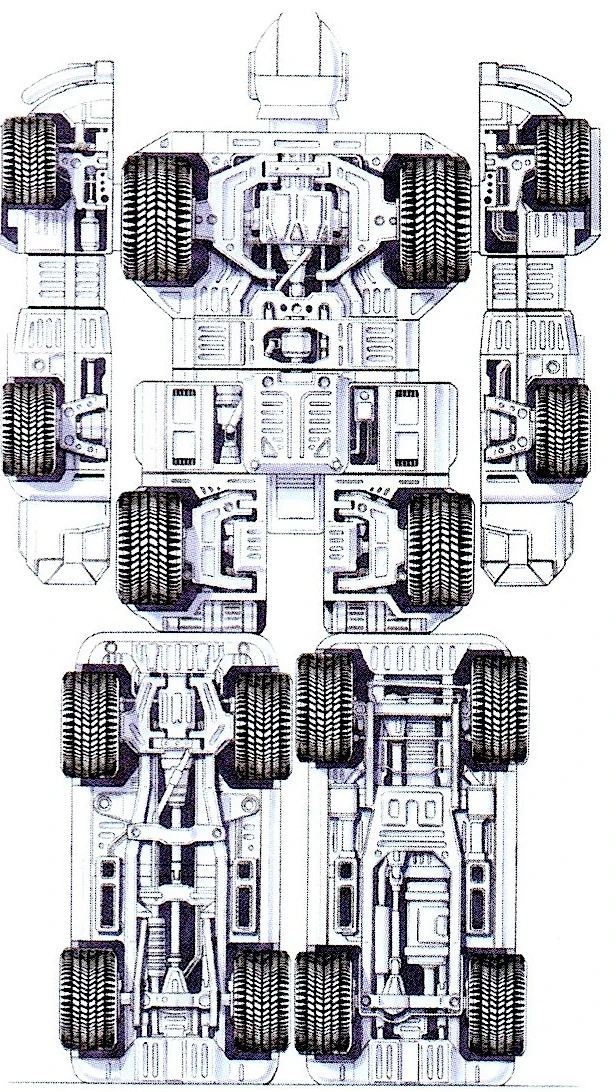
The rear drawing turns the robot into a map of vehicle undersides.
Super Sentai Art Collection - MediaWorks, 2002 · printed p. 054 · PDF p. 62
Even the sword gets a bar
The car theme reaches details that never had to transform. A silver bar frames the helmet’s face, with round wheel-like forms at the sides. The RV Sword has a bar of its own, and the Radial Shield is explicitly designed around a tire. [1]
Beside the armed DX, those drawings make the final joke land: even after five cars have become a giant warrior, someone has equipped it with another tire. RV Robo can stand up, draw a sword and fight. It still looks ready for a drive.
Sources: [1] Super Sentai Art Collection: Sentai Robo Edition 1975–2002 (MediaWorks, 2002), printed 054 / PDF 62: RV Robo, original DX, rear, helmet and weapons. [2] Same book, printed 055 / PDF 63: Ranger Vehicles and design commentary. [3] RoboToyDays’ original Japanese DX photographs: package, separate vehicles and assembly sequence. Japanese captions are paraphrased; readings of visible shapes are visual observations.
Look closer
Car details carried through
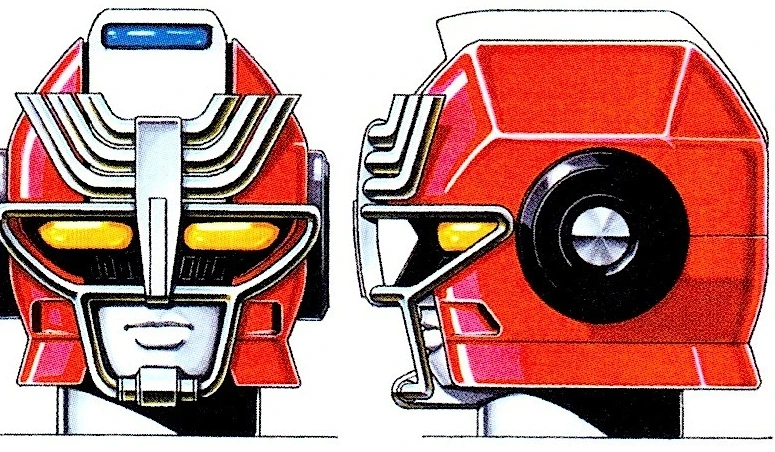
The helmet repeats the bars and round wheel forms found on the cars.
Super Sentai Art Collection - MediaWorks, 2002 · printed p. 054 · PDF p. 62
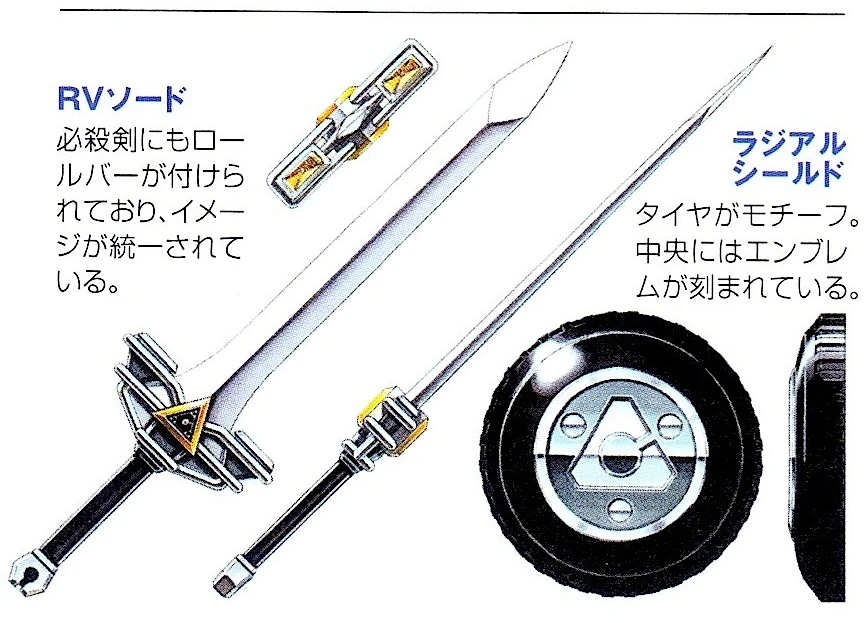
The RV Sword carries its own protective bar; the Radial Shield takes the form of a tire.
Super Sentai Art Collection - MediaWorks, 2002 · printed p. 054 · PDF p. 62
Sources
- Super Sentai Art Collection - RV Robo and Ranger Vehicles · MediaWorks · 2002 · page 054 · scan page 62
- Super Sentai Art Collection - RV Robo and Ranger Vehicles · MediaWorks · 2002 · page 055 · scan page 63
- RoboToyDays - original Japanese Bandai Gekisou Gattai DX RV Robo · RoboToyDays
Artwork and toy photographs are credited reproductions from published sources. This is a virtual exhibit.