From design to toy · 1990s
Ryuseioh
A winding dragon becomes a standing warrior. Follow Ryuseioh’s changing head and transformation from rough sketches to the finished design and its original DX toy.
- From the world of
- Gosei Sentai Dairanger
- Toy maker
- Bandai
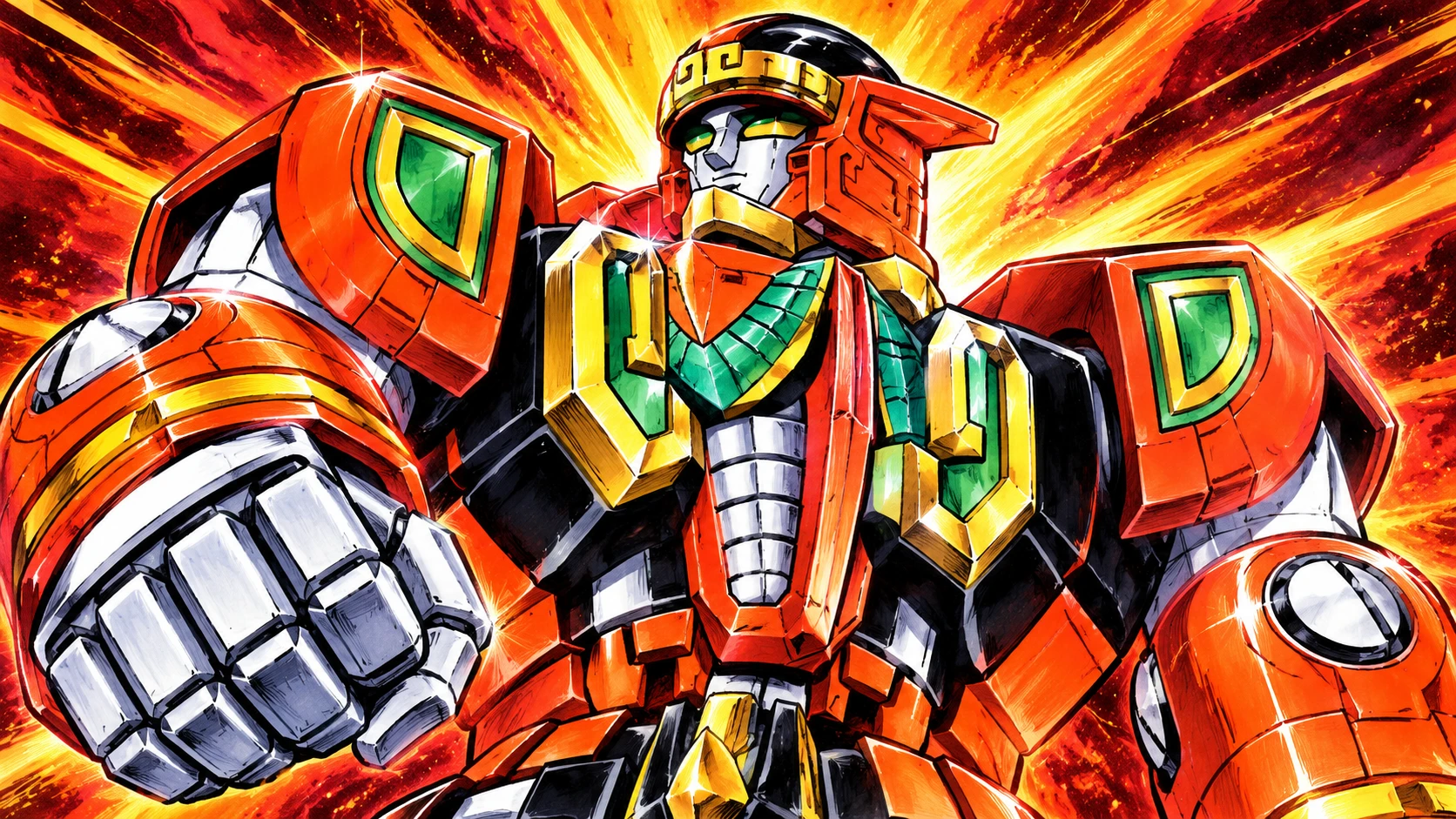
Original AI cover illustration inspired by the character design; historical artwork and toy photographs appear inside the article.
AI cover illustration · Rewind: Northwest RetroDesign reference ↗01 / The design
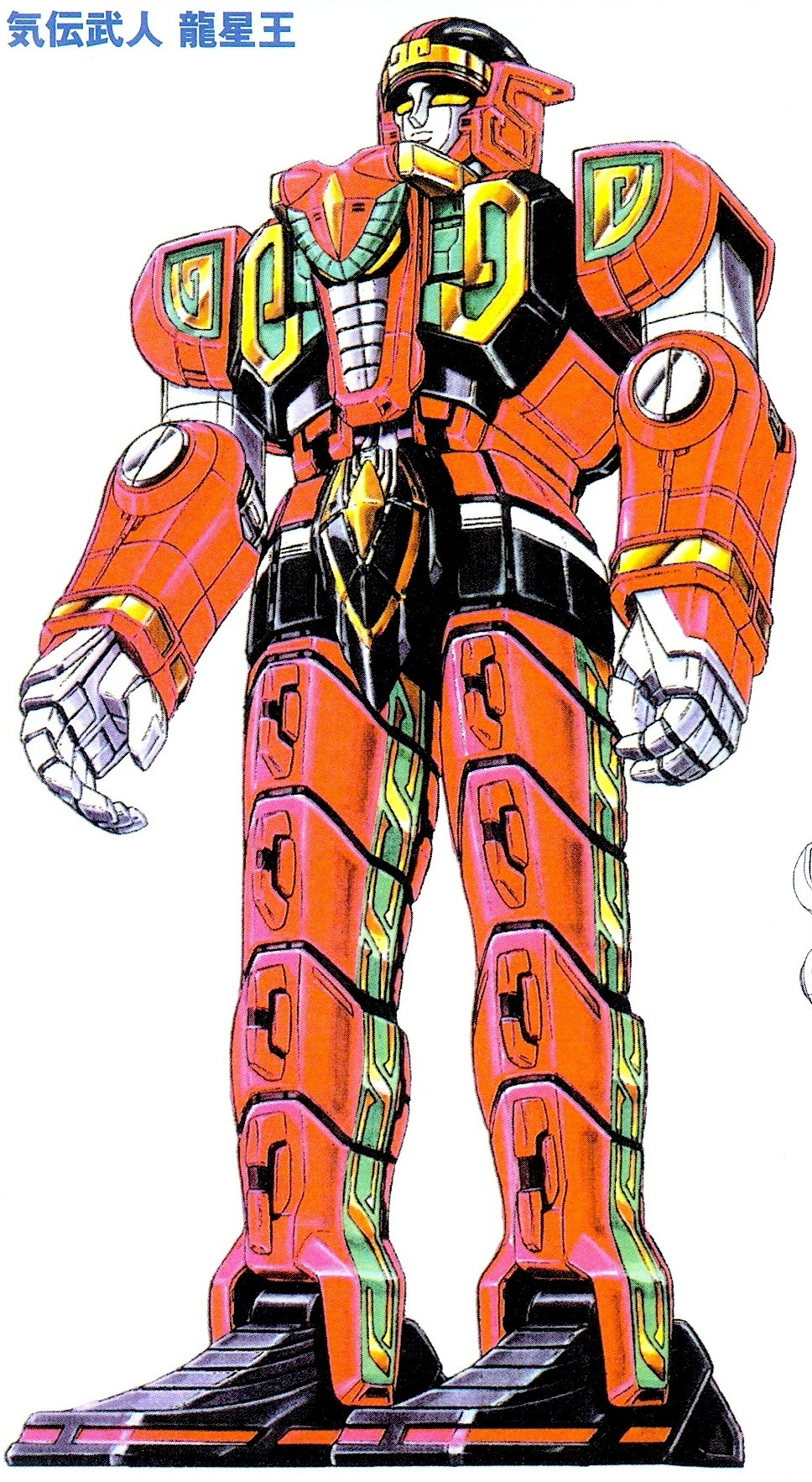
Ryuseioh in its warrior form. The red segments, green chest panels, and dragon-shaped helmet carry details from the long-bodied beast into an upright silhouette.
Super Sentai Art Collection · MediaWorks, 2002 · printed p. 079 · PDF p. 87
02 / The toy
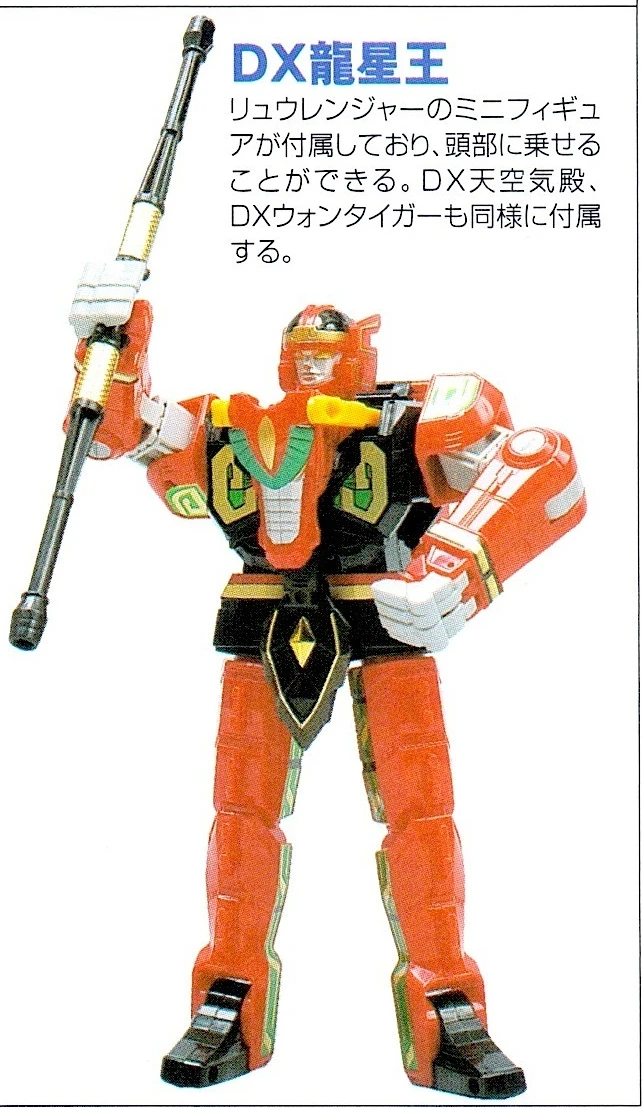
DX Ryuseioh holding its long staff. The crop from the original artbook scan retains the product heading and note beside the staff.
Super Sentai Art Collection · MediaWorks, 2002 · printed p. 079 · PDF p. 87
In the story
A dragon’s long body becomes a warrior’s red legs. Its claws become hands, and its head gives the warrior a helmet. Ryuseioh makes the change between creature and robot the center of its identity.
In Gosei Sentai Dairanger, the heroes fight the revived Gorma Empire using ki energy and martial arts. The artbook describes their Mythical Qi Beasts as giant beings born from the Earth’s natural world. Ryuseioh is Ryuranger’s beast, able to perform Warrior Transformation into its humanoid form. It appears from episode 1; its finishing move is Hiryu Kon Dai Fusha Giri, an attack with its staff. Artbook, p. 079.
The finished drawings let you trace that dual identity. The warrior’s chest repeats the dragon’s green-and-gold panels, while the long red body is echoed in the segmented legs. The silver hands retain the creature’s clawed shape. These are visible correspondences between the two drawings; the development captions explain how the designers worked toward the transformation.
The dragon on the toy shelf
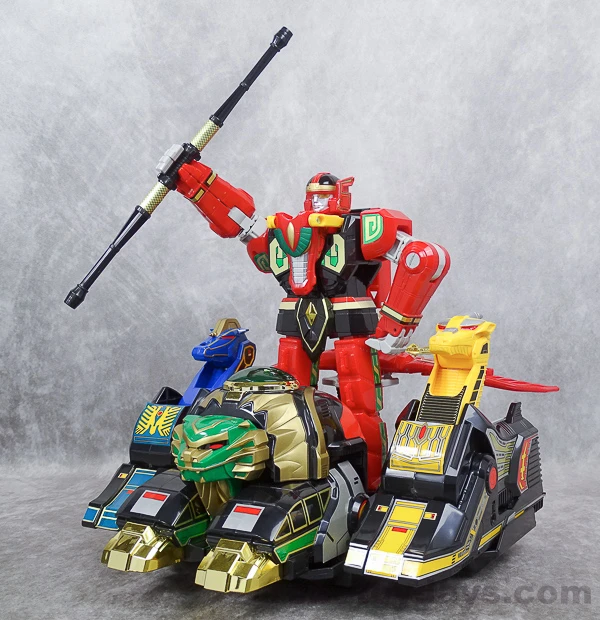
The warrior photograph tells only half of Ryuseioh’s transformation. Below, an original DX dragon-mode photograph lets you compare the long red body and silver underside with the finished dragon artwork. A second photograph shows the upright toy riding Tenku Kiden, the platform made by its four companion beasts. The clear support beneath the separate dragon is part of the photographer’s display. DX photographs — RoboToyDays; Tenku Kiden, artbook p. 081.
Look closer
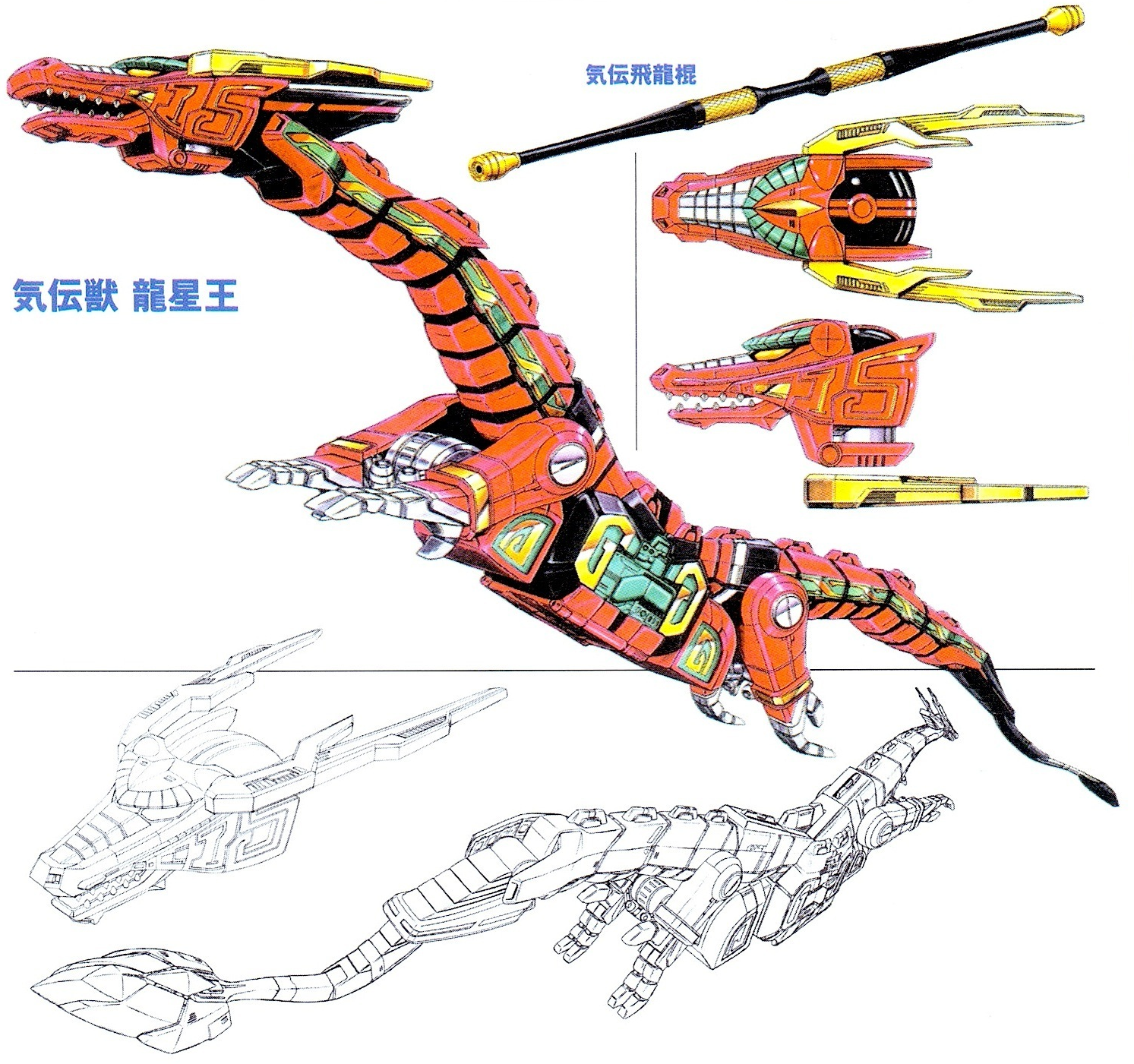
The same page records Ryuseioh’s dragon form, head details, staff, and underside view. These are finished design drawings, rather than photographs of the toy.
Super Sentai Art Collection · MediaWorks, 2002 · printed p. 079 · PDF p. 87
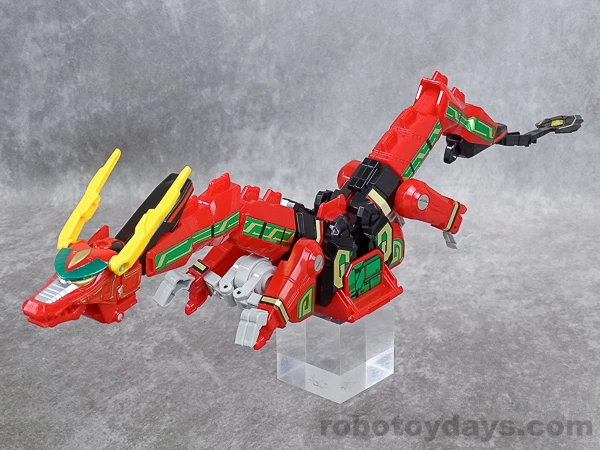
DX Ryuseioh before it stands up as a warrior. The clear display support belongs to the photographer’s setup.
On the drawing board
The early sketches start with surprisingly spare diagrams. The caption for drawing 2 identifies it as an idea memo for transforming the beast into a warrior; drawings 3–5 develop that memo into rough sketches. Before there was a finished dragon or armored figure, there was a problem of arranging shapes. Early sketches, p. 150.
The excerpt below begins at drawings 6–7. The book describes these as a simpler revision, with the arm transformation already established. In this version, the dragon’s head sits at the warrior’s knees. The caption specifically describes a complete transformation without exchanging parts. Look at drawing 7’s plain humanoid head and compare it with the creature-shaped helmet in the finished artwork. Early sketches, p. 150.
Drawings 8–10 record a different priority. The caption says there was a request to use the dragon’s head as the warrior’s head, so the design changed to a parts-exchange approach. Drawing 10 makes that choice visible: the dragon’s long snout extends behind the warrior’s face. The finished color design keeps that connection between the two identities. The book does not identify who made the request. Early sketches, p. 150.
This is a useful glimpse of a design decision with a cost. The earlier sketches prioritized keeping the transformation together; the later ones made the dragon’s identity more prominent on the warrior’s head. The caption documents the change, while the drawings show its effect on the silhouette.
Look closer
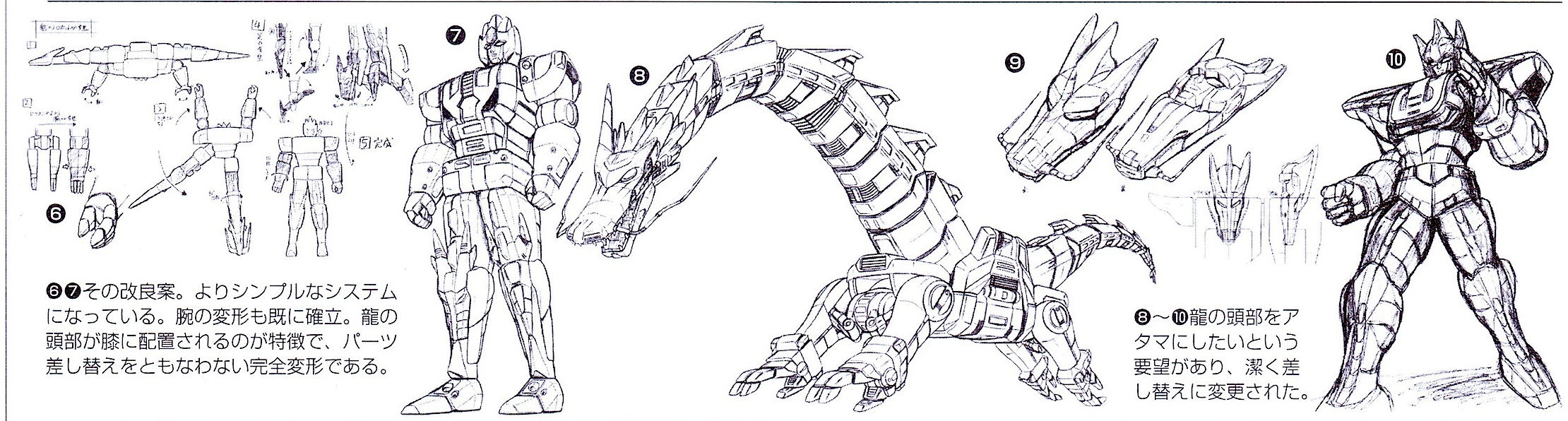
Drawings 6–10 document a change in priorities: an earlier transformation kept the dragon’s head at the knees, while later studies moved it to the warrior’s head through a parts exchange.
Super Sentai Art Collection · MediaWorks, 2002 · printed p. 150 · PDF p. 158
On the toy shelf
The artbook supplies a photograph explicitly labeled DX Ryuseioh (DX龍星王), giving this exhibit a matched toy image from the same source as the artwork. The red legs, green-and-gold chest, black feet, and dragon-shaped helmet are visible in both. The toy is shown in warrior form holding its long staff. Artbook, p. 079.
The product note highlights a smaller detail: a Ryuranger mini figure was included and could be placed on the toy’s head. That gives the large warrior a connection to the human hero who controls it in the series. The photograph and note are reproduced together above, so the product identification stays attached to the image. Artbook, p. 079.
Dairanger began broadcasting in 1993; the artbook is a 2002 retrospective. The displayed page does not establish the DX toy’s exact release date or original price, so neither is assigned here. The photographed subject is the original DX toy documented in that book.
Return to the two heads in the sketches. Moving the dragon’s head from the knees to the helmet made the transformation a little less self-contained, but gave the warrior a feature that still identifies its other form at a glance.
Continue to Dairenoh to see the combined warrior built around Ryuseioh.
Sources
- Super Sentai Art Collection: Sentai Robo Edition 1975–2002 — Dairanger, Ryuseioh and DX toy · MediaWorks · 2002 · page 079 · scan page 87
- Super Sentai Art Collection — Early Sketches: Ryuseioh · MediaWorks · 2002 · page 150 · scan page 158
- RoboToyDays — original Bandai DX toy photographs · RoboToyDays
Artwork and toy photographs are credited reproductions from published sources. This is a virtual exhibit.