From design to toy · 1990s
Sirender: The Police Car That Answers a Whistle
A whistle calls the lights and sounds to life. Follow Sirender from police car to giant officer, then lift the visor and inspect the equipment.
- From the world of
- Gekisou Sentai Carranger
- Toy maker
- Bandai
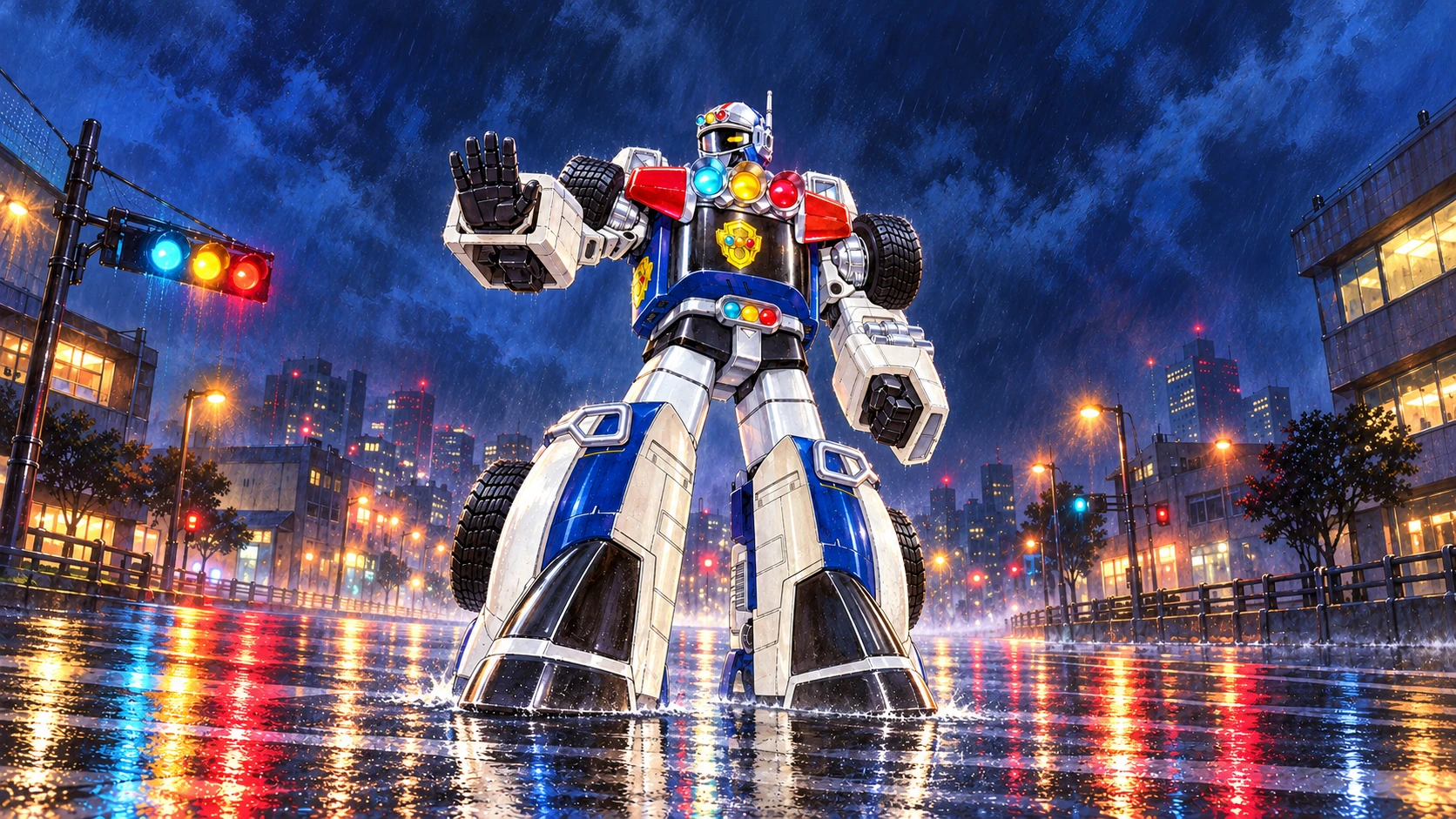
Sirender on duty at an imagined city crossing. The original drawings and toy follow.
AI cover illustration - OpenAI ImageGenDesign reference ↗01 / The design
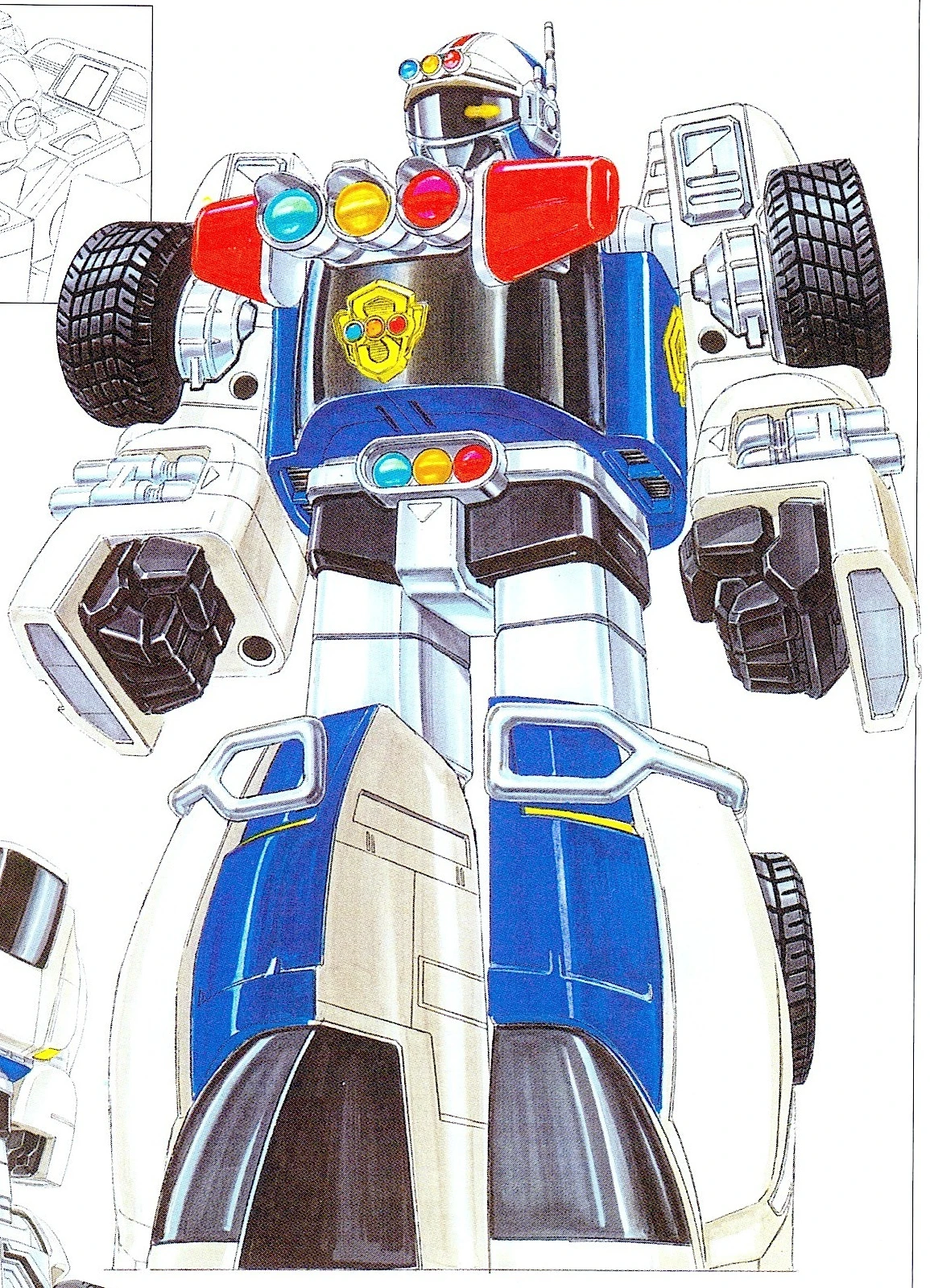
A police car standing to attention: the roof lights cross the chest, and the front bodywork forms the shins.
Super Sentai Art Collection - MediaWorks, 2002 · printed p. 056 · PDF p. 64
02 / The toy
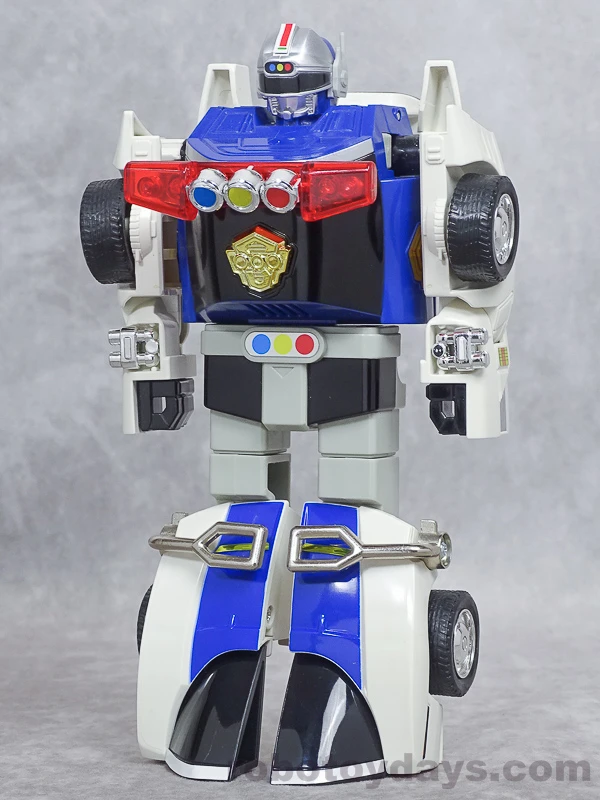
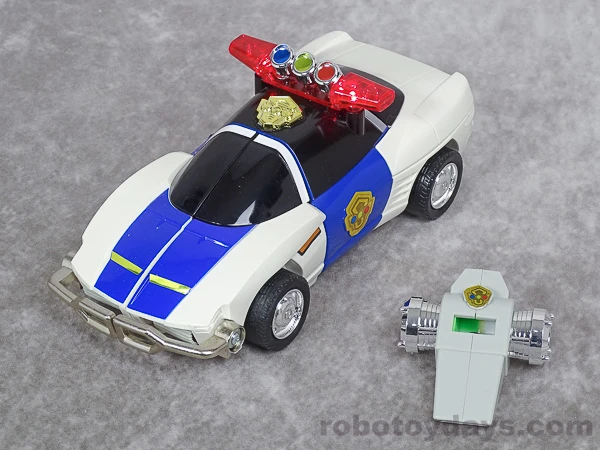
The original Japanese DX keeps the badge, signal lamps and four conspicuous wheels.
Blow a whistle, and the police car answers with lights and sound. The original Japanese DX Sirender gives a child a small part of Signalman’s job before the transformation even begins. Then the car’s nose unfolds into legs, the rear body becomes arms, and the roof lights arrive on a giant officer’s chest. [1]
A call you can make
In Gekisou Sentai Carranger, Sirender is Signalman’s emergency vehicle. His command, “Stand up! Sirender!”, turns it into a robot. The design makes the connection easy to read: blue and white bodywork, a gold badge, and three colored lamps repeated across the helmet, chest and waist. [1]
The DX adds a response you can trigger yourself. Its included Signal Whistle activates lights and sounds, as the artbook’s toy caption explains. You still fold the car into a robot by hand. The whistle supplies the call; your hands supply the transformation. [1]
Look closer
A police car you can call
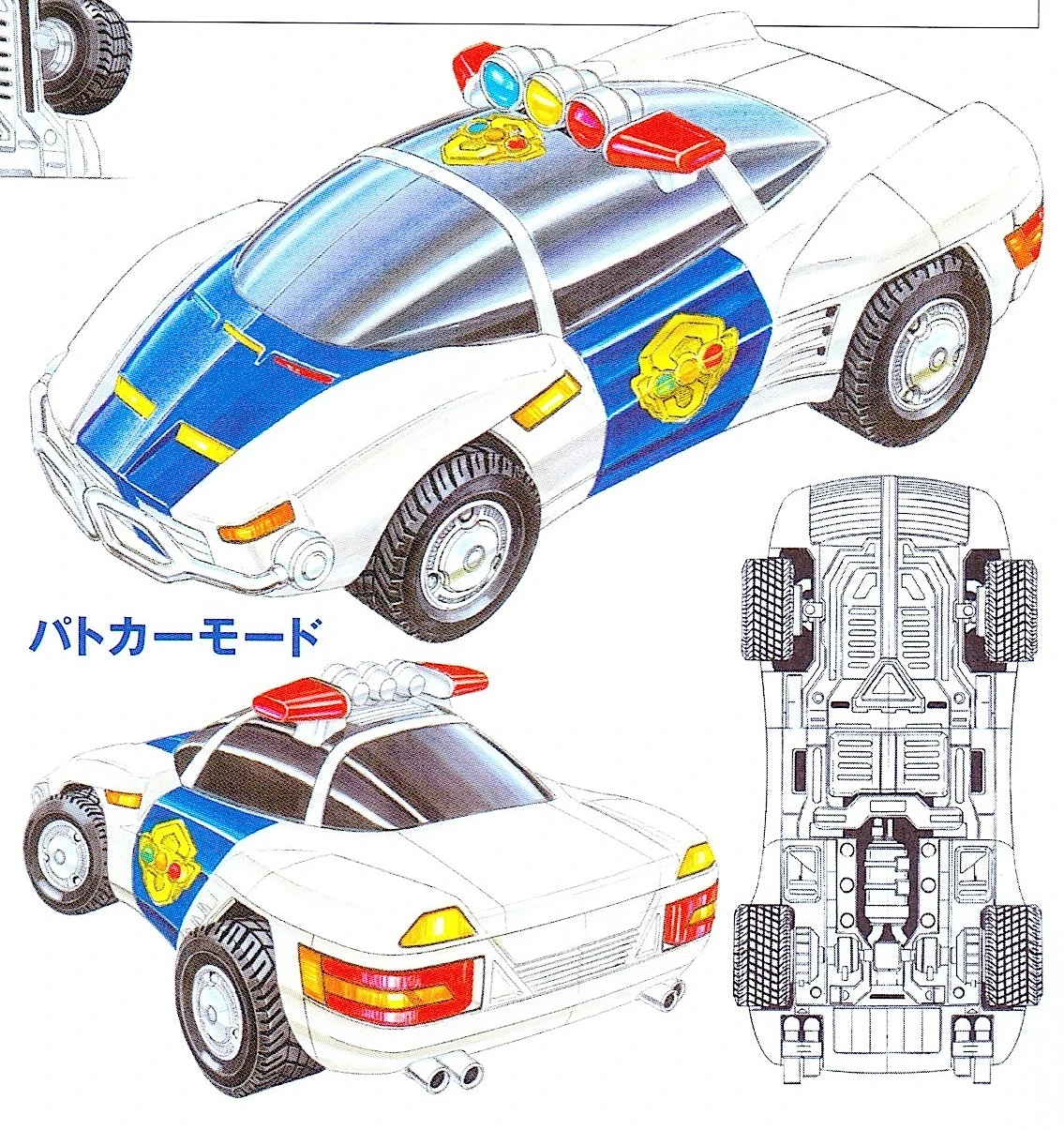
Patrol-car views: follow the roof lamps, blue hood and rear panels into the standing robot.
Super Sentai Art Collection - MediaWorks, 2002 · printed p. 056 · PDF p. 64
The car nose becomes the feet
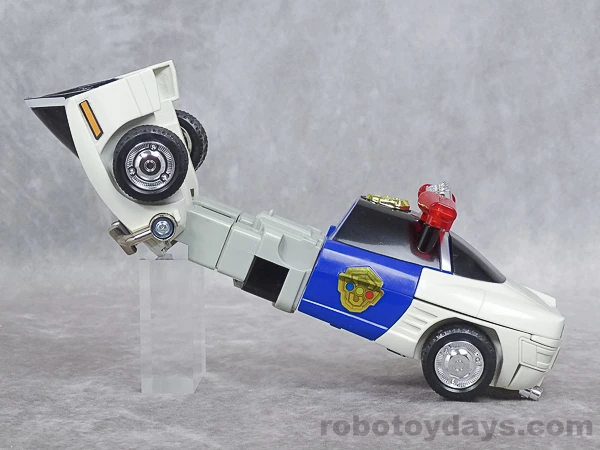
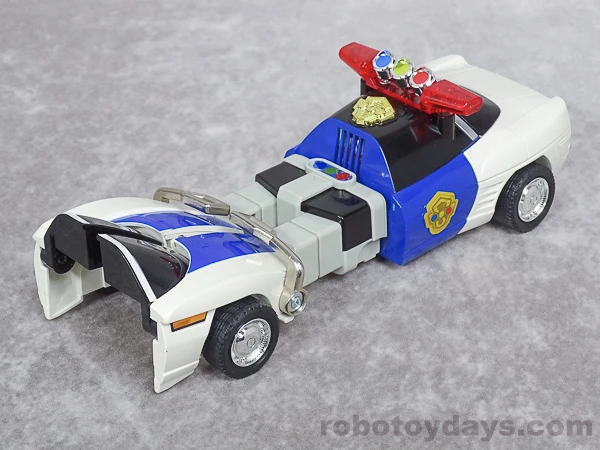
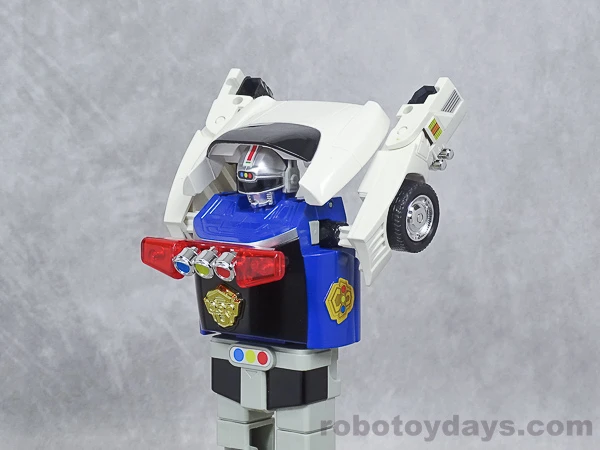
Watch the front wheels in the toy sequence. The front body swings away from the cabin, turns, and separates into two long legs. The blue hood panels face forward on the shins; dark sections of the windshield end up at the toes. The front guard divides between the legs. [1, 2]
At the other end, the rear body opens to release the arms. Its wheels rise to shoulder height, while the roof’s red light bar settles across the chest. The car has changed its stance without shedding the details that identify it. Compare the finished robot above: all four wheels are still easy to find. [1, 2]
Look closer
Follow the front wheels
A face behind the visor
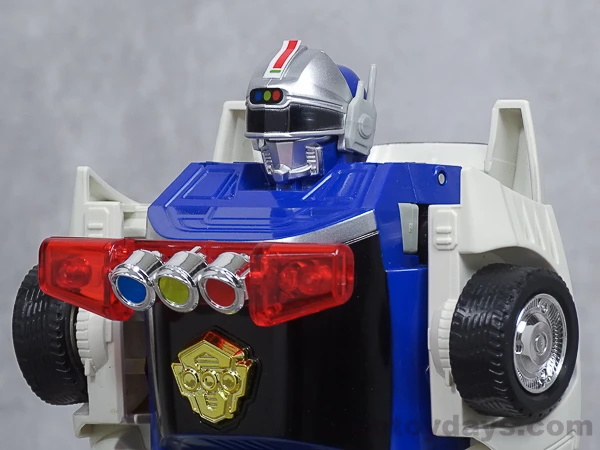
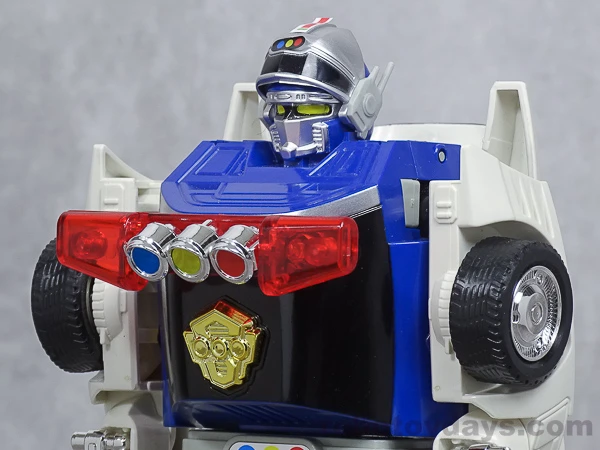
Sirender’s helmet looks ready for traffic duty. Its broad dark visor sits below another little row of colored lamps, with a silver grille guarding the mouth. The head drawings show that visor raised as well as lowered; lifting it exposes a pair of yellow eyes. [1]
The original DX makes the drawing into a small action. Raise the visor and the eyes appear beneath it. After the large movement of turning a car into a person, this is a quieter transformation: the helmet stays in place, but the face becomes readable. [1, 2]
Look closer
The drawing: down and up
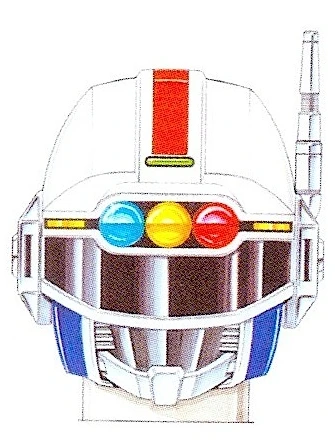
Visor down: the eyes sit behind a broad dark band.
Super Sentai Art Collection - MediaWorks, 2002 · printed p. 056 · PDF p. 64
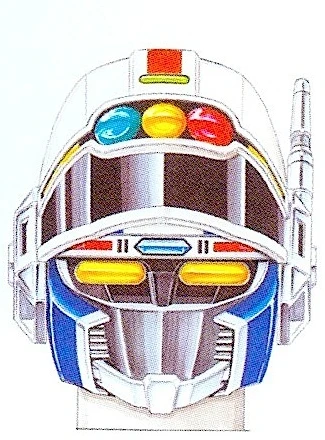
Visor up: yellow eyes appear above the silver mouth grille.
Super Sentai Art Collection - MediaWorks, 2002 · printed p. 056 · PDF p. 64
Equipment for a giant officer
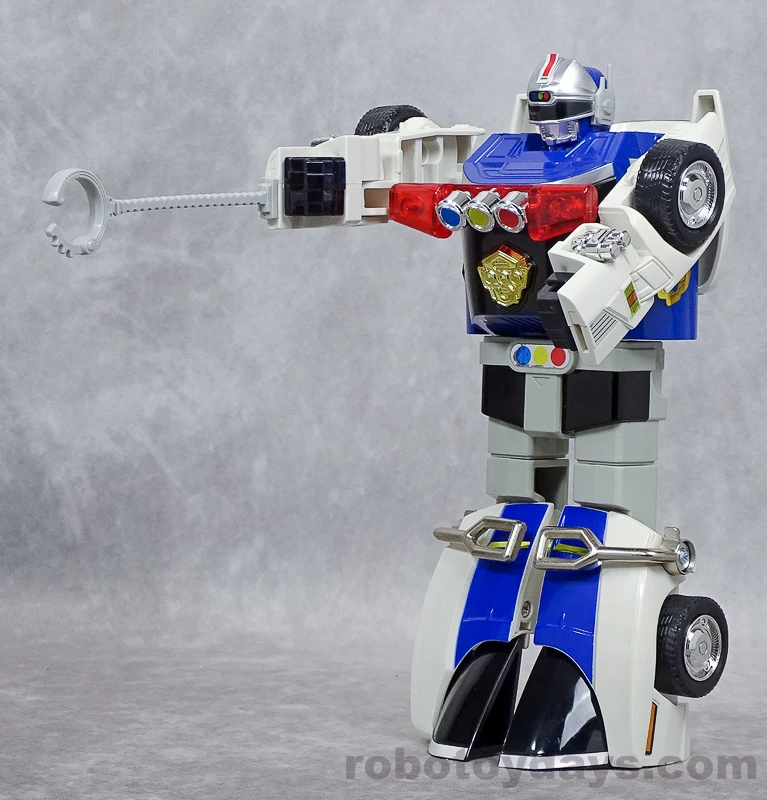
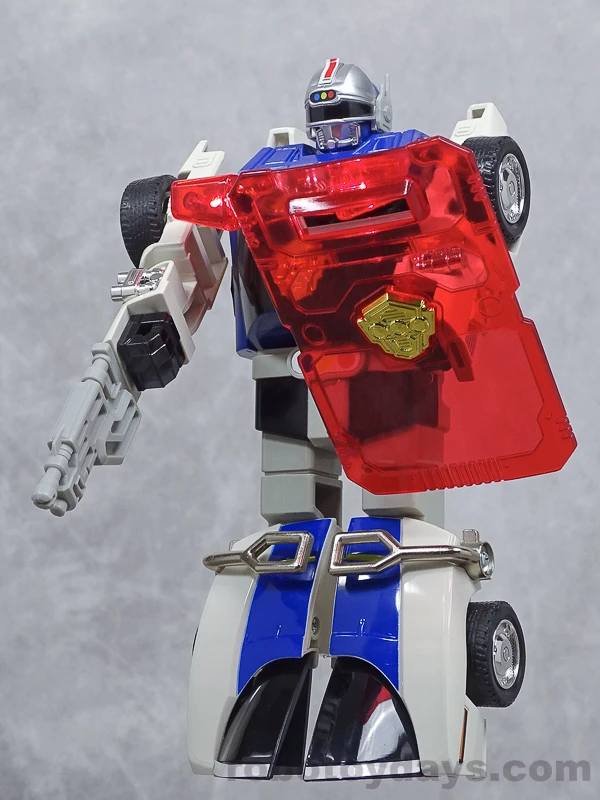
The police theme extends down to the forearms. The drawings give Sirender a Siren Vulcan gun, a Wappa Gun with a handcuff on a chain, a Siren Dagger and a tall shield. The accompanying note imagines the weapons other than the shield housed inside the arms. [1]
On the DX, these are separate accessories fitted to the arms. The handcuff and shield make particularly clear comparisons: familiar police equipment has simply grown to robot size. The toy turns the drawings into things to attach, swap and hold. [1, 2]
Return to the little whistle beside the car. Sirender carries the badge and lights of an officer; the child gets the call that brings them to life. That exchange makes the vehicle feel like a partner before it has even stood up.
Look closer
Police equipment
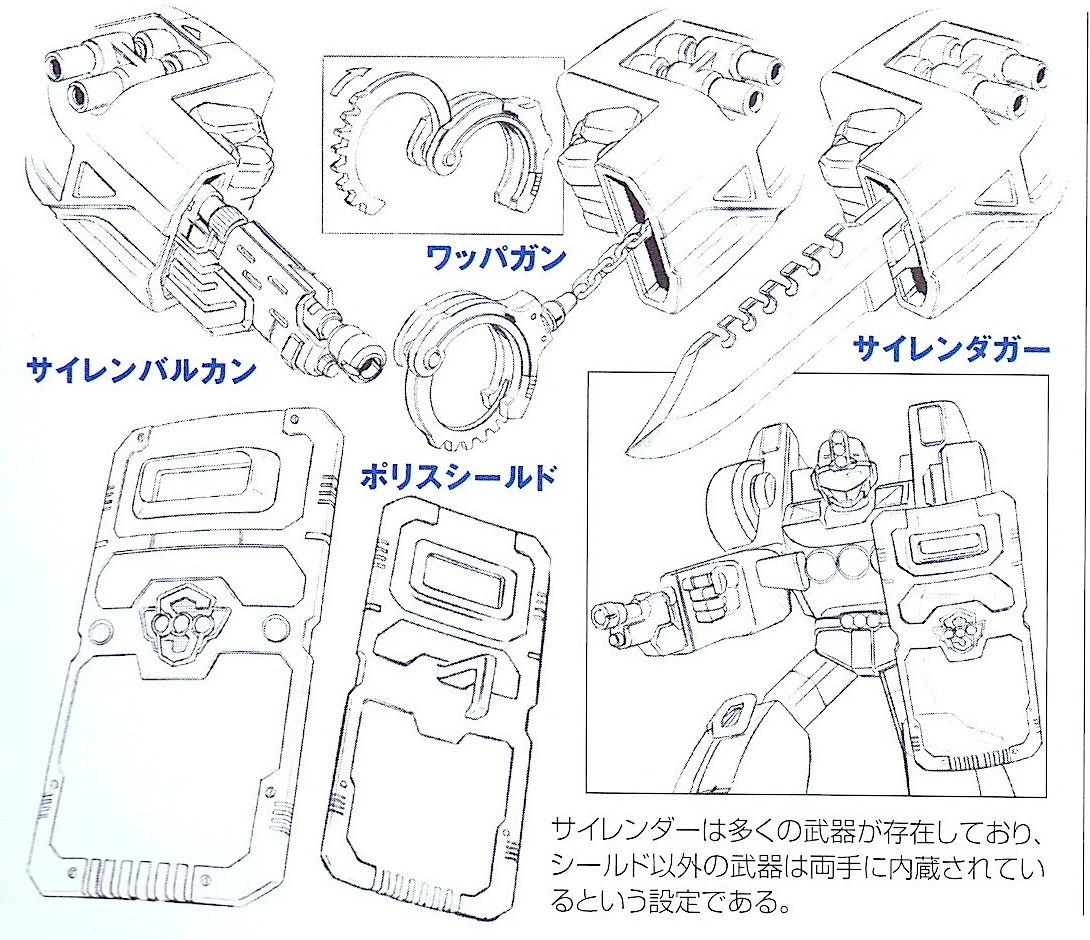
The police kit: Siren Vulcan, Wappa Gun, Siren Dagger and shield, with an equipped robot drawing.
Super Sentai Art Collection - MediaWorks, 2002 · printed p. 056 · PDF p. 64
Sources
[1] Super Sentai Art Collection: Sentai Robo Edition 1975–2002 (MediaWorks, 2002), printed 056 / PDF 64: Sirender, DX caption, patrol-car views, helmet and equipment. [2] RoboToyDays’ original Japanese DX photographs: package, Signal Whistle, transformation, lifting visor and equipped toy. Japanese captions are paraphrased; descriptions of moving parts follow the photographed sequence.
Sources
- Super Sentai Art Collection - Sirender · MediaWorks · 2002 · page 056 · scan page 64
- RoboToyDays - original Japanese Bandai DX Sirender · RoboToyDays
Artwork and toy photographs are credited reproductions from published sources. This is a virtual exhibit.