From design to toy · 1995
Red Puncher: From Fists to Cannons
A star-faced fighter throws electric punches, then turns its arms into another robot's cannons. Follow Red Puncher from the finished design sheets to Bandai's motorized DX toy and its Buster Ohranger Robo combination.
- From the world of
- Chouriki Sentai Ohranger
- Toy maker
- Bandai
- Release year
- 1995
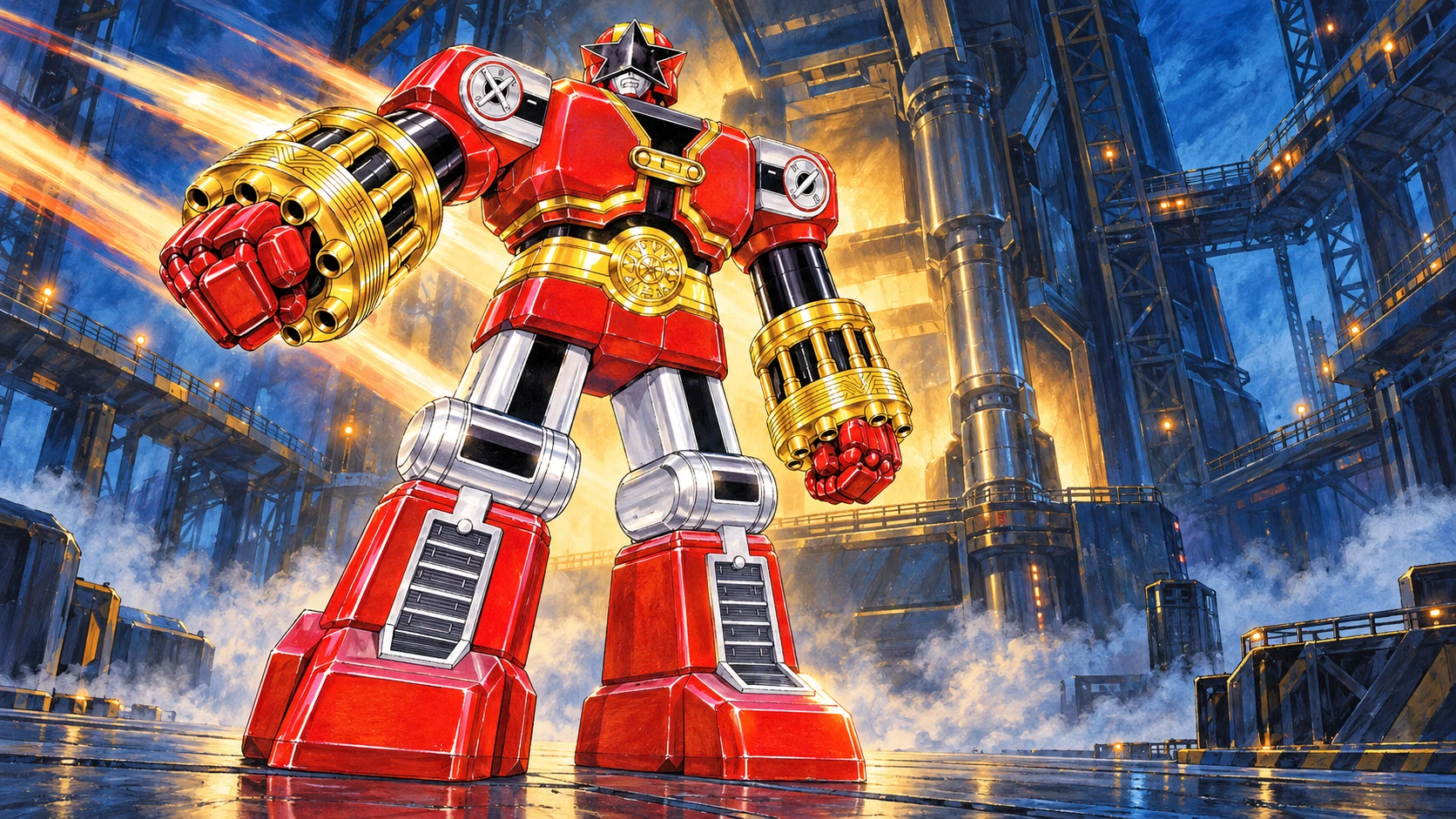
Original interpretive cover based on the finished Red Puncher design. Historical artwork and photographs follow below.
AI cover illustration - Rewind: Northwest RetroDesign reference ↗01 / The design
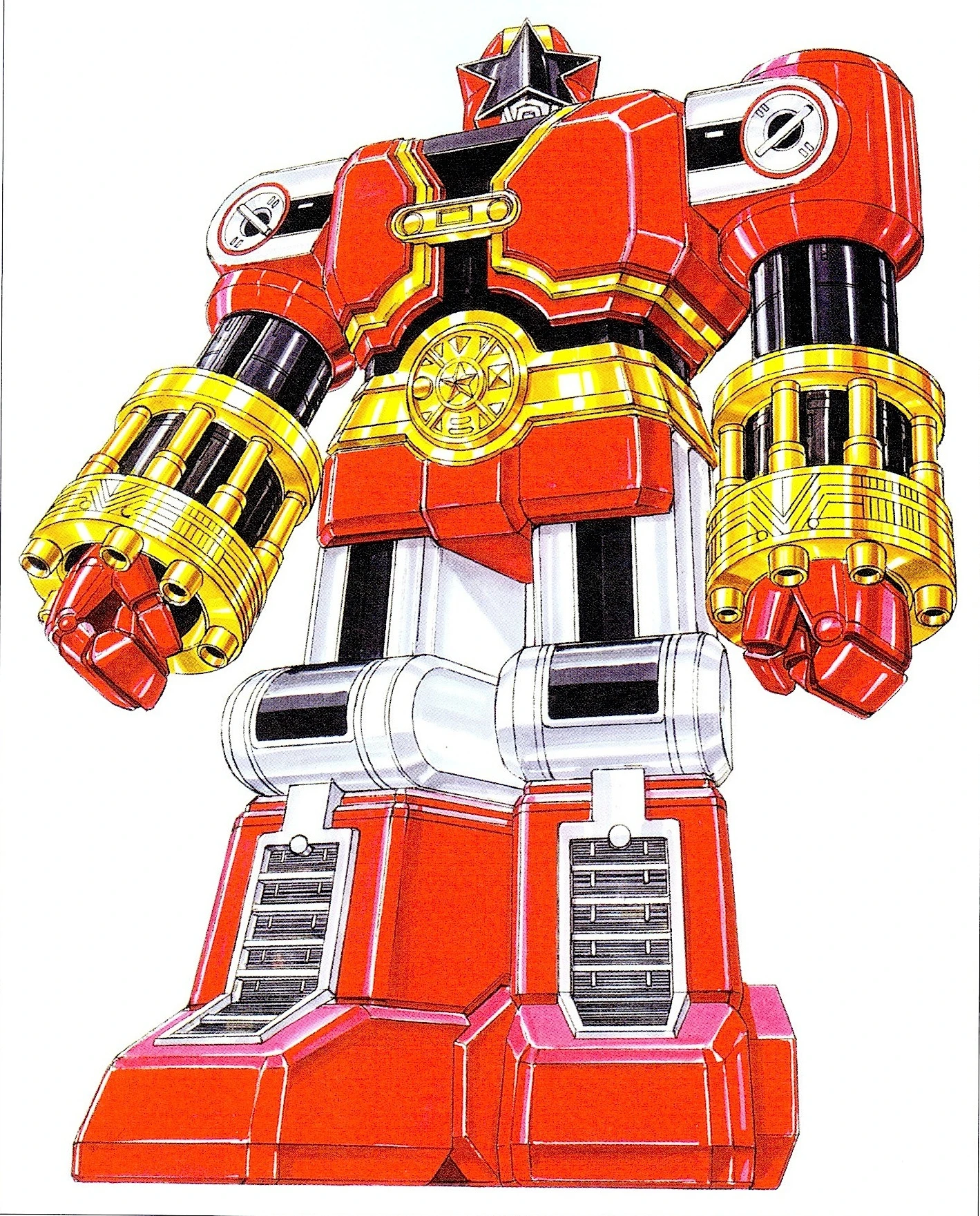
The finished Red Puncher design. Black cylinders and gold sleeves make the arms the visual focus; a star visor and circular belt emblem anchor the red body.
Super Sentai Art Collection - MediaWorks, 2002 · printed p. 062 · PDF p. 70
02 / The toy
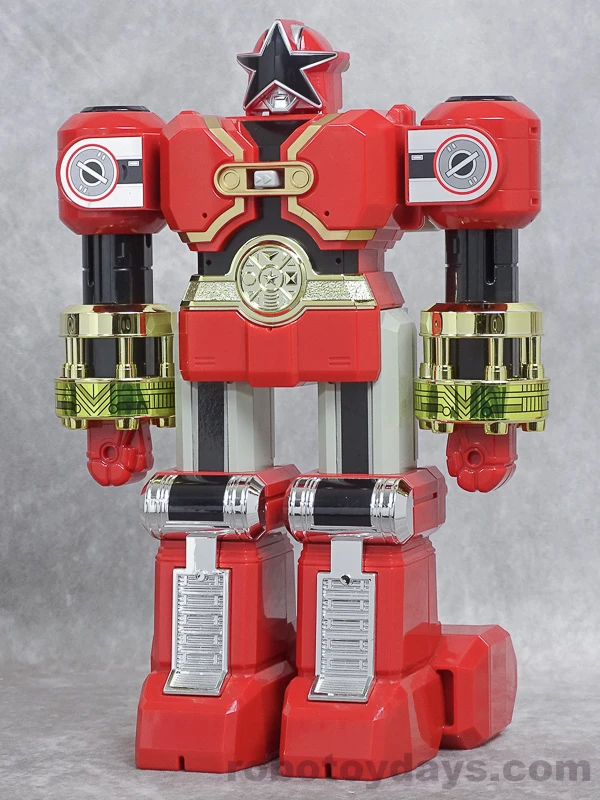
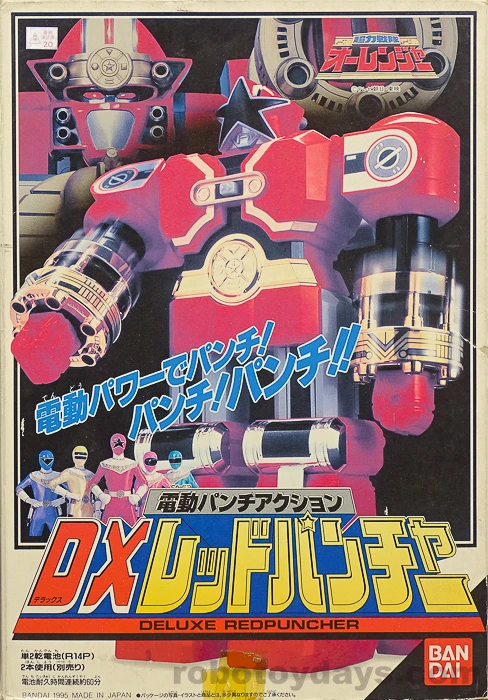
Bandai's original Japanese DX Red Puncher. Compare the cylindrical arms and broad feet with the finished drawing beside it.
In the story
Red Puncher looks built for a single decisive gesture. Gold cylinders surround its red fists, black shafts connect them to square shoulders, and a black star fills almost the entire face. Even standing still, the robot directs your attention to its arms.
In Chouriki Sentai Ohranger, Red Puncher is a prototype built before Ohranger Robo and becomes OhRed’s personal robot. The artbook places its debut in episode 19 and names its finishing move Magna Puncher. Its accompanying action illustration turns an upraised fist into the center of a burst of light. Artbook, p. 062.
The same arms take on a different role in Buster Ohranger Robo, introduced in episode 22. Red Puncher combines with Ohranger Robo, placing its cylinders above the shoulders as Puncher Cannons. The book identifies the combined attack as Big Cannon Burst. Artbook, p. 063.
On the drawing board
The finished views reward a look around the back. Red Puncher’s star visor is unmistakable from the front; the reverse of its head has a second set of details. On the next page, that same red head becomes the helmet of Buster Ohranger Robo, fitted over Ohranger Robo’s base head. One small component carries two faces for two configurations. Artbook, pp. 062-063.
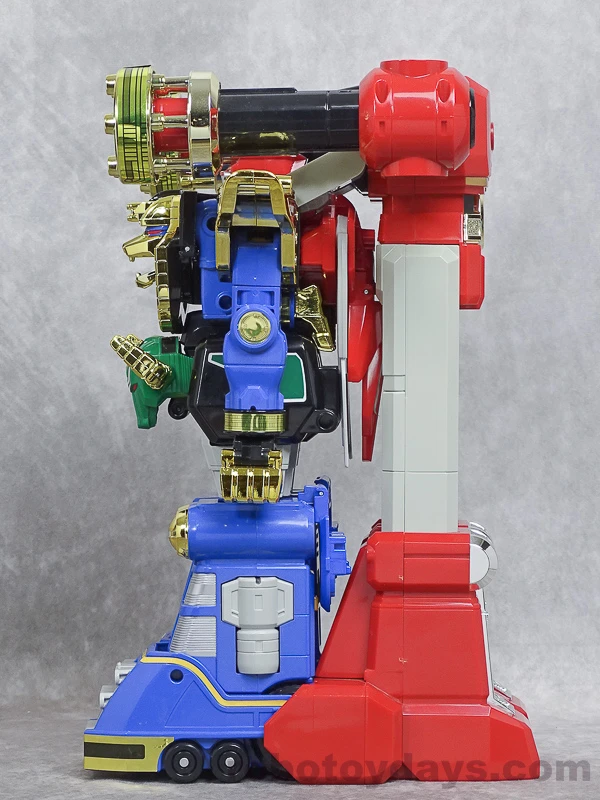
The rear combination drawing explains the larger change. Red Puncher’s recognizable chest and belt face backward, its legs extend down behind its partner, and its arms project forward overhead. Compare that line drawing with the side photograph below: the physical toy makes the long, stacked arrangement particularly clear. The drawings reproduced here document the finished design and its combination rather than a sequence of abandoned prototypes.
Look closer
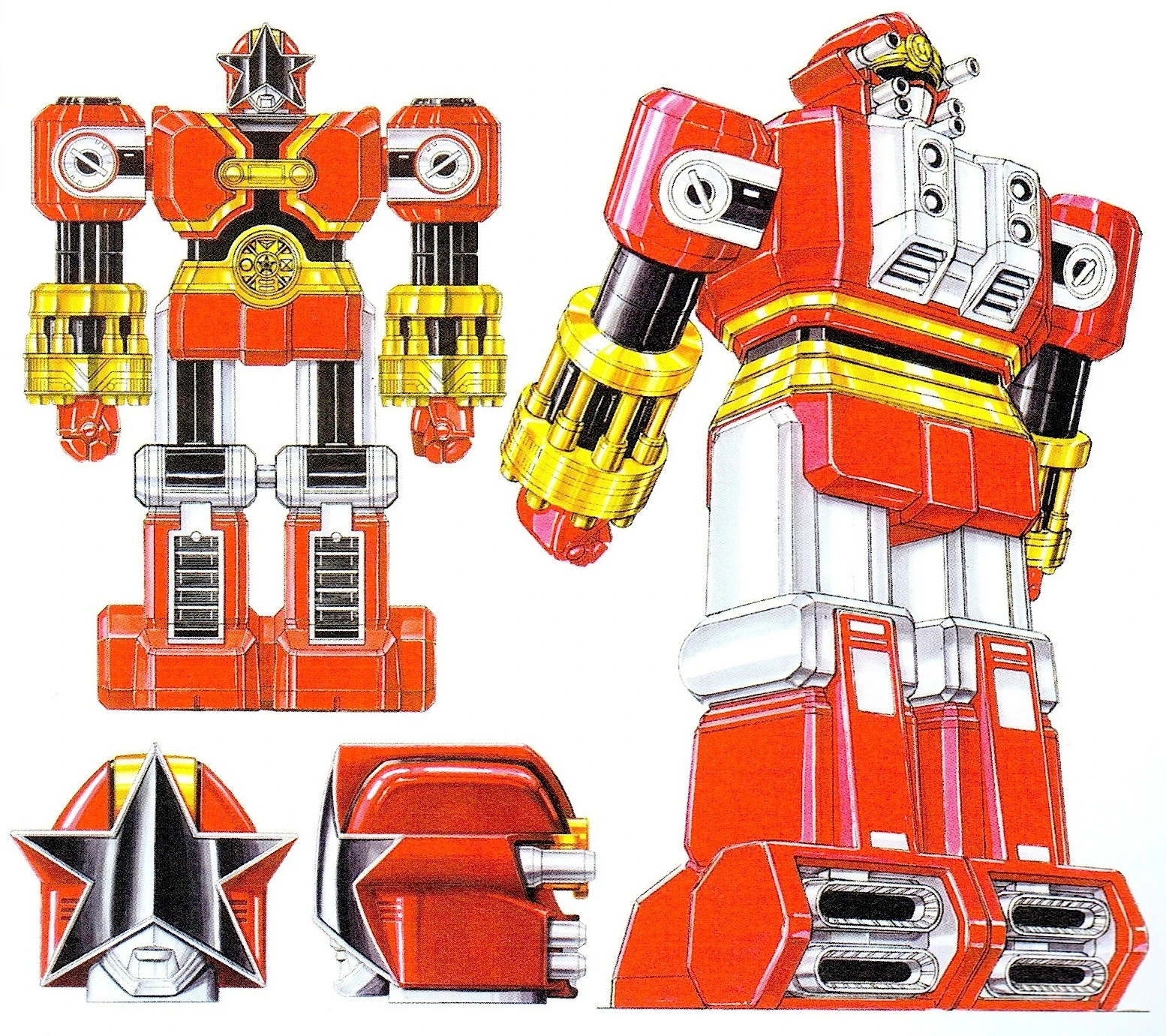
Read the design from both sides. The helmet's reverse carries the details that face forward on Buster Ohranger Robo. These are finished design views.
Super Sentai Art Collection - MediaWorks, 2002 · printed p. 062 · PDF p. 70
Two robots, one combined form
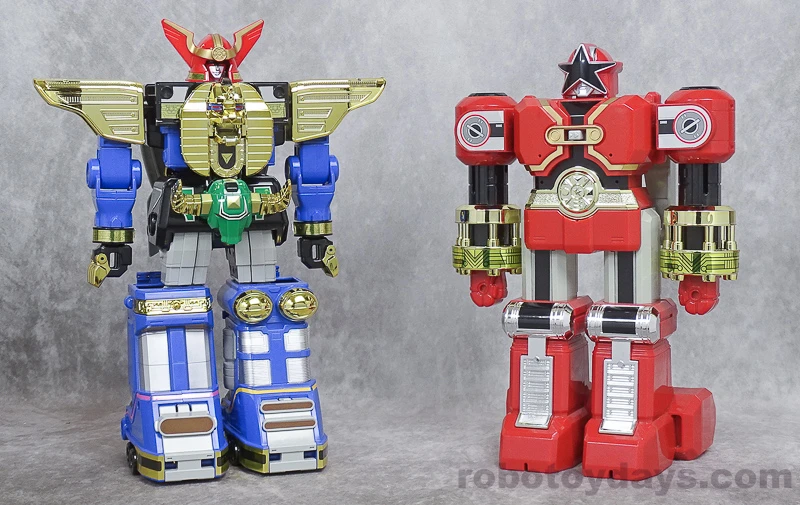
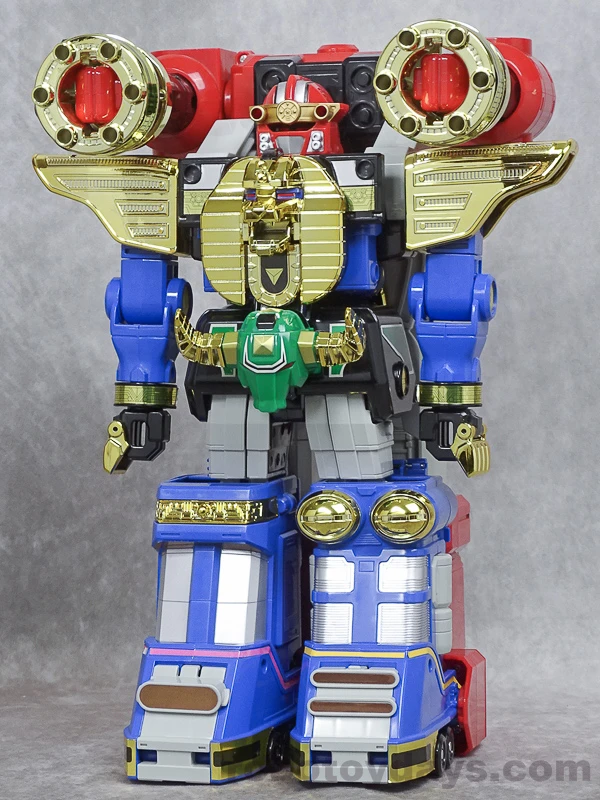
Start with the photograph of the two separate DX robots. Ohranger Robo contributes the blue limbs, lion-faced chest and wing-shaped shoulders. Red Puncher contributes a second red body, the cylindrical arms and the replacement helmet. In the combined front view, Ohranger Robo’s silhouette remains easy to recognize beneath its new equipment.
Turn the assembly sideways and the engineering becomes much more visible. Red Puncher runs almost the full height of its partner’s back. The artbook’s toy note explains that Red Puncher attaches behind Ohranger Robo and that mounting its legs helps the electric action operate more reliably. The mechanism remains part of the combination’s appeal. Artbook, p. 063.
For the five machines within the blue robot, continue to Ohranger Robo: One Robot, Five Helmets, which includes their separate designs and catalog photographs.
Look closer
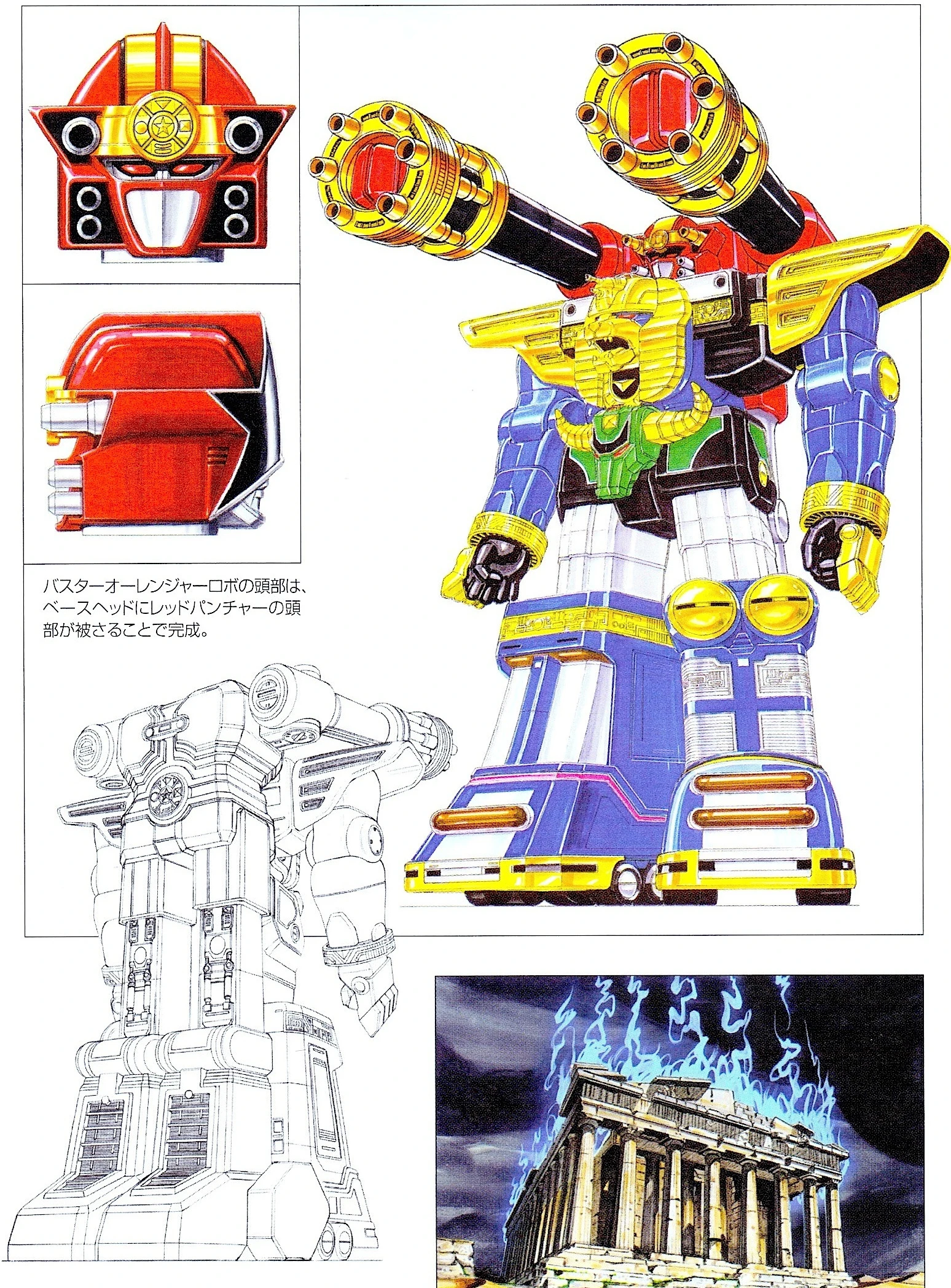
Buster Ohranger Robo, seen from the front and rear. The drawing gives Red Puncher's arms a second job as shoulder cannons; the helmet study shows its head fitted over Ohranger Robo's base head.
Super Sentai Art Collection - MediaWorks, 2002 · printed p. 063 · PDF p. 71
On the toy shelf
Bandai’s 1995 X’mas Book Catalog presents Electric Punch Action DX Red Puncher with one fist extended and a price of ¥4,980. The catalog excerpt preserves both the photograph and its blue product label. Clear display cylinders lift the toy for the photograph; they are not identified as accessories in the listing. Bandai catalog, p. 3.
The artbook describes a motor-driven piston-punch mechanism in both arms, with the legs serving as battery compartments. That connects the broad lower body to the toy’s main action: the feet provide room for power while the arms deliver the movement. The cylinder shapes are doing more than decorating a conventional robot figure. Artbook, p. 062.
The modern photographs here document the original Japanese DX release. Its packaging carries the DX Red Puncher name and Bandai logo; the review dates the toy to 1995. The blue Ohranger Robo is a separate toy used for the combination. RoboToyDays.
Look back at the opening comparison: star face, barrel forearms, silver legs and broad red feet survive the journey from drawing to toy. Then look at the combined form. The same parts remain visible, but the fists have become cannons and the fighter has become its partner’s artillery.
Look closer
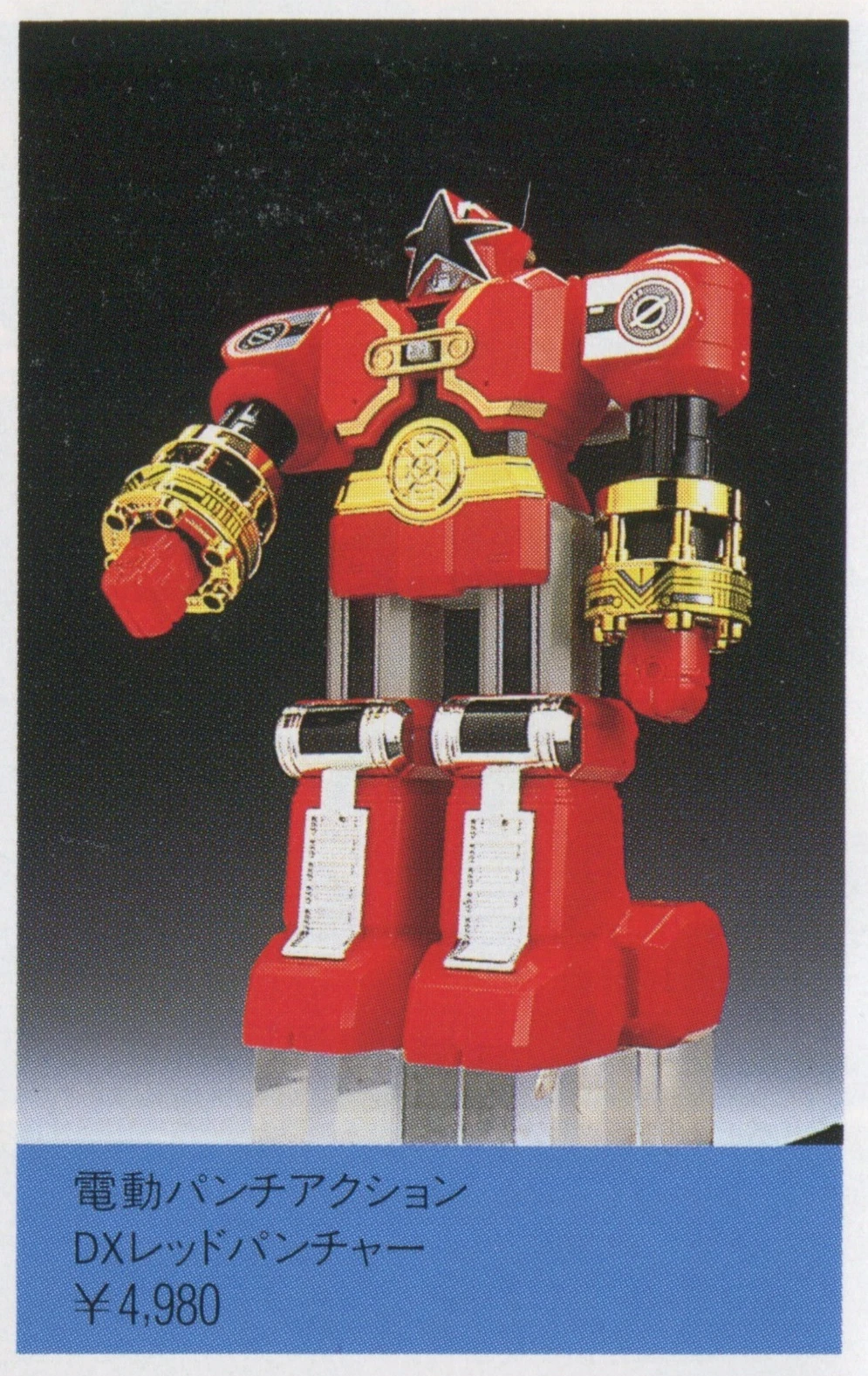
Bandai's 1995 Christmas catalog: Electric Punch Action DX Red Puncher, ¥4,980. The clear cylinders beneath the toy are part of the photographic display.
1995 Bandai X'mas Book Catalog - Bandai · printed p. 3 · PDF p. 3
Sources
- Super Sentai Art Collection: Sentai Robo Edition 1975-2002 - Red Puncher · MediaWorks · 2002 · page 062 · scan page 70
- Super Sentai Art Collection - Buster Ohranger Robo · MediaWorks · 2002 · page 063 · scan page 71
- 1995 Bandai X'mas Book Catalog - DX Red Puncher listing · Bandai · 1995 · page 3 · scan page 3
- RoboToyDays - DX Red Puncher (1995), packaging, separate robots and combination photographs
Artwork and toy photographs are credited reproductions from published sources. This is a virtual exhibit.